
REVIEW · CAPPADOCIA TRIPS FROM ISTANBUL
From Istanbul: Cappadocia Konya Pamukkale Ephesus 7 Nights
Istanbul, Ephesus, Pamukkale, Cappadocia… in one sweep. This 7-night Turkey route is built for people who want major sights without juggling tickets, hotels, and day-by-day logistics. I especially liked the mix of big-city monuments (Istanbul) with ancient ruins (Ephesus) and the weird-beautiful scenery of Cappadocia’s valleys.
Two things I really appreciate: you get real guided time at the big ticket sites, and you also get those “small moments” built in, like the lunch stop at a handicrafts center garden and the pottery workshop in Avanos. One consideration: this is a packed 8-day plan with long days and plenty of walking, and the airport drive in Istanbul can eat time.
If you want a trip that feels smooth and organized, this tour can be a strong fit. I also like that the guides include names you’ll actually remember—Melih, Serkan, and Tezcan show up in the feedback. The vibe sounds warm and proactive, tied to an operator named Fevzi, which matters when you’re tired and switching cities fast.
In This Review
- Key moments that make this tour worth your time
- Price and logistics: what you’re really paying for
- Istanbul days 1–2: monuments, markets, and the city’s old nerve
- Topkapi Palace and Hagia Sophia: why the order matters
- Hippodrome and the Grand Bazaar: history you can walk through
- Flying to Izmir and reaching Ephesus: the Roman-era world comes alive
- Artemis Temple stop: context before the walking
- Ephesus: what you’re meant to notice
- Lunch in a handicrafts center garden
- Kusadasi to Pamukkale: Hierapolis first, then the cotton-castle terraces
- Hierapolis: theatre, Apollo, and the necropolis
- Pamukkale travertines and hot springs: the main event
- Konya-area cultural stops and a cave hotel in Cappadocia
- Mevlana and the mystic tradition
- Sultanhani Caravanserai: where travel history becomes tangible
- Cave hotel night: why sleeping here matters
- Cappadocia Day 6: Three Sisters, Kaymakli, Göreme, and Uchisar
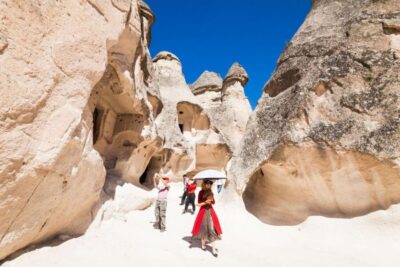
- Ürgüp’s Three Sisters fairy chimneys
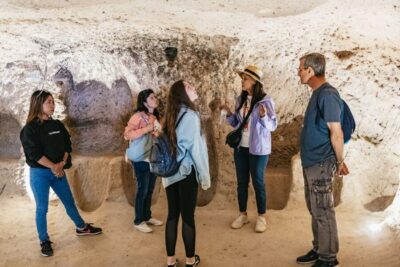
- Kaymakli Underground City: the part many people forget
- Göreme Open Air Museum: religion carved into rock
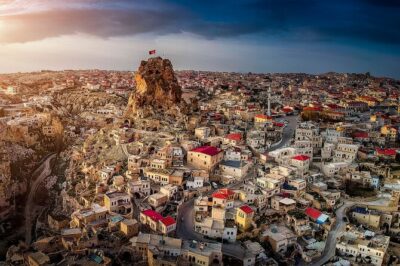
- Uchisar Castle: a panoramic payoff
- Day 7: Devrent Valley, Avanos pottery, and a flight back to Istanbul
- Devrent Valley: the lunar landscape you recognize
- Avanos lunch and pottery workshop demo
- Flight from Kayseri to Istanbul
- Where you sleep: four-star level comfort, including cave-style nights
- How tiring is it, really?
- What kind of traveler should book this?
- Should you book this Istanbul to Cappadocia highlights tour?
- FAQ
- What airports are used for arrival and departure in Istanbul?
- Are domestic flights included?
- What meals are included?
- Do I need to pay for entrance fees?
- Will there be an English guide?
- Are hotel nights included?
- What’s not included in the price?
Key moments that make this tour worth your time
- Guided hits at Topkapi, Hagia Sophia, Blue Mosque, and Grand Bazaar so you don’t wander lost
- Ephesus plus the Artemis Temple stop for context before you walk the ruins
- Pamukkale Hierapolis and the travertine terraces for that snow-white mineral look
- Cave hotel stay in Cappadocia for the full fairy-tale setting
- Kaymakli Underground City and Göreme Open Air Museum for “wow” depth beyond postcards
- Avanos pottery demo to connect the scenery with local craft
Chasing the balloons: more Cappadocia trips

Price and logistics: what you’re really paying for
At $1,579 per person, you’re not just paying for admission tickets. You’re paying for a system: private transfers in between stops, professional guides for the guided portions, seven breakfasts, two dinners, and two domestic flights (Istanbul to Izmir; and Istanbul to Cappadocia, via Kayseri later). You’re also getting hotel nights in four-star level properties (with specific hotel examples offered).
That value only holds if you like the structure. If you prefer to roam solo with no “clock” at all, you might feel rushed. But if you want your trip to run like a well-oiled route—arrivals handled, airport transfers lined up, and key sites guided—this plan is set up for that.
Two practical notes to keep in mind:
- Istanbul airport transfers can be long. One review calls out drives of up to 2.5 hours, so plan your day with that buffer in mind.
- Luggage rules are set for the internal flights: 15 kg checked and 8 kg cabin. If you travel with more, you’ll need to adjust early.
Istanbul days 1–2: monuments, markets, and the city’s old nerve
Your arrival day is straightforward: you land at IST or SAW, meet your tour representative, and go straight to your hotel for the night. The next day is the classic Istanbul set, done with a walking approach that focuses on big recognition sites.
Topkapi Palace and Hagia Sophia: why the order matters
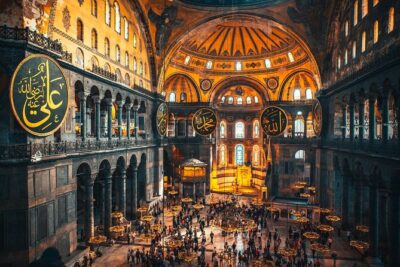
You’ll get guided time at Topkapi Palace, then Hagia Sophia, and the Sultan Ahmed Mosque (Blue Mosque) follows. This grouping works because it shows the layers of Istanbul in a compressed way: power, religion, and art in the same day.
Topkapi is not just pretty courtyards. It helps you understand how the Ottoman world organized itself—court life, collections, and the sense of empire-scale ceremony. Hagia Sophia gives you the architectural “why” behind the city’s long-standing cultural weight. And the Blue Mosque, with its interiors and domes, rounds out the day so you leave seeing more than one style.
More days out to ancient Ephesus
- 4 Days Turkey Tour – Cappadocia, Ephesus and Pamukkale Tour★ 5.0 · 138 reviews
- 6 Days Turkey Tour Cappadocia, Pamukkale, Ephesus, Gallipoli Troy★ 5.0 · 109 reviews
- Daily Ephesus & House of Virgin Mary from Istanbul – Small Group★ 4.0 · 95 reviews
- 7 Days Best of Turkey Tour: Istanbul-Cappadocia-Ephesus-Pamukkale★ 5.0 · 91 reviews
Hippodrome and the Grand Bazaar: history you can walk through
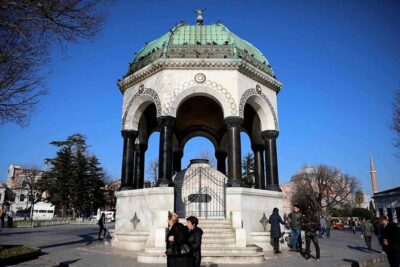
The Hippodrome stop is a clever add-on because it sits outside the palace/monument circuit. Even if you don’t memorize every name, it helps you picture how public life played out in Byzantine times—chariot racing and political unrest.
Then comes the Grand Bazaar, with shopping time built in. This is one of the few places where the tour structure can actually help you. With a guide, you’re less likely to get dragged into random stalls or lose time trying to understand where to start. You’ll be able to pick your own pace once you’re oriented.
Saturday twist: the tour notes that on Saturday departures, the Istanbul day shifts so the Istanbul tour runs on Day 7 when the Grand Bazaar is open. If you’re planning shopping, that’s a key detail worth aligning your expectations with.
Flying to Izmir and reaching Ephesus: the Roman-era world comes alive
On Day 3, you fly to Izmir, then head to Ephesus. The structure here is practical: you don’t just show up at ruins and hope you’ll figure it out.
Artemis Temple stop: context before the walking
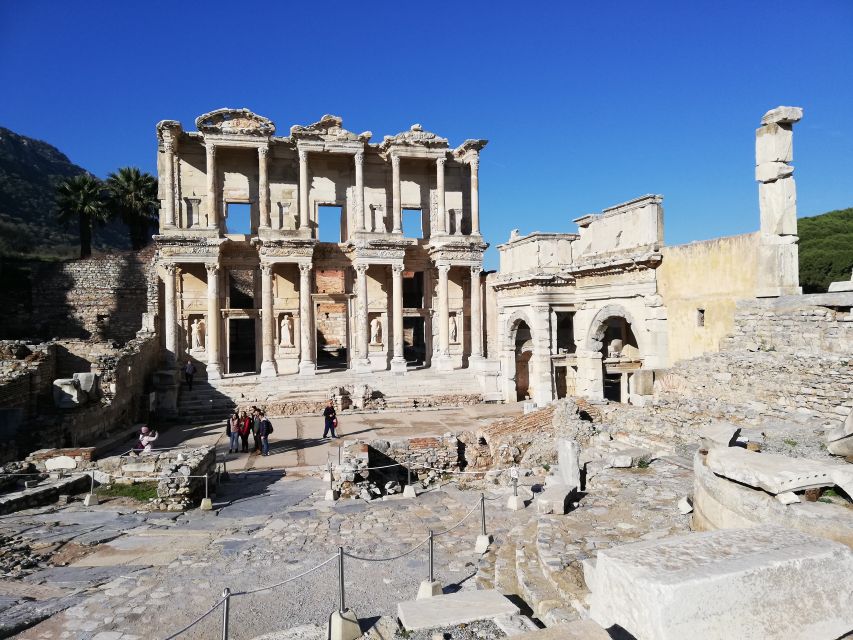
You’ll visit the Artemis Temple area before entering Ephesus. Even though much of it is not preserved like a fully intact building, the stop helps you frame Ephesus as more than a pile of stones. It’s a major place people traveled for—religion, commerce, and civic life.
Ephesus: what you’re meant to notice
Ephesus is guided, and that matters. The ruins become clearer when someone points out what to look for: main streets, how the space was designed for crowds, and what different building types were used for. Without guidance, you can still enjoy it, but you’ll likely miss the bigger pattern.
You’ll also stop at the House of the Virgin Mary before overnighting in Kusadasi. This is a quieter counterpoint to Roman architecture. It changes the tempo—less of a city-grid feel, more of a devotional site experience.
Lunch in a handicrafts center garden
There’s a meal included in a local handicrafts center garden. That’s a small thing that adds up because it breaks the day between sightseeing clusters and gives you an easy setting to reset.
Kusadasi to Pamukkale: Hierapolis first, then the cotton-castle terraces
Day 4 is a drive to Pamukkale, but it’s planned as a one-two punch.
Hierapolis: theatre, Apollo, and the necropolis
You visit Hierapolis, including the Theatre, Apollo Temple, and the Necropolis (the graveyard area). Hierapolis is what turns Pamukkale from “pretty white cliffs” into a place with real depth. When you look at travertines afterward, they feel less like a standalone spectacle and more like part of a longer-lived human landscape.
The theatre stop is especially useful because you can picture how public performance and gatherings would have worked in that environment—again, architecture you can understand without a textbook.
Pamukkale travertines and hot springs: the main event
Then you get the travertine terraces and Pamukkale Hot Springs area. The description is dead-on: the terraces look like snow or cotton balls, shaped by mineral springs flowing into the white cliffs. You’ll also have a guided visit plus time to explore the hot springs area.
One strong tip: treat Pamukkale like a photo-and-feel stop, not just a walk-through. The visuals are famous for a reason, and the mineral water experience is part of why this stop exists on tours like this.
Konya-area cultural stops and a cave hotel in Cappadocia
Day 5 shifts you inland to Cappadocia. En route you visit two places that connect Turkey’s religious culture to the roadside and travel world: the Mausoleum of Mevlana and the Sultanhani Caravanserai.
Mevlana and the mystic tradition
The Mausoleum of Mevlana is included as a stop to honor the world-famous mystic. It’s a reminder that Turkey isn’t only Roman ruins and Ottoman domes. There’s a spiritual and cultural thread here that shaped art, poetry, and public life.
Sultanhani Caravanserai: where travel history becomes tangible
The Sultanhani Caravanserai is the practical-travel history moment. Caravanserais are built for rest, trade, and shelter—exactly what ancient routes depended on. It makes sense you’d pass through something like this on the way to a region known for travelers and stopovers.
Cave hotel night: why sleeping here matters
You’ll stay in Cappadocia in a cave hotel. This is one of those choices that quietly upgrades your whole trip. Even if you’re not the type who cares about rooms, sleeping in that setting keeps the fairy-tale mood consistent.
Cappadocia Day 6: Three Sisters, Kaymakli, Göreme, and Uchisar
Day 6 is a full Cappadocia tour with breakfasts included, and it hits the region’s signature “systems”: fairy chimneys above ground, underground living, and stone churches in the open air.
Ürgüp’s Three Sisters fairy chimneys
You start at the Three Sisters Fairy Chimneys in Ürgüp. It’s the kind of scene that teaches you why people call this place lunar-looking. When you’re standing there, it’s hard not to see how wind and time carved a whole landscape into strange forms.
Kaymakli Underground City: the part many people forget
You’ll descend into Kaymakli Underground City, described as one of the largest and deepest in Cappadocia. This is the big “wait, people lived here?” moment. The value is not only the scale—it’s the shift in how you think about safety, community, and survival in a region that could face unrest.
Göreme Open Air Museum: religion carved into rock
Next is the Göreme Open Air Museum. Stone churches and painted surfaces are the “art and faith” side of Cappadocia, and with a guide you’ll spend less time wondering what you’re looking at.
Uchisar Castle: a panoramic payoff
You finish at Uchisar Rock Castle for a panorama view. The view is your reward for the day’s digging and walking—standing high gives you the map of the valley in your head.
Day 7: Devrent Valley, Avanos pottery, and a flight back to Istanbul
Day 7 keeps Cappadocia playful and hands-on.
Devrent Valley: the lunar landscape you recognize
You’ll visit Devrent Valley, known for its rock shapes that resemble animals and faces. This stop is simple but effective because it doesn’t require museum reading. You can just look, guess, and laugh a little at what your eyes invent.
Avanos lunch and pottery workshop demo
Then you go to Avanos, a center of terracotta art since 3000 BC (that’s the headline the tour provides). You’ll have lunch there and watch a demonstration in a traditional pottery workshop. This is where the trip feels more local. Cappadocia is geology, but the people around it turn that into craft.
Flight from Kayseri to Istanbul
In the afternoon, you fly from Kayseri to Istanbul and overnight back in Istanbul. That means you get a second look at Istanbul without needing to relocate your suitcase again.
Where you sleep: four-star level comfort, including cave-style nights
The hotels are listed as four-star bed and breakfasts and hotels, with specific examples for each region:
- Istanbul: Recital Hotel, Yasmak Sultan Hotel, Dosso Dossi Old City, or similar
- Kusadasi: Efe Boutique Hotel, Neopol Deluxe, or similar
- Pamukkale: Colossae Thermal, Pam Thermal, or similar
- Cappadocia: Melekler Evi Cave Hotel, Zeydem Suits, or similar
That said, comfort can vary by region because cave hotels have their own style and constraints. One review notes WiFi is okay in most places and amenities are basic. If you’re the type who needs modern-luxury comforts at all times, you might find that cave hotel living is more charming than glossy.
Still, the structure works: you sleep in each region long enough that the daily sightseeing doesn’t become pure “commute time.”
How tiring is it, really?
This tour is not built like a slow “sit on a terrace” vacation. You’re dealing with:
- multiple long sightseeing days,
- guided walking at several major monuments,
- and domestic flights that compress time.
One review describes Cappadocia, Pamukkale, and Kusadasi days as a bit tiring due to walking and long driving segments. That matches what you should expect from a highlights route.
On the plus side, multiple reviews mention the guides were excellent at pacing and explaining without making it feel like a lecture. You even get named guide feedback—Melih for one group, Serkan for Istanbul, and Tezcan for the rest—plus proactive support linked to Fevzi. That kind of “friendly competence” matters on busy itineraries.
What kind of traveler should book this?
I think this fits best if:
- You want Istanbul + ancient ruins + Pamukkale + Cappadocia on one trip.
- You like guides and clear explanations more than self-planning.
- You prefer the convenience of private transfers and internal flights handled for you.
- You’re okay with a full schedule and some walking.
It may feel like too much if:
- You want lots of free time each day.
- You’re sensitive to long drives (especially from Istanbul airports).
- You hate structured itineraries and want to choose every stop yourself.
Should you book this Istanbul to Cappadocia highlights tour?
If your goal is to see Turkey’s headline attractions with minimal hassle, I’d lean yes. The value comes from stacking guided time, entrance fees, hotel nights, and flights into one package so you’re not constantly re-booking and re-checking.
The decision mainly comes down to energy level. If you can handle a packed 8 days and you like being kept on schedule, this route is a strong way to experience a lot of Turkey in a coherent order—from Istanbul’s monuments to Ephesus’ ruins, then Pamukkale’s mineral magic, and finally Cappadocia’s stone-and-underground world.
If you want a slower pace with fewer transfers, you might prefer a shorter region-focused itinerary instead.
FAQ
What airports are used for arrival and departure in Istanbul?
The tour includes pickup and drop-off at either Istanbul Airport (IST) or Sabiha Gökçen Havalimanı (SAW).
Are domestic flights included?
Yes. Domestic flights are included: Istanbul to Izmir and Istanbul to Cappadocia, with a stated luggage limit of 15 kg checked and 8 kg cabin.
What meals are included?
You’ll get 7 breakfasts and 2 dinners. Lunches and drinks are not included.
Do I need to pay for entrance fees?
Entrance fees for the sites on the itinerary are included.
Will there be an English guide?
Yes. The tour includes a live guide for guided portions in English and Spanish.
Are hotel nights included?
Yes. You get 7-night accommodation in four-star bed and breakfasts/hotels (with listed examples for Istanbul, Kusadasi, Pamukkale, and Cappadocia).
What’s not included in the price?
Not included: lunches, drinks, dinners in Istanbul, personal expenses, visa fees, and travel insurance.
If you want, tell me your travel month and whether you’re arriving via IST or SAW, and I’ll help you plan what to watch for on the Istanbul days (timing, walking pace, and best priorities).
More Trips to Pamukkale
- 4 Days Turkey Tour – Cappadocia, Ephesus and Pamukkale Tour★ 5.0 · 138 reviews
- 6 Days Turkey Tour Cappadocia, Pamukkale, Ephesus, Gallipoli Troy★ 5.0 · 109 reviews
- 7 Days Best of Turkey Tour: Istanbul-Cappadocia-Ephesus-Pamukkale★ 5.0 · 91 reviews
- 5-Day Aegean Tour – Gallipoli, Troy, Ephesus, Kusadasi, Pamukkale★ 4.5 · 86 reviews
- Istanbul, Ephesus, Pamukkale and Cappadocia 8 Day Package★ 5.0 · 83 reviews
- Private 4 Days Turkey Tour from Istanbul to Cappadocia, Ephesus, Pamukkale★ 5.0 · 80 reviews
More Days Out to Ephesus
- 4 Days Turkey Tour – Cappadocia, Ephesus and Pamukkale Tour★ 5.0 · 138 reviews
- 6 Days Turkey Tour Cappadocia, Pamukkale, Ephesus, Gallipoli Troy★ 5.0 · 109 reviews
- Daily Ephesus & House of Virgin Mary from Istanbul – Small Group★ 4.0 · 95 reviews
- 7 Days Best of Turkey Tour: Istanbul-Cappadocia-Ephesus-Pamukkale★ 5.0 · 91 reviews
- 5-Day Aegean Tour – Gallipoli, Troy, Ephesus, Kusadasi, Pamukkale★ 4.5 · 86 reviews
- Istanbul, Ephesus, Pamukkale and Cappadocia 8 Day Package★ 5.0 · 83 reviews
More Cappadocia Trips from Istanbul
- From Istanbul: 2-Day All-Inclusive Cappadocia Guided Trip★ 4.9 · 380 reviews
- Istanbul: 2-Day Cappadocia Trip with Flights and Cave Hotel★ 4.7 · 318 reviews
- 2 Days Cappadocia from Istanbul with Cave Hotel+Optional Balloon★ 5.0 · 260 reviews
- Cappadocia Dream: 2-Days Tour from Istanbul & Balloon Ride Option★ 4.5 · 236 reviews
- Istanbul: Cappadocia 2-3 Day Tour with Flights & Hotel★ 5.0 · 202 reviews
- From Istanbul: Day Trip to Cappadocia with Flight & Lunch★ 4.6 · 182 reviews
Fresh off the boat: new Istanbul reviews

Cappadocia Trips from Istanbul, compared.
 ★ 4.9From Istanbul: 2-Day All-Inclusive Cappadocia Guided TripFrom $709380 reviews
 ★ 4.72-Day Cappadocia Trip with Flights and Cave HotelFrom $328318 reviews
 ★ 5.02 Days Cappadocia from Istanbul with Cave Hotel+Optional BalloonFrom $330260 reviews
 ★ 4.5Cappadocia Dream: 2-Days Tour from Istanbul & Balloon Ride OptionFrom $590236 reviews
 ★ 5.0Cappadocia 2-3 Day Tour with Flights & HotelFrom $361202 reviews
 ★ 4.6From Istanbul: Day Trip to Cappadocia with Flight & LunchFrom $188182 reviews
 ★ 5.04 Days Turkey Tour – Cappadocia, Ephesus and Pamukkale TourFrom $1,571138 reviews
 ★ 5.02 Days Cappadocia Tour From IstanbulFrom $725132 reviews
Browse the lists this tour appears in