
Istanbul’s grand sights in one tight route. You’ll get guided visits to the Blue Mosque, Hagia Sophia, and Basilica Cistern, plus a stop at the Hippodrome for the missing civic-history piece. I like how the plan ties Ottoman and Byzantine stories to the buildings in front of you, and I also like the small-group setup (max 20) with headsets so you can actually hear your guide. One thing to keep in mind: these are working mosques, so either site could close to visitors for official reasons, and timed-entry means you must show up early.
You’ll spend about 3 hours covering four major landmarks, which makes it a great “first day in Istanbul” move. It’s also a good value if you hate spending your vacation stuck in security lines and ticket queues, even though you still can’t personally jump lines. If you don’t like walking tours or you’re sensitive to strict dress rules, this may feel like more friction than fun.
In This Review
- Key highlights at a glance
- Three iconic stops plus the Hippodrome
- Entering faster: timed tickets, headsets, and what you should expect
- Blue Mosque: İznik tiles, Sultan Ahmet I, and strict mosque etiquette
- Hagia Sophia Grand Mosque: dome scale and the art you came for
- Basilica Cistern: marble columns, Medusa heads, and a cooler pace
- Hippodrome walk: Serpent Column, Obelisk, and Kaiser Wilhelm’s gift
- Pace and comfort: how the walking affects your day
- Value check: what $116.43 buys you (and why it can be worth it)
- Who this tour suits best
- Should you book this Istanbul Blue Mosque, Hagia Sophia, Basilica Cistern and Hippodrome tour?
- FAQ
- How long is the tour?
- What is included in the ticket price?
- Is this a true skip-the-line tour?
- What time should I arrive at the meeting point?
- Can I join the tour after it starts?
- What dress code do I need for the mosques?
- Are children allowed on this tour?
- What happens if Basilica Cistern is closed?
- Can I cancel for a full refund?
Key highlights at a glance
- Timed entry for Hagia Sophia and Basilica Cistern to keep your visits efficient
- A guided route that includes the Hippodrome, not just the big two mosques
- Headsets so you hear the story clearly, even in crowded interiors
- Small group (up to 20) for a more personal pace and easier question time
- Fallback cistern options if Basilica Cistern is closed (Şerefiye or Binbirdirek)
Other ways under the Hagia Sophia dome
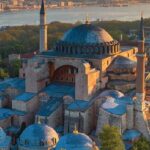

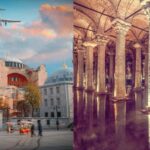
Three iconic stops plus the Hippodrome
This tour is built around Istanbul at full volume: mosque domes above, Byzantine art in the middle, and Justinian-era engineering underground. You get the big visual hits—Blue Mosque, Hagia Sophia, Basilica Cistern—then you walk through the Hippodrome, where the city’s public life once turned on politics, ceremony, and spectacle.
What I like is the logic of the sequence. You start with an Ottoman landmark (Blue Mosque), shift to the Byzantine heart (Hagia Sophia), then drop underground into a practical piece of city infrastructure (Basilica Cistern). Ending with the Hippodrome gives you context for why so many rulers cared about mass gatherings and monuments.
Entering faster: timed tickets, headsets, and what you should expect
This experience runs on timed entry, especially for Hagia Sophia and Basilica Cistern. You’ll receive mobile tickets, and the rule is simple: arrive at the meeting point 15 minutes early because the entry is scheduled.
Two practical notes matter a lot here. First, nobody can skip the line at either mosque—the best you can do is a smoother, more efficient flow because your guide does this every day. Second, once the tour starts, you can’t join mid-stream, so don’t plan to be “kind of on time.”
The headsets are a big deal for quality. In places like Hagia Sophia, you’ll be close to other groups and noise can drown out casual explanations. Also, bring your own comfort kit if you’re picky about audio: one common complaint is that the provided ear pieces can be a bit fiddly, so having your own headphones/earbuds can save you frustration.
Group size stays friendly, with a maximum of 20 travelers. That usually means less waiting while the group regroups, and it’s easier to ask questions without shouting over everyone.
Blue Mosque: İznik tiles, Sultan Ahmet I, and strict mosque etiquette
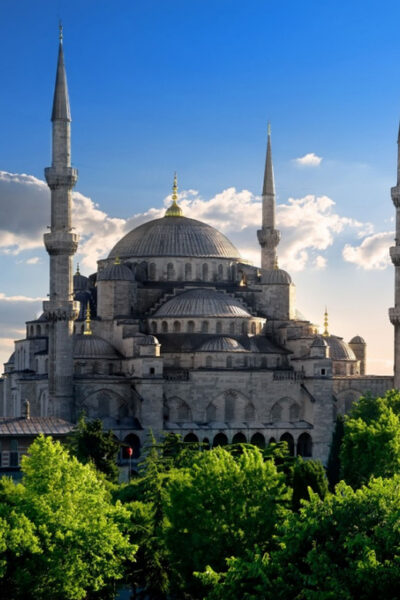
The Blue Mosque is the kind of place where details reward you for slowing down. Inside, you’ll see elegant domes and hand-painted İznik blue tiles that give the whole room that unmistakable, cool-toned glow. Your guide also connects what you’re seeing to Ottoman power, including the story of Sultan Ahmet I and why this mosque mattered in its time.
One big plus: you don’t just “look.” You’ll have context for how Ottoman architecture borrowed, adapted, and presented ideas in a visually commanding way. That storytelling turns a stunning interior from a photo stop into a place with meaning.
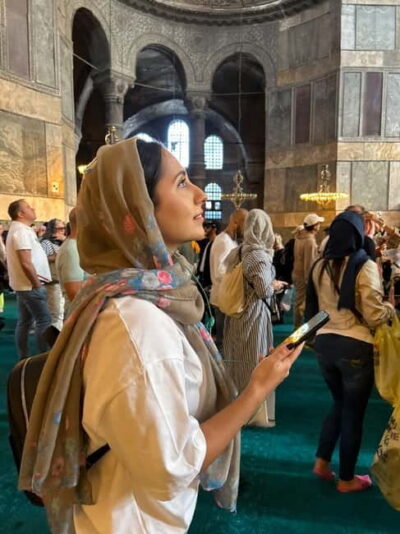
Now for the part that can make or break your experience: dress code and footwear rules. Women must wear a headscarf, and both women and men need clothing that covers shoulders and knees. Shorts and sleeveless tops aren’t permitted inside. And at the Blue Mosque, be prepared to take off your shoes; socks can be helpful if you want to stay comfortable.
More time beneath the Blue Mosque's six minarets
- Istanbul: Blue Mosque, Hagia Sophia, & Old Town Walking Tour★ 4.8 · 2,372 reviews
- Istanbul: Basilica, Hagia Sophia, Blue Mosque Tour & Cruise★ 4.5 · 1,929 reviews
- Istanbul: Blue Mosque Guided Tour★ 4.5 · 1,910 reviews
- Hagia Sophia Skip-the-Line Ticket & Blue Mosque Audio Guide★ 4.1 · 1,879 reviews
Hagia Sophia Grand Mosque: dome scale and the art you came for
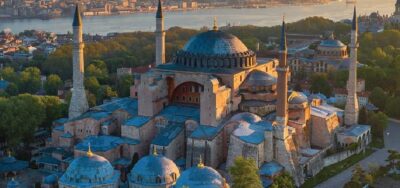
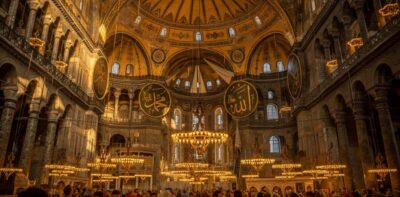
Hagia Sophia is huge in every direction, which is why a guide matters here. With pre-reserved entry, you’ll step inside and immediately notice the contrast between Byzantine and Ottoman layers—particularly the mix of Byzantine mosaics and later Ottoman details.
You’ll also get pointed attention on the specific artworks people travel for, including the Deesis Mosaic, the Imperial Gate, and the image of the Virgin Mary with Child. When someone explains what you’re looking at (and why it was placed where it was), the space becomes easier to read. Otherwise, it can feel like you’re just standing under the world’s most famous dome without a map.
A key practical factor: Hagia Sophia is a functioning mosque. Even with pre-arranged tickets, the site can close to visitors for official events, and there’s no guarantee it will be open for your timing.
Also, there are strict rules about what you can bring inside. You’re not allowed to carry signs, symbols, banners, flags, documents, drawings, or any materials representing political, ideological, or religious beliefs in Hagia Sophia. Plan for a clean, low-drama visit: phone is fine, but keep everything else minimal.
Basilica Cistern: marble columns, Medusa heads, and a cooler pace
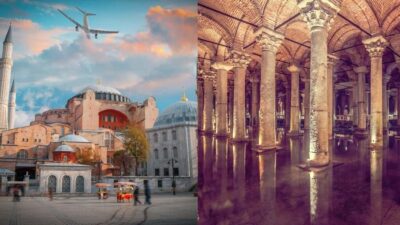
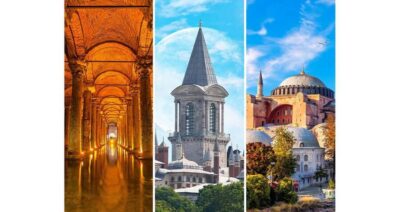
After the bright scale of the mosques, Basilica Cistern changes everything. This is the 6th-century underground cistern built by Emperor Justinian, and the atmosphere is part of the point: cool air, quiet corners, and a forest-like grid of marble columns.
The standout visual detail is the Medusa heads, which sit like a quiet riddle beneath the waterline. Your guide explains the cistern’s role in the city’s past, which helps you understand this wasn’t just an architectural flex—it supported real needs in a dense metropolis.
Time here is shorter, around 30 minutes, so it’s more “see and absorb” than “slow museum meander.” Still, that limit is useful. You’ll want to keep your energy for the Hippodrome walk afterward, and the cistern is exactly the sort of place where a guide’s narration keeps you from missing key symbolism.
There’s also a smart contingency plan. If Basilica Cistern is closed, the tour visits Şerefiye (cistern of Theodosius) or Binbirdirek (cistern of Philoxenos) instead. That’s good to know because it reduces the chance your main underground stop becomes a letdown.
Hippodrome walk: Serpent Column, Obelisk, and Kaiser Wilhelm’s gift
The Hippodrome stop is only about 30 minutes, but it fills an important gap. It was the center of Byzantine civic life, so it connects Istanbul’s story from religion and architecture to public spectacle and power.
You’ll see key monuments tied to the place’s identity:
- the Serpent Column
- the Obelisk of Theodosius
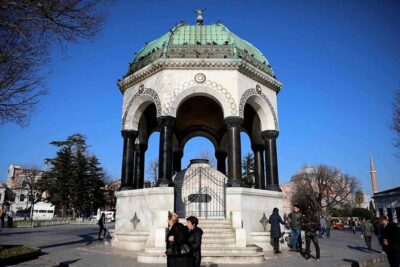
- the German Fountain, a piece associated with Kaiser Wilhelm II, described as a symbol of Ottoman–German friendship
This is the part of the tour that helps you feel the city’s timeline instead of seeing isolated landmarks. Even if you don’t remember every date, you’ll leave with a better sense of what people gathered for and how rulers used stone, symbols, and ceremonies to communicate authority.
Pace and comfort: how the walking affects your day
This is a guided walking route. Even with efficient entry, you’ll be moving between sites, and you’ll want solid shoes.
One practical comfort detail: guides typically build in time for basics like bathroom breaks and photos, especially if you ask early. In one experience, a guide known for being patient even helped someone exit quickly when they were tired, which hints at how flexible good guides can be within the fixed schedule.
Sound can also be a factor. The provided headsets are designed to help you hear, but if you’re the type who hates anything “off,” bring your own audio backup. You’ll thank yourself when the ear pieces slip.
Heat and crowding can stack up fast in Istanbul. Pace yourself: take photos early, listen through the key explanations, and don’t try to shoot every second. The guide’s context will still land, even if you’re not holding a camera at all times.
Value check: what $116.43 buys you (and why it can be worth it)
At $116.43 per person, this isn’t a budget-only option. But it can be good value because you’re not just buying access—you’re buying time saved and interpretation included.
Here’s what the price covers in practical terms:
- admission tickets are included for Blue Mosque, Hagia Sophia, and Basilica Cistern
- you get pre-reserved tickets for Hagia Sophia and Basilica Cistern
- you get guided visits across the main indoor sites
- you get a professional licensed guide
- you get headsets for clearer listening
- the group size stays capped (max 20)
That matters because timed entry reduces the “stand in line” tax. And again, you can’t literally skip lines on your own, but the combination of prebooked access and daily guide routines usually means less wasted time than doing it unguided.
The tour doesn’t include transportation to the meeting spot, though the meeting area is near public transit. So you’ll want to plan that part carefully.
Who this tour suits best
I think this tour fits best if you want your first Istanbul day to cover the essentials with context, not just photos. It’s also a strong fit if you like hearing stories that connect Ottoman and Byzantine eras instead of treating each stop like a separate postcard.
It may feel less ideal if:
- you strongly dislike walking tours
- you’re traveling with a child under 7 (children under 7 aren’t permitted on this tour)
- you’re not willing to follow mosque dress rules (headscarf for women; shoulders and knees covered for everyone)
- you’re likely to arrive late, since timed entry can shut the door if you miss your window
Should you book this Istanbul Blue Mosque, Hagia Sophia, Basilica Cistern and Hippodrome tour?
If your goal is a focused, guided route through Istanbul’s biggest religious and architectural landmarks, I’d book this. The mix of Blue Mosque + Hagia Sophia + Basilica Cistern plus the Hippodrome makes the whole day feel more complete than most “two mosques and done” plans.
I’d only hesitate if you’re unsure you can handle strict mosque etiquette (headscarf and covered shoulders/knees) or if you’re worried about closures at working mosques. Since official shutdowns can happen, go in with flexibility and treat this as a planned route, not a guarantee.
If you do book, your best move is simple: arrive early, dress correctly, bring comfy socks for the shoe-off moments, and plan to listen. This tour works when you lean into the guided explanations, not just the skyline views.
FAQ
How long is the tour?
The tour runs about 3 hours (approx.), covering the Blue Mosque, Hagia Sophia, Basilica Cistern, and the Hippodrome.
What is included in the ticket price?
Admission tickets are included for Blue Mosque, Hagia Sophia, and Basilica Cistern. You also get guided visits to those sites and the Hippodrome stop, plus a professional licensed guide, small-group format, mobile ticketing, and headsets.
Is this a true skip-the-line tour?
Skip-the-line access is available for adults only. Even with that, the rules note that nobody can skip the line at either of the mosques; guides help make entry more efficient.
What time should I arrive at the meeting point?
You must arrive at the meeting point 15 minutes before the tour start time due to timed entry of the tickets.
Can I join the tour after it starts?
No. It isn’t possible to join after the tour has commenced.
What dress code do I need for the mosques?
Women are required to wear a headscarf. Both men and women should cover shoulders and knees; shorts, sleeveless tops, and other revealing attire are not permitted inside.
Are children allowed on this tour?
Children under 7 are not permitted on this tour. Also, children under 7 do not benefit from the skip-the-line access rules.
What happens if Basilica Cistern is closed?
If Basilica Cistern is closed, the tour visits Şerefiye (cistern of Theodosius) or Binbirdirek (cistern of Philoxenos) instead.
Can I cancel for a full refund?
Yes. Free cancellation is available if you cancel up to 24 hours in advance for a full refund.
Further Into the Basilica Cistern
- Istanbul: Basilica Cistern Fast-Track Entry and Audio Guide★ 4.6 · 7,521 reviews
- Basilica Cistern & Hagia Sophia with Optional Topkapi Palace★ 4.6 · 3,547 reviews
- Istanbul: Basilica Cistern Skip-the-Line Entry Ticket★ 4.6 · 2,270 reviews
- Combo: Hagia Sophia+Basilica Cistern Optional Topkapi Palace★ 4.3 · 1,880 reviews
- Istanbul: Blue Mosque, Hagia Sophia, & Basilica Cistern Tour★ 4.7 · 1,806 reviews
- Istanbul: Basilica Cistern Skip-the-Line Entry & Audio Guide★ 4.6 · 1,477 reviews
More at the Blue Mosque
- Istanbul: Blue Mosque & Hagia Sophia Guided Tour w/ Tickets★ 4.8 · 3,600 reviews
- Istanbul: Blue Mosque, Hagia Sophia, & Old Town Walking Tour★ 4.8 · 2,372 reviews
- Istanbul: Basilica, Hagia Sophia, Blue Mosque Tour & Cruise★ 4.5 · 1,929 reviews
- Istanbul: Blue Mosque Guided Tour★ 4.5 · 1,910 reviews
- Hagia Sophia Skip-the-Line Ticket & Blue Mosque Audio Guide★ 4.1 · 1,879 reviews
- Istanbul: Blue Mosque, Hagia Sophia, & Basilica Cistern Tour★ 4.7 · 1,806 reviews
Hagia Sophia, A Few More Ways In
- Istanbul: Hagia Sophia Skip-the-Line Ticket & Museum Option★ 3.7 · 4,958 reviews
- Istanbul: Blue Mosque & Hagia Sophia Guided Tour w/ Tickets★ 4.8 · 3,600 reviews
- Basilica Cistern & Hagia Sophia with Optional Topkapi Palace★ 4.6 · 3,547 reviews
- Istanbul: Hagia Sophia Entry Ticket with Audio Guide★ 4.3 · 2,854 reviews
- Istanbul: Blue Mosque, Hagia Sophia, & Old Town Walking Tour★ 4.8 · 2,372 reviews
- Istanbul: Basilica, Hagia Sophia, Blue Mosque Tour & Cruise★ 4.5 · 1,929 reviews
Fresh off the boat: new Istanbul reviews
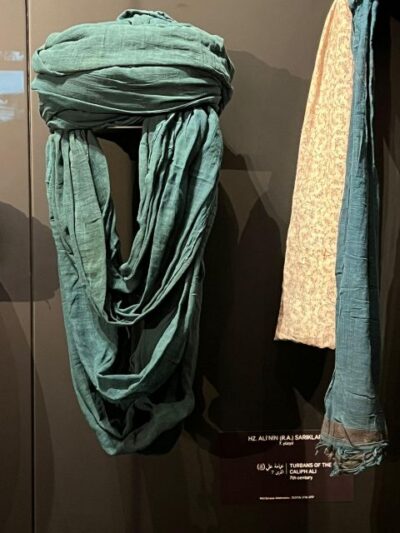
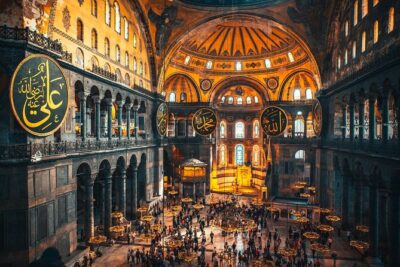


Hagia Sophia Tours, compared.
 ★ 3.7Hagia Sophia Skip-the-Line Ticket & Museum OptionFrom $334,958 reviews
 ★ 4.8Blue Mosque & Hagia Sophia Guided Tour w/ TicketsFrom $393,600 reviews
 ★ 4.6Basilica Cistern & Hagia Sophia with Optional Topkapi PalaceFrom $813,547 reviews
 ★ 4.3Hagia Sophia Entry Ticket with Audio GuideFrom $332,854 reviews
 ★ 4.8Blue Mosque, Hagia Sophia, & Old Town Walking TourFrom $712,372 reviews
 ★ 4.5Basilica, Hagia Sophia, Blue Mosque Tour & CruiseFrom $681,929 reviews
 ★ 4.3Combo: Hagia Sophia+Basilica Cistern Optional Topkapi PalaceFrom $811,880 reviews
 ★ 4.1Hagia Sophia Skip-the-Line Ticket & Blue Mosque Audio GuideFrom $331,879 reviews
Browse the lists this tour appears in