
REVIEW · CAPPADOCIA TRIPS FROM ISTANBUL
7 Day Istanbul-Cappadocia-Ephesus-Pamukkale Tour (Balloon Ride)
Hot air balloons and ancient cities, all stitched together.
This 7-day Turkey tour connects Istanbul’s classic sights to Cappadocia’s surreal geology, then lands you at Ephesus and Pamukkale’s famous travertines. Two big things I like: the way domestic flights handle the long distances for you, and the fact that you get proper guided time at the headliners (not just “go see that, bye”). One thing to consider: the hot air balloon ride is optional and depends on weather, so you should treat it as a bonus, not a guaranteed win.
You’ll move with pickup help in Istanbul and comfortable transfers between stops, then rely on an organized team to keep tickets, timing, and connections working. It’s a lot of ground, but it’s also the kind of route where the logistics matter—because Turkey is huge, and you do not want to spend your vacation in transit.
In This Review
- Key things that make this tour worth a look
- Istanbul’s old-city hits, on foot and on purpose
- Price and logistics: where the value really comes from
- Cappadocia starts with cave-hotel energy
- Balloon ride add-on: what you gain and what you should plan for
- The Cappadocia classics: Göreme, Pasabag, Avanos pottery crafts
- Ephesus and Mary’s House: a pilgrimage-style day with major ruins
- Pamukkale’s terraces and Hierapolis museum time
- Who this tour suits best (and who may want a different plan)
- Should you book this Istanbul–Cappadocia–Ephesus–Pamukkale tour?
- FAQ
- FAQ
- Is the hot air balloon ride included in the tour price?
- Are domestic flights included?
- What meals are included?
- Are entrance fees included?
- How many people are in the group?
- What happens if the balloon flight is canceled due to weather?
Key things that make this tour worth a look
- A guided walking day through Istanbul’s historic core with a private guide
- Domestic flights included between cities to save serious time
- Cave hotel overnight in Cappadocia after your south Cappadocia touring day
- Classic Cappadocia highlights like Göreme Open-Air Museum, Pasabag, and Avanos crafting
- Ephesus + Virgin Mary’s House grouped efficiently for one region week
- Balloon ride as an add-on with weather-related cancellation refunds
Chasing the balloons: more Cappadocia trips

Istanbul’s old-city hits, on foot and on purpose
Istanbul can overwhelm fast. This tour tackles that problem with a focused day in the Sultanahmet area—where you can hit several top monuments close together without burning hours on indecision.
You’ll start at Sultanahmet Square and the Hippodrome zone, the old Roman/Byzantine entertainment center. Even if you don’t do a deep history binge, it helps to see the space where spectacle happened—this is where the civic energy of empires left its physical fingerprints. Highlights here include the Mysterious Serpentine Column, the Egyptian Obelisk, and the German Fountain of Wilhelm II.
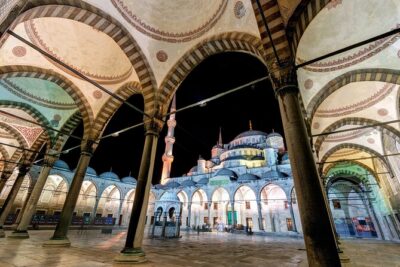
From there, you’ll move into major landmarks around the same historic cluster. Hagia Sophia Grand Mosque is next. It’s been a church and later a mosque, and today functions again as a mosque (you’ll want to dress and behave accordingly). The same goes for the Blue Mosque, known for its six minarets and famous İznik tile interior work—details you’ll only really appreciate when you’re standing in the space.
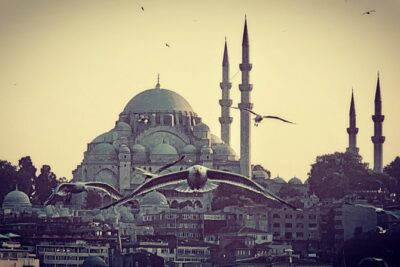
Then you’ll work your way into the Ottoman era with Topkapı Palace. Think of it as the imperial machine: the Ottoman administrative center and residence for sultans and their families for centuries. Even if you skip parts of the museum, the scale helps you understand why this wasn’t a quick stop on a calendar.
A nice palate cleanser follows: Basilica Cistern. This underground water-storage system—built to serve the city back in the Byzantine period—feels like a film set when the light hits the columns. It’s also one of those places where your guide’s commentary can turn it from “cool room” into “how on earth did they build this?”
You’ll also get time at the Grand Bazaar, which is less about browsing for one perfect item and more about understanding how traditional trade works. If you like spices, carpets, jewelry, and antiques, this is your “see it all in one place” moment.
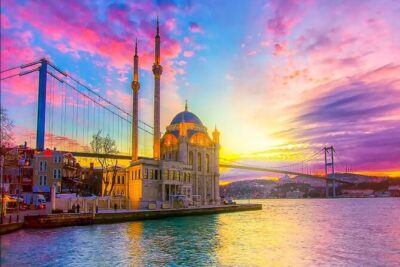
Finally, the day wraps with the Bosphorus Strait area. Even without doing a full cruise, the goal is to help you grasp why Istanbul is split between Europe and Asia—and why centuries of power focused on this narrow waterway.
Small caution: the day is described as a walking tour, and the note says only a private guide is included—lunch, entries, and any extra transport are paid as you go. So if you tend to buy snacks often, or if you want to add palace/museum time beyond what’s included, plan for that.
Price and logistics: where the value really comes from
At $1,750 per person for a roughly week-long route, the main value isn’t that everything is free. It’s that the plan is set up to reduce the two most painful vacation costs: time and confusion.
Here’s what you’re paying for in practical terms:
- Domestic flights are included between the major regions. That’s huge when you’re going Istanbul to Cappadocia, then to the Ephesus/Pamukkale corridor, and back to Istanbul.
- You get breakfast (5) and lunch (4), so you’re not funding every meal out of pocket every single day.
- Entrance fees are included for the stops listed in the program. Several key sights do carry separate charges, and those costs add up fast if you’re doing it all independently.
- Transfers and pickup are handled (pickup is offered from various Istanbul hotels), which matters on a multi-day route with early starts.
The fine print that affects your budget:
- Beverages with lunch are not included.
- The balloon flight is not included and has an added cost that changes with season and demand.
- Domestic flights come with 15 kg check-in luggage and 8 kg hand baggage per person (economy class). If you’re traveling with extra gear, ask early.
The other logistics detail that’s easy to miss: the route and even accommodations can shift based on direct flight schedules tied to Ephesus and Cappadocia. That’s not a downside by itself—just a reminder that this is a flight-connected trip, not a car-only road journey where you control every mile.
If your travel superpower is saying yes to a well-paced plan, this price starts to make sense.
Cappadocia starts with cave-hotel energy
The tour’s pacing changes once you reach Cappadocia. Instead of “see one museum, get out,” you start collecting impressions that feel like different worlds in one region.
Your travel day into Cappadocia includes an early hotel pickup and a flight out of either SAW or IST (depending on your schedule). After landing, you head into a south Cappadocia tour and end with an overnight in a cave hotel. Cave hotels aren’t just a novelty—staying inside the region’s rock-cut style makes the whole place feel more real. It also helps you reset for the next day’s viewpoints and walks.
That first Cappadocia touring block hits several kinds of wow, in a sensible order:
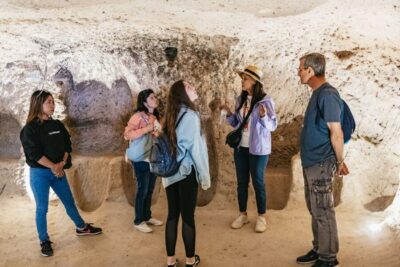
- Kaymaklı Underground City: carved into soft volcanic rock, it’s a multi-level refuge system used by early Christians. You’ll see tunnels and rooms that served daily life—storage, kitchens, stables-like areas, and ventilation shafts. Even if you only remember one thing, remember this: humans turned geology into survival tech.
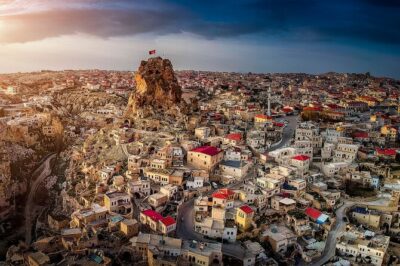
- Uçhisar Castle: a massive rock formation and the highest point in the area, used as a fortress historically. From the top you get sweeping views over fairy chimneys and valleys—this is where the region’s scale clicks.
Then you shift from engineered history to pure geology:
- Love Valley: known for rock formations often described as phallic-shaped. Beyond the jokes people make, it’s a great photography and short-walk zone.
- Red Valley: vibrant red and pink rock tones, plus rock-cut churches and cave dwellings in the mix.
- Çavuşin Village: ancient rock-cut dwellings and churches, including the Church of St. John the Baptist, with valley panoramas.
This is the kind of day where your camera and your walking shoes each get a workout. If you’re sensitive to stairs or tight tunnels, Kaymaklı is the part to think about, because it’s underground and compact.
More days out to ancient Ephesus
- 4 Days Turkey Tour – Cappadocia, Ephesus and Pamukkale Tour★ 5.0 · 138 reviews
- 6 Days Turkey Tour Cappadocia, Pamukkale, Ephesus, Gallipoli Troy★ 5.0 · 109 reviews
- Daily Ephesus & House of Virgin Mary from Istanbul – Small Group★ 4.0 · 95 reviews
- 7 Days Best of Turkey Tour: Istanbul-Cappadocia-Ephesus-Pamukkale★ 5.0 · 91 reviews
Balloon ride add-on: what you gain and what you should plan for
Your tour route includes hot air balloon ride as an optional activity, not a baked-in ticket. That’s actually the more honest way to handle Cappadocia, because balloon flights depend on weather.
What you gain: balloon views are the easiest way to understand why Cappadocia looks like it belongs on another planet. From above, the fairy chimneys, valleys, and rock formations read as a single connected system instead of separate photo spots.
What you need to plan for:
- Flights require optimum weather conditions, and the Civil Aviation Authority can cancel flights for safety at any time.
- If your balloon is canceled due to weather conditions, you receive a full refund.
- The tour itself advises you to consider cancellations if balloon time is the sole reason you’re coming. In other words: treat the balloon as a bonus, and enjoy the ground game no matter what.
If you’re the type who wants a guaranteed event, you may feel tense here. If you’re the type who loves good views and can roll with the day, you’ll be fine.
The Cappadocia classics: Göreme, Pasabag, Avanos pottery crafts
Once you’re based in Cappadocia, the next leg focuses on the most photographed sites and the most human craft experiences.
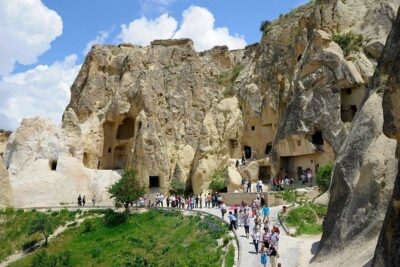
A standout is the Göreme Open-Air Museum, a UNESCO World Heritage site with Byzantine-era rock-cut churches and frescoes. This is where Cappadocia’s story shifts from “people hiding in rocks” to “people making art in rocks.” Fresco-covered chapels can be small, but when you see them in context, they hit harder.
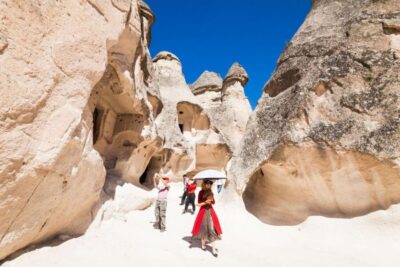
Then it’s Pasabag (Monks Valley), known for its fairy chimney formations—tall rock pillars with some featuring multiple caps. Many sights in Cappadocia are strange. Pasabag is just plain striking, because the forms feel both natural and designed.
Next comes viewpoints and walking:
- Göreme Panorama gives you a sweeping view over the fairy chimneys and the museum area.
- Devrent Valley (Imagination Valley) is more playful: rock shapes that resemble animals and figures created by erosion over millennia. This one is natural wonder first. It doesn’t have historical churches as the main draw, so think of it as your calmer break between big museum stops.
- Ürgüp is more town-based, with cave hotels and a winemaking tradition nearby. If you like seeing everyday life rather than only monuments, it adds texture.
Then you end with Avanos, famous for pottery. Here you’ll get a chance to try or watch pottery and other crafts—pottery demonstration, Turkish carpet weaving, and hand-made onyx making are specifically mentioned. This matters because it gives you a souvenir story beyond “I bought a magnet.” You’ll leave with an understanding of how the craft actually works.
If you’re short on energy, prioritize Pasabag and Avanos; if you love art, prioritize Göreme.
Ephesus and Mary’s House: a pilgrimage-style day with major ruins
After Cappadocia, you fly toward the Ephesus region for a full day of ancient-world highlights. Ephesus is one of those places where a guide’s job matters. Without help, you can walk through and miss why each building exists where it does.
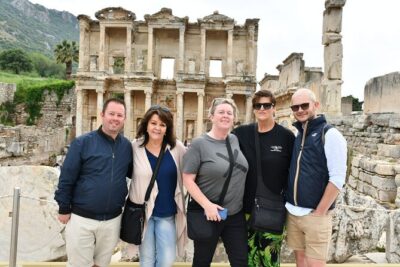
You’ll start with the Ancient City of Ephesus, a port city for multiple civilizations and a major early Christian hub. It’s also tied to the biblical narrative as one of the seven churches in Revelation. That context doesn’t make the stones magically speak—but it gives you a reason to look up from the ground.
Key sights include:
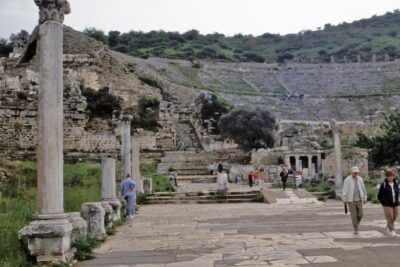
- Library of Celsus (a remarkable surviving Roman structure)
- Temple of Hadrian
- Ancient Theater
Then the tour moves to Meryemana (The Virgin Mary’s House) on Bulbul Mountain, about 9 km from Selçuk. This stop is not listed as included in the program’s admission fees, so you’ll want to have a bit of cash/card ready. It’s tied to tradition about Mary spending her last days there, and it feels quieter than the big ruin zone.
After that comes Temple of Artemis, one of the Seven Wonders of the World. The program notes it as a quick stop, and while the remnants are not what they would be in a full restoration scenario, it’s still a powerful comparison point: this used to be enormous.
The day also includes Harbour Gymnasium and an area tied to ancient baths, near the Virgin Mary area. Even if you don’t plan a long linger, it’s useful for understanding Ephesus as more than one “main street” of ruins.
Pamukkale’s terraces and Hierapolis museum time
If Ephesus is about human scale, Pamukkale is about natural spectacle.
You’ll visit Hierapolis Archaeology Museum first. The program notes it as an ancient city area turned museum, connected to thermal springs that were visited since ancient Greek times. It was added to UNESCO heritage in 1988, so it’s a stop with official weight, not just a tourism nickname.
Then you get the centerpiece: Pamukkale Thermal Pools. The name means Cotton Castle, referring to the appearance of the travertines formed by mineral-rich spring water. The program also mentions that the area is known for healing skin diseases—whether you buy into that or not, you can’t argue with what the mineral deposits look like up close.
There’s also a chance to visit Cleopatra Pools, located above the travertines and described as a pool where you can bathe and swim. That one is specifically marked as admission not included, so it’s an optional add-on inside your visit. If swimming is your goal, bring a swimsuit and expect some extra logistics on site.
This is also the part of the trip where you’ll want to pace yourself. You’re looking at bright mineral terraces, standing around, and possibly getting in water. Plan for breaks and basic hydration.
Who this tour suits best (and who may want a different plan)
This route is built for you if:
- You want high-impact highlights in a fixed time window
- You prefer guided time in the big sites like Istanbul and Ephesus
- You’re okay with flying between regions to avoid long bus days
- You like a mix of ruins, rock formations, and thermal experiences
It may feel like a lot if:
- You want lots of free time to wander independently with no structure
- You’re trying to keep the schedule super relaxed every day
- You’re expecting the balloon ride to be guaranteed (it’s weather-dependent)
One more note from past experiences: the Istanbul-to-routes connection relies on people staying on top of timing. In feedback, Ibrahim is singled out for helping make the itinerary work smoothly and for keeping things organized throughout the trip. That kind of follow-through is exactly what you want when you’re juggling flights and multiple regions.
Should you book this Istanbul–Cappadocia–Ephesus–Pamukkale tour?
If your dream Turkey trip includes at least four headline regions—Istanbul, Cappadocia, Ephesus, and Pamukkale—this is a strong match. The included domestic flights and the mixture of guided museum-and-ruin time with hands-on crafts help you see more without getting buried in planning.
I’d book it if you can do two things: enjoy being “on the move” and accept that balloons are an add-on with weather rules. You’ll come away with a trip that feels varied in a good way: mosques and palaces, underground Christian history, fairy chimneys, ancient theater, and cotton-castle terraces.
FAQ
FAQ
Is the hot air balloon ride included in the tour price?
The balloon ride is an optional activity and is not included in the price for all options. Balloon ticket prices vary by season and demand, and you’re asked to request it in special requests during booking.
Are domestic flights included?
Yes. Domestic fly tickets between the cities are included, and the tour notes they are economy class with 15 kg check-in luggage and 8 kg hand baggage allowance for each domestic flight.
What meals are included?
Breakfast is included for 5 days, and lunch is included for 4 days. Beverages during lunch are not included.
Are entrance fees included?
Entrance fees are included for the stops that are specifically marked as included in the program. Some major sights may not be included and would require payment on your own, based on what’s listed.
How many people are in the group?
The tour offers two options: a small group tour with a maximum of 15 people, or a private tour exclusive to your group.
What happens if the balloon flight is canceled due to weather?
If your balloon flight reservation is canceled due to weather conditions, you will receive a full refund.
More Trips to Pamukkale
- 4 Days Turkey Tour – Cappadocia, Ephesus and Pamukkale Tour★ 5.0 · 138 reviews
- 6 Days Turkey Tour Cappadocia, Pamukkale, Ephesus, Gallipoli Troy★ 5.0 · 109 reviews
- 7 Days Best of Turkey Tour: Istanbul-Cappadocia-Ephesus-Pamukkale★ 5.0 · 91 reviews
- 5-Day Aegean Tour – Gallipoli, Troy, Ephesus, Kusadasi, Pamukkale★ 4.5 · 86 reviews
- Istanbul, Ephesus, Pamukkale and Cappadocia 8 Day Package★ 5.0 · 83 reviews
- Private 4 Days Turkey Tour from Istanbul to Cappadocia, Ephesus, Pamukkale★ 5.0 · 80 reviews
More Days Out to Ephesus
- 4 Days Turkey Tour – Cappadocia, Ephesus and Pamukkale Tour★ 5.0 · 138 reviews
- 6 Days Turkey Tour Cappadocia, Pamukkale, Ephesus, Gallipoli Troy★ 5.0 · 109 reviews
- Daily Ephesus & House of Virgin Mary from Istanbul – Small Group★ 4.0 · 95 reviews
- 7 Days Best of Turkey Tour: Istanbul-Cappadocia-Ephesus-Pamukkale★ 5.0 · 91 reviews
- 5-Day Aegean Tour – Gallipoli, Troy, Ephesus, Kusadasi, Pamukkale★ 4.5 · 86 reviews
- Istanbul, Ephesus, Pamukkale and Cappadocia 8 Day Package★ 5.0 · 83 reviews
More Cappadocia Trips from Istanbul
- From Istanbul: 2-Day All-Inclusive Cappadocia Guided Trip★ 4.9 · 380 reviews
- Istanbul: 2-Day Cappadocia Trip with Flights and Cave Hotel★ 4.7 · 318 reviews
- 2 Days Cappadocia from Istanbul with Cave Hotel+Optional Balloon★ 5.0 · 260 reviews
- Cappadocia Dream: 2-Days Tour from Istanbul & Balloon Ride Option★ 4.5 · 236 reviews
- Istanbul: Cappadocia 2-3 Day Tour with Flights & Hotel★ 5.0 · 202 reviews
- From Istanbul: Day Trip to Cappadocia with Flight & Lunch★ 4.6 · 182 reviews
Fresh off the boat: new Istanbul reviews
Cappadocia Trips from Istanbul, compared.
 ★ 4.9From Istanbul: 2-Day All-Inclusive Cappadocia Guided TripFrom $709380 reviews
 ★ 4.72-Day Cappadocia Trip with Flights and Cave HotelFrom $328318 reviews
 ★ 5.02 Days Cappadocia from Istanbul with Cave Hotel+Optional BalloonFrom $330260 reviews
 ★ 4.5Cappadocia Dream: 2-Days Tour from Istanbul & Balloon Ride OptionFrom $590236 reviews
 ★ 5.0Cappadocia 2-3 Day Tour with Flights & HotelFrom $361202 reviews
 ★ 4.6From Istanbul: Day Trip to Cappadocia with Flight & LunchFrom $188182 reviews
 ★ 5.04 Days Turkey Tour – Cappadocia, Ephesus and Pamukkale TourFrom $1,571138 reviews
 ★ 5.02 Days Cappadocia Tour From IstanbulFrom $725132 reviews
Browse the lists this tour appears in