
REVIEW · CAPPADOCIA TRIPS FROM ISTANBUL
7-Day Turkey Tour from Istanbul: Cappadocia,P.kale, Ephesus, Troy, Gallipoli
Turkey moves fast on this one-week circuit. From central Istanbul hotel pickup to Ankara, Cappadocia, Pamukkale, Ephesus, Troy, and Gallipoli, this trip strings together the big hits with a guide, a WiFi bus, and a whirling dervish ceremony.
I love the easy logistics: you get pickup and drop-off from Istanbul city hotels, plus comfortable coach travel that makes long drives feel less painful. I also like that the tour is structured around major historical sites, so you’re not guessing what matters at places like Göreme’s cave churches or Ephesus’ Roman streets. The main drawback is the pace—expect packed days and planned stops that can include shopping and food detours, so go in with a plan for how you want to spend your free minutes.
In This Review
- Key Things That Make This Tour Worth Paying Attention To
- First Week of Turkey: A Fast, Guided “Highlights Route”
- From Istanbul to Ankara: Long Drive, Clear Start
- Ankara’s Anıtkabir and Museum Stops: Learn the Context Before the Ruins
- Into Cappadocia: Ozkonak Underground City and the 5-Floor Feeling
- Cappadocia Day: Göreme Open-Air Museum, Pasabag, Uçhisar, and Pigeon Valley
- The Cappadocia Timing Reality
- Artisan Workshop Stops: Useful If You Browse, Risky If You Hate Sales
- Caravanserai to Pamukkale: Sultanhan Kervansarayı Makes a Strong Mid-Trip Stop
- Pamukkale and Hierapolis: The White Terraces and the Roman-Greek Layer
- Ephesus Day: Roman Streets, Mary’s House, and Artemis
- Ephesus Advice: Walk Smart
- Pergamon and Troy: Asclepion’s Healing Story and Homer’s City
- Gallipoli Day: The Late-Finish That Packs an Emotional Punch
- Price and Logistics: What $1,508 Really Buys You
- Who Should Book This Tour (and Who Should Think Twice)
- Should You Book This Tour?
- FAQ
- What time does pickup happen in Istanbul?
- Is Wi-Fi provided during the tour?
- Are meals included?
- Is the tour guided and in English?
- Are entry tickets included for major sites?
- What extra costs should I budget for?
Key Things That Make This Tour Worth Paying Attention To
- Central Istanbul hotel pickup and drop-off so you’re not wrestling taxis for every leg
- WiFi-equipped bus that helps during long stretches between regions
- Cappadocia’s guided focus on Göreme cave churches, Pasabag fairy chimneys, and Uçhisar
- UNESCO-heavy itinerary across Ephesus, Troy, and Gallipoli battlefield areas
- WWI Gallipoli sites that are emotionally heavy (in a good way, if you’re ready)
- Small group size (max 24) which usually means less waiting around than huge bus tours
Chasing the balloons: more Cappadocia trips

First Week of Turkey: A Fast, Guided “Highlights Route”
This isn’t a slow travel itinerary where you linger. It’s a guided sprint across Turkey’s western and central icons—Ankara, Cappadocia, Pamukkale, Ephesus, Troy, and Gallipoli—built for people who don’t have weeks to spare.
The value here is in how much ground you cover without doing the planning yourself. You’re also traveling by a deluxe coach with WiFi, which matters when you’re staring at the window for hundreds of kilometers at a time.
The tradeoff is that “free time” can feel like a suggestion, not a guarantee. If you’re the type who likes to drift into side streets and stay flexible, you’ll need to manage expectations.
From Istanbul to Ankara: Long Drive, Clear Start
Your day begins with pickup from Istanbul city-centered hotels, typically between 12:00 and 13:00 (the tour start time is listed as 12:30 pm). Then you depart by deluxe coach with a route that crosses Istanbul’s intercontinental bridge.
You’re heading toward Ankara—about 450 km—so settle in for a travel-heavy start. Dinner is at the hotel, and you sleep in Ankara.
One practical note: when you’re moving this fast, your best “comfort upgrade” is to bring what you need for the bus day—water, a light layer, and something for your feet. The itinerary keeps you on the move, and you’ll thank yourself later.
Ankara’s Anıtkabir and Museum Stops: Learn the Context Before the Ruins
Ankara’s two big stops are designed to give you a Turkey “frame” before you jump into ancient sites.
Anıtkabir is Atatürk’s mausoleum—his final resting place since 1953—and it sits with a commanding view over the city. If you want to understand why modern Turkey talks about leadership, independence, and identity the way it does, this stop is a useful starting point.
Then you visit Anadolu Medeniyetleri Muzesi (Anatolian Civilizations Museum). It highlights early Anatolian cultures and includes finds connected to Catal Hüyük, plus collections of tablets where the translations can be a reminder that people still argue about love, power, rules, and survival—just with different tools.
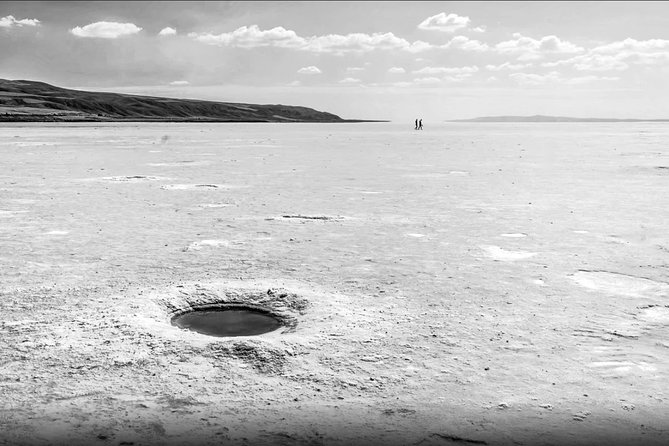
A short photo stop at Lake Tuz breaks up the drive—simple, quick, and very “look, that’s salty white!” in a good way.
More days out to ancient Ephesus
- 4 Days Turkey Tour – Cappadocia, Ephesus and Pamukkale Tour★ 5.0 · 138 reviews
- 6 Days Turkey Tour Cappadocia, Pamukkale, Ephesus, Gallipoli Troy★ 5.0 · 109 reviews
- Daily Ephesus & House of Virgin Mary from Istanbul – Small Group★ 4.0 · 95 reviews
- 7 Days Best of Turkey Tour: Istanbul-Cappadocia-Ephesus-Pamukkale★ 5.0 · 91 reviews
Into Cappadocia: Ozkonak Underground City and the 5-Floor Feeling
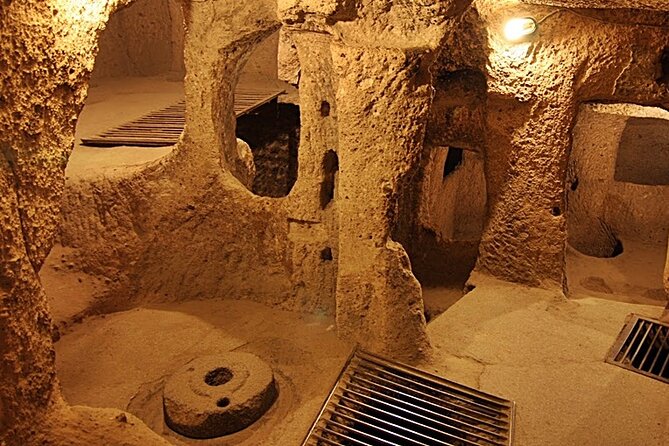
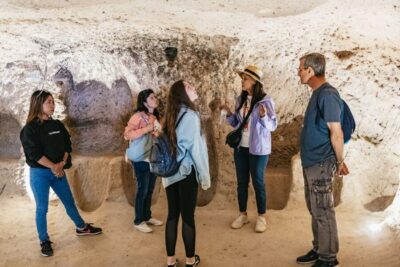
After Ankara, the tour keeps going, and you eventually reach Cappadocia. One stop that sets the tone is Özkonak Underground City, where you explore five floors of underground rooms.
Underground cities are hard to picture until you’re standing in the tunnels. The payoff is the sense of how people planned for safety, storage, and shelter. Even if the rooms feel similar at first glance, it’s the sheer scale that makes it stick.
If you’re claustrophobic, take it seriously. Underground spaces are part of the deal here, and the best approach is wearing comfortable shoes and moving at your own pace.
Cappadocia Day: Göreme Open-Air Museum, Pasabag, Uçhisar, and Pigeon Valley
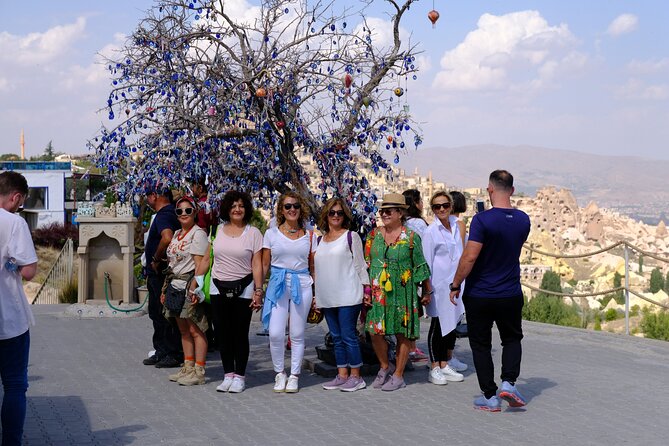
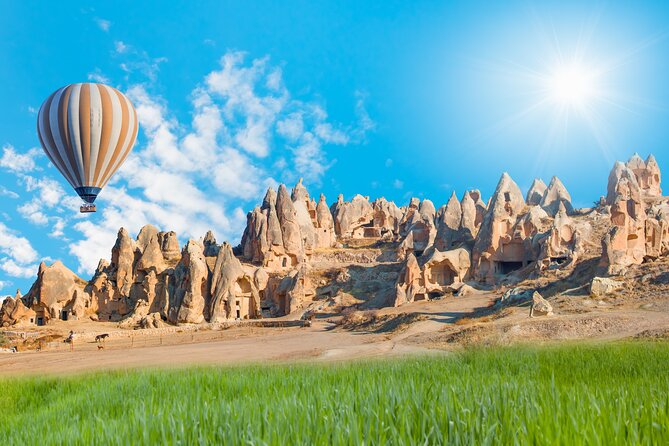
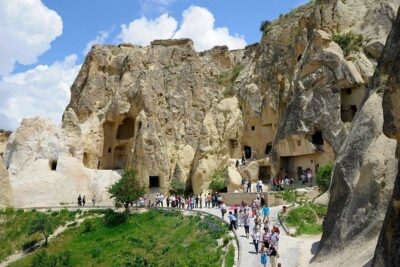
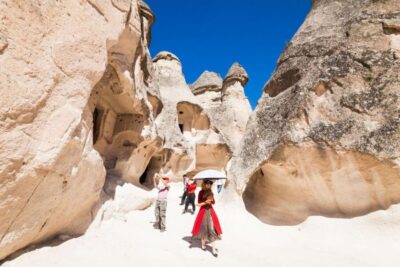
Cappadocia is the centerpiece. This is the day where you get most of the signature views: cave churches, fairy chimneys, and towns shaped by soft volcanic rock.
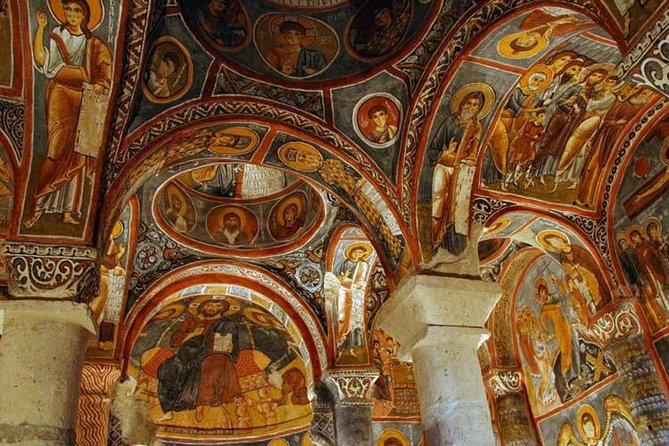
You start at Göreme National Park / Göreme Open-Air Museum, a Byzantine monastic complex with nearly 600 cave churches. What you’re seeing isn’t just “fairy chimney photos.” It includes frescoes from the Byzantine period, which gives the scenery real meaning instead of just pretty shapes.
Then you move to Paşabağları / Pasabag, famous for its strange rock formations—especially the fairy chimneys that look like sculpted towers. Short stop, strong impact.
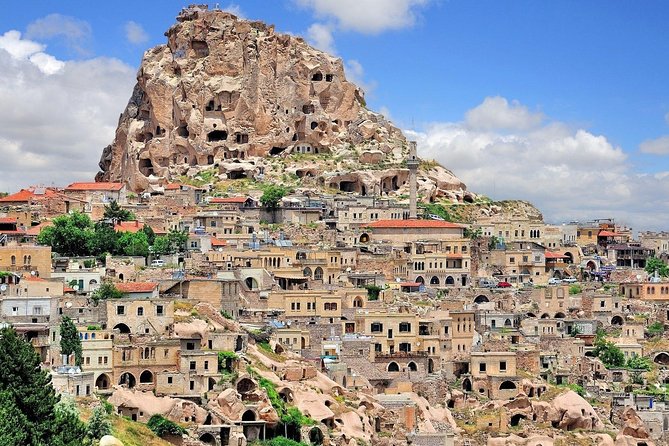
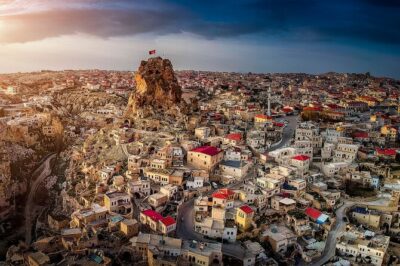
Next comes Uçhisar, dominated by a rock “castle” with underground passageways and rooms. The town sits on the edge of the Göreme area, and the view is the reason many people remember the day. You’ll also hear about the underground gallery that runs beneath houses—about 100 meters—and how it likely served as a protected link in earlier times.
You finish with a quick but fun Pigeon Valley photo stop, where pigeon houses fill the view and you can feed the birds.
One more highlight you should plan around: this tour includes a whirling dervish ceremony, which is listed as a feature. So when the schedule feels full, it’s because they’ve slotted in a cultural performance—not just stones and tunnels.
The Cappadocia Timing Reality
Cappadocia stops are short. That means you get variety, but you don’t get long “sit and watch the sunset” time. If you want deep photo time, you’ll need to treat it like a checklist day and then consider adding extra time on your own later.
Artisan Workshop Stops: Useful If You Browse, Risky If You Hate Sales
Cappadocia also includes time for artisan workshops and demonstrations (carpets and onyx-stone jewelry are specifically mentioned). This can be genuinely interesting if you enjoy seeing how things are made and you don’t feel pressure.
But go in with eyes open: scheduled shop time can eat into your mood and your energy. In the worst case, it starts feeling like the tour is more about purchases than experiences.
My advice: treat these stops as optional learning moments. If something catches your eye, ask questions and keep it light. If you just want photos, you can usually skim through quickly—then move on.
Caravanserai to Pamukkale: Sultanhan Kervansarayı Makes a Strong Mid-Trip Stop
Day 4 is a mix of architecture and surreal nature.
First is Sultanhani Kervansarayı, a Seljuk-era caravanserai built in the late 1220s/early 1230s period. It’s big—covering around 4,800 m²—and it functions like a fortress for travelers: courtyards, arcades, a mosque, and practical spaces like storages and workshops.
This is one of those stops that helps you understand trade routes. People weren’t just sightseeing; they were moving goods, animals, and information across long distances. Caravanserais are the “infrastructure” that made that possible.
Pamukkale and Hierapolis: The White Terraces and the Roman-Greek Layer
Then you go to Pamukkale (Cotton Palace), a UNESCO World Heritage site. Mineral-rich waters flowing down a cliff created terraced basins that look unreal up close—more like geology than sightseeing.
After that, you visit Hierapolis, another UNESCO site. The ruins connect the Roman-era spa culture to earlier Greek presence: baths, temples, and monumental remains from a long chain of occupation.
This is a great day for a careful footwear choice. Pamukkale involves walking on uneven surfaces, and you’ll want shoes that handle it.
Ephesus Day: Roman Streets, Mary’s House, and Artemis
Day 5 is a high-value cultural day because Ephesus is one of the best places in Turkey to “see” a whole era of power and urban life.
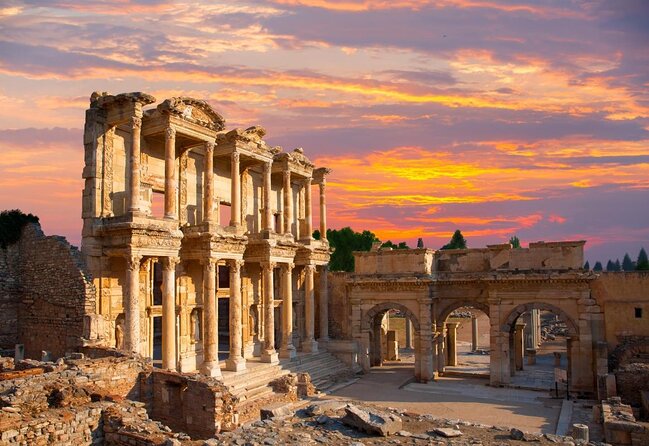
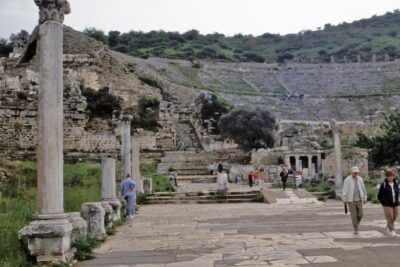
Ancient City of Ephesus is UNESCO-listed and was a major Ionian and later Roman center—at one point, a top city of the Roman Empire in Asia Minor. The harbor’s decline from silt was part of why the city faded, but what remains gives you a clear sense of how large it once was.
Then you visit Meryemana (The Virgin Mary’s House). The story here is religious—connected to German visions in the 1800s and later discovery narratives. Whether you’re strongly religious or just curious, the value is in seeing how faith traditions shape sacred landscapes and local tourism.
Finally, you stop at the Temple of Artemis area. The original was wood-based and later versions became more grand, but the key point for most visitors is the scale of what used to be there and how long Artemis worship lasted in the region. The stop is brief, so you don’t expect a deep museum-style experience.
Ephesus Advice: Walk Smart
Ephesus is spread out. If you rush it, you’ll miss the “wow” moments. Wear comfortable shoes and pace yourself. This day works best if you arrive ready to spend time reading signs and letting the guide connect the dots.
Pergamon and Troy: Asclepion’s Healing Story and Homer’s City
On Day 6 you start in Bergama, then head to two major archaeological stops.
First is Asclepion (the therapeutic center), described as the most important hospital in Asia Minor. Even if you don’t know the myths, it’s fascinating to see how ancient cultures treated illness—where environment, routine, and ritual could all play a role.
Next is Pergamon itself. It’s described as a Hellenistic city that later became important in Roman administration. You’ll also hear how Pergamon’s strategic location mattered, since it overlooks key valleys leading toward the Aegean.
Then you continue to Troy (Truva). Whether you treat the Trojan War as legend, history, or both, the archaeological site makes it tangible. The tour presents the broad scholarly acceptance that the excavations reveal a city connected to the world of Homer’s stories.
This is one of those days where “one stop” could become “three stories” because the city ties together myth, empire, and real ruins you can walk through.
Gallipoli Day: The Late-Finish That Packs an Emotional Punch
Day 7 begins with breakfast, then the tour crosses the Dardanelles Strait by car ferry. That ferry ride gives you a feeling for geography—straits, peninsulas, and the way land shapes military decisions.
Then you visit Gallipoli, including major World War I sites tied to the ANZAC landings and the wider campaign. Stops can include places like ANZAC Cove, Arıburnu Cemetery, Brighton Beach, Lone Pine, and areas connected with Turkish and Allied trenches and memorials, including The Nek and Chunuk Bair.
This is emotionally intense history. It’s not light sightseeing, and you’ll feel it even if you only know a few names.
You’ll arrive back in Istanbul late—between 8:00 pm and 9:00 pm—and then transfer to your hotel. So plan for a quiet evening after.
Price and Logistics: What $1,508 Really Buys You
At $1,508.23 per person, you’re paying for an all-in guided circuit across huge distances, with a coach, a guide, hotel nights, and a bundle of included admissions and meals.
Where the price can feel fair is the structure. You’re not juggling tickets for each site, you’re not booking buses between regions, and you’re getting set educational framing at major stops.
Where the price can feel frustrating is when the experience shifts into time-saving compromises—especially if you don’t enjoy shop stops, or if hotel locations are far from where you’d rather wander. Some travelers also report the tour can feel rushed, so it helps to know what you value most: “seeing everything” or “lingering with freedom.”
Who Should Book This Tour (and Who Should Think Twice)
This tour is a good fit if you:
- have a week and want to see Turkey’s headline destinations
- like guided interpretation at big sites like Ephesus and Göreme
- don’t want to plan transport across multiple regions
- prefer group logistics over DIY juggling
I’d think twice if you:
- hate shopping detours or planned restaurant stops
- need lots of personal time at monuments
- are very sensitive to hotel quality and location (because experiences can vary)
- expect a calm, flexible pace rather than a packed schedule
Also, if you’re doing any add-on hotel upgrades in Cappadocia, I’d ask about room placement and noise—some cave-style options can come with tradeoffs.
Should You Book This Tour?
I think this can be a great first Turkey trip—especially if you want an efficient, guided route that hits Ankara, Cappadocia, Pamukkale, Ephesus, Troy, and Gallipoli without you having to map everything yourself.
Book it if you’re comfortable with a fast schedule and you’ll treat shop and food stops as optional, not the main event. Skip the pressure and focus on the sites. If your priority is slow travel and total freedom, you’ll probably enjoy Turkey more with a smaller, more flexible itinerary.
FAQ
What time does pickup happen in Istanbul?
Pickup is from Istanbul city-centered hotels, typically between 12:00 and 13:00, with the tour start time listed as 12:30 pm.
Is Wi-Fi provided during the tour?
Yes. The bus includes free Wi-Fi.
Are meals included?
Breakfast and dinner are included on most days: Breakfast (6) and Dinner (6) are listed as included. Lunch is not listed as included.
Is the tour guided and in English?
Yes. The tour is offered with a guide in English.
Are entry tickets included for major sites?
Many site admissions are listed as included in the schedule. Examples include Anıtkabir, Anadolu Medeniyetleri Muzesi, Göreme Open-Air Museum, Ozkonak Underground City, Ephesus, Meryemana, and Hierapolis & Pamukkale.
What extra costs should I budget for?
Tips to the guide and driver are suggested (3€/person/day for the guide and 2€/person/day for the driver). You’ll also need to cover things not listed as included, such as drinks/personal expenses and visa fees.
More of Gallipoli and Troy
- Istanbul to Gallipoli Full Day Tour with Lunch and Transfers★ 5.0 · 567 reviews
- Gallipoli Full-Day Tour from Istanbul★ 4.9 · 468 reviews
- From Istanbul: Gallipoli and Anzac Full-Day Tour★ 4.9 · 345 reviews
- Troy: Full-Day Tour from Istanbul★ 4.7 · 312 reviews
- Gallipoli Day Trip from Istanbul★ 4.5 · 147 reviews
- Istanbul to Gallipoli, Canakkale and Troy. 2 Day Tour with Hotel★ 5.0 · 144 reviews
More Days Out to Ephesus
- 4 Days Turkey Tour – Cappadocia, Ephesus and Pamukkale Tour★ 5.0 · 138 reviews
- 6 Days Turkey Tour Cappadocia, Pamukkale, Ephesus, Gallipoli Troy★ 5.0 · 109 reviews
- Daily Ephesus & House of Virgin Mary from Istanbul – Small Group★ 4.0 · 95 reviews
- 7 Days Best of Turkey Tour: Istanbul-Cappadocia-Ephesus-Pamukkale★ 5.0 · 91 reviews
- 5-Day Aegean Tour – Gallipoli, Troy, Ephesus, Kusadasi, Pamukkale★ 4.5 · 86 reviews
- Istanbul, Ephesus, Pamukkale and Cappadocia 8 Day Package★ 5.0 · 83 reviews
More Cappadocia Trips from Istanbul
- From Istanbul: 2-Day All-Inclusive Cappadocia Guided Trip★ 4.9 · 380 reviews
- Istanbul: 2-Day Cappadocia Trip with Flights and Cave Hotel★ 4.7 · 318 reviews
- 2 Days Cappadocia from Istanbul with Cave Hotel+Optional Balloon★ 5.0 · 260 reviews
- Cappadocia Dream: 2-Days Tour from Istanbul & Balloon Ride Option★ 4.5 · 236 reviews
- Istanbul: Cappadocia 2-3 Day Tour with Flights & Hotel★ 5.0 · 202 reviews
- From Istanbul: Day Trip to Cappadocia with Flight & Lunch★ 4.6 · 182 reviews
Fresh off the boat: new Istanbul reviews
Cappadocia Trips from Istanbul, compared.
 ★ 4.9From Istanbul: 2-Day All-Inclusive Cappadocia Guided TripFrom $709380 reviews
 ★ 4.72-Day Cappadocia Trip with Flights and Cave HotelFrom $328318 reviews
 ★ 5.02 Days Cappadocia from Istanbul with Cave Hotel+Optional BalloonFrom $330260 reviews
 ★ 4.5Cappadocia Dream: 2-Days Tour from Istanbul & Balloon Ride OptionFrom $590236 reviews
 ★ 5.0Cappadocia 2-3 Day Tour with Flights & HotelFrom $361202 reviews
 ★ 4.6From Istanbul: Day Trip to Cappadocia with Flight & LunchFrom $188182 reviews
 ★ 5.04 Days Turkey Tour – Cappadocia, Ephesus and Pamukkale TourFrom $1,571138 reviews
 ★ 5.02 Days Cappadocia Tour From IstanbulFrom $725132 reviews
Browse the lists this tour appears in