
REVIEW · CAPPADOCIA TRIPS FROM ISTANBUL
8 days by flights Istanbul Cappadocia Konya Ephesus Max 10 pax
A week in Turkey can feel like a sprint. This one is more like a well-run shuttle: top sights in order with small-group pacing and comfort-minded transport. I especially like the balance of big icons (Istanbul’s domes, Ephesus’ ruins) with slower moments (Cappadocia valleys, Pamukkale’s terraces). One possible drawback: the schedule is tight, so you’ll want solid stamina and an early-morning mindset.
I like that you’re not stuck planning logistics across cities. You get domestic flights, pre-arranged hotels (boutique and cave stays), and a licensed guide handling the main ticket timing and entrances. Still, there are a couple of modern travel realities to plan around, including the Hagia Sophia interior rules that affect how the visit is guided.
Here’s the good news: when the day is long, the payoff tends to be big.
In This Review
- Key points worth knowing before you go
- Istanbul to Cappadocia to Ephesus: the route in plain terms
- Day 1 in Istanbul: airport meet-and-transfer, then you’re done
- Day 2 Istanbul: Hippodrome, Hagia Sophia, Blue Mosque, Topkapi and the Grand Bazaar
- The St. Sophia headphone rule: how to make it painless
- Fly to Cappadocia: fairy chimneys and an underground world
- Day 4 Cappadocia: Devrent, pottery in Avanos, Göreme again, and Uchisar views
- The Konya stop you can’t skip: Mevlana’s mausoleum before Pamukkale
- Pamukkale and Hierapolis: travertines plus ancient ruins
- The Ephesus day: Meryemana, Ephesus walk, then Artemis Temple
- Day 8: fly out and you’re done
- Hotels, transport, and group size: where comfort shows up
- Price and logistics value: is $1,579 per person fair?
- Who this tour suits best, and who should think twice
- Should you book this Istanbul–Cappadocia–Ephesus route?
- FAQ
- FAQ
- How many nights and what hotel style is included?
- Does the tour include internal flights?
- What baggage allowance applies on the domestic flights?
- What meals are included?
- Is airport pickup included on arrival and departure?
- What are the Hagia Sophia interior rules for this tour?
- What if a museum or attraction is closed?
- Are there any special rules for markets on certain days?
- Does the tour include thermal pool time at Pamukkale?
- What’s the cancellation policy for a full refund?
Key points worth knowing before you go
- Max 10 pax style, small-group feel: built for more personal pacing than a huge coach tour
- Flights inside the trip: Istanbul to Cappadocia and Izmir back to Istanbul cut driving time
- Hagia Sophia interior requirements: smart phones and headphones are part of the experience now
- Cappadocia covers both style and scale: fairy chimneys, a pottery workshop, and an underground city
- Pamukkale includes thermal pool time: you’re not just looking at the terraces from far away
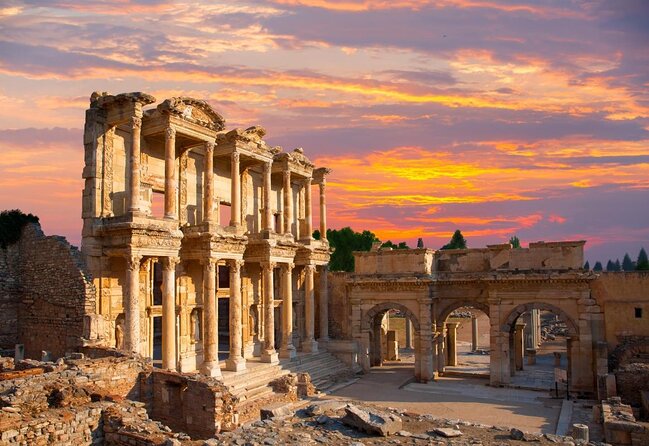
- Ephesus is a full classic day: Meryemana, the ancient city walk, then Artemis Temple
Chasing the balloons: more Cappadocia trips

Istanbul to Cappadocia to Ephesus: the route in plain terms
This is an 8-day, flight-connected loop that strings together Turkey’s headline regions: Istanbul, Cappadocia, Konya, Pamukkale, and Ephesus. The smart trick here is pacing. You do the farthest “big-distance” hops by flight (Istanbul → Cappadocia, and Izmir → Istanbul), while the remaining legs are done by air-conditioned minivan.
That structure matters for you because it keeps the trip from turning into constant airport-and-seat fatigue. You still get some long drive time (the Konya to Pamukkale transfer is a big one), but you’ll spend less of your holiday staring out a window than on road-only itineraries.
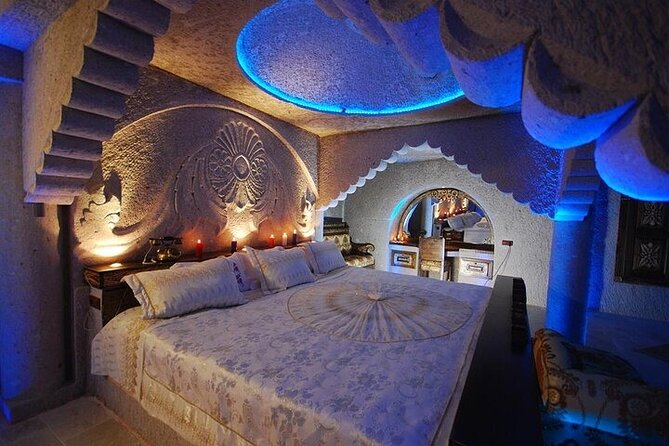
Also, the tour is sold as boutique/cave hotel focused rather than generic big-chain stays. That’s a value-add if you like atmosphere, not just beds.
One small note: the package is labeled as max 10 pax, but the operator also mentions a maximum of 15 travelers in general. Either way, it’s clearly meant to stay small.
Day 1 in Istanbul: airport meet-and-transfer, then you’re done
On arrival (either Istanbul Airport IST or Sabiha Gökçen SAW), a representative meets you with a name sign and handles your private transfer to the hotel. That’s the kind of start that prevents day-one chaos. You get one focused mission: arrive, check in, sleep.
This day is intentionally light. It’s a nice setup for a morning start on the next day’s historic walk.
Day 2 Istanbul: Hippodrome, Hagia Sophia, Blue Mosque, Topkapi and the Grand Bazaar
Day 2 is a classic “Istanbul greatest hits” route, and it works because the stops are close enough to be walkable without turning into a drag-and-drop day.
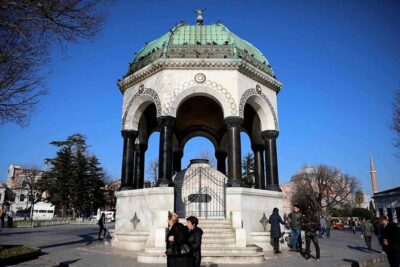
Hippodrome Square sets the scene. You learn how chariot races and Byzantine-era riots shaped the space. Even if you only catch the “outline” of what’s there, it gives context before you hit the religious and imperial landmarks.
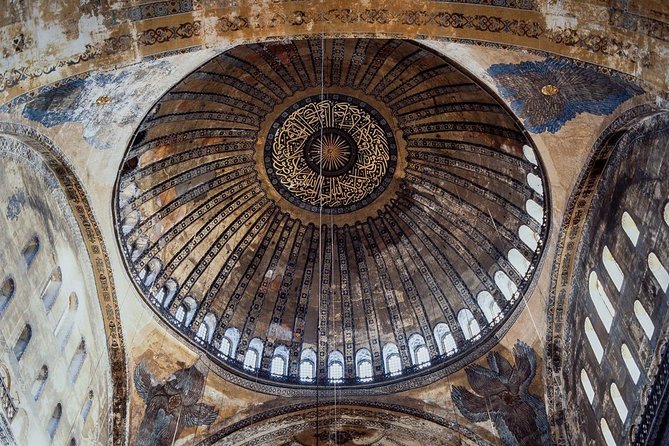
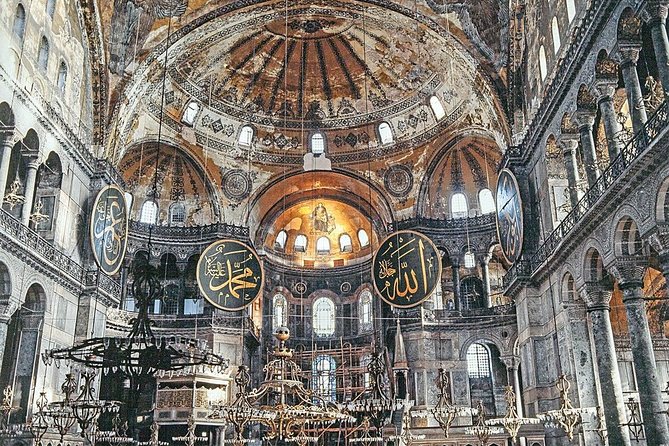
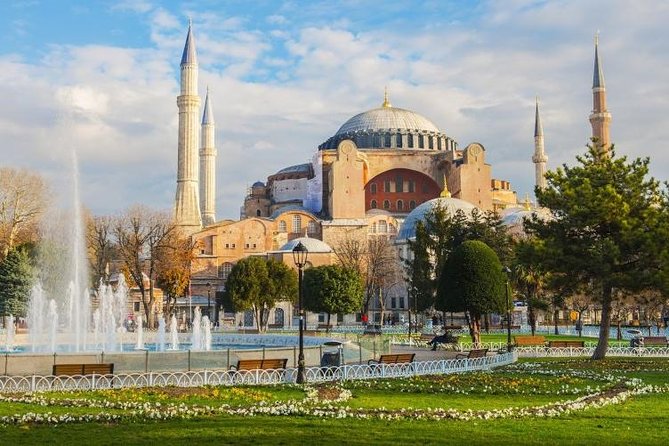
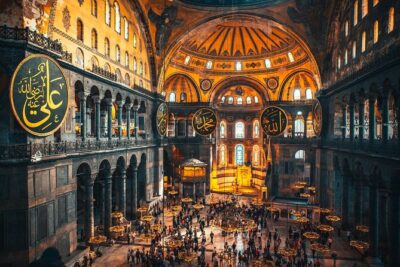
Then it’s Hagia Sophia Grand Mosque. Built in 532 AD under Emperor Justinian, it’s one of those places where the building does most of the talking. The important practical piece is how the interior visit is handled right now:
- Live guiding is not allowed in Hagia Sophia after Jan 15, 2024.
- You’ll need smart phones and headphones during your visit.
- If you don’t have headphones, you can buy them at the entrance for 3.5 USD.
- If you don’t have a phone, you’ll follow signs and on-site information.
In other words: this isn’t a problem, but it’s a checklist item. Bring a charged phone, and plan to use headphones. It’s also why this stop can feel different from the rest of the tour.
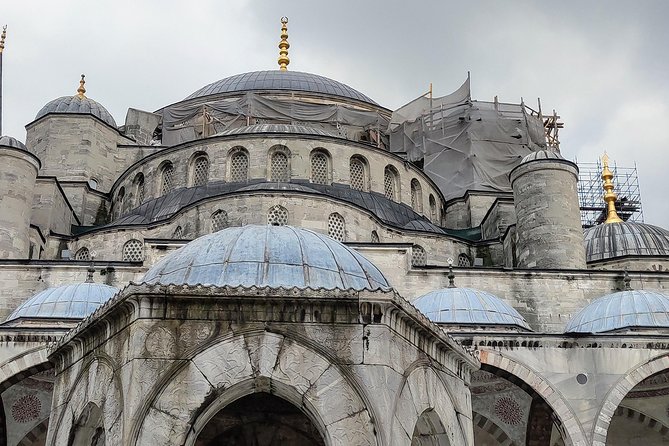
After that, you pop into the Blue Mosque for its famous Iznik tile work. It’s scheduled as a shorter stop, so you’re not wandering forever—but you do get the main visual payoff.
Next is Topkapi Palace, including the weapons section. That’s a welcome twist. Palace visits can sometimes be overly “rooms and portraits,” but the weapons area helps connect the Ottoman story to how power worked.
You end with a visit to the Grand Bazaar, one of the oldest covered markets in the world. The scale is real: over 58 covered streets and 1,200+ shops. It’s credited with daily visitor numbers in the hundreds of thousands, so it’s not a quiet museum stop. Plan for sensory overload, then treat it like a walk-through. You’ll get more out of it that way than trying to “shop your way” through it.
More days out to ancient Ephesus
- 4 Days Turkey Tour – Cappadocia, Ephesus and Pamukkale Tour★ 5.0 · 138 reviews
- 6 Days Turkey Tour Cappadocia, Pamukkale, Ephesus, Gallipoli Troy★ 5.0 · 109 reviews
- Daily Ephesus & House of Virgin Mary from Istanbul – Small Group★ 4.0 · 95 reviews
- 7 Days Best of Turkey Tour: Istanbul-Cappadocia-Ephesus-Pamukkale★ 5.0 · 91 reviews
The St. Sophia headphone rule: how to make it painless
If you only remember one logistics note for Istanbul, make it this one.
Hagia Sophia’s interior visit now depends on an audio system that works with smart phones and headphones. So before you go, do two things:
- Ensure your phone has enough battery for the visit.
- Bring earbuds/headphones you can actually use.
If you forget headphones, the entrance option is spelled out: you can buy them for 3.5 USD. And if you don’t have a smart phone, signs and printed/on-site info guide you anyway.
Why I think this matters for your trip quality: it determines how smoothly you’ll follow the story inside. Without the audio setup, you can still see the interior, but it’s more self-guided. With it, you get more out of the experience without needing a live guide talking over restrictions.
Fly to Cappadocia: fairy chimneys and an underground world
Day 3 starts early. You’re picked up from the hotel and transferred to the airport for the flight to Cappadocia. Once you arrive, the tour guide meets you and you move straight into sights.
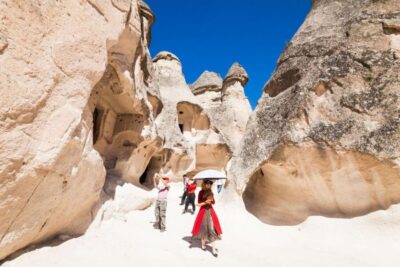
First stop: Göreme Open Air Museum. You also include a quick introduction to the Three Sisters Fairy Chimneys near Ürgüp—the postcard shapes that show up everywhere for good reason. This area also gets a fun local detail: pigeon houses were carved into the landscape so the birds would stay in specific spots. It’s not just scenery; it’s how people adapted to living in rock.
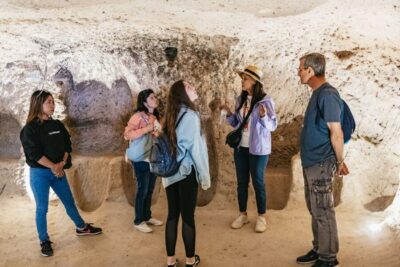
Then comes Özkonak Underground City. This is where the tour changes tone, from “pretty rocks” to “survival architecture.” You descend into layered underground spaces connected by tunnels. The tour also highlights ventilation piping—plus the idea that rooms had ventilation systems maintained for sieges.
Practical payoff for you: underground cities cool you down and break up the “sun + walking” rhythm, which matters because Cappadocia days can stack up quickly.
Day 4 Cappadocia: Devrent, pottery in Avanos, Göreme again, and Uchisar views
Day 4 is another scenery-heavy day, but it’s structured like a path through different types of Cappadocia experiences.
You begin with Devrent Valley and its “lunar landscape” feel. Then you move to troglodyte houses—human history carved into rock. After that, you visit Pasabag, the fairy chimneys area near Zelve, where wind and rock formations create a kind of natural sound mix.
Next stop is Avanos for a traditional pottery workshop demonstration and the terra cotta story. Avanos has been associated with pottery since around 3000 BC in the tour description, so you’re seeing the “craft continuity” angle—not just a souvenir shop pitch.
In the afternoon you return to Göreme Open Air Museum for Byzantine rock-cut churches and frescoes from roughly the 10th to 13th centuries. This is a good pairing with the earlier day: first you see the rock landscape, then you see how people turned it into worship spaces.
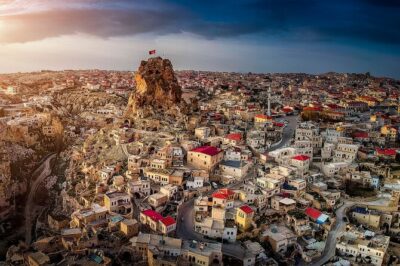
Finally, Uçhisar Castle delivers the panoramic payoff. You look out over the valleys, which helps your brain connect the day’s scattered stops into one bigger picture.
The Konya stop you can’t skip: Mevlana’s mausoleum before Pamukkale
Day 5 is a “cultural anchor” day inside a longer travel shift. After an early drive, you stop in Konya for Mevlana Muzesi (the mausoleum of Mevlana). This gives the trip a different cultural flavor than the Byzantine-Ottoman-Cappadocia chain.
Then it’s a long transfer toward Pamukkale. The day description includes a major drive segment from Konya. Expect a slower, travel-heavy feel here compared to Istanbul or Cappadocia.
Overnight is in a thermal hotel and you’re set up to swim in thermal pools at the hotel. That matters for value: you’re paying for the sights, but you also get time to reset your body with that on-site soak, not just view another landmark from the bus.
Pamukkale and Hierapolis: travertines plus ancient ruins
Day 6 is built around two high-impact elements: Hierapolis and the white travertine terraces of Pamukkale.
You visit Hierapolis first. The included highlights are the theatre, the Apollo Temple, and the necropolis. You’re also meant to take in the necropolis atmosphere—the cemetery scale in particular gives you a sense of how large the ancient city once was.
Then you move to the travertine terraces at Pamukkale, described as formed from mineral springs. The visuals are why the place became famous: white mineral formations that look like cotton or snow (and people remember it that way). The minivan ride to this stop is worth it because you’re not getting this effect from a distant viewpoint.
After this, you head to Kuşadası and check into a city-center hotel. Dinner and overnight are included on this side as well, so you’re not scrambling after a full day of walking.
The Ephesus day: Meryemana, Ephesus walk, then Artemis Temple
Day 7 is where the trip turns into something special if you love ancient cities.
First you drive to Meryemana (the Virgin Mary’s House) on the Aladag Mountains, about 5 miles from Ephesus. The tour frames it through the church tradition that Mary lived in Ephesus, then later highlights how it became a pilgrimage site and received a papal visit.
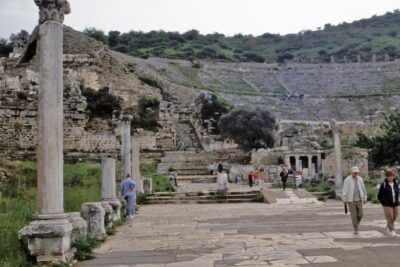
Next is Ancient City of Ephesus. This is the main event, and the itinerary lists an impressive range of structures: State Agora, Odeon, the Memnius Monument, the Temple of Domitian, Curetes Street, the Trajan Fountain, the Baths of Scholastica, Hadrian Temple, and the Celsus Library. You also pass major gates and the Grand Theater, described as originally built in the 3rd century BC and later expanded to hold up to 24,000 spectators under Romans.
If you want the best experience here, go at a “read and look” pace. Ephesus is big. Short bursts of attention make you catch more details than trying to see everything at speed.
Then you head to the Temple of Artemis, framed as one of the Seven Wonders of the Ancient World. It’s a shorter stop, so think of it as the “wrap-up icon” to bring closure to the Ephesus theme.
After Artemis, you transfer to Izmir Adnan Menderes Airport for the flight back to Istanbul in the evening, then you arrive at Sabiha Gökçen Airport and transfer to your Istanbul hotel for overnight.
Day 8: fly out and you’re done
After breakfast on Day 8, you check out and get a private transfer to Istanbul Airport or Sabiha Gökçen for your international flight home. Services end there.
You’ll feel it as a finale day: it’s not another marathon tour stop. It’s the part where you actually have time to pack without stress.
Hotels, transport, and group size: where comfort shows up
This package is fairly clear about accommodation style:
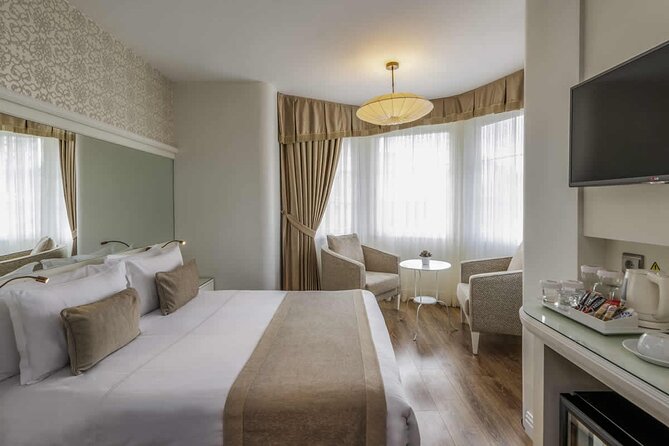
- Istanbul: boutique hotels such as Yasmak Sultan, Celal Sultan Hotel, or Recital Hotel (or similar)
- Cappadocia: cave hotel options such as Melekler Evi, Zeydem Suites, or Fresco Konakları
- Pamukkale: thermal hotel options (Colossae Thermal or Pam Thermal Hotel, or similar)
- Kuşadası: boutique options like Efe Butik or Neopol Deluxe, or similar
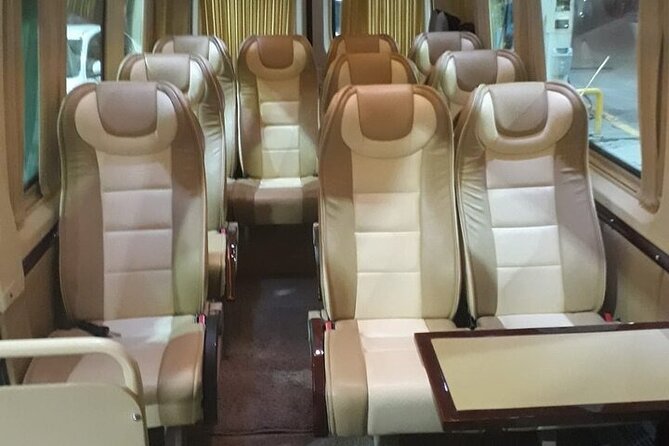
You also get air-conditioned minivan transport with a driver, plus a professional licensed guide.
The trip includes 7 breakfasts and 2 dinners, which is a real value point for a tour like this. You know what’s handled, and you can budget your meal time without guessing.
On flights, domestic baggage allowance is clearly stated: 15 kg check-in and 8 kg cabin.
For a small group tour, that kind of predictability keeps your energy where it belongs: on the stops, not on problem-solving.
Price and logistics value: is $1,579 per person fair?
At $1,579 per person for 8 days, the value comes from what’s bundled:
- Domestic flights (Istanbul → Cappadocia, Izmir → Istanbul)
- 7 nights of lodging across multiple regions
- A licensed guide and pre-paid tickets aimed at skipping line time
- Major admissions through the itinerary
- Meals included (7 breakfasts, 2 dinners)
- Comfortable group transportation
If you tried to rebuild this trip yourself, you’d likely spend time coordinating flights, booking hotels across five regions, and paying for admissions and guided pacing. The tour price is expensive enough to matter, but not outrageous for a flight-connected routing that includes a lot of entry fees and the guiding structure.
Where you may question value is if you hate early starts or you prefer to move at your own speed every day. This plan is designed for efficient touring, not slow strolling for its own sake.
Who this tour suits best, and who should think twice
I’d point you here if:
- You want to hit Istanbul + Cappadocia + Ephesus in one week without stitching together your own transport plan
- You like small-group touring and guidance that keeps sites organized
- You’re okay with early mornings and at least one long drive day toward Pamukkale
- You want a thermal hotel night with actual pool time
I’d think twice if:
- You strongly prefer self-paced travel and dislike set stop times
- You know you’ll struggle with the Hagia Sophia phone/headphone audio setup
- You want a relaxed, no-rush vacation where every day has room to breathe
Should you book this Istanbul–Cappadocia–Ephesus route?
Yes, if your goal is clear: see Turkey’s headline icons with a plan that already handles the big moving parts. The small-group format, the mix of flight hops and minivan transfers, and the inclusion of major admissions make it a practical way to do a lot in a short time.
If you book, do it with the right mindset: you’re signing up for an itinerary that moves. Bring charged headphones for Hagia Sophia, pack for lots of walking, and treat this like a guided highlights tour with real comfort built in.
FAQ
FAQ
How many nights and what hotel style is included?
The tour includes 7 nights. Hotels are listed as boutique hotels in Istanbul and a cave hotel in Cappadocia. Pamukkale stays are in thermal hotel options, and Kuşadası has boutique hotel options as well.
Does the tour include internal flights?
Yes. Domestic flights Istanbul to Cappadocia and Izmir to Istanbul are included.
What baggage allowance applies on the domestic flights?
The tour states 15 kilos check-in and 8 kilos cabin for the included domestic flights.
What meals are included?
You get 7 breakfasts and 2 dinners during the tour.
Is airport pickup included on arrival and departure?
Yes. A representative meets you with a name sign and provides private transfer at arrival and departure.
What are the Hagia Sophia interior rules for this tour?
The interior visit has restrictions: live guiding isn’t allowed after Jan 15, 2024. The tour notes you need smart phones and headphones. If you don’t have headphones, you can buy them at the entrance for 3.5 USD.
What if a museum or attraction is closed?
The tour notes that in case of closures, an alternative similar museum will be visited.
Are there any special rules for markets on certain days?
On Sundays, Grand Bazaar will be replaced by Spice Market. During Religious Holidays, Grand Bazaar is replaced by Arasta Bazaar. On Fridays, Blue Mosque opening hours are limited to 14.30 to 16.30.
Does the tour include thermal pool time at Pamukkale?
Yes. The tour includes an overnight in a thermal hotel in Pamukkale and says you can swim in the thermal pools at the hotel.
What’s the cancellation policy for a full refund?
You can cancel up to 6 days in advance for a full refund. Specifically, for a full refund, you must cancel at least 6 full days before the experience start time.
More Tour Reviews in Istanbul
- Istanbul: Bosphorus Dinner Cruise & Show with Private Table★ 4.8 · 62,058 reviews
- Istanbul: Daytime or Sunset Sightseeing Cruise & Audio Guide★ 4.8 · 14,430 reviews
- Istanbul: Bosphorus Dinner Cruise & Turkish Night Show★ 4.8 · 12,954 reviews
- Best of Istanbul 1, 2 or 3-Day Private Guided Istanbul Tour★ 5.0 · 8,922 reviews
- Istanbul: Basilica Cistern Fast-Track Entry and Audio Guide★ 4.6 · 7,521 reviews
- Istanbul: Hagia Sophia Skip-the-Line Ticket & Museum Option★ 3.7 · 4,958 reviews
More Days Out to Ephesus
- 4 Days Turkey Tour – Cappadocia, Ephesus and Pamukkale Tour★ 5.0 · 138 reviews
- 6 Days Turkey Tour Cappadocia, Pamukkale, Ephesus, Gallipoli Troy★ 5.0 · 109 reviews
- Daily Ephesus & House of Virgin Mary from Istanbul – Small Group★ 4.0 · 95 reviews
- 7 Days Best of Turkey Tour: Istanbul-Cappadocia-Ephesus-Pamukkale★ 5.0 · 91 reviews
- 5-Day Aegean Tour – Gallipoli, Troy, Ephesus, Kusadasi, Pamukkale★ 4.5 · 86 reviews
- Istanbul, Ephesus, Pamukkale and Cappadocia 8 Day Package★ 5.0 · 83 reviews
More Cappadocia Trips from Istanbul
- From Istanbul: 2-Day All-Inclusive Cappadocia Guided Trip★ 4.9 · 380 reviews
- Istanbul: 2-Day Cappadocia Trip with Flights and Cave Hotel★ 4.7 · 318 reviews
- 2 Days Cappadocia from Istanbul with Cave Hotel+Optional Balloon★ 5.0 · 260 reviews
- Cappadocia Dream: 2-Days Tour from Istanbul & Balloon Ride Option★ 4.5 · 236 reviews
- Istanbul: Cappadocia 2-3 Day Tour with Flights & Hotel★ 5.0 · 202 reviews
- From Istanbul: Day Trip to Cappadocia with Flight & Lunch★ 4.6 · 182 reviews
Fresh off the boat: new Istanbul reviews
Cappadocia Trips from Istanbul, compared.
 ★ 4.9From Istanbul: 2-Day All-Inclusive Cappadocia Guided TripFrom $709380 reviews
 ★ 4.72-Day Cappadocia Trip with Flights and Cave HotelFrom $328318 reviews
 ★ 5.02 Days Cappadocia from Istanbul with Cave Hotel+Optional BalloonFrom $330260 reviews
 ★ 4.5Cappadocia Dream: 2-Days Tour from Istanbul & Balloon Ride OptionFrom $590236 reviews
 ★ 5.0Cappadocia 2-3 Day Tour with Flights & HotelFrom $361202 reviews
 ★ 4.6From Istanbul: Day Trip to Cappadocia with Flight & LunchFrom $188182 reviews
 ★ 5.04 Days Turkey Tour – Cappadocia, Ephesus and Pamukkale TourFrom $1,571138 reviews
 ★ 5.02 Days Cappadocia Tour From IstanbulFrom $725132 reviews
Browse the lists this tour appears in