
REVIEW · CAPPADOCIA TRIPS FROM ISTANBUL
Fire of Anatolia – Istanbul, Cappadocia, Pamukkale, Ephesus, Troy
Turkey’s highlights in 11 days, tightly packed and fun. This Fire of Anatolia route links Istanbul with Cappadocia, then presses on to Pamukkale, Ephesus, Troy, and Gallipoli without wasting days. I like how the plan mixes big-ticket sights with a few off-the-beaten-path stops that make the trip feel like more than a checklist.
I really appreciate the practical stuff: you get a professional English-speaking guide for the whole journey, plus entrance fees handling for many of the stops. On top of that, breakfast is included most mornings (10) and dinner is included several nights (7), which matters when you’re moving every day.
The main consideration is the pace. You’ll do plenty of walking at major historical sites, and the trip assumes moderate physical fitness, with long travel days built in. If you want a slow vacation with long breaks, this may feel like a sprint.
In This Review
- Key moments that make this tour worth a look
- How This 11-Day Turkey Loop Actually Feels
- Istanbul First: Getting Oriented Fast (and Then Going Your Own Way)
- Istanbul’s Big Four: Topkapi Palace, Blue Mosque, Hagia Irene, and Hagia Sophia
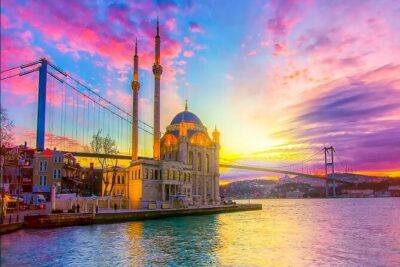
- Bosphorus Crossings: A Public Ferry Takes You Between Continents
- Cappadocia in Full: Göreme Open Air Museum and Underground City Levels
- Optional Turkish Folklore Evening in Cappadocia
- Konya for Rumi: Mevlana Museum and Whirling Dervishes Exhibits
- Pamukkale: Calcium Terraces and Hierapolis Ruins in One Day
- Laodicea and Leather Craft Stop: A Less-Obvious Anatolian Detour
- Ephesus Day: Ruins, the Archaeology Museum, Carpets in Selçuk, and Wine Tasting
- Pergamon’s Acropolis and Troy’s UNESCO Site (Plus the New Troy Museum)
- Gallipoli: WWI Memorials, Trenches, and the Long Drive Back
- What You’re Really Paying For: Included Fees, Transfers, and Meals
- Who This Tour Suits (and Who Should Rethink It)
- Should You Book Fire of Anatolia: Istanbul to Gallipoli?
- FAQ
- How long is the Fire of Anatolia tour?
- What does the tour cost?
- What is the maximum group size?
- Are airport transfers included?
- Do you get an English-speaking guide?
- Are entrance fees included?
- How many breakfasts and dinners are included?
- Is a Bosphorus cruise included?
- What optional activities are mentioned?
- What happens if the tour is canceled due to poor weather or not enough travelers?
Key moments that make this tour worth a look
- Small group size (max 20) with guides like Irem, Göksu, and Fatih Karci doing the crowd-control work for you
- Istanbul to Cappadocia plus the rest of Anatolia in one efficient loop, including transfers and an air-conditioned vehicle
- Built-in value: entrance fees, breakfast (10), and dinner (7) reduce the usual day-to-day cost surprises
- Cappadocia sights that go beyond the viewpoints, with Göreme Valley Open Air Museum and an underground city visit
- Ephesus with more than ruins, including the Ephesus Archaeology Museum, carpet-making stop, and wine tasting in Selçuk
- Gallipoli WWI sites and memorials (Lone Pine, Chunuk Bair, ANZAC Cove, and more) before returning to Istanbul
Chasing the balloons: more Cappadocia trips


How This 11-Day Turkey Loop Actually Feels
This tour is built around motion. You’re not staying in one place for long stretches; you’re trading hotel downtime for access to a lot of Turkey’s headline sites in a short window.
That can be great if you’re the type who wants to see a lot and you’re comfortable with early starts and guided time blocks. It can feel exhausting if you prefer long, unstructured afternoons and “take it as it comes” sightseeing.
Istanbul First: Getting Oriented Fast (and Then Going Your Own Way)
Day one is a clean setup. You land, get transferred to your hotel, and then you have the rest of the day on your own to get your bearings in Istanbul.
That free time matters more than you might think. It gives you a chance to handle dinner, find a pharmacy, and figure out what neighborhood you’re in before the full guided day kicks in.
Istanbul’s Big Four: Topkapi Palace, Blue Mosque, Hagia Irene, and Hagia Sophia
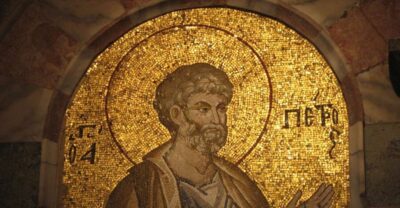
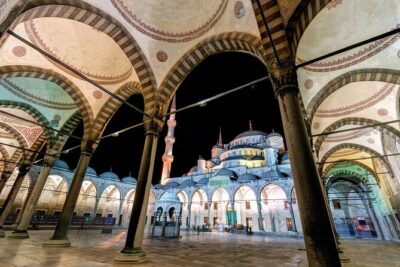
The next day is a classic Istanbul day with major monuments grouped together. You’ll tour Topkapi Palace (including Hagia Irene), the Blue Mosque, Hagia Sophia Museum, and the Hippodrome area.
What I like here is that the guide can explain the layers of the city. Istanbul’s history isn’t one straight line, so being guided through these sites helps you connect what you see with why it looks the way it does.
This is also where your timing helps. Plan to dress for mosque visits with shoulders and knees covered, and expect lines and security checks at the most popular stops.
More days out to ancient Ephesus
- 4 Days Turkey Tour – Cappadocia, Ephesus and Pamukkale Tour★ 5.0 · 138 reviews
- 6 Days Turkey Tour Cappadocia, Pamukkale, Ephesus, Gallipoli Troy★ 5.0 · 109 reviews
- Daily Ephesus & House of Virgin Mary from Istanbul – Small Group★ 4.0 · 95 reviews
- 7 Days Best of Turkey Tour: Istanbul-Cappadocia-Ephesus-Pamukkale★ 5.0 · 91 reviews
Bosphorus Crossings: A Public Ferry Takes You Between Continents
You get the Bosphorus experience in a practical way: a 1-hour ferry cruise where your guide points out historical sites along the water. It’s not the same as a high-end private boat day, but it’s also easier to fit into a tight schedule.
The best part is the feeling of the city changing as you cross. Even if you’ve seen Istanbul photos before, seeing the waterway in motion gives you scale you can’t get from postcards.
Then the day shifts gears with a flight to Cappadocia. You’re still in “Istanbul mode” in the morning and suddenly living in “fairy chimney mode” that same trip.
Cappadocia in Full: Göreme Open Air Museum and Underground City Levels
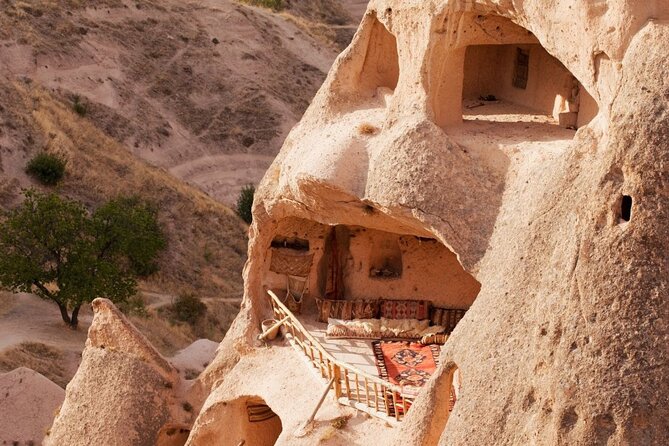
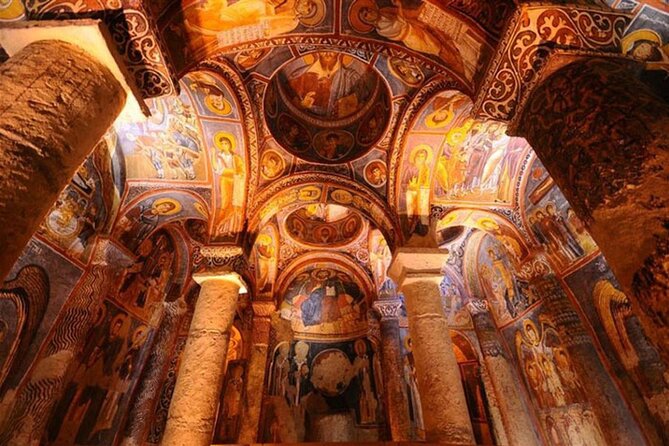
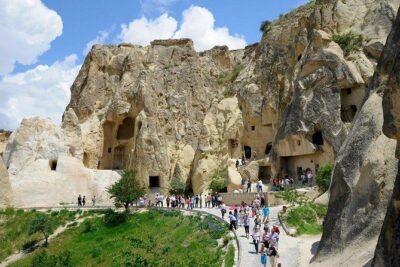
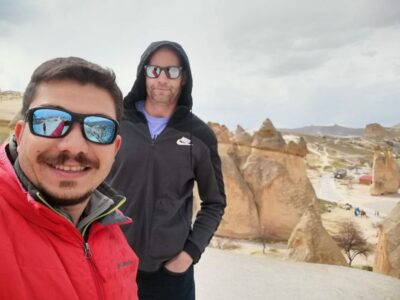
Cappadocia is where this tour really starts to feel like a different planet. You visit the Göreme Valley Open Air Museum and see fairy chimneys and rock-cut churches, the kind of scenery that looks unreal until you’re standing there.
You also get underground-city time, including exploring many levels of an underground city. That’s a smart choice for people who don’t just want photos; it shows how communities adapted to danger, resource limits, and shelter needs.
If you go, wear shoes you trust. The ground can be uneven, and you’ll walk more than you expect even if the sites are “mostly museum-type” spaces.
Optional Turkish Folklore Evening in Cappadocia
After the daytime walking, there’s an optional Turkish folklore evening with folklore and belly dancers. This isn’t required, but it’s a good “night off your feet” option if you want culture and entertainment without getting stuck searching for something last minute.
It’s also the kind of evening that can help break up the pace. After two big activity-heavy days, having a choice like this is a relief.
Konya for Rumi: Mevlana Museum and Whirling Dervishes Exhibits
Konya brings the spiritual side of Turkey into the mix. You visit the mausoleum of Mevlana Celaleddin Rumi and explore the Mevlana Museum, including his tomb, manuscripts, and exhibits about the Whirling Dervishes and their traditions.
Even if you don’t know Rumi’s work well, the museum helps you connect art, meaning, and devotion. It’s one of those stops where the guide’s explanations really matter because symbolism is the point.
There’s a second major stop that keeps the day moving: the Çatalhöyük Museum. It covers the history of one of the world’s oldest Neolithic settlements, which gives you a strong contrast to the religious focus.
Pamukkale: Calcium Terraces and Hierapolis Ruins in One Day
Pamukkale is built for “walk and look” time. You’ll visit the calcium travertines and stroll over the white terraces, plus see the ruins of Hierapolis, including the Temple of Apollo and the Necropolis.
This is a place where photos tempt you to rush. Try to slow down for a few minutes at a terrace edge just to watch how the light changes on the mineral layers.
Heat can be a factor, so bring water and consider sun protection. Also, be ready for the reality that you’re visiting a living site with rules for how you move around on the travertines.
Laodicea and Leather Craft Stop: A Less-Obvious Anatolian Detour
Not every day is a household name. On this day you explore Laodicea, an ancient city that was central to the Lycus River Valley region, with an identity tied to older traditions and shifting civilizations.
Then you get a local craftsmanship stop involving handcrafted leather goods. This isn’t just a sales errand; it’s a way to understand how traditional skills show up in modern daily life.
If you’re sensitive to shopping stops, it helps to treat this as a short cultural break. Browse, ask questions, and decide what you want—no need to buy on the spot.
Ephesus Day: Ruins, the Archaeology Museum, Carpets in Selçuk, and Wine Tasting
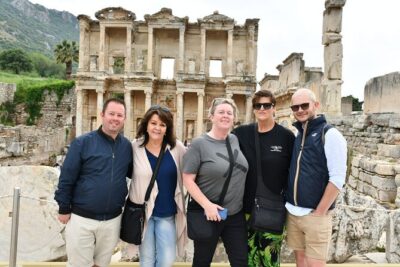
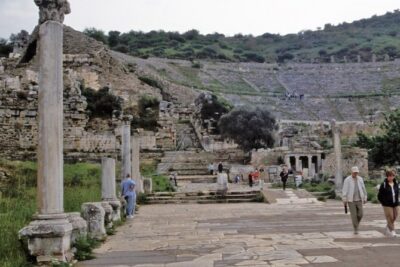
Ephesus is one of Turkey’s big draws, and this tour handles it well by pairing the famous site with supporting context. You get a guided visit to Ephesus, with stops linked to the Temple of Artemis, the Library of Celsus facade, and the impressive amphitheater.
You also visit the Ephesus Archaeology Museum. That’s a smart pairing because the museum helps you picture what you’re seeing in the ruins after time has stripped away the original surfaces.
Then you head to a carpet village where you learn how carpets are made by hand and what affects their value. It’s useful education, especially if you’ve ever wondered why prices vary so much.
The day doesn’t end on crafts alone. You also go for a wine tasting experience in Selçuk, which gives you a local break from monuments and a chance to try something typically tied to the region.
Pergamon’s Acropolis and Troy’s UNESCO Site (Plus the New Troy Museum)
The next day keeps the ancient-world theme but shifts it again. You go to Bergama and visit the acropolis of Pergamon, known for impressive temples and a library that once made it a major cultural and political center.
After Pergamon, you head to Troy (Truva). You explore the ancient city, a UNESCO World Heritage Site, and you also visit the new Troy Museum.
I like that the museum is included, because Troy is one of those stories people think they know. When you see artifacts and interpretive displays alongside the site, it becomes clearer what’s legend and what’s archaeology-based.
Expect walking on uneven terrain around archaeological areas. Bring a light day bag, water, and layers for temperature swings.
Gallipoli: WWI Memorials, Trenches, and the Long Drive Back
Gallipoli adds a completely different mood to the trip. After breakfast, you visit WW1 battlefields and memorials, including Lone Pine and Chunuk Bair, plus ANZAC Cove, The Nek, Johnston’s Jolly, and original trenches and tunnels.
This is an intense set of stops. I recommend you go with a respectful mindset and give yourself space to process what you see, instead of treating it like another “tick the box” location.
It’s also a long day, with a drive back to Istanbul at the end. If you’re prone to motion sickness, consider prepping for the ride and keep snacks handy since the day is packed.
What You’re Really Paying For: Included Fees, Transfers, and Meals
The price is listed at $2,802.68 per person for about 11 days. On its face, that’s a lot, but this route is set up to reduce lots of the common add-ons: entrance fees are included for many key sights, you have an English-speaking guide, and you’re not responsible for daily logistics.
Here’s what’s included that can meaningfully affect your budget:
- Air-conditioned vehicle for transport during the land days
- Entrance fees
- Inbound and outbound transfers in Istanbul
- Professional English-speaking tour guide for the duration
- Breakfast (10) and dinner (7)
Also, you get a mobile ticket, which is helpful when you’re bouncing across multiple cities and don’t want to worry about printed passes.
What’s not included is mainly what you’d expect:
- Compulsory travel insurance
- Suggested optional activities
That last part is a real-world point. You’ll likely want to add extras like the Cappadocia folklore evening or the optional Bosphorus cruise, depending on your interests.
Who This Tour Suits (and Who Should Rethink It)
This tour fits best if you want a guided, highlight-heavy Turkey trip with less planning on your side. If you like ancient sites, you’ll appreciate the arc from Ephesus to Troy, with stops like Pergamon and Laodicea keeping the bigger story of Anatolia in view.
It’s also a strong match for people who value good group management. The guides named in customer feedback—like Irem, Göksu, and Fatih Karci—are described as helpful and attentive, especially in crowded venues and when questions come up.
Where it might not fit: if you want lots of free time in each city, or if your idea of travel is slow café days and minimal walking. This plan expects you to move, often in big heritage spaces.
Should You Book Fire of Anatolia: Istanbul to Gallipoli?
I’d consider booking this tour if you’re trying to see a wide sweep of Turkey without building the logistics yourself. You’re getting a tight route with major sights across Istanbul, Cappadocia, Pamukkale, Ephesus, Troy, and Gallipoli—plus the kind of guidance that helps you understand what you’re looking at.
I’d also book it if you like the idea of structured days with options. The optional Bosphorus cruise and the folklore evening give you chances to steer the trip while still keeping the core plan moving.
Skip it, or at least think twice, if long travel days and historical-site walking are not your thing. Also, if your trip style is to stay put and unwind, this one may feel like it’s always “next stop” time.
FAQ
How long is the Fire of Anatolia tour?
It’s listed as 11 days (approx.).
What does the tour cost?
The price is $2,802.68 per person.
What is the maximum group size?
The tour has a maximum of 20 travelers.
Are airport transfers included?
Yes. The tour includes inbound transfer from the airport in Istanbul and outbound transfer to the airport in Istanbul.
Do you get an English-speaking guide?
Yes. A professional English-speaking tour guide is included for the duration of the tour.
Are entrance fees included?
Yes. Entrance fees are included.
How many breakfasts and dinners are included?
Breakfast is included 10 times and dinner is included 7 times.
Is a Bosphorus cruise included?
You get a 1-hour Bosphorus cruise by public ferry with your guide. There’s also an optional half-day Bosphorus cruise.
What optional activities are mentioned?
An optional Turkish folklore evening in Cappadocia is mentioned, and there’s an optional half-day Bosphorus cruise.
What happens if the tour is canceled due to poor weather or not enough travelers?
The experience requires good weather. If canceled due to poor weather, you’ll be offered a different date or a full refund. If canceled because the minimum number of travelers isn’t met, you’ll be offered a different date/experience or a full refund.
More Trips to Pamukkale
- 4 Days Turkey Tour – Cappadocia, Ephesus and Pamukkale Tour★ 5.0 · 138 reviews
- 6 Days Turkey Tour Cappadocia, Pamukkale, Ephesus, Gallipoli Troy★ 5.0 · 109 reviews
- 7 Days Best of Turkey Tour: Istanbul-Cappadocia-Ephesus-Pamukkale★ 5.0 · 91 reviews
- 5-Day Aegean Tour – Gallipoli, Troy, Ephesus, Kusadasi, Pamukkale★ 4.5 · 86 reviews
- Istanbul, Ephesus, Pamukkale and Cappadocia 8 Day Package★ 5.0 · 83 reviews
- Private 4 Days Turkey Tour from Istanbul to Cappadocia, Ephesus, Pamukkale★ 5.0 · 80 reviews
More Days Out to Ephesus
- 4 Days Turkey Tour – Cappadocia, Ephesus and Pamukkale Tour★ 5.0 · 138 reviews
- 6 Days Turkey Tour Cappadocia, Pamukkale, Ephesus, Gallipoli Troy★ 5.0 · 109 reviews
- Daily Ephesus & House of Virgin Mary from Istanbul – Small Group★ 4.0 · 95 reviews
- 7 Days Best of Turkey Tour: Istanbul-Cappadocia-Ephesus-Pamukkale★ 5.0 · 91 reviews
- 5-Day Aegean Tour – Gallipoli, Troy, Ephesus, Kusadasi, Pamukkale★ 4.5 · 86 reviews
- Istanbul, Ephesus, Pamukkale and Cappadocia 8 Day Package★ 5.0 · 83 reviews
More Cappadocia Trips from Istanbul
- From Istanbul: 2-Day All-Inclusive Cappadocia Guided Trip★ 4.9 · 380 reviews
- Istanbul: 2-Day Cappadocia Trip with Flights and Cave Hotel★ 4.7 · 318 reviews
- 2 Days Cappadocia from Istanbul with Cave Hotel+Optional Balloon★ 5.0 · 260 reviews
- Cappadocia Dream: 2-Days Tour from Istanbul & Balloon Ride Option★ 4.5 · 236 reviews
- Istanbul: Cappadocia 2-3 Day Tour with Flights & Hotel★ 5.0 · 202 reviews
- From Istanbul: Day Trip to Cappadocia with Flight & Lunch★ 4.6 · 182 reviews
Fresh off the boat: new Istanbul reviews
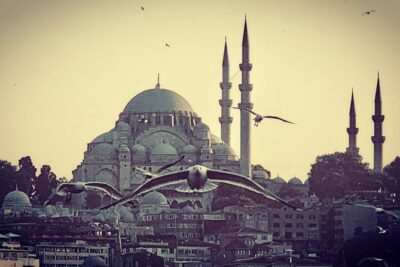
Cappadocia Trips from Istanbul, compared.
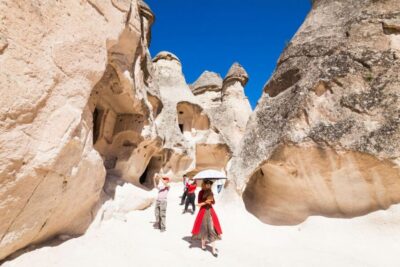 ★ 4.9From Istanbul: 2-Day All-Inclusive Cappadocia Guided TripFrom $709380 reviews
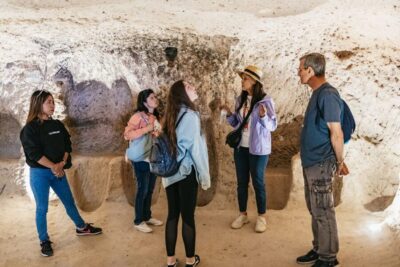 ★ 4.72-Day Cappadocia Trip with Flights and Cave HotelFrom $328318 reviews
 ★ 5.02 Days Cappadocia from Istanbul with Cave Hotel+Optional BalloonFrom $330260 reviews
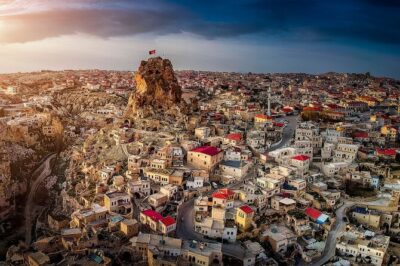 ★ 4.5Cappadocia Dream: 2-Days Tour from Istanbul & Balloon Ride OptionFrom $590236 reviews
 ★ 5.0Cappadocia 2-3 Day Tour with Flights & HotelFrom $361202 reviews
 ★ 4.6From Istanbul: Day Trip to Cappadocia with Flight & LunchFrom $188182 reviews
 ★ 5.04 Days Turkey Tour – Cappadocia, Ephesus and Pamukkale TourFrom $1,571138 reviews
 ★ 5.02 Days Cappadocia Tour From IstanbulFrom $725132 reviews
Browse the lists this tour appears in