
REVIEW · GALLIPOLI & TROY DAY TRIPS
Private Day-Tour of Ancient Battle Fields (Troy & Gallipoli)
Two eras of warfare, one unforgettable route. This private Troy and Gallipoli day brings mythology and First World War history into the same long drive, with a ferry crossing the Dardanelles and a guide to connect the stories. I especially like the hotel pickup and drop-off, which makes a 12-hour day feel manageable, and I like the way you actually see both places that shaped the myths and the battles, not just names on a map. One drawback to plan for: the day is long, and museum/ruins entrance fees and meals aren’t included, so you’ll pay a bit extra once you’re there.
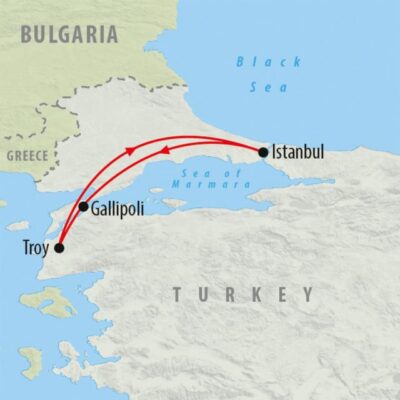
Istanbul to Troy to Gallipoli sounds like a lot—and it is—but the logistics work because the tour moves early and uses time well. You start with Marmara Sea views, then cross the strait, then shift into solemn WWI ground at Gallipoli. If you want a relaxed pace, this probably isn’t it; if you want a full, well-explained day, it’s a strong fit.
A couple of practical notes from real-world experiences: one guest recommended bringing a little tip money for both driver and guide, and another pointed out that Troy’s ruins aren’t a grand palace city—you’ll get the setting and the story more than polished, restored glamour. Also, guide quality can vary; one review flagged average English for a guide, so if language detail matters a lot to you, it’s smart to ask questions early.
In This Review
- Key things to know before you go
- The Istanbul-to-Dardanelles drive: why the morning matters
- Ferry crossing to Troy: myth gets a real coastline
- Troy’s practical highlights: walls, Athena’s temple, Odeon, and the Trojan Horse
- Athena’s temple viewpoint: the stop you’ll remember longest
- The Behram / Aristotle-style stop: a quick thinker’s break
- Gallipoli’s battlefields and cemeteries: when the tone changes
- Why this combo tour works: Troy + Gallipoli in one day
- Hotel pickup, skip-the-line, and private pacing: the comfort side of value
- Price and what you get for $541.85 per person
- What to plan for on the ground: tickets, meals, walking, and tips
- Should you book this Troy & Gallipoli private day tour?
- FAQ
- What is the tour duration?
- What time does the tour start?
- Is pickup from my hotel included?
- Is the tour private?
- What language is the tour guide?
- Are meals and entrance tickets included?
- Can I cancel for a full refund?
Key things to know before you go
- Early start (6:30 am) keeps crowds and traffic from wrecking your time at Troy and Gallipoli.
- Ferry across the Dardanelles is part of the fun, not just transport, since you’re crossing the same waters tied to both stories.
- Skip-the-line with your guide helps, but entrance tickets and meals aren’t included, so budget for extras.
- Troy is a ruin site: you’ll focus on walls, viewpoints, key structures, and the reconstructed Trojan Horse.
- Gallipoli is emotional ground with ANZAC landing areas and cemeteries—wear shoes you can walk in.
- Private group means you set the pace with your guide and driver, rather than getting herded.
More time at Gallipoli and Troy
The Istanbul-to-Dardanelles drive: why the morning matters
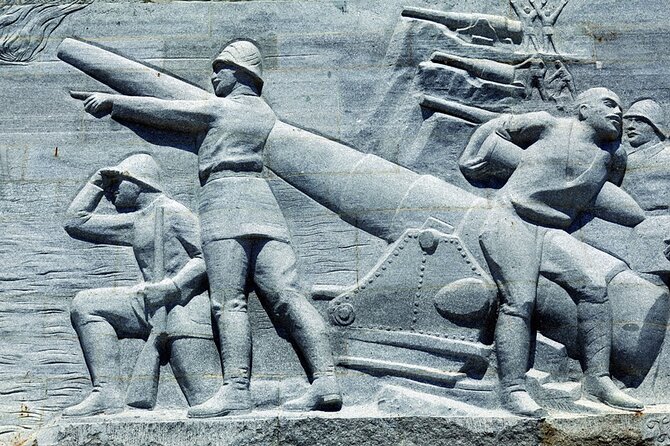
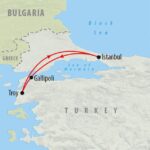
This tour starts early—pick-up begins around 6:30 am—and that timing is one of the hidden advantages. The drive runs along the European shore of the Marmara Sea, where you get those long coastal views and a quick sense of scale before you hit history.
Even if you’re not a road-trip person, you’ll likely appreciate the calm before the big sites. You pass summer villas and see Gallipoli in the distance, which helps the later battlefield views land harder. This is also where your guide can set the framework: how the strait functioned over time and why both Greeks in legend and soldiers in reality cared about these waters.
Because it’s a private tour, you don’t have to rush through transport with strangers around you. Still, this is a full-day schedule. Bring water, wear breathable clothes, and plan to be in motion for most of the day.
Ferry crossing to Troy: myth gets a real coastline
After the morning drive, you board a ferry to cross the Dardanelles, the narrow strait that has long mattered for navigation between the Sea of Marmara and the Aegean/Mediterranean. The strait is also the kind of place where you can feel geography driving history: it separates Europe and Asia, and it’s famously narrow for a major water route.
This ferry segment helps the Troy portion feel more grounded. You’re not just driving to a site; you’re crossing the same corridor that connects stories, armies, and trade. One stop even touches on the strait itself—there’s a brief Dardanelles Strait viewpoint moment (about 30 minutes), where you can learn how the Ottomans had castles on each side and why the area carried the name Dardanelles.
Once you arrive, the day turns from geography to narrative: Homer’s Troy comes alive as your guide connects the landscape with the Iliad’s setting. If you love mythology, this can feel like a storybook with coastlines.
Troy’s practical highlights: walls, Athena’s temple, Odeon, and the Trojan Horse
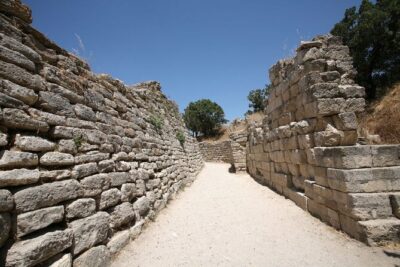
Troy is the big name, but it helps to walk in with the right expectations. Troy is a Bronze Age archaeological ruin, so you’re not going to see fully intact royal palaces. What you get instead is a strong sense of place: strategic walls, key structures, and sweeping views over the plain and toward the Aegean—exactly the kind of setting that makes the Homer references click.
Your Troy time centers on a guided walk through major pieces of the site, including:
- City walls and the bigger defensive layout (useful for understanding why “the ending” matters in strategy, not just plot).
- Athena’s temple area, built on a rocky crag, which sets you up for one of the best viewpoints of the day.
- The Odeon, a preserved stone theater that gives you a concrete feel for how later cultures built on earlier ground.
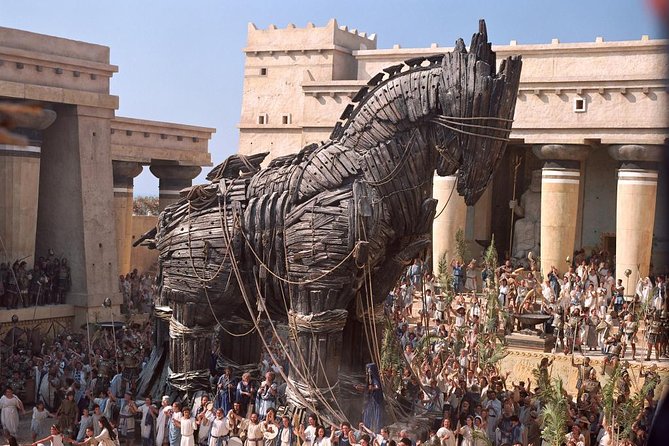
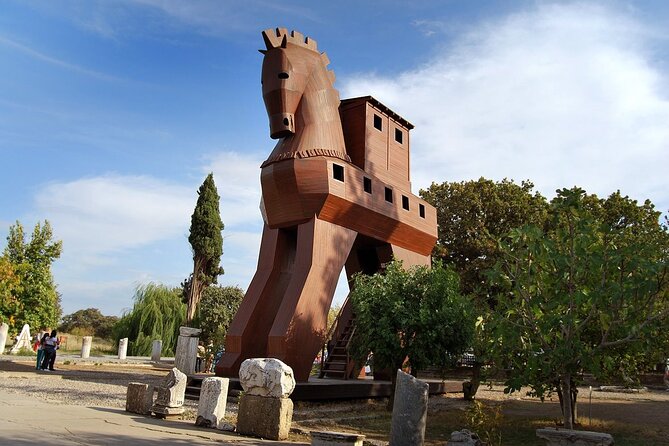
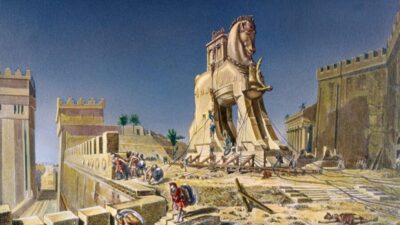
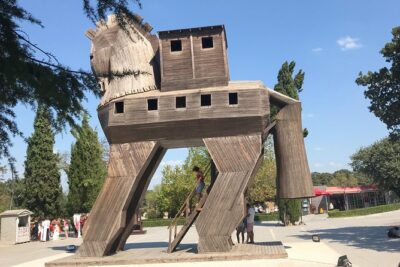
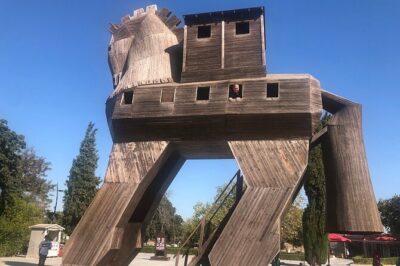
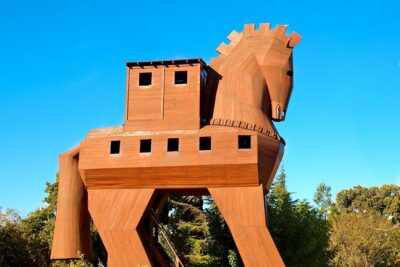
- A chance to step inside a reconstructed Trojan Horse, where the story goes from metaphor to something you can physically stand inside.
That Trojan Horse stop is about 45 minutes, and it’s one of those experiences that’s fun even if you don’t know every detail of the legend. You’re literally climbing into the “hide-and-wait” idea, and the guide can connect it to the broader theme of strategy and deception that also shows up at Gallipoli.
If you’re photo-minded, build in time for photos at the higher points. If you’re more into understanding, focus on the walls and how the route of attack makes sense in open terrain.
Worth putting side by side with this Istanbul pick:
- Istanbul: Bosphorus Dinner Cruise & Show with Private Table★ 4.8 · 62,058 reviews
- Istanbul: Private Turkish Bath, Massage, and Spa in Old City★ 4.6 · 3,225 reviews
- Bosphorus Dinner Cruise with Show and Private Table★ 4.5 · 2,021 reviews
- Private Transfer from Istanbul Airport to Fatih, Beyoglu and Besiktas★ 5.0 · 1,793 reviews
Athena’s temple viewpoint: the stop you’ll remember longest
One of the best parts of this tour is the Temple of Athena area, which your schedule gives about 45 minutes. This is not just another ruin-stop; it’s a viewpoint stop where your eyes do the work your guide starts.
The temple sits atop a crag, and from a clear day your view can extend toward Lesbos, Pergamum, and Mount Ida. To the north, you can see the Tuzla River, and to the northwest there are tall Hellenic columns marking a gate.
This is where Troy becomes more than “old stones.” You start to understand how settlements control movement and visibility. And it’s a great “pause moment” in a day that is otherwise very full.
If you’re sensitive to heat, come prepared for sun exposure here. The tour runs long and outdoor time stacks up.
The Behram / Aristotle-style stop: a quick thinker’s break
Between Troy and the heavier WWI sites, you make a stop called Behram (about 1 hour). The context given for this stop is tied to Aristotle and a place called Assos: the schedule’s description includes the idea of Aristotle opening an academy in Assos after leaving Athens, plus the fact that he fled after the Persians killed Hermias.
In practical terms, this stop reads like a breather—less about walking miles and more about a short, guided look at the area. There’s also mention of a modern statue of Aristotle at the town entrance. If you like history as an ongoing thread rather than isolated landmarks, you’ll probably appreciate this shift of focus.
If you prefer only the biggest headline stops, treat this as a chance to stretch and reset before Gallipoli.
Gallipoli’s battlefields and cemeteries: when the tone changes
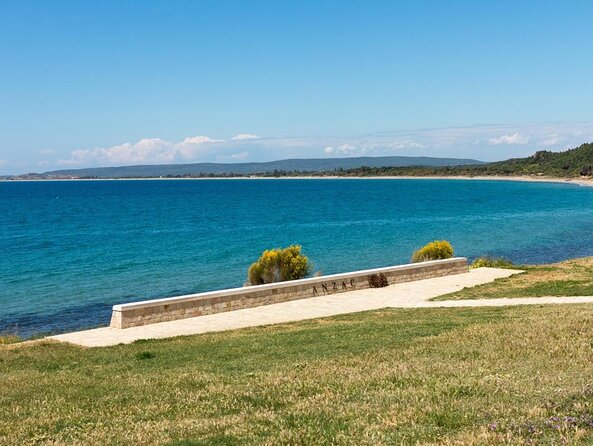
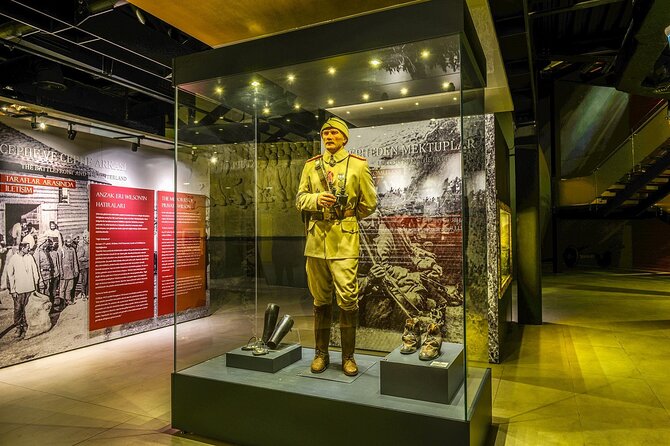
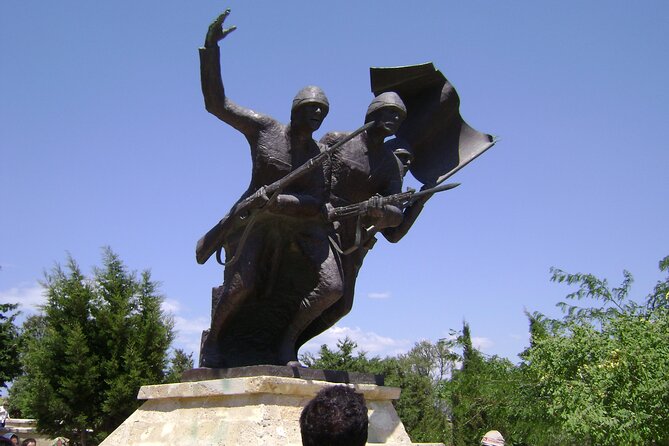
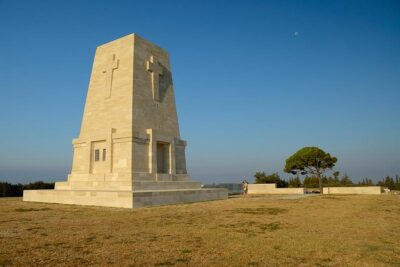
Then comes the emotional shift: Gallipoli, with about 1 hour at the battlefield area and another 1 hour at Anzak Bay (Anzac Cove).
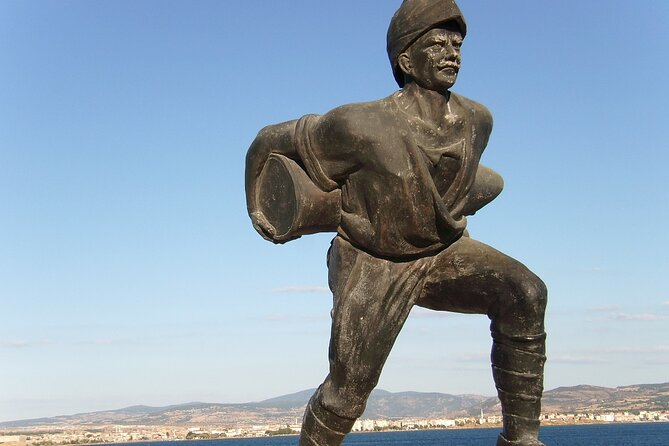
The Gallipoli campaign (also called the Dardanelles campaign) ran from February 1915 to January 1916, and your guide’s framing matters here. You’ll learn how the Allies tried to weaken the Ottoman Empire by targeting control of the straits, and you’ll hear about the failed February assault followed by landings on the peninsula.
Most tours describe the battle. This one aims to connect it to people on both sides. The schedule includes the idea of fighting between Ottoman forces and ANZAC troops, and it also covers why some referred to the conflict as a Gentleman’s War—a phrase that pushes you to think beyond chaos and into attitudes of the time.
At Anzac Cove, you get the landing story for 25 April 1915, including the details that ANZAC forces landed at night and ended up about a mile north of their intended landing beach because of darkness and mixing formations. That kind of specificity helps a lot. It turns “a landing” into a sequence with friction and consequence.
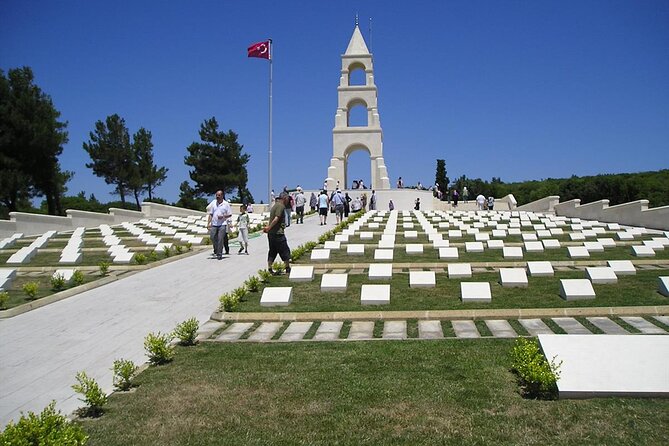
There’s also a cemetery component: you’ll pay respects at the sites tied to soldiers who fought and died along the Dardanelles. This part of the tour isn’t about checking boxes. It’s quiet, reflective, and worth slowing down for.
If you want a small-group feeling, pay attention to the fact that at least one real-world experience reported very light crowds at Gallipoli at the time of the visit. Still, Gallipoli can draw visitors, so start the day early and keep your expectations realistic.
Why this combo tour works: Troy + Gallipoli in one day
Pairing Troy with Gallipoli isn’t random. It’s a clever way to make you notice how the same geography can hold different meanings across centuries.
Troy gives you the idea of strategy and siege—how myth builds around walls, access, and deception. Gallipoli gives you siege and strategy in a modern form—how narrow waters, supply routes, and landing conditions decide outcomes. When your guide connects the themes, the day feels more cohesive than “two separate field trips.”
The drive along the Marmara shore and the ferry across the Dardanelles also stitches the day together. You’re constantly circling the same transit corridor, so your brain keeps mapping one story onto another.
If you only have a short time in Istanbul and you want maximum value from a single outing, this pairing is a strong way to do it. If you have unlimited days, you’d still likely want more time at Troy and more time at Gallipoli—but for one day, the combo is efficient.
Hotel pickup, skip-the-line, and private pacing: the comfort side of value
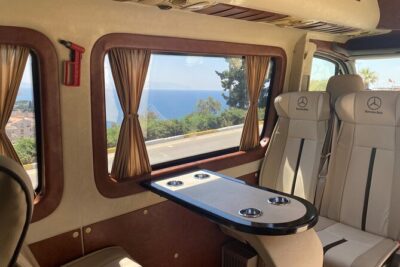
For many visitors, the biggest pain with long Istanbul day trips is the “how” of travel. This tour tackles that with hotel pick-up and drop-off plus transportation in a private vehicle with your own guide.
One guest described a comfortable BMW with a driver and private guide and said the pacing felt considerate at each stop. Another guest liked the fact that it was a private vehicle and private guide, and they felt they weren’t fighting crowds the way you might on larger group tours.
There’s also skip-the-line access with your guide. That matters at sites where queues can waste your limited time—especially on a schedule that has to squeeze in Troy and two Gallipoli areas.
One more point: the tour is private, meaning only your group participates. That’s great if you want to ask follow-up questions, or if you’d rather not listen to a loud speaker doing history for everyone.
Price and what you get for $541.85 per person
At $541.85 per person, this isn’t a budget day trip. For the price, you’re paying for three main things:
- Time-intensive travel from Istanbul to the Gallipoli Peninsula and back, including a ferry crossing.
- Private guide + private transportation, not a shared bus.
- Guided, connected storytelling that helps you understand what you’re seeing—especially at Gallipoli where context matters.
If you’re comparing this to cheaper group tours, ask yourself what you value more: saving money or getting comfort and flexibility. If you care about hotel pickup, a guide who can point out specifics, and a full schedule that doesn’t feel chaotic, the price can make sense.
Still, you should go in with eyes open about extra costs. Museum or ruins entrance tickets and meals aren’t included. One guest also pointed out that entry fees to ruins weren’t included, and while they said it wasn’t a big deal, it would have been a nice touch given the trip cost. Plan for those add-ons so the final bill feels predictable, not surprising.
What to plan for on the ground: tickets, meals, walking, and tips
This day is outdoors, and it’s long. Even if the walking isn’t extreme, you’ll be on uneven ground at archaeological sites and you’ll want comfortable shoes for cemetery areas.
A few practical planning ideas:
- Bring a small amount of cash if you want to tip. One guest specifically recommended tip money for two—driver and guide.
- Budget separately for entrance fees at museums/ruins and for lunch. The tour lists meals as not included, though one review mentioned a lunch stop on the way to Troy.
- Plan your water and snacks around the fact that this is a full day. The itinerary includes multiple timed stops, so you may not get long breaks.
- Expect moderate physical effort. The tour notes a moderate fitness level requirement, and Gallipoli can involve walking on paths over memorial ground.
Also, expect your guide’s English quality to matter. One review praised a guide named Ali for specialist WWI knowledge and another praised Cenk for attentive, personable guidance. But one guest reported a guide’s English and knowledge base were only average. If you want deep myth and deep military history, it’s worth asking your operator if they can match you with a guide strong in those areas.
Should you book this Troy & Gallipoli private day tour?
Book it if you want a one-day hit of two major regions that most people need a guide to understand well—Troy’s myth-and-strategy setting and Gallipoli’s ANZAC landing and memorial ground. The hotel pickup, private vehicle, and skip-the-line help justify the price when your time in Istanbul is limited.
Skip it or rethink it if you hate long days, if you want meals and entrance fees fully included, or if you prefer slower travel with more breathing room. Troy is also a ruin site, not a restored palace complex, so you’ll enjoy it more if you like archaeological sites and big-sky viewpoints rather than polished interiors.
If you do book, I’d do two things: bring a comfortable walking setup and plan your extra budget for tickets and lunch. And if you can, ask whether your guide will be strong in both Homeric Troy context and WWI detail—names like Ali and Cenk came up in past experiences, and that kind of match can turn a good day into a memorable one.
FAQ
What is the tour duration?
It runs for about 12 hours.
What time does the tour start?
The start time is 6:30 am.
Is pickup from my hotel included?
Yes. Hotel pick-up and drop-off from your base-location in Istanbul are included.
Is the tour private?
Yes. It’s a private tour/activity, with only your group participating.
What language is the tour guide?
The tour is offered in English.
Are meals and entrance tickets included?
No. Meals & drinks are not included, and museum entrance ticket fees are not included.
Can I cancel for a full refund?
Yes. You can cancel up to 24 hours in advance for a full refund.
More Tours in Istanbul
- Best of Istanbul 1, 2 or 3-Day Private Guided Istanbul Tour★ 5.0 · 8,922 reviews
- Istanbul: Bosphorus Sightseeing Cruise Tour with Audio Guide★ 4.6 · 4,704 reviews
- Istanbul: Blue Mosque & Hagia Sophia Guided Tour w/ Tickets★ 4.8 · 3,600 reviews
- Istanbul: Blue Mosque, Hagia Sophia, & Old Town Walking Tour★ 4.8 · 2,372 reviews
- Istanbul: Princes Islands Tour with Heybeliada and Buyukada★ 4.4 · 2,305 reviews
- Istanbul: Basilica, Hagia Sophia, Blue Mosque Tour & Cruise★ 4.5 · 1,929 reviews
More Tour Reviews in Istanbul
- Istanbul: Bosphorus Dinner Cruise & Show with Private Table★ 4.8 · 62,058 reviews
- Istanbul: Daytime or Sunset Sightseeing Cruise & Audio Guide★ 4.8 · 14,430 reviews
- Istanbul: Bosphorus Dinner Cruise & Turkish Night Show★ 4.8 · 12,954 reviews
- Best of Istanbul 1, 2 or 3-Day Private Guided Istanbul Tour★ 5.0 · 8,922 reviews
- Istanbul: Basilica Cistern Fast-Track Entry and Audio Guide★ 4.6 · 7,521 reviews
- Istanbul: Hagia Sophia Skip-the-Line Ticket & Museum Option★ 3.7 · 4,958 reviews
More of Gallipoli and Troy
- Istanbul to Gallipoli Full Day Tour with Lunch and Transfers★ 5.0 · 567 reviews
- Gallipoli Full-Day Tour from Istanbul★ 4.9 · 468 reviews
- From Istanbul: Gallipoli and Anzac Full-Day Tour★ 4.9 · 345 reviews
- Troy: Full-Day Tour from Istanbul★ 4.7 · 312 reviews
- Gallipoli Day Trip from Istanbul★ 4.5 · 147 reviews
- Istanbul to Gallipoli, Canakkale and Troy. 2 Day Tour with Hotel★ 5.0 · 144 reviews
Fresh off the boat: new Istanbul reviews





Gallipoli & Troy Day Trips, compared.
 ★ 5.0Istanbul to Gallipoli Full Day Tour with Lunch and TransfersFrom $157567 reviews
 ★ 4.9Gallipoli Full-Day Tour from IstanbulFrom $154468 reviews
 ★ 4.9From Istanbul: Gallipoli and Anzac Full-Day TourFrom $159345 reviews
 ★ 4.7Troy: Full-Day Tour from IstanbulFrom $169312 reviews
 ★ 4.5Gallipoli Day Trip from IstanbulFrom $240147 reviews
 ★ 5.0Istanbul to Gallipoli, Canakkale and Troy. 2 Day Tour with HotelFrom $387144 reviews
 ★ 4.5Istanbul to Truva Troy Guided Day Tour with Lunch and TransfersFrom $172134 reviews
 ★ 5.0Troy Full-Day Guided Tour incl. Transfer, Ferry Tickets w/LunchFrom $151126 reviews
Browse the lists this tour appears in