
REVIEW · GRAND BAZAAR TOURS
Shopping in Grand Bazaar
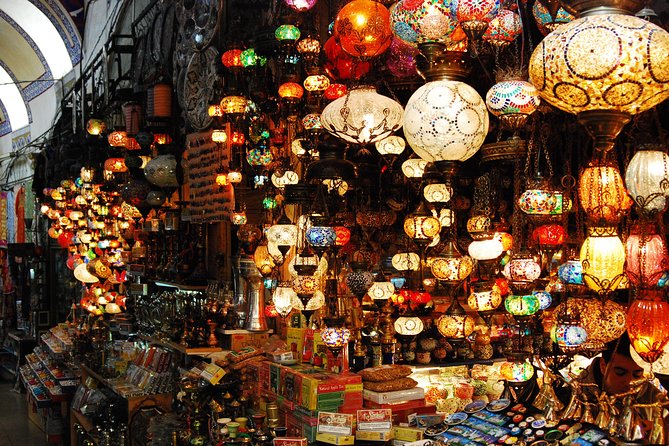
That first turn into the Grand Bazaar is a shock. The stalls, smells, and constant movement make this a classic Istanbul maze, and a guide helps you shop without wasting hours getting lost. You’ll get practical bargaining coaching and a smart route through the 15th-century Ottoman market rather than just drifting.
I love that this tour keeps things small—max 5 people—so the guide can steer you toward what you actually want. I also like the blend of history and shopping focus: the Grand Bazaar’s story matters, because it explains why certain items and workshops cluster where they do. Names I’ve seen associated with top experiences include Tayfun, Lutfallah, Serhat, Apo, and Yuke, and the common thread is direction.
One drawback to consider: some itineraries can include detours to rug or carpet shops outside the bazaar. If rugs are not your thing, go in with clear priorities, because a couple of guests felt they lost time to hard selling.
In This Review
- Key things to know before you go
- Entering the Grand Bazaar at 9:00am: why you want a guide
- Meeting near Çemberlitaş and reaching the bazaar entrance fast
- Inside the 15th-century Ottoman market: what the walking route is really doing
- Bargaining in a way that doesn’t ruin your day
- What you’ll shop for: jewelry, ceramics, rugs, and alabaster-style keepsakes
- Tea, coffee, and the small break that keeps you sane
- The fly in the ointment: rug detours and hard-sell risks
- Price and value: is $264.34 worth 3–4 hours?
- Who this tour suits best (and who should think twice)
- Should you book the Grand Bazaar shopping tour?
- FAQ
- How long is the Grand Bazaar shopping tour?
- Where do I meet the guide?
- What time does the tour start?
- Is hotel pickup included?
- What’s included in the price?
- Are admission tickets included?
- Are food and drinks included?
- Does the tour include hotel drop-off?
- Can I cancel and get a refund?
Key things to know before you go
- Small-group size (max 5): more time with your guide, less “follow-the-leader” chaos.
- 9:00am start: mornings tend to feel calmer, which makes shopping and bargaining easier.
- 4,000+ stalls spread across nearly 60 blocks: you’ll need a plan to avoid wandering aimlessly.
- Bargaining coaching: you’ll learn the local rhythm of offers, counters, and when to walk.
- Focus on authentic keepsakes: look for locally crafted jewelry, ceramics, and even alabaster-style pieces.
- Possible rug-showroom stop: if you dislike rugs, say it up front.
Get lost in the Grand Bazaar a while longer


Entering the Grand Bazaar at 9:00am: why you want a guide
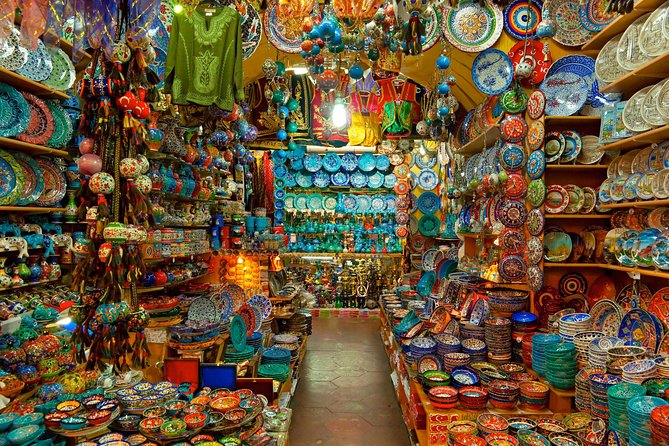
If you’ve never been, picture a covered shopping city. The Grand Bazaar is built as a maze of corridors and slender alleyways, and it’s easy to lose your bearings fast—especially when you’re trying to compare prices and spot craftsmanship at the same time. This tour is set up to solve that problem: you have an English-speaking guide who knows how to move you efficiently through the market.
The other big reason I think this tour works is the group size. With a maximum of 5, you’re not competing for the guide’s attention while you stand off to the side. On small groups, guides like Serhat (praised for insider knowledge) could slow down when questions came up, and you felt like shopping with a knowledgeable friend who also understands how to negotiate.
Meeting near Çemberlitaş and reaching the bazaar entrance fast
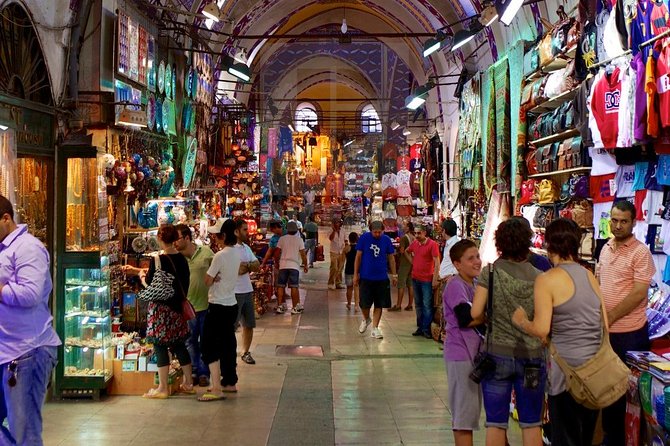
You meet your guide near the Çemberlitaş tram station area, then head toward the Grand Bazaar entrance in the Beyazıt area (the start point is listed as Grand Bazaar, Beyazıt). That matters because getting “to the bazaar” can be the easy part—the hard part is entering and then navigating.
From the first steps into the market, the tour makes a clear promise: stay close. The bazaar is a place where landmarks blur together. Your best strategy is to treat the guide like your human map for the first 30–45 minutes, then start branching off with confidence if you still have time left after the guided route.
Inside the 15th-century Ottoman market: what the walking route is really doing
Once you cross into the Grand Bazaar, you’re walking through a commercial complex that dates back to the Ottoman period after Constantinople was taken. The market grew into a covered system of trade that today is famous for its scale: thousands of shops packed across nearly 60 blocks.
The tour’s core value is that you’re not just looking at products—you’re learning how the bazaar is structured. You’ll see categories you might expect (jewelry, ceramics, woven rugs), but you’ll also learn where to look for “types” of artisans so you can shop smarter. A key detail: the Grand Bazaar is home to upwards of 4,000 stalls and shops, so even with focus, you’d struggle to cover the best areas alone.
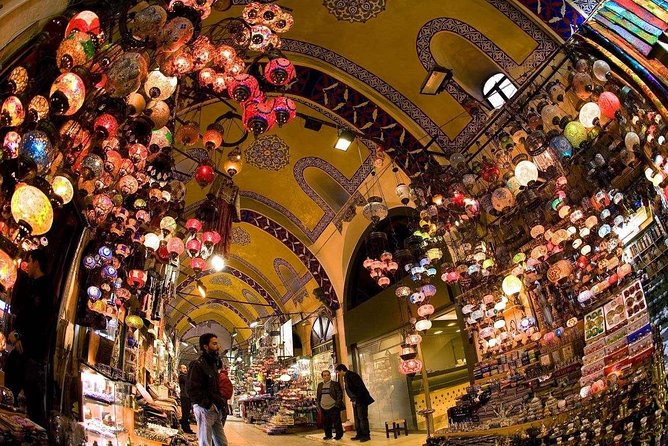
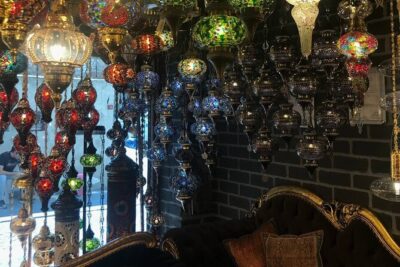
And yes, this is also where your sense of pace matters. The market is crowded with visual noise—shiny metalwork, patterned textiles, framed displays—and your mind starts filtering without you noticing. A guide helps you slow down just enough to notice quality signals (materials, finishing, and consistency) before you get swept into the next offer.
Worth putting side by side with this Istanbul pick:
- Small-Group Bosphorus Cruise and Istanbul’s Egyptian Bazaar★ 3.5 · 208 reviews
- Istanbul: Hagia Sophia, Blue Mosque, Cistern & Bazaar Tour★ 4.9 · 189 reviews
- Culinary Backstreets of the Bazaar Quarter★ 5.0 · 118 reviews
- Istanbul Old City: Basilica Cistern – Blue Mosque – Grand Bazaar★ 5.0 · 112 reviews
Bargaining in a way that doesn’t ruin your day
Most people think bargaining means yelling numbers. In practice, it’s more about rhythm and expectations. This tour explicitly trains you in the “tricks of the trade” for haggling with shopkeepers, and that’s one of the most useful parts—because you’ll carry that skill into any shop you visit after the tour too.
Here’s how I’d apply the bargaining mindset you’ll get from the guide:
- Have a target range in mind before you start. If you don’t, you’ll feel “behind” every time the price is quoted.
- Ask questions about materials and whether items are locally made. Even if you don’t buy, the answers tell you whether the shop is dealing in handcrafted work or generic inventory.
- Don’t negotiate against yourself. If you feel pressured, pause. A good bargaining approach includes knowing when the deal isn’t moving.
Guests who praised the negotiation side often said their guides could take them to special stores and help them avoid wasted time. Serhat, for example, was highlighted for explaining bargaining and leading to places people wouldn’t find alone.
What you’ll shop for: jewelry, ceramics, rugs, and alabaster-style keepsakes
This is a shopping tour, so the goal is to help you discover items worth taking home. The best shopping targets often fall into a few lanes inside the bazaar:
- Locally crafted jewelry: look for workmanship, not just the shine. If you care about authenticity, you’ll want the guide’s pointers on what’s genuinely made nearby versus what’s just sold there.
- Ceramics and artisan crafts: you’ll see traditional pieces and artisan-made options that can feel more “Turkish” than mass souvenirs.
- Woven rugs: these are a huge part of the bazaar’s identity, but they’re also the most likely place for persuasion.
- Alabaster-style pots and decorative items: the tour includes searching for Turkish keepsakes like alabaster pots, which can be beautiful and conversation-starting at home.
One practical note: if you’re shopping for gifts, decide early what “success” looks like. Do you want one statement item or several smaller pieces? The bazaar rewards focus. If your plan is fuzzy, the market will help you spend time—and then your money follows.
Also, timing matters for quality. A couple of guides were praised for taking guests through the bazaar when shops were just opening, which can make it easier to talk calmly and see displays before they’re hectic.
Tea, coffee, and the small break that keeps you sane
Mid-walk, the tour includes time for a break where you can stop for traditional Turkish tea or coffee, or grab a snack. Food and drinks are not included, so you’re paying your own way, but the value is that the guide builds in a reset point.
I like this part because it gives you a chance to recalibrate your shopping instincts. After an hour of looking, you start comparing with your eyes only. A pause helps you start comparing with your brain: material, craftsmanship, and whether the price makes sense.
The fly in the ointment: rug detours and hard-sell risks

This is where I’ll be blunt, because it’s one of the most important decision factors.
Even though the tour is centered on the Grand Bazaar, some guests reported time spent in rug or carpet shops, including a rug shop outside the bazaar or a carpet manufacturer-type stop. One review complained about a visit to a rug shop when the guest had said they had no interest, and another mentioned taking them to a rug shop outlet away from the Grand Bazaar.
So here’s my advice: before you shop hard, tell your guide what you do not want. If you’re not buying rugs, say it plainly and early. If you’re open to small textiles but not big-ticket rugs, say that too. A good guide will tailor the route.
The upside is that many guides are praised for finding “special places” inside the market without rushing you. Serhat and Tayfun were singled out for pride, insiders’ knowledge, and for not feeling in a hurry. The best-case version is a smooth, flexible shopping walk with smart choices.
Price and value: is $264.34 worth 3–4 hours?
At $264.34 per person for about 3 to 4 hours (listed around 3.5 hours), you’re paying for more than just walking around. You’re buying:
- An English-speaking licensed professional guide
- A/c deluxe chauffeur-driven vehicle
- Pick-up from centrally located European-side Istanbul hotels
- A mobile ticket, and the bazaar admission ticket is listed as free
For many people, the “value” isn’t the entrance fee—it’s the time and decision-making. In the Grand Bazaar, the wrong route can turn your day into hours of price-checking and second-guessing. With a guide, you can reduce dead time and focus on items that match your taste.
That said, if you already know exactly what you want to buy, you might not need a guide for the full duration. If you’re the type who enjoys independent browsing and you hate bargaining, you could struggle to get value out of the negotiation coaching. In that case, you’d likely do better with a general bazaar wander and a separate plan for a single craft workshop.
Who this tour suits best (and who should think twice)
This tour is a great fit if:
- You want to shop for Turkish keepsakes and learn bargaining in real time.
- You’d rather have a plan for where to look than wander through 4,000+ stalls.
- You like history, but only if it helps you understand the place you’re shopping in.
- You prefer a small group—max 5—so the guide can tailor the route.
I’d think twice if:
- Rugs and carpets are not on your list, and you don’t want to be guided toward them at all.
- You’re traveling with a very tight schedule and 3.5 hours in the bazaar feels like a lot of “market time.”
- You’re expecting a slow museum-style experience; this is a working marketplace where shopping and negotiating are part of the pace.
Should you book the Grand Bazaar shopping tour?
If you want to buy gifts and you’re okay with bargaining, I think this is one of the more practical ways to handle the Grand Bazaar. The best versions of the experience happen when your guide uses their local knowledge to guide you toward the right shops and helps you avoid wasted time, and that’s exactly what the top-rated guides in the experience set are praised for.
Before you book, do two things: set your shopping priorities, and make it clear if you don’t want rug/carpet hard-sell detours. If your tastes align with jewelry, ceramics, and locally made decorative keepsakes—and you want help learning how offers work—this tour is a strong use of a half-day in Istanbul.
FAQ
How long is the Grand Bazaar shopping tour?
It runs for about 3 to 4 hours, with the walking time described as roughly 3.5 hours.
Where do I meet the guide?
You meet near the Çemberlitaş tram station area and then head to the Grand Bazaar entrance. The meeting point is also listed as Grand Bazaar, Beyazıt.
What time does the tour start?
The start time is 9:00 am.
Is hotel pickup included?
Pickup is included only from centrally located European-side Istanbul hotels.
What’s included in the price?
The price includes an English-speaking licensed professional guide, an A/C deluxe chauffeur-driven vehicle, and hotel pickup (from eligible locations).
Are admission tickets included?
The admission ticket is listed as free.
Are food and drinks included?
No. Tea, coffee, and snacks are available during the tour, but food and drinks are not included in the price.
Does the tour include hotel drop-off?
No. The tour ends back at the meeting point, and hotel drop-off is not included.
Can I cancel and get a refund?
Yes. Free cancellation is available up to 24 hours in advance for a full refund.
If you tell me what you want to buy (jewelry, ceramics, rugs, alabaster-style items, or specific price range), I can help you choose what to ask for from the guide before you arrive.
More Shopping Tours in Istanbul
- Istanbul Grand Bazaar: From Rooftops to the Secret Passages★ 4.8 · 337 reviews
- Istanbul: Hagia Sophia, Blue Mosque and Grand Bazaar Tour★ 4.5 · 222 reviews
- Small-Group Bosphorus Cruise and Istanbul’s Egyptian Bazaar★ 3.5 · 208 reviews
- Istanbul: Hagia Sophia, Blue Mosque, Cistern & Bazaar Tour★ 4.9 · 189 reviews
- Istanbul: Hagia Sophia, Blue Mosque, and Grand Bazaar Tour★ 4.5 · 162 reviews
- Culinary Backstreets of the Bazaar Quarter★ 5.0 · 118 reviews
More Tour Reviews in Istanbul
- Istanbul: Bosphorus Dinner Cruise & Show with Private Table★ 4.8 · 62,058 reviews
- Istanbul: Daytime or Sunset Sightseeing Cruise & Audio Guide★ 4.8 · 14,430 reviews
- Istanbul: Bosphorus Dinner Cruise & Turkish Night Show★ 4.8 · 12,954 reviews
- Best of Istanbul 1, 2 or 3-Day Private Guided Istanbul Tour★ 5.0 · 8,922 reviews
- Istanbul: Basilica Cistern Fast-Track Entry and Audio Guide★ 4.6 · 7,521 reviews
- Istanbul: Hagia Sophia Skip-the-Line Ticket & Museum Option★ 3.7 · 4,958 reviews
More of the Grand Bazaar
- Istanbul Grand Bazaar: From Rooftops to the Secret Passages★ 4.8 · 337 reviews
- Istanbul: Hagia Sophia, Blue Mosque and Grand Bazaar Tour★ 4.5 · 222 reviews
- Istanbul: Hagia Sophia, Blue Mosque, and Grand Bazaar Tour★ 4.5 · 162 reviews
- Istanbul Old City: Basilica Cistern – Blue Mosque – Grand Bazaar★ 5.0 · 112 reviews
- Morning Istanbul: Half-Day Tour with Blue Mosque, Hagia Sophia, Hippodrome and Grand Bazaar★ 4.5 · 103 reviews
- Private Istanbul Shopping in Grand Bazaar with Personal Shopper★ 5.0 · 68 reviews
Fresh off the boat: new Istanbul reviews



Grand Bazaar Tours, compared.
 ★ 4.8Istanbul Grand Bazaar: From Rooftops to the Secret PassagesFrom $31337 reviews
 ★ 4.5Hagia Sophia, Blue Mosque and Grand Bazaar TourFrom $35222 reviews
★ 4.5Hagia Sophia, Blue Mosque, and Grand Bazaar TourFrom $25162 reviews
★ 4.5Hagia Sophia, Blue Mosque and Grand Bazaar TourFrom $35222 reviews
★ 4.5Hagia Sophia, Blue Mosque, and Grand Bazaar TourFrom $25162 reviews
 ★ 5.0Istanbul Old City: Basilica Cistern – Blue Mosque – Grand BazaarFrom $60112 reviews
 ★ 4.5Morning Istanbul: Half-Day Tour with Blue Mosque, Hagia Sophia, Hippodrome and Grand BazaarFrom $141103 reviews
 ★ 5.0Private Istanbul Shopping in Grand Bazaar with Personal ShopperFrom $7568 reviews
 ★ 5.0Private 5-6h: Topkapi + Hagia Sophia + Blue Mosque + Grand BazaarFrom $30067 reviews
 ★ 3.5Imperial Istanbul Half-Day Tour: Hagia Sophia and Grand BazaarFrom $11064 reviews
Browse the lists this tour appears in