REVIEW · ISTANBUL
Ancient Rome Under Istanbul
Istanbul’s best history is under your feet. This tour walks you through Roman and Byzantine remains hidden beneath today’s streets, churches, and squares. You get a guide to connect the dots between what you see above ground and what survives below.
I especially like the underground focus—cisterns and chapel remnants make the city feel real, not postcard-flat. I also love the way guides such as Ece, AJ, and Ege turn architecture into a story you can picture.
One possible drawback: the route can include short shop stops and the pacing may feel lighter for some people, so set your expectations for a mix of ruins plus a bit of city errands rather than nonstop archaeology.
In This Review
- Key takeaways before you go
- Why Istanbul’s Roman and Byzantine layers are different
- Price and what $45 really buys you
- Meeting at Binbirdirek and the pace you should expect
- Stop 1: Roman and Byzantine ruins under modern Istanbul
- Stop 2: Kucuk Ayasofya and the Hagia Sophia design link
- Stop 3: The Hippodrome’s square feel in Sultanahmet
- The underground cistern and chapel remnants you’ll be looking for
- The shop stop reality: tile and rug demonstrations
- Guides make or break this one
- Logistics that matter: meeting point, pickup expectations, and timing
- Who this tour suits best
- Practical tips so you enjoy every stop
- Should you book Ancient Rome Under Istanbul?
- FAQ
- How much does this tour cost?
- How long is the tour?
- What locations do we visit?
- Are tickets included?
- What’s included in the price?
- Is food or lunch included?
- Where do we meet, and when does the tour start?
- What’s the maximum group size?
- Is there free cancellation?
- What if I’m a cruise passenger?
Key takeaways before you go
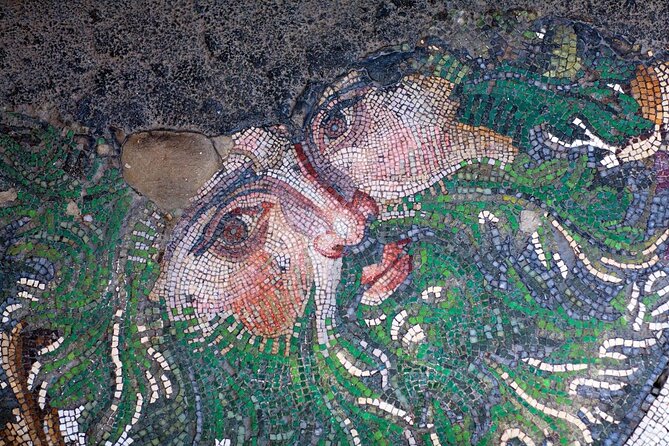
- Underground Roman-Byzantine remains you can’t easily find on your own
- Guides with deep historical explanations, often with strong command of Greek and architectural context
- Constantine’s Palace area + Byzantine chapels alongside cisterns
- Kucuk Ayasofya for the Hagia Sophia design connection (church → mosque)
- Hippodrome ruins in Sultanahmet Square, where chariot-race energy still echoes
- Small group size (up to 15) for a calmer walk and easier questions
Still deciding? Here is how a few Istanbul favourites compare with this one:



Why Istanbul’s Roman and Byzantine layers are different
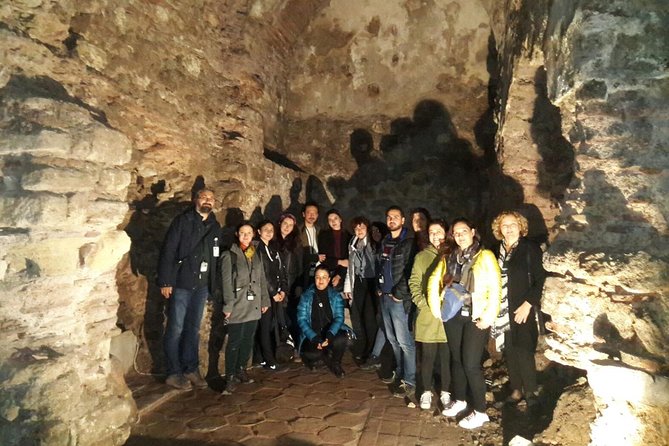
Istanbul is a rare city where you don’t “visit” history in a museum and call it a day. You look around at modern buildings, and then a good guide shows you the same spot’s older life underneath—brick, stone, water systems, and sacred spaces that changed jobs over centuries.
That underground angle matters because Byzantine Istanbul wasn’t preserved like a frozen scene. It was lived in. Some structures were reused, some were walled in, and others became part of basements, courtyards, and foundations. So when you go under street level, you’re seeing how the city kept functioning while its identity kept shifting.
This kind of tour also teaches you a useful habit: slow down and read what you’re standing near. A cistern isn’t just a hole in the ground. It’s a clue to plumbing, priorities, and how water moved through a dense capital.
Price and what $45 really buys you
At $45 for about 3 to 5 hours, the value is mainly in three places: a professional guide, local taxes/fees, and the fact that the stops are structured to give you access to several big themes (Roman/Byzantine, sacred buildings, water, and public entertainment) in one outing.
The itinerary notes Admission Ticket Free for the listed stops, which helps keep your total cost predictable. And since the price includes the guide, you’re not stuck trying to interpret architectural details alone while you’re tired and hot.
Where value can dip: if you’re expecting only major “standalone” sites with long indoor visits, you might feel there’s not enough time in each location. One review complained the experience felt shorter than advertised and included less-than-expected time at certain points. If you like rapid-fire history with frequent changes of scene, you’ll probably be fine.
Meeting at Binbirdirek and the pace you should expect
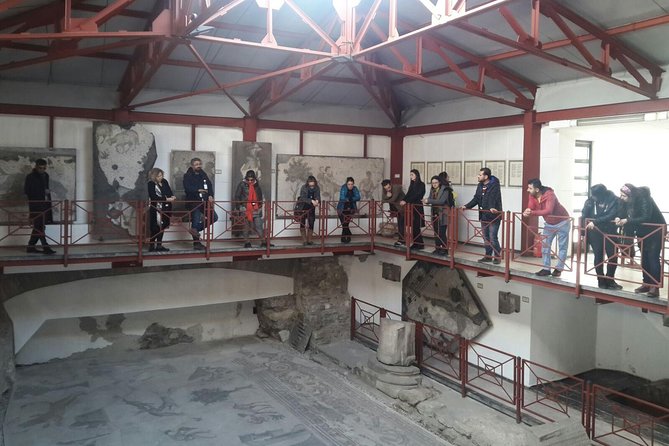
Your tour starts at 10:00 am near Binbirdirek, Divan Yolu Cd. No:15, in Fatih (Sultanahmet area). It ends back at the meeting point, so you’re not trying to catch a tram at the end while your legs negotiate with your plans.
The group max is 15 travelers. That’s a sweet spot. Large enough to feel like a real tour, small enough that your guide can pause for questions and still keep everyone moving.
Also plan for walking. Several reviews emphasize getting around on foot and recommend comfortable shoes. If you’re short on mobility or hate stairs, you might want to ask the operator how underground portions are handled at the day’s specific sites.
- Best of Istanbul 1, 2 or 3-Day Private Guided Istanbul Tour★ 5.0 · 8,922 reviews
- Istanbul: Basilica Cistern Fast-Track Entry and Audio Guide★ 4.6 · 7,521 reviews
- Istanbul: Hagia Sophia Skip-the-Line Ticket & Museum Option★ 3.7 · 4,958 reviews
- Istanbul: Hodjapasha Whirling Dervishes Show & Exhibition★ 4.4 · 4,790 reviews
Stop 1: Roman and Byzantine ruins under modern Istanbul
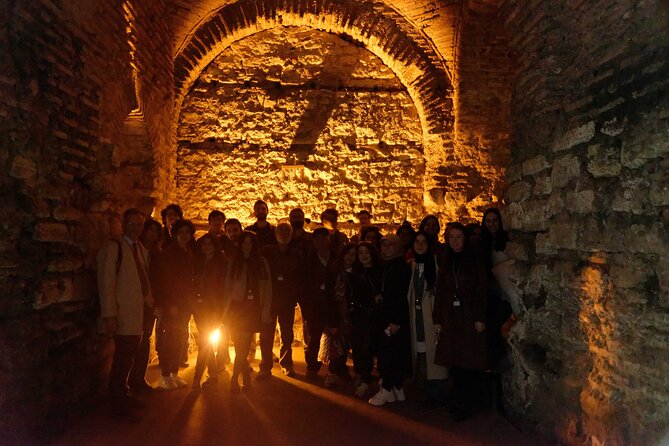
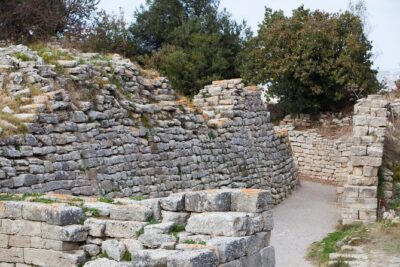
This is the core idea of the tour: Roman and Byzantine layers beneath the modern city. Think foundations, remains tucked under buildings, and spaces you’d never notice just wandering Sultanahmet.
What you’re likely to get here is guided context—how those ruins connect to the Byzantine city layout, and why you keep hearing about structures that are now partly hidden. A good guide will also help you “see” what you’re looking at: construction style, materials, and how the city’s functions evolved.
One extra highlight mentioned in the tour description is Constantine’s Palace. Even if you’re not walking through a full palace complex like you would in a blockbuster site, being shown the palace-related context in the right underground setting can make the whole capital-story feel more believable. Istanbul’s rulers left fingerprints everywhere, but they don’t always leave them in obvious places.
Stop 2: Kucuk Ayasofya and the Hagia Sophia design link
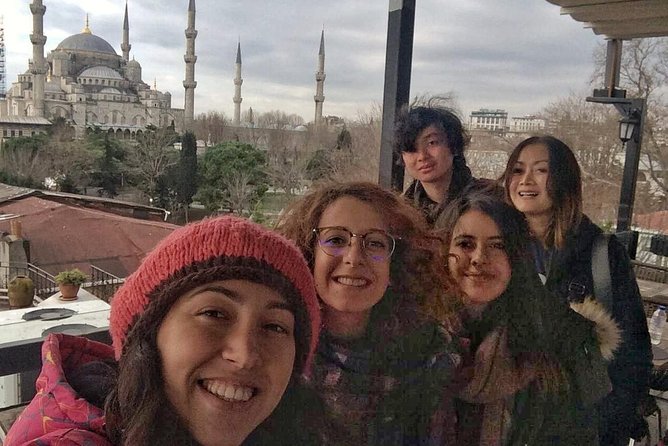
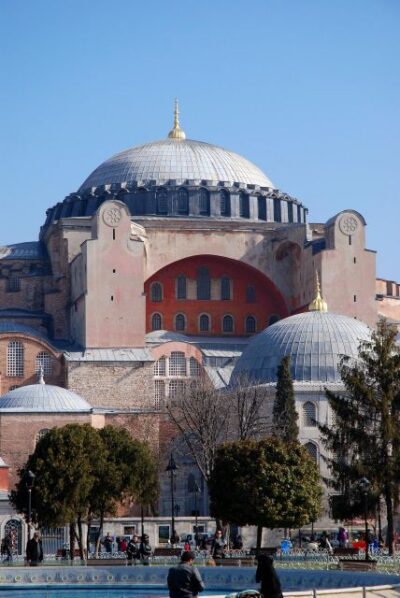
Kucuk Ayasofya Mosque (with nearby Gazi Süleyman Paşa Mosque) is where the tour switches from “hidden archaeology” to “recognized architecture.” The key detail is that it was a church and later converted into a mosque—so you get a clear example of how Byzantine sacred design was adapted rather than erased.
This stop is also described as a model for Hagia Sophia’s architects. In practical terms, that means your guide can point out design choices—layout cues, proportions, and architectural logic—that help you understand why Hagia Sophia looks the way it does.
What I like about this stop is that it gives you an “on-ramp.” Even if underground ruins make your brain spin, a visible, explainable building helps you lock in the story: Byzantine style didn’t vanish overnight. It changed function and kept influencing designers.
Timing here is short (around 20 minutes), so don’t expect a slow sit-down. Treat it like a focused architecture lesson with photos after.
Stop 3: The Hippodrome’s square feel in Sultanahmet
The Hippodrome is now around Sultanahmet Square, and that matters because it’s a reminder that public life shaped the city as much as religious life did. This is the area tied to chariot races and major celebrations, and today it’s surrounded by the modern bustle of the neighborhood.
A good guide will help you picture the scale and movement. Even if the physical remains you can see are limited, you learn where the action happened and how the Hippodrome fit into the Byzantine capital’s rhythm.
The stop is brief (around 15 minutes), but it’s a high-interest one. It helps you stop thinking of Istanbul as only churches and palaces. It was also a place where crowds gathered, politics performed, and spectacle mattered.
The underground cistern and chapel remnants you’ll be looking for
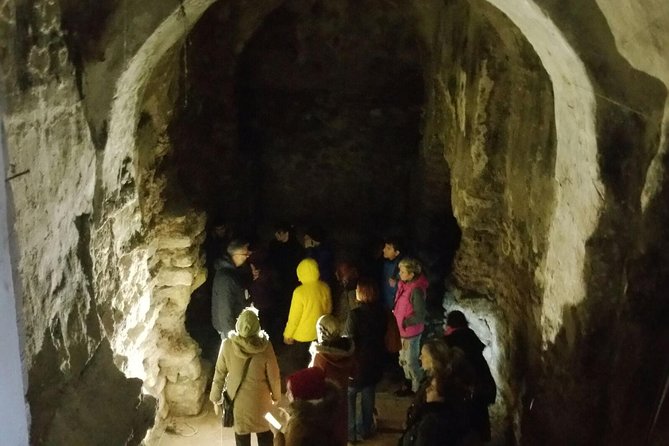
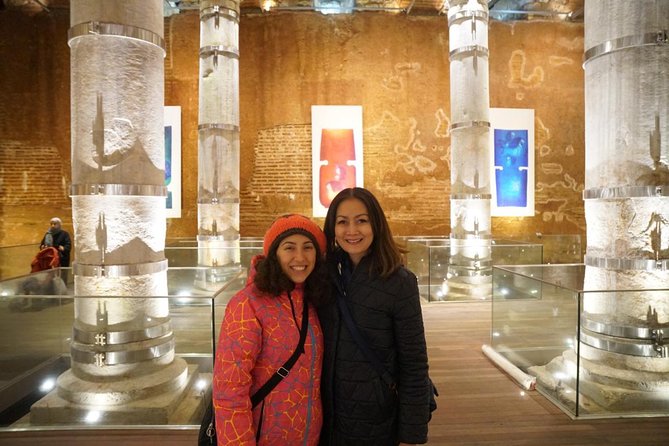
The tour description promises ancient cisterns and the remains of Byzantine chapels. Those are not just “cool underground rooms.” They’re also where you can learn the practical side of Byzantine life.
Cisterns teach you about water management in a dense city. Chapels teach you how private devotion and community worship likely worked in spaces that weren’t always meant for huge public crowds. When you connect those dots, the underground feels less like a hidden basement tour and more like a functional slice of daily reality.
One thing to watch: some parts of these spaces can feel dim and enclosed, so keep your phone flashlight ready (without blinding anyone). If you’re someone who likes to read captions and study quietly, you might want to slow down during the stops and ask your guide to point out 2–3 specific details you can remember later.
Also note that you may experience changes in the exact underground areas you access depending on what’s available. The tour is built around the idea of discovering what’s there beneath the modern city, but conditions at individual sites can vary.
The shop stop reality: tile and rug demonstrations
Here’s where expectations can get tricky. Some versions of the route can include brief time in shops tied to the local crafts story. One review mentioned a rug shop after starting with tea at a restaurant with a view. Another mentioned a tile shop demonstration, where the guide talked through materials and techniques.
That doesn’t automatically mean the tour is bad. Done well, a craft stop can help you understand how modern Istanbul still values the same visual language—tiles, ornament, and restoration culture. But it can also feel like a detour if you booked specifically for uninterrupted ruins.
My advice: if ruins are your only priority, ask the guide in advance what the shop portion looks like on your day. If you’re flexible and enjoy art and local materials, a short demonstration can be a nice pause between heavy history.
Guides make or break this one
This tour seems to rise and fall on the guide, and the feedback is clear. Names like Ece, AJ, Ege, and Eve come up repeatedly, and the common thread is strong explanations paired with warmth.
What that means for you: you’ll get more than dates. You’ll likely get comparisons between Greek and Roman elements, architectural reasoning, and a local perspective on how Istanbul’s layers got arranged over time. One review even described a rainy-day start with an hour of context over coffee, which tells me the best guides adjust in real time when conditions change.
If you care about asking questions, this is also a good format. The group size stays small enough for back-and-forth, not just a one-way lecture.
Logistics that matter: meeting point, pickup expectations, and timing
Your official start is at the meeting point in the old city. The tour information doesn’t promise hotel pickup, and one response in the feedback stream explains that pickup—when it happens—is not included in the base tour price.
So here’s the practical rule: plan to get to Binbirdirek on your own. If you think you’ll struggle finding it, contact the provider ahead of time and ask what support is possible for your situation.
Timing is also a real-world factor. Although the tour is listed as 3 to 5 hours, some reviews mention running closer to 3 hours. That doesn’t mean it’s automatically worse—more efficient walking and quicker site access can happen—but if you’re budgeting a long day, keep a little cushion.
Who this tour suits best
This is a great match if:
- you like architecture and how cities evolve
- you want Istanbul’s Roman-Byzantine story told through water systems and sacred spaces
- you enjoy shorter stops with frequent explanation
- you’re happy to walk and want help spotting what matters
You might like something else if:
- you need long, museum-style time at one site
- you dislike any shop stops or time spent in commercial spaces
- you’re very time-crunched and can’t handle a possible shorter schedule
Practical tips so you enjoy every stop
- Wear comfortable shoes. You’re moving between underground and street-level areas.
- Bring a layer. Underground portions can feel cooler than the sun outside.
- Have a quick snack in mind, since food and drinks aren’t included.
- If you’re interested in Constantine’s Palace context, ask your guide to connect what you see underground to the bigger capital story early. It pays off later.
Should you book Ancient Rome Under Istanbul?
I think you should book if you want a different side of Istanbul—less “look at another mosque” and more “understand the city’s engineering and faith layers.” For the $45 price, the value is strongest when you get a guide who can explain what you’re seeing clearly, and the feedback strongly suggests that’s often the case.
Skip it only if your ideal day is one major archaeological site after another with no surprises in pacing. This tour is built around layers, transitions, and explanation, not just monuments standing alone.
If you’re the type who loves to mentally map cities—where power lived, how water worked, and how sacred spaces changed jobs—this is a smart way to spend a half day in Istanbul.
FAQ
How much does this tour cost?
The price is listed as $45.
How long is the tour?
The duration is 3 to 5 hours (approx.).
What locations do we visit?
You’ll go to Roman and Byzantine ruins underground in Istanbul, Kucuk Ayasofya / Gazi Süleyman Paşa Mosque, and the Hippodrome area at Sultanahmet Square.
Are tickets included?
The itinerary shows Admission Ticket Free for the stops listed.
What’s included in the price?
The tour includes all taxes, fees and handling charges, local taxes, and a professional guide.
Is food or lunch included?
No. Food and drinks, lunch are not included.
Where do we meet, and when does the tour start?
The meeting point is Binbirdirek, Divan Yolu Cd. No:15, 34122 Fatih/İstanbul, and the start time is 10:00 am.
What’s the maximum group size?
The tour has a maximum of 15 travelers.
Is there free cancellation?
Yes. You can cancel up to 24 hours in advance for a full refund.
What if I’m a cruise passenger?
You must provide the ship name, docking time, disembarkation time, and re-boarding time at booking.
More Tour Reviews in Istanbul
- Istanbul: Bosphorus Dinner Cruise & Show with Private Table★ 4.8 · 62,058 reviews
- Istanbul: Daytime or Sunset Sightseeing Cruise & Audio Guide★ 4.8 · 14,430 reviews
- Istanbul: Bosphorus Dinner Cruise & Turkish Night Show★ 4.8 · 12,954 reviews
- Best of Istanbul 1, 2 or 3-Day Private Guided Istanbul Tour★ 5.0 · 8,922 reviews
- Istanbul: Basilica Cistern Fast-Track Entry and Audio Guide★ 4.6 · 7,521 reviews
- Istanbul: Hagia Sophia Skip-the-Line Ticket & Museum Option★ 3.7 · 4,958 reviews