
REVIEW · BASILICA CISTERN TOURS
Basilica Cistern Skip-the-Ticket-Line Entry with Audio Guide
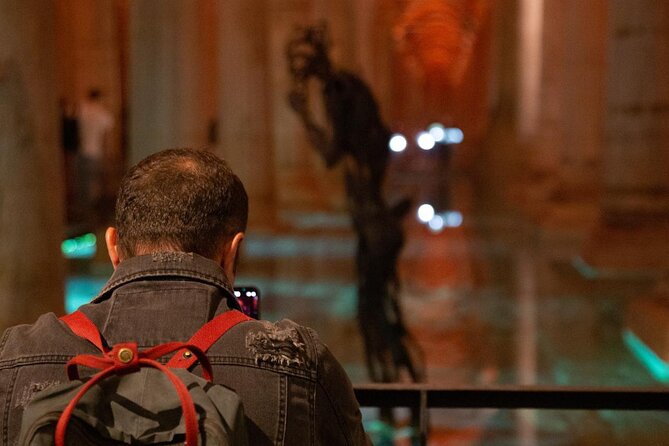
Istanbul’s Basilica Cistern feels like a secret you can actually walk through, with towering columns and the famous Medusa heads. You’ll also get a QR ticket and an audio guide, so the place stops being just spooky and turns into a clear story.
I especially love the cool, cathedral-like atmosphere and the scale—336 marble columns and a whole underground water system that once served the Great Palace. I also like that the audio guide focuses on the myths and engineering details, including the 52 stone steps and the cistern’s huge capacity.
One thing to think about: even with skip-the-line entry, you still must go through security, and the experience relies on your QR codes showing up correctly by email.
In This Review
- Key highlights before you go
- Basilica Cistern in One Breath: Justinian’s Underground Water World
- Skip-the-Line Entry: What You Can Skip (and What You Can’t)
- Descending 52 Stone Steps Into a Cathedral-Size Cistern
- The 4th-to-6th Century Story: Why This Place Was Built
- Medusa Heads and the 336 Marble Columns: The Myth Meets the Math
- Your Audio Guide Experience: How to Get More From the 1-Hour Visit
- What the Time Limit Means in Real Life
- Price and Value: Is $55.61 Worth It?
- Who This Basilica Cistern Entry Fits Best
- Should You Book This Basilica Cistern Skip-the-Ticket-Line Entry?
- FAQ
- FAQ
- How long is the Basilica Cistern visit?
- What’s included in the ticket?
- Do I need to download anything?
- Can I skip the security line?
- When will I receive the QR ticket and audio guide?
- Are there set hours for the visit?
- Is there free cancellation?
- Is the location near public transportation?
Key highlights before you go

- Medusa head columns: one carved head is upside down and the other is sideways
- Justinian-era engineering: built to supply the Great Palace via aqueducts
- 52 stone steps down: a physical reminder you’re entering a working water space
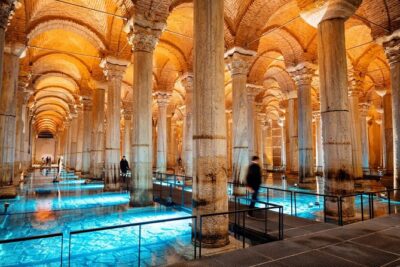
- 336 marble columns: the cistern’s size hits you fast once you’re inside
- 80,000 cubic meters of water storage: a mind-boggling amount, explained in context
- Audio guide link by email: plan ahead so you’re ready when you arrive
Back down among the cistern's columns


Basilica Cistern in One Breath: Justinian’s Underground Water World
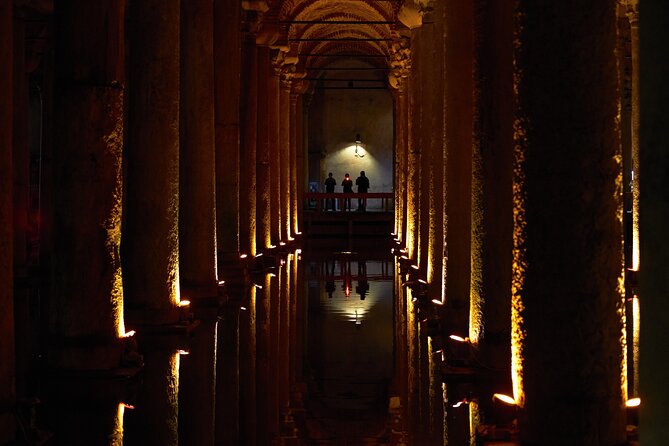
The Basilica Cistern is Istanbul’s best kind of surprise: part myth, part infrastructure. Built in the 4th century and enlarged in 532 AD, it became a practical water storage space during Byzantine times—and later, it was tied to the water supply of the Great Palace.
In the 6th century, Emperor Justinian I made this into a true system. The cistern was supplied through long aqueducts, including water delivered via 20 kilometers of aqueducts from a reservoir near the Black Sea. When you’re standing under those rows of columns, that practical purpose makes the mood feel even stranger, like you’re watching history run on quiet power.
Skip-the-Line Entry: What You Can Skip (and What You Can’t)
This entry is set up to reduce the time you spend at the ticket counter, and that matters in a busy city. Your access is managed by QR codes, and the audio guide link comes through email before your date.
Here’s the key detail: you cannot skip security lines. There may still be a line at the entrance, and everyone goes through it. So yes, you save time versus a full ticket counter shuffle, but don’t expect a friction-free entry through the whole process.
I’d also treat the QR codes like a checklist item. If they don’t arrive as expected, you’ll feel the stress fast because the counter may not be able to fix things on the spot. One past issue was exactly that—missing QR codes made entry hard—so do yourself a favor and search your email the day before, then again the morning of. If your QR codes are in a separate email from the Istanbul Tourist Pass sender, check both messages.
Descending 52 Stone Steps Into a Cathedral-Size Cistern
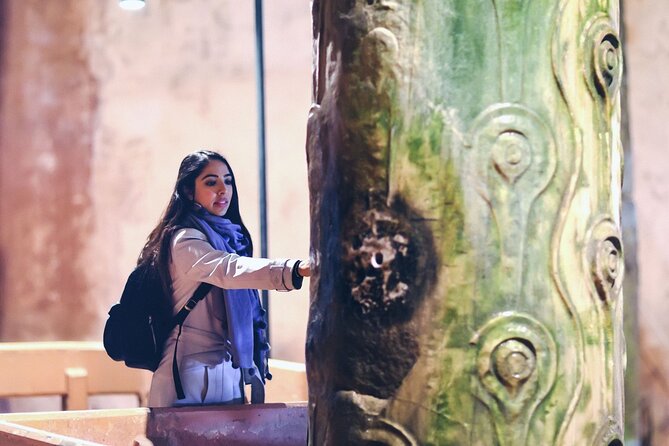
Once you’re through entry, the experience changes from street noise to stone silence. You descend fifty-two stone steps into the cistern, and the temperature drop is real in a way that makes your brain pay attention.
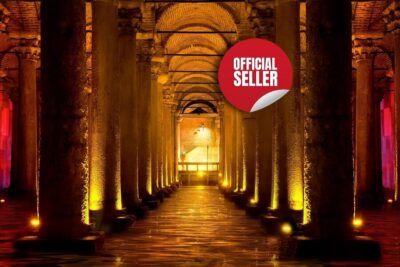
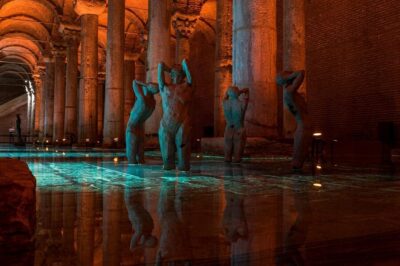
Inside, you’re walking into a space designed for water storage at massive scale. The cistern’s layout, with 336 marble columns, creates long sightlines and a slow sense of movement even if you’re just standing still. The air feels cooler and calmer, which is why this site works so well for visitors who want something different from the usual outdoor Istanbul highlights.
You’ll also notice how the cistern’s design supports the myths told about it. Water storage spaces don’t normally get described like a movie set, but here the scale and lighting do it for you. The cistern feels like it was built to make people whisper.
Worth putting side by side with this Istanbul pick:
- Istanbul: Hagia Sophia Skip-the-Line Ticket & Museum Option★ 3.7 · 4,958 reviews
- Topkapi Palace and Harem Skip-the-Line-Tickets & Audio Guide★ 4.3 · 4,745 reviews
- Istanbul: Blue Mosque & Hagia Sophia Guided Tour w/ Tickets★ 4.8 · 3,600 reviews
- Istanbul: Hagia Sophia Entry Ticket with Audio Guide★ 4.3 · 2,854 reviews
The 4th-to-6th Century Story: Why This Place Was Built

The Basilica Cistern isn’t just old. It’s old with a job. It began as part of the 4th-century city’s water needs and was enlarged in 532 AD, during Byzantine times.
Later, under Justinian I, the cistern became part of a larger plan for supplying the Great Palace of Constantinople. The idea was simple and huge: store enormous quantities of water and deliver it where it was needed, including the palace complex. The information tied to this visit includes that the cistern could store up to 80,000 cubic meters of water.
When you hear those numbers while you’re underground, they stop being trivia. You start to understand why the space feels so deliberate. This is not just a “cool photo spot.” It’s a physical explanation of how a major city kept running.
Medusa Heads and the 336 Marble Columns: The Myth Meets the Math

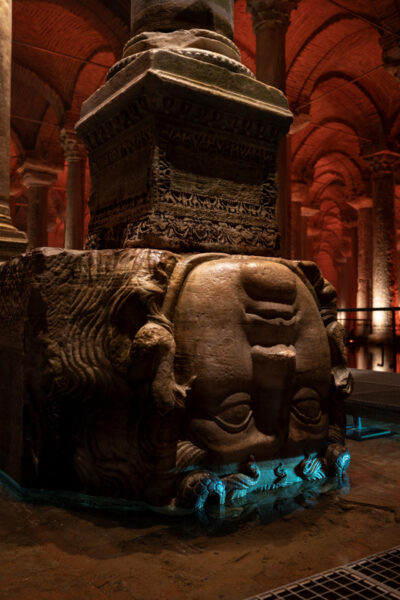
The Basilica Cistern’s most famous visual feature is the Medusa head columns. Two ancient stone carvings show Medusa—one placed upside down and the other laid sideways.
It’s an odd detail in an otherwise practical water hall. That’s what makes it work. The columns and the storage function give you structure; the myth gives you mystery. Even if you don’t know the story of Medusa, the fact that these heads appear in the middle of a working water space creates instant atmosphere.
This is also where the audio guide earns its keep. You’re not just looking at carvings. You’re hearing the context that connects them to Greek mythology and how the story became part of the cistern’s modern identity.
Your Audio Guide Experience: How to Get More From the 1-Hour Visit
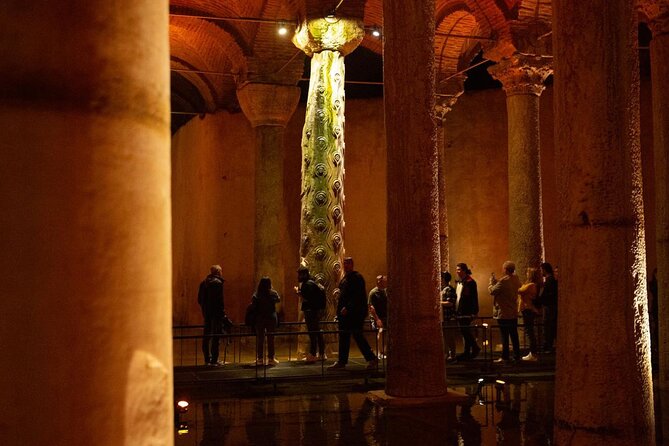
Your visit is designed for about 1 hour. That’s long enough to get oriented, walk through the main hall, and read the key visual points without feeling rushed.
Your audio guide is included, and it’s delivered as a link by email ahead of time. You’ll have both the entry ticket QR codes and the audio guide link coming through separate emails from the supplier. That separation is useful once you know what to look for, but it also means you should be proactive.
How to make it feel effortless:
- Download or open the audio guide link before you arrive
- Keep your QR code accessible on your phone, but also have a backup screen ready in case your signal is weak
- Let the guide set the pace, then pause at the columns you want to photograph
If you like site stories—how a place worked, who built it, why specific elements were placed there—this format is a good match. If you prefer silent wandering, you can still take your time, but you’ll miss some of the connections that explain why the cistern feels so strange.
What the Time Limit Means in Real Life
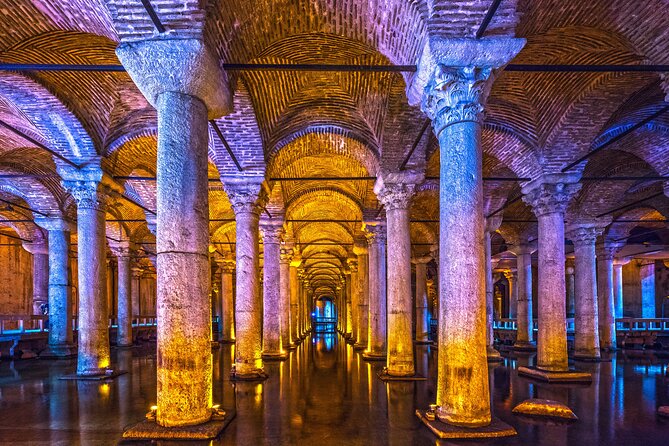
A one-hour visit sounds short until you go underground and start noticing details. The columns create lots of angles, and it’s natural to slow down near the Medusa heads and then drift back toward the center.
Also, the visit timing is tied to the cistern’s daily operating hours. On January 1st, the Basilica Cistern is open from 12:00 PM to 6:00 PM. For most other days, you’ll want to check the current hours before you commit to your plan, since hours can shift outside that one listed date.
Best use of your time: arrive ready to commit to the story. If you’re rushing between Istanbul sites all day, you might treat this like a quick stop. But if you give it even a solid hour, you’ll actually feel the change in scale and mood.
Price and Value: Is $55.61 Worth It?
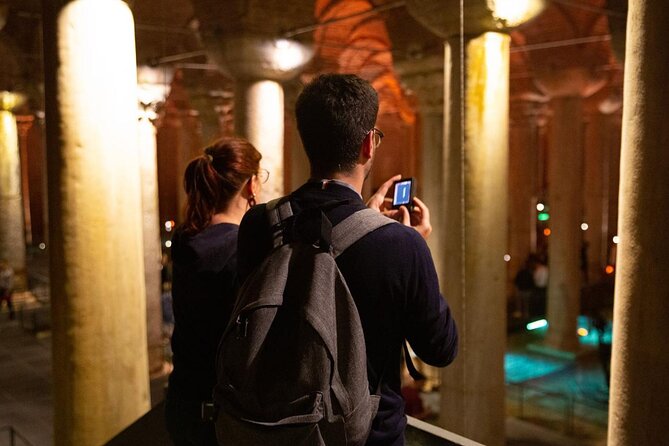
At $55.61 per person, you’re paying for more than just entry. You’re also paying for a managed ticket flow (skip the ticket counter), plus an included audio guide.
That can be good value if:
- You know you’ll want the context and don’t want to improvise at the site
- You want to reduce time spent figuring out what ticket desk to use
- You like the idea of a guided pace without being stuck in a large group
It may feel less worth it if you’re the type who doesn’t use audio guides, or if you’re worried about QR-code hiccups. Based on a previous complaint, the online QR process can go sideways, and when it does, it doesn’t help that security and entrance lines still exist. If your email setup is messy, if you travel with weak phone reception, or if you hate relying on tech, you’ll want a backup plan (like checking your inbox early and saving screenshots).
Overall, the value makes sense when the goal is a smooth, informative visit. The included audio guide is the main reason this price doesn’t feel random.
Who This Basilica Cistern Entry Fits Best
This experience suits you if you want:
- A cool indoor break from Istanbul heat and crowds
- A story-heavy stop where myth and engineering connect
- A structured visit that still lets you wander at your own pace
It also works well for first-timers. The Basilica Cistern is widely known, but the audio format helps you move beyond the postcard version. You’ll leave with a clearer mental map of what you saw: steps down, columns around, Medusa heads in the middle of it, and the water-storage system behind the scenes.
Should You Book This Basilica Cistern Skip-the-Ticket-Line Entry?
I think you should book it if you’re comfortable handling QR codes and you’ll actually use the audio guide. The ticket structure plus audio context is what makes the time worth it, especially because the visit is about one hour.
I’d reconsider if you tend to avoid app- or email-based tickets, or if you’re worried about device issues on the day of travel. The biggest real-world risk isn’t the cistern—it’s the entry experience when QR codes don’t show up as expected. If that would stress you out, you may prefer to plan a more manual approach.
If you’re organized—check your emails the day before, keep your QR codes ready, download the audio ahead—this is a strong way to see one of Istanbul’s most haunting spaces without wasting time at the counter.
FAQ
FAQ
How long is the Basilica Cistern visit?
The visit is about 1 hour.
What’s included in the ticket?
You get entrance to the Basilica Cistern and an audio guide.
Do I need to download anything?
You’ll receive an audio guide link by email prior to your tour date, and you’ll use your QR ticket codes for entry.
Can I skip the security line?
No. You cannot skip security lines, and there may be a line at the entrance.
When will I receive the QR ticket and audio guide?
Your QR ticket and audio guide link are sent via email prior to the tour date by the activity provider, with entry QR codes and the audio guide link arriving via separate emails from the Istanbul Tourist Pass supplier.
Are there set hours for the visit?
The Basilica Cistern’s operating hours are listed as 12:00 PM to 6:00 PM on January 1st.
Is there free cancellation?
Yes. You can cancel up to 24 hours in advance for a full refund.
Is the location near public transportation?
Yes, it’s near public transportation.
More Tickets in Istanbul
- Istanbul: Hagia Sophia Skip-the-Line Ticket & Museum Option★ 3.7 · 4,958 reviews
- Topkapi Palace and Harem Skip-the-Line-Tickets & Audio Guide★ 4.3 · 4,745 reviews
- Istanbul: Blue Mosque & Hagia Sophia Guided Tour w/ Tickets★ 4.8 · 3,600 reviews
- Istanbul: Hagia Sophia Entry Ticket with Audio Guide★ 4.3 · 2,854 reviews
- Istanbul: Topkapi Palace and Harem Ticket with Audio Guide★ 4.4 · 2,401 reviews
- Istanbul: Basilica Cistern Skip-the-Line Entry Ticket★ 4.6 · 2,270 reviews
More Tour Reviews in Istanbul
- Istanbul: Bosphorus Dinner Cruise & Show with Private Table★ 4.8 · 62,058 reviews
- Istanbul: Daytime or Sunset Sightseeing Cruise & Audio Guide★ 4.8 · 14,430 reviews
- Istanbul: Bosphorus Dinner Cruise & Turkish Night Show★ 4.8 · 12,954 reviews
- Best of Istanbul 1, 2 or 3-Day Private Guided Istanbul Tour★ 5.0 · 8,922 reviews
- Istanbul: Basilica Cistern Fast-Track Entry and Audio Guide★ 4.6 · 7,521 reviews
- Istanbul: Hagia Sophia Skip-the-Line Ticket & Museum Option★ 3.7 · 4,958 reviews
Further Into the Basilica Cistern
- Istanbul: Basilica Cistern Fast-Track Entry and Audio Guide★ 4.6 · 7,521 reviews
- Basilica Cistern & Hagia Sophia with Optional Topkapi Palace★ 4.6 · 3,547 reviews
- Istanbul: Basilica Cistern Skip-the-Line Entry Ticket★ 4.6 · 2,270 reviews
- Combo: Hagia Sophia+Basilica Cistern Optional Topkapi Palace★ 4.3 · 1,880 reviews
- Istanbul: Blue Mosque, Hagia Sophia, & Basilica Cistern Tour★ 4.7 · 1,806 reviews
- Istanbul: Basilica Cistern Skip-the-Line Entry & Audio Guide★ 4.6 · 1,477 reviews
Fresh off the boat: new Istanbul reviews



Basilica Cistern Tours, compared.
 ★ 4.6Basilica Cistern Fast-Track Entry and Audio GuideFrom $447,521 reviews
 ★ 4.6Basilica Cistern & Hagia Sophia with Optional Topkapi PalaceFrom $813,547 reviews
 ★ 4.6Basilica Cistern Skip-the-Line Entry TicketFrom $442,270 reviews
 ★ 4.3Combo: Hagia Sophia+Basilica Cistern Optional Topkapi PalaceFrom $811,880 reviews
 ★ 4.7Blue Mosque, Hagia Sophia, & Basilica Cistern TourFrom $581,806 reviews
 ★ 4.6Basilica Cistern Skip-the-Line Entry & Audio GuideFrom $711,477 reviews
 ★ 4.3Basilica Cistern Guided Tour & Blue Mosque Audio GuideFrom $481,337 reviews
 ★ 4.6Basilica Cistern &Topkapi Palace &Hagia Sophia Combo TicketsFrom $1571,306 reviews
Browse the lists this tour appears in