
REVIEW · BLUE MOSQUE TOURS
Blue Mosque: Art and Symbolism Guided Group Walking Tour
Step inside the Blue Mosque and start seeing clues. This 1.5-hour group walking tour helps you read Sultan Ahmed Mosque through its 20,000+ handmade blue tiles and the symbols built into the architecture. I like how the guide points out specific details most people miss, like the elephant-foot pillars and the tile flowers. One thing to plan for: the walk is not suitable for mobility impairments and it can be tough if you have heart or respiratory issues.
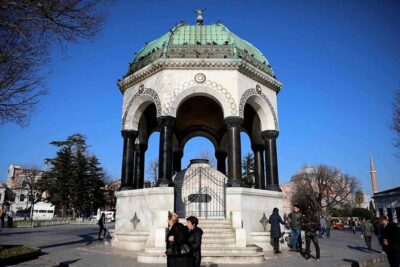
Meet at the German Fountain, then let a guide connect the art to the meaning. You’ll learn why the mosque’s look earned the name Blue Mosque, and you’ll also hear context about its 17th-century design under architect Mehmet Aga. A possible drawback is simple: it’s focused and time-limited, so you’ll want to arrive ready to look closely and move when the group moves.
In This Review
- Key Highlights Worth Showing Up For
- The Blue Mosque Is More Than Blue—You’ll Learn How to Read It
- What I Like Most (and Why It Matters)
- A Small Reality Check
- German Fountain Meet-Up: Start Easy, Get Your Bearings Fast
- Entering Sultan Ahmed Mosque: Tiles, Light, and the 17th-Century Design
- What You’ll See With a Guide Versus Alone
- Time in the Mosque: 1.5 Hours Goes Quickly
- The Detail Stops: Elephant-Foot Pillars and Gold Minarets
- Elephant-Foot Pillars
- Gold Minarets
- Tile Flowers and Religious Symbolism: The Part People Remember
- Why This Interpretation Improves Your Visit
- Architectural Context: Mehmet Aga and Ottoman Style Clues
- Photography Tips: How to Get a Better Shot Without Fighting the Crowd
- Price and Value: When $140 for 1.5 Hours Makes Sense
- Who This Tour Fits Best (and Who Might Want to Rethink It)
- Who Should Be Careful
- What to Bring: Small Items That Make the Tour Easier
- Before You Go: Simple Rules That Keep the Visit Smooth
- Should You Book This Blue Mosque Walking Tour?
- FAQ
- FAQ
- Where do we meet for the tour?
- How long is the Blue Mosque guided walking tour?
- What languages are available for the live guide?
- Is there a fee to enter the Sultan Ahmed Mosque?
- What should I bring with me?
- Is the tour suitable for people with mobility issues or health conditions?
- Is free cancellation available?
Key Highlights Worth Showing Up For
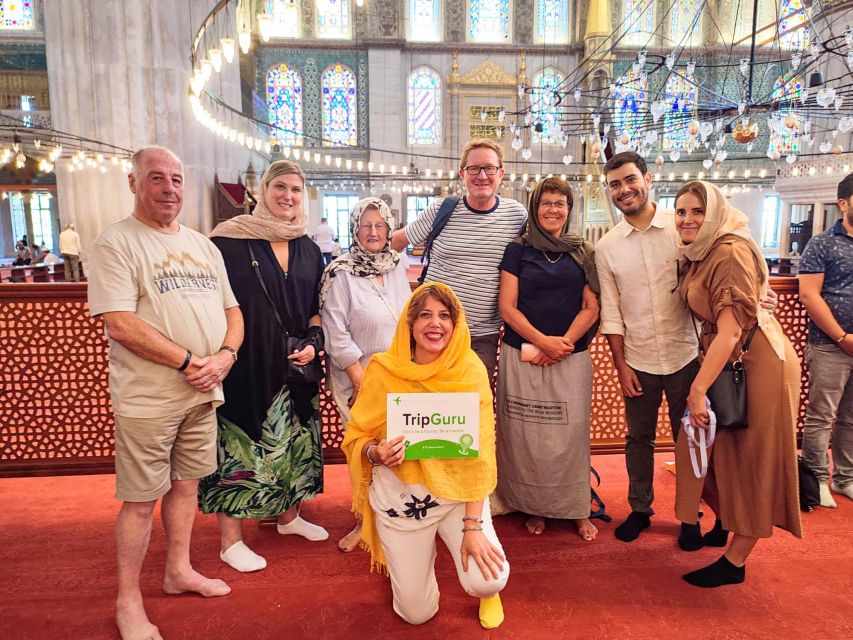
- German Fountain start with clear meet-up guidance (TripGuru shirt or sign)
- Blue tile storytelling, including how the tile flowers and patterns are meant to be read
- Spot-the-detail tour: elephant-foot pillars, gold minarets, and key architectural features
- Photo help that’s actually useful, including where to stand for strong angles for social media
- English-speaking guide plus multiple language options, depending on the day and availability
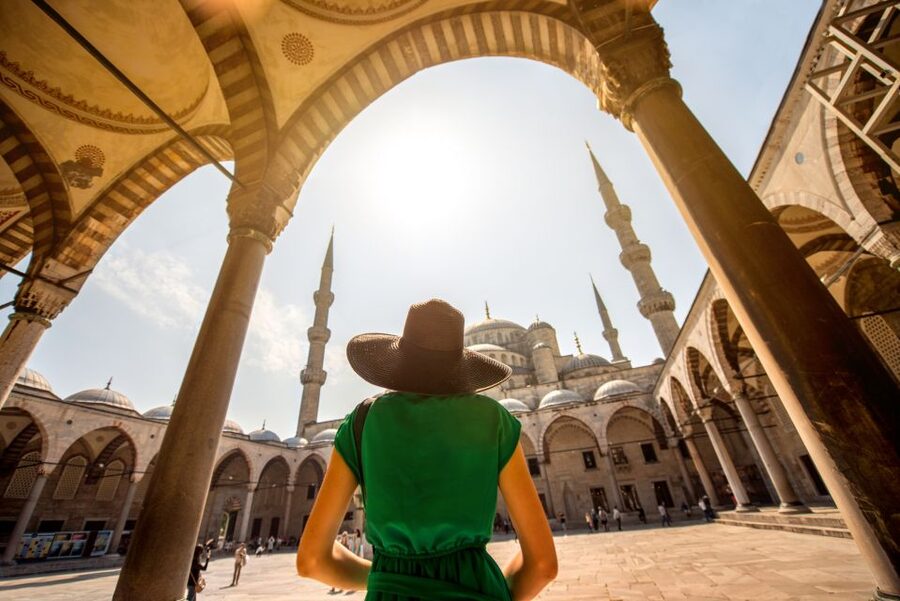
More time beneath the Blue Mosque's six minarets



The Blue Mosque Is More Than Blue—You’ll Learn How to Read It
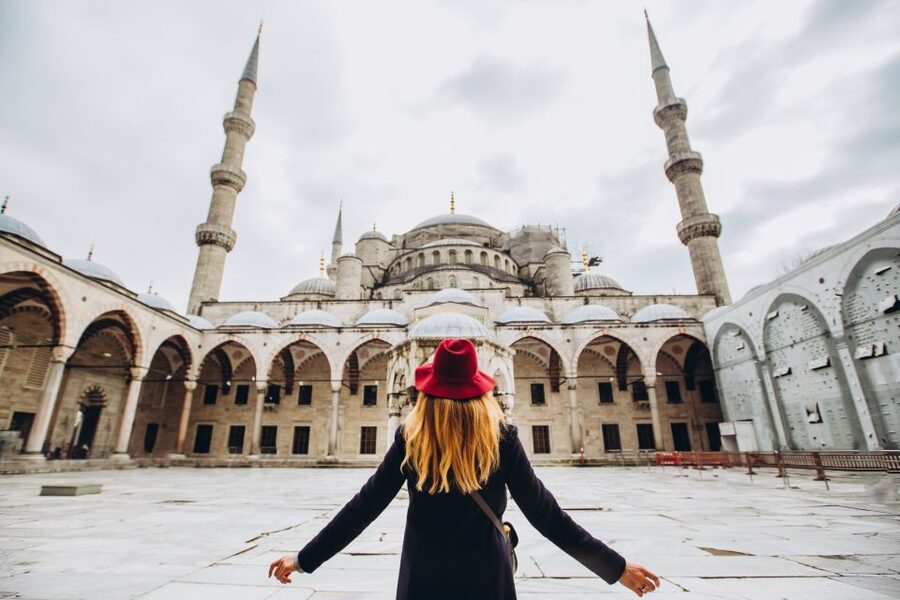
When you see Istanbul’s Sultan Ahmed Mosque for the first time, it’s easy to think the main story is color. The tour nudges you past that quick impression. The big payoff is learning how the handmade blue ceramic tiles are part art, part religious communication, and part Ottoman-era identity.
The best value here is the guided attention. Instead of wandering for an hour hoping you notice the details, you get help identifying what matters. You’ll look at things like the arrangement of the tiles and the symbolism behind repeating motifs—especially the tile flowers—so the building starts making sense as a whole.
What I Like Most (and Why It Matters)
Two things tend to make this tour stand out for practical travelers: the focus on specific features, and the way symbolism is explained in plain language. You’ll spend your time on the building’s “readable” elements, not just general sightseeing.
First, the elephant-foot pillars are called out, which instantly changes how you look at the prayer hall. Second, the gold minarets aren’t treated like random decoration; your guide ties them to the bigger visual plan.
A Small Reality Check
This is an interior-focused monument visit, but it’s still a group walking tour. That means you might not get long stretches of solo time at every corner, even if you want it. If you’re the type who likes to linger and sketch or photograph slowly, come early around the meeting time and plan extra free time after the tour.
Worth putting side by side with this Istanbul pick:
- Istanbul: Blue Mosque, Hagia Sophia, & Old Town Walking Tour★ 4.8 · 2,372 reviews
- Istanbul: Fener Balat Half-day Guided Walking Tour★ 4.9 · 1,711 reviews
- Istanbul Highlights Small-Group Walking Guided Tour★ 4.5 · 1,346 reviews
- Istanbul: European and Asian Side Guided Foodie Walking Tour★ 4.9 · 1,038 reviews
German Fountain Meet-Up: Start Easy, Get Your Bearings Fast
You’ll meet at the German Fountain and look for a guide wearing a TripGuru shirt or holding a TripGuru sign. That’s simple, and it matters because the Sultan Ahmed area can feel busy and confusing when you’re trying to find your group.
Getting the start right also helps with photos. The tour is designed so you’re not just arriving late to the best viewing spots. You’re guided to viewpoints and angles when conditions look good for clear shots—useful if you’re posting back home and want more than the typical “standing in front of a wall” photo.
If you’re trying to fit this into a tight day, it’s also helpful that last-minute booking is available for the meeting point option.
Entering Sultan Ahmed Mosque: Tiles, Light, and the 17th-Century Design
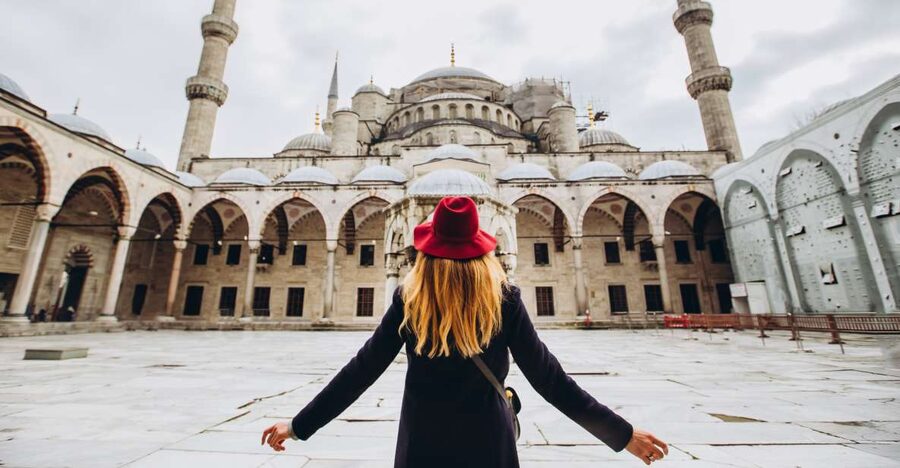
Once you’re inside Sultan Ahmed Mosque, the atmosphere changes quickly. The tour format is straightforward: you meet your guide at the entrance, then you step into a visual system built from more than 20,000 handmade blue ceramic tiles.
That number sounds huge because it is. The point isn’t the statistic—it’s how it affects your eyes. With so much tilework, you start seeing layers: patterns, borders, medallions, and details that connect visually across spaces. Without guidance, many visitors miss how structured it all is.
What You’ll See With a Guide Versus Alone
With a guide, you’re more likely to notice:
- The specific ways the tiles frame areas and lead your gaze.
- How different architectural details interact with the tile designs.
- Why some features are included to communicate meaning, not just beauty.
You also get a guided explanation of the mosque’s blend of Islamic and Ottoman architecture. That mix matters because it explains why the mosque feels both spiritual and highly designed in an imperial style.
Time in the Mosque: 1.5 Hours Goes Quickly
The tour runs about 1.5 hours total. That’s enough time to see and understand the key features, but it’s not a slow, all-day meditative visit. Plan to move efficiently and keep your camera ready—especially when your guide tells you to change your angle.
The Detail Stops: Elephant-Foot Pillars and Gold Minarets
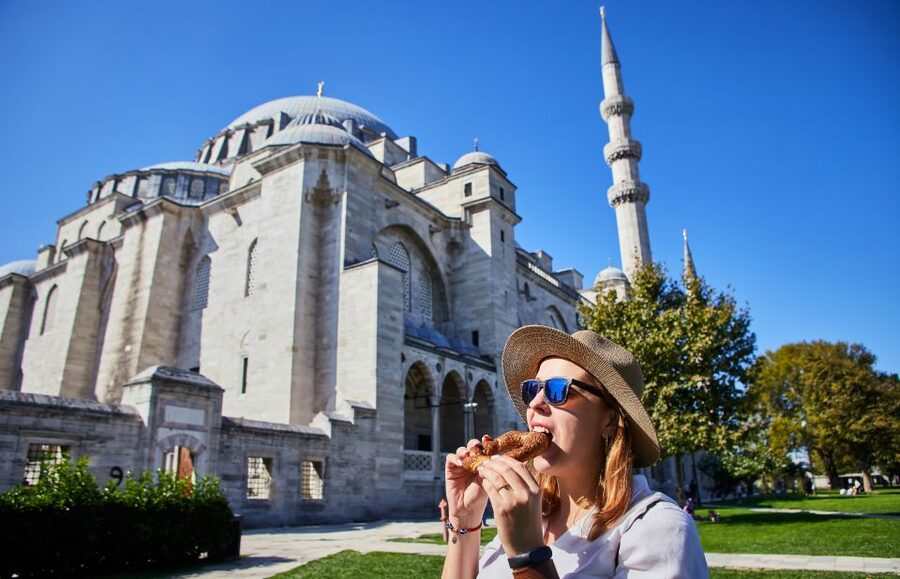
One reason this tour can be worth the money is that it tells you where to look. The highlight list isn’t generic. It names features that are real, visible, and easy to miss without context.
Elephant-Foot Pillars
The elephant-foot pillars are a great example. You’ll learn why they’re significant, which helps you stop treating them as just a striking shape. In monuments like this, structural elements and decorative choices often share the same message: strength, order, and careful design.
When the guide explains the meaning behind what you’re seeing, the building stops feeling like a photo background and starts feeling like a system of signals.
Gold Minarets
Then there are the gold minarets. You’ll hear how they fit into the mosque’s visual language and what their presence communicates. Even if you don’t memorize every detail, you’ll come away with a clearer mental map: what you’re seeing and why it’s placed where it is.
Tile Flowers and Religious Symbolism: The Part People Remember
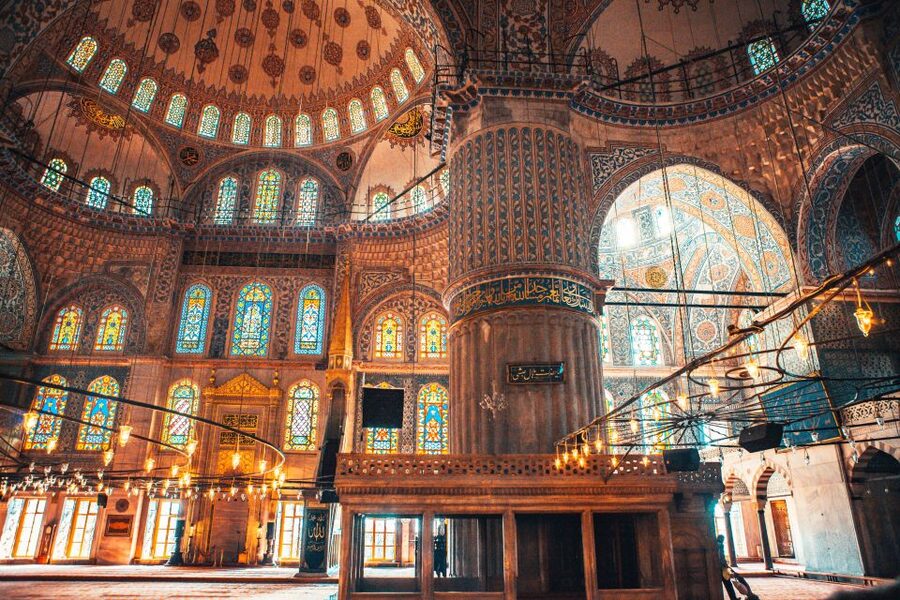
The tour’s most memorable element is the symbolism. You’re not just walking through pretty decoration—you’re learning why the different flowers on the tiles matter.
Tile flowers show up as repeating motifs, and motifs repeat for a reason in Islamic art. Your guide explains how those designs function within the space. The goal isn’t to turn the mosque into a textbook. It’s to help you understand why the design feels patterned, intentional, and meaningful.
Why This Interpretation Improves Your Visit
Here’s the practical payoff: once you understand one or two key symbols, you start recognizing them everywhere. Instead of feeling overwhelmed by the sheer amount of decoration, you’ll see structure.
That’s why a guide can make a bigger difference here than at some monuments. The Blue Mosque is a building where attention to small things changes your whole experience.
Architectural Context: Mehmet Aga and Ottoman Style Clues

You’ll also hear about the mosque’s famed architect, Mehmet Aga, and the fact that it’s a 17th-century landmark. This matters because the mosque isn’t random—it’s the result of specific Ottoman design thinking, which you can spot once someone points it out.
During the tour, you’ll get context that helps you understand how the mosque balances form and symbolism. You’ll also pick up cues on where Ottoman design shows through in an Islamic religious setting.
If you like architecture but hate feeling lost, this structure is useful. You don’t need to become an expert. You just need a few “hooks” that connect the features to a bigger story.
Photography Tips: How to Get a Better Shot Without Fighting the Crowd

The tour includes help finding strong photo angles, including ways to capture the Blue Mosque for social media. That’s a big deal in a place where many people are holding phones at chest height, and everyone ends up with the same flat perspective.
With a guide, you’re more likely to get:
- a viewpoint where the mosque’s lines read clearly,
- an angle that shows architectural features without them being cut off,
- timing suggestions when it’s easier to photograph.
A practical hint: bring a camera you can use quickly. If you need to change lenses or settings every time the guide tells you to move, you’ll fall behind.
Also, plan to bring your own patience. Even with photo help, this is a major landmark. You’ll get better results by moving with the group than by trying to break away at the last second.
Price and Value: When $140 for 1.5 Hours Makes Sense
This tour costs $140 per person for a 1.5-hour guided experience.
That price can sound steep until you compare it to what you actually get. You’re paying for an English-speaking guide (plus other language options), and you’re paying for interpretation—what the tiles mean, why architectural features matter, and where to stand for better photos. In other words, you’re not just paying for entry; you’re paying for understanding plus guidance.
Also, mosque entry is free, which means your money goes toward the guide and the organized walking format. If you enjoy taking in meaning, architecture, and symbolism rather than only “see and go,” this price can feel fair.
If you’re traveling solo with a strong interest in Islamic art and you’re happy doing research on your own, you might skip the tour. But if you want your questions answered while you’re standing inside the building, the guide adds real value.
Who This Tour Fits Best (and Who Might Want to Rethink It)
This experience is best for people who want more out of a famous site than a quick checklist. It’s especially good if you like:
- architecture and ornament
- symbolism you can actually see
- photo guidance that goes beyond the basics
- a structured route so you don’t waste time guessing
It’s also a good fit for families when the guide is prepared to handle mixed needs. One guide name you may meet is Kadri, who has a reputation for being very prepared and for mixing deep knowledge with a friendly, helpful attitude—plus making time for people in the group.
Who Should Be Careful
The tour is not suitable for:
- people with mobility impairments
- people with heart problems
- people with respiratory issues
That’s worth taking seriously. It’s a walking tour inside a dense area and the mosque environment may not be comfortable for everyone.
What to Bring: Small Items That Make the Tour Easier
The basics matter here. Bring:
- comfortable shoes
- a camera
- scarf (you may need one)
- insect repellent
- cash
You won’t want to be scrambling for those at the last minute. Shoes are the big one. Even in 1.5 hours, the ground and crowds can wear you out if you’re in the wrong footwear.
Also, plan for practical sunlight and shade. The guide will help with angles, but you still control how comfortable you are while waiting for the right view.
Before You Go: Simple Rules That Keep the Visit Smooth
A key detail: there is no fee to enter the Sultan Ahmed Mosque. Your cost is for the guided walking tour, not admission.
Also, the tour lists no hotel pickup and drop-off, so you’ll need to get yourself to the German Fountain area. If you’re staying nearby, it’s easy. If you’re farther out, build in extra buffer time for getting there.
Finally, beverages aren’t included, so bring water if you expect to be out all day.
Should You Book This Blue Mosque Walking Tour?
If you want to understand what you’re seeing—especially the tilework, elephant-foot pillars, tile flowers, and Mehmet Aga’s role—this tour is a strong choice. The structure is tight, the guide adds meaning fast, and you get help with photo angles so you don’t waste your best moments.
Book it if you’re the type who looks closer when someone explains what a building is doing. Skip it only if you already plan to study the symbolism in depth on your own and you’d rather spend the time wandering without a group.
If you can match the pace and you’re comfortable walking inside a major religious site, this is an excellent way to turn a famous stop into a memorable, more “readable” experience.
FAQ
FAQ
Where do we meet for the tour?
Meet at the German Fountain. Look for a guide wearing a TripGuru shirt or holding a TripGuru sign.
How long is the Blue Mosque guided walking tour?
The tour duration is 1.5 hours.
What languages are available for the live guide?
The live guide can be German, English, Spanish, Portuguese, or Italian.
Is there a fee to enter the Sultan Ahmed Mosque?
No. There is no fee to enter the Sultan Ahmed Mosque.
What should I bring with me?
Bring comfortable shoes, a camera, an insect repellent, cash, and a scarf.
Is the tour suitable for people with mobility issues or health conditions?
The tour is not suitable for people with mobility impairments, heart problems, or respiratory issues.
Is free cancellation available?
Yes. You can cancel up to 24 hours in advance for a full refund.
More Tours in Istanbul
- Best of Istanbul 1, 2 or 3-Day Private Guided Istanbul Tour★ 5.0 · 8,922 reviews
- Istanbul: Bosphorus Sightseeing Cruise Tour with Audio Guide★ 4.6 · 4,704 reviews
- Istanbul: Blue Mosque & Hagia Sophia Guided Tour w/ Tickets★ 4.8 · 3,600 reviews
- Istanbul: Blue Mosque, Hagia Sophia, & Old Town Walking Tour★ 4.8 · 2,372 reviews
- Istanbul: Princes Islands Tour with Heybeliada and Buyukada★ 4.4 · 2,305 reviews
- Istanbul: Basilica, Hagia Sophia, Blue Mosque Tour & Cruise★ 4.5 · 1,929 reviews
More Tour Reviews in Istanbul
- Istanbul: Bosphorus Dinner Cruise & Show with Private Table★ 4.8 · 62,058 reviews
- Istanbul: Daytime or Sunset Sightseeing Cruise & Audio Guide★ 4.8 · 14,430 reviews
- Istanbul: Bosphorus Dinner Cruise & Turkish Night Show★ 4.8 · 12,954 reviews
- Best of Istanbul 1, 2 or 3-Day Private Guided Istanbul Tour★ 5.0 · 8,922 reviews
- Istanbul: Basilica Cistern Fast-Track Entry and Audio Guide★ 4.6 · 7,521 reviews
- Istanbul: Hagia Sophia Skip-the-Line Ticket & Museum Option★ 3.7 · 4,958 reviews
More at the Blue Mosque
- Istanbul: Blue Mosque & Hagia Sophia Guided Tour w/ Tickets★ 4.8 · 3,600 reviews
- Istanbul: Blue Mosque, Hagia Sophia, & Old Town Walking Tour★ 4.8 · 2,372 reviews
- Istanbul: Basilica, Hagia Sophia, Blue Mosque Tour & Cruise★ 4.5 · 1,929 reviews
- Istanbul: Blue Mosque Guided Tour★ 4.5 · 1,910 reviews
- Hagia Sophia Skip-the-Line Ticket & Blue Mosque Audio Guide★ 4.1 · 1,879 reviews
- Istanbul: Blue Mosque, Hagia Sophia, & Basilica Cistern Tour★ 4.7 · 1,806 reviews
Fresh off the boat: new Istanbul reviews


Blue Mosque Tours, compared.
 ★ 4.8Blue Mosque & Hagia Sophia Guided Tour w/ TicketsFrom $393,600 reviews
 ★ 4.8Blue Mosque, Hagia Sophia, & Old Town Walking TourFrom $712,372 reviews
 ★ 4.5Basilica, Hagia Sophia, Blue Mosque Tour & CruiseFrom $681,929 reviews
 ★ 4.5Blue Mosque Guided TourFrom $191,910 reviews
 ★ 4.1Hagia Sophia Skip-the-Line Ticket & Blue Mosque Audio GuideFrom $331,879 reviews
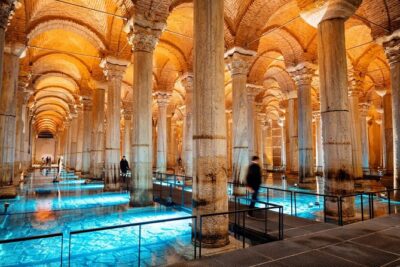 ★ 4.7Blue Mosque, Hagia Sophia, & Basilica Cistern TourFrom $581,806 reviews
 ★ 4.3Basilica Cistern Guided Tour & Blue Mosque Audio GuideFrom $481,337 reviews
★ 4.9Blue Mosque, Hagia Sophia & Basilica Cistern TourFrom $1521,180 reviews
★ 4.3Basilica Cistern Guided Tour & Blue Mosque Audio GuideFrom $481,337 reviews
★ 4.9Blue Mosque, Hagia Sophia & Basilica Cistern TourFrom $1521,180 reviews
Browse the lists this tour appears in