
REVIEW · WALKING TOURS
Byzantion Walk Path and City Walls of Istanbul
Istanbul has a second city hidden in plain stone. This walk traces the Byzantine defensive spine—Theodosian Walls and gate towers—then pairs it with the Chora Museum’s famed mosaics. You get big-structure history you can actually see, plus the payoff of art that shows how Constantinople changed over time.
What I like most is the way the itinerary moves in clear chapters: starting at Yedikule’s major-wall section and ending with Chora’s intense Palaeologan masterpieces. I also like that it’s a private, guided setup (your group only), so the pace can match your comfort. The main consideration: this is not a flat stroll. You need moderate fitness, and the tour is not recommended if you have leg problems due to walking and uneven terrain.
In This Review
- Key Highlights You’ll Care About
- What This Byzantine Walk Really Gives You
- Yedikule and the Golden Gate: The Wall Section That Sets the Tone
- Silivrikapı Gate: A Short Stop With Siege-Engine Clues
- Mevlanakapı and the Theodosian Walls Walk: Where the System Becomes Real
- Chora Museum: The Art Payoff After the Stone Defenses
- Timing, Walking Style, and What to Wear
- Price and Value: When $372.07 Works (and When It Doesn’t)
- Getting There: German Fountain to the Wall Line
- What You Can Expect From the Guiding Style
- Who Should Book This Tour
- Should You Book This Byzantine Walk + Chora Museum?
- FAQ
- How long is the Byzantion Walk Path and City Walls tour?
- Is this a private tour?
- What language is the tour offered in?
- Where does the tour start and end?
- What admissions are included?
- Is lunch included?
- Is the tour suitable if I have leg problems?
- Is the tour good for someone with moderate fitness?
- What happens if weather is poor?
- Is it okay to bring service animals?
Key Highlights You’ll Care About
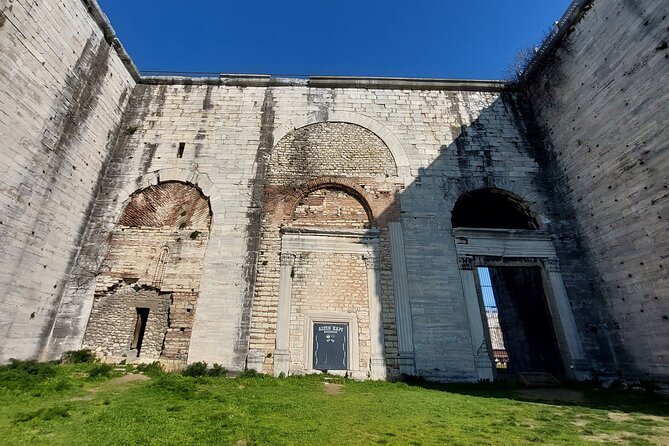
- City walls you can measure with your own eyes: multiple layers of defenses, not just a single line on a map
- Three free wall-gate stops: admission is free at Yedikule, Silivrikapı, and Mevlanakapı
- Chora Museum as the emotional finish: expect high-impact mosaics and frescoes in one visit
- A guide who checks in on the pace: breaks and comfort matter on a walk like this
- Private group up to 15: good value if you travel with friends or family
Worth putting side by side with this Istanbul pick:



What This Byzantine Walk Really Gives You
This tour is built around a simple idea: if you want to understand Constantinople, don’t only look at monuments—walk the defensive logic that shaped the city.
The Theodosian Walls weren’t a decorative border. They were designed like an engineered system. In this route you’ll see how the city’s defenses worked as layered protection: an outer defense concept, a deep moat idea, and a tall inner wall meant to absorb attacks and stop siege engines. Even if you’re not a military-history person, the structures make the story feel real, because you’re standing at the scale where the plan mattered.
Then you pivot to Chora Museum. That contrast is one reason this tour lands well. The walls show how a city protected itself. Chora shows how a city expressed beliefs, power, and emotion through art—especially in the 14th-century Palaeologan Renaissance style with a shift toward natural feeling.
Yedikule and the Golden Gate: The Wall Section That Sets the Tone
You start in the Yedikule area, where you’ll see one of the biggest wall segments and the Golden Gate.
Here’s why this opening matters: the Golden Gate isn’t just another landmark. It’s a high-meaning threshold within the larger wall story. Yedikule also connects strongly to Ottoman-era use, including dungeons. So early on, you’re not only learning Byzantine engineering—you’re seeing how later rulers reused and repurposed the same defensive landscape.
Logistics-wise, you may reach the best viewing portions by taxi or public transportation. That’s a practical choice on a walk like this. You still get the wall experience, but you don’t spend your whole time stuck in long transit between scattered sections.
Timing on this stop is about 1 hour 30 minutes, and admission is free. That’s a solid chunk of time at no extra ticket cost—always a good sign when you’re budgeting.
Potential drawback: if you’re expecting continuous walking from the first minute, you might find the early movement by transport a little different. But it’s usually the fastest way to get to the most meaningful wall segment.
Silivrikapı Gate: A Short Stop With Siege-Engine Clues
Next you head to Silivrikapı, one of the main gates on the northern side, located between two polygonal gateway towers.
What I like about a stop like Silivrikapı is that it teaches you how to read walls. Gateways are where history concentrates: entrances, bottlenecks, and points where defenders could funnel an attacker into the most controllable geometry.
This gate was renewed in the late Byzantine period with irregular stones and brick rows placed between. That matters because it’s the visual evidence of time. You aren’t just looking at one moment. You’re seeing repairs, updates, and the city staying active across eras.
This stop is shorter—about 40 minutes—and again admission is free. If you enjoy details, this is the kind of place where the guide’s explanations help you notice what you’d otherwise miss standing at a single gate.
Worth putting side by side with this Istanbul pick:
- Istanbul: Private Turkish Bath, Massage, and Spa in Old City★ 4.6 · 3,225 reviews
- ISTANBUL BEST: Iconic Landmarks Full Day PRIVATE Guided City Tour★ 5.0 · 1,032 reviews
- Istanbul: Best of the City Full-Day Tour with Transfers★ 4.6 · 704 reviews
- Istanbul: Private City Highlights Guided Tour★ 4.5 · 552 reviews
Mevlanakapı and the Theodosian Walls Walk: Where the System Becomes Real
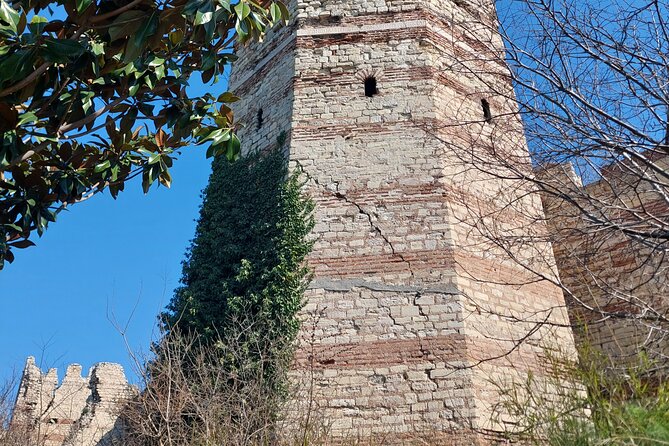
This is often the emotional centerpiece of the tour: walking along the defenses that held off invaders for over a millennium.
At Mevlanakapı, you’ll get a clear sense of what Theodosian Walls were built to do. The defense system is described as multi-layered: a deep moat idea, an outer defense wall, and a massive inner wall—about 12 meters high—built to absorb cannon fire and repel siege engines. That’s not marketing copy; it’s the reason these walls look the way they do.
This part is about 45 minutes. Expect more walking than the earlier stops, but still structured around viewpoints and explanation. If you’re a photo person, this is also where you’ll likely want to take extra time, because the architecture gives you angles you can’t easily replicate from ground level elsewhere in the city.
The free admission piece matters here too: it’s free at Mevlanakapı. So your money goes toward the guiding and the experience, not multiple museum tickets.
Main consideration: the walls and ground around gates can be uneven. The tour is labeled for moderate physical fitness. If your legs tire easily, plan to take breaks and avoid rushing. This is one of those tours where stopping to understand is part of the fun.
Chora Museum: The Art Payoff After the Stone Defenses
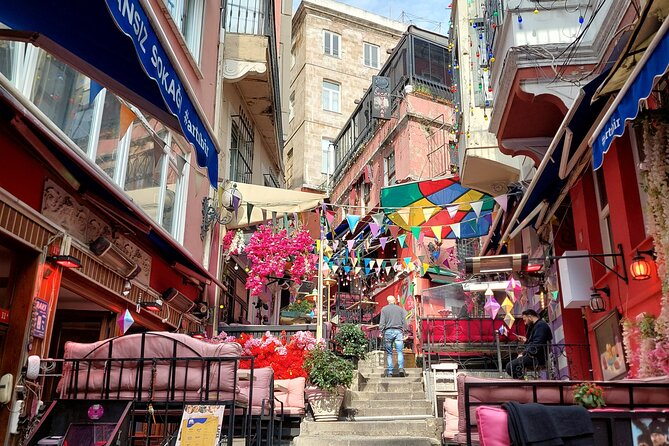
After the wall walk, you transition to Chora Museum, described as the hidden Sistine Chapel of Istanbul for its standout mosaic and fresco collection.
This stop is where the trip’s story widens. The museum was originally the Church of the Holy Savior in Chora, and it holds some of the most spectacular surviving Byzantine mosaic and fresco work. These works were created in the 14th century and connect to the Palaeologan Renaissance—often associated with a shift toward naturalism and human emotion you don’t always see in earlier Byzantine art.
If you’re thinking, wait, how does this relate to walls? That’s exactly the smart question. Walls and mosaics are different mediums, but they both reveal how Constantinople thought: what it feared, what it believed, and what it wanted people to feel.
Timing here is about 1 hour 20 minutes, and admission is not included. Plan for a ticket cost on top of your tour price.
Important schedule note: Chora Museum is closed on Fridays. If you’re looking at a Friday visit, you’ll need to choose another day to get this full itinerary.
Timing, Walking Style, and What to Wear
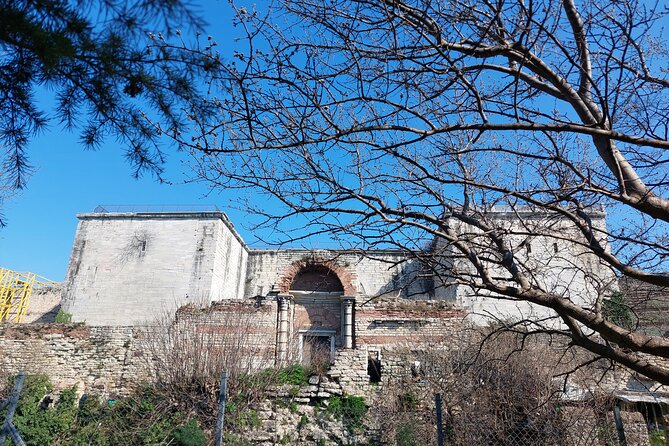
This tour runs from 9:00 am and ends back at the meeting point. Total duration is listed as 1 to 5 hours (approx.), which is a broad range. In practice, you’ll likely feel it as a focused half-day experience because the stop durations alone add up to well over three hours, with added time for transitions and explanations.
The walk is not presented as extreme, but it is not a stroller-friendly route either. You’ll want to come with shoes that work on uneven pavement and stone edges. If your legs get cranky after an hour, this tour is still doable—but build in breaks and keep your pace realistic.
Also, it helps to travel with water and a plan for photos. The walls provide plenty of viewpoints, but you’ll be moving. Don’t count on having the perfect lighting at the exact moment you want it.
Price and Value: When $372.07 Works (and When It Doesn’t)
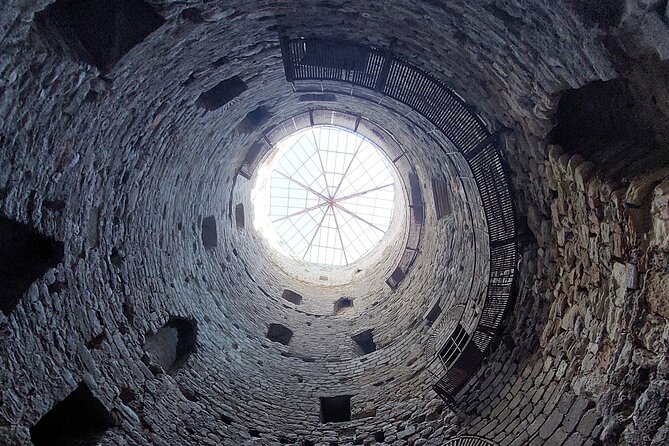
The listed price is $372.07 per group, up to 15 people. That pricing model is where the value math becomes interesting.
If you’re traveling with a full group near the 15-person limit, your cost per person can drop a lot because the price is not per head. If you’re booking as a smaller group, the tour can feel more expensive per person, but you’re still getting a licensed English guide plus a route that includes multiple wall-area stops with free admissions.
Chora Museum is the one ticket you should budget separately since its admission is not included. So your total day cost depends on whether you’re just paying the tour fee or also adding the museum ticket for your group.
The best way to think about value here: you’re paying for a guided walk that links structures, gates, and art into one coherent storyline. If you like your sightseeing organized (and you don’t want to spend hours figuring out how to sequence these scattered sites), this format tends to pay off.
Getting There: German Fountain to the Wall Line
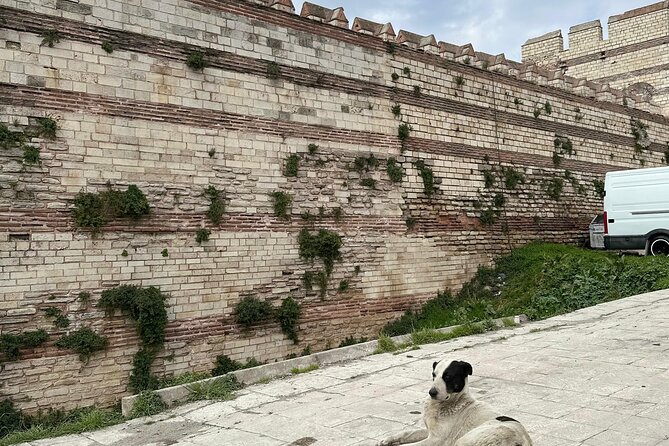
You meet at German Fountain (Alman Çeşmesi), Binbirdirek, At Meydanı Cd, 34122 Fatih/İstanbul at 9:00 am. The tour ends back at the meeting point.
The meeting point is central enough that you can use public transportation, which helps a lot in Istanbul where traffic and parking can be a mess. If you’re staying in Sultanahmet or nearby historic areas, this can be a straightforward start to your day.
One more practical note: this experience is near public transportation and is described as requiring good weather. So if skies look sketchy, expect your day plan to be adjusted.
What You Can Expect From the Guiding Style
The guide is listed as licensed or certified and English-speaking.
From how the guiding is described, the strongest theme is clarity plus friendliness. Your guide is expected to explain what you’re seeing in a way that makes the walls legible, not just historical namedropping. There’s also a clear emphasis on making sure everyone is comfortable, including checking whether you want breaks during the walk.
If you’re traveling with questions, this is the kind of itinerary that benefits from a real back-and-forth. Walls and mosaics both reward curiosity. The guide’s job is to give you the “why” without drowning you in academic detail.
Who Should Book This Tour
This is a great match if you:
- love Byzantine-era places where you can still see engineering at human scale
- want a structured walk that connects multiple sites instead of bouncing around alone
- care about art and history and enjoy seeing how one era’s style changes another
It might be less ideal if you:
- have leg problems or mobility limitations that make walking uncomfortable
- dislike walking on uneven surfaces
- are only interested in museum-style indoor time (this includes multiple outdoor wall sections)
Should You Book This Byzantine Walk + Chora Museum?
If you’re trying to pick one experience that ties together Constantinople’s defensive thinking and its later artistic peak, I’d say book it. The route has smart pacing: three free wall-gate stops to stretch your money, then Chora as the payoff where the emotion lands.
The decision hinge is simple. If you can handle a guided walk with uneven ground and you’re visiting on a non-Friday, this tour is a strong choice. If your legs are limiting or you’re traveling on a Friday, you may want to rethink the plan because Chora Museum is closed that day.
FAQ
How long is the Byzantion Walk Path and City Walls tour?
The duration is listed as approximately 1 to 5 hours, depending on timing and the flow between stops.
Is this a private tour?
Yes. It’s a private tour/activity, and only your group will participate.
What language is the tour offered in?
The tour is offered in English.
Where does the tour start and end?
It starts at German Fountain (Binbirdirek, At Meydanı Cd, 34122 Fatih) at 9:00 am, and it ends back at the meeting point.
What admissions are included?
Admission is free for Yedikule, Silivrikapı, and Mevlanakapı. Chora Museum admission is not included.
Is lunch included?
No. Lunch is not included.
Is the tour suitable if I have leg problems?
No. It is not recommended for anyone who has leg problems.
Is the tour good for someone with moderate fitness?
Yes. It requires a moderate physical fitness level.
What happens if weather is poor?
The experience requires good weather. If it’s canceled due to poor weather, you’ll be offered a different date or a full refund.
Is it okay to bring service animals?
Yes. Service animals are allowed.
More City Tours in Istanbul
- Istanbul: Private Turkish Bath, Massage, and Spa in Old City★ 4.6 · 3,225 reviews
- ISTANBUL BEST: Iconic Landmarks Full Day PRIVATE Guided City Tour★ 5.0 · 1,032 reviews
- Istanbul: Best of the City Full-Day Tour with Transfers★ 4.6 · 704 reviews
- Istanbul: Private City Highlights Guided Tour★ 4.5 · 552 reviews
- Best Of Istanbul 1, 2 or 3-Day Private City Guided Tour★ 4.7 · 530 reviews
- Istanbul: City Highlights Tour w/Hagia Sophia & Blue Mosque★ 4.5 · 390 reviews
More Walking Tours in Istanbul
- Istanbul: Blue Mosque, Hagia Sophia, & Old Town Walking Tour★ 4.8 · 2,372 reviews
- Istanbul: Fener Balat Half-day Guided Walking Tour★ 4.9 · 1,711 reviews
- Istanbul Highlights Small-Group Walking Guided Tour★ 4.5 · 1,346 reviews
- Istanbul: European and Asian Side Guided Foodie Walking Tour★ 4.9 · 1,038 reviews
- Half day Fener-Balat Walking Tour in Turkiye★ 5.0 · 308 reviews
- Istanbul: Colorful Fener & Balat Walking Tour w/Expert Guide★ 4.7 · 234 reviews
More Tour Reviews in Istanbul
- Istanbul: Bosphorus Dinner Cruise & Show with Private Table★ 4.8 · 62,058 reviews
- Istanbul: Daytime or Sunset Sightseeing Cruise & Audio Guide★ 4.8 · 14,430 reviews
- Istanbul: Bosphorus Dinner Cruise & Turkish Night Show★ 4.8 · 12,954 reviews
- Best of Istanbul 1, 2 or 3-Day Private Guided Istanbul Tour★ 5.0 · 8,922 reviews
- Istanbul: Basilica Cistern Fast-Track Entry and Audio Guide★ 4.6 · 7,521 reviews
- Istanbul: Hagia Sophia Skip-the-Line Ticket & Museum Option★ 3.7 · 4,958 reviews
Fresh off the boat: new Istanbul reviews




Walking Tours, compared.
 ★ 4.8Blue Mosque, Hagia Sophia, & Old Town Walking TourFrom $712,372 reviews
 ★ 4.9Fener Balat Half-day Guided Walking TourFrom $201,711 reviews
 ★ 4.5Istanbul Highlights Small-Group Walking Guided TourFrom $1551,346 reviews
 ★ 4.9European and Asian Side Guided Foodie Walking TourFrom $1351,038 reviews
 ★ 5.0Half day Fener-Balat Walking Tour in TurkiyeFrom $20308 reviews
 ★ 4.7Colorful Fener & Balat Walking Tour w/Expert GuideFrom $18234 reviews
 ★ 4.4Asian Side Walking Tour with Ferry RideFrom $29224 reviews
 ★ 5.0Old Town Of Istanbul Orientation – Tip Based Walking TourFrom $18181 reviews
Browse the lists this tour appears in