
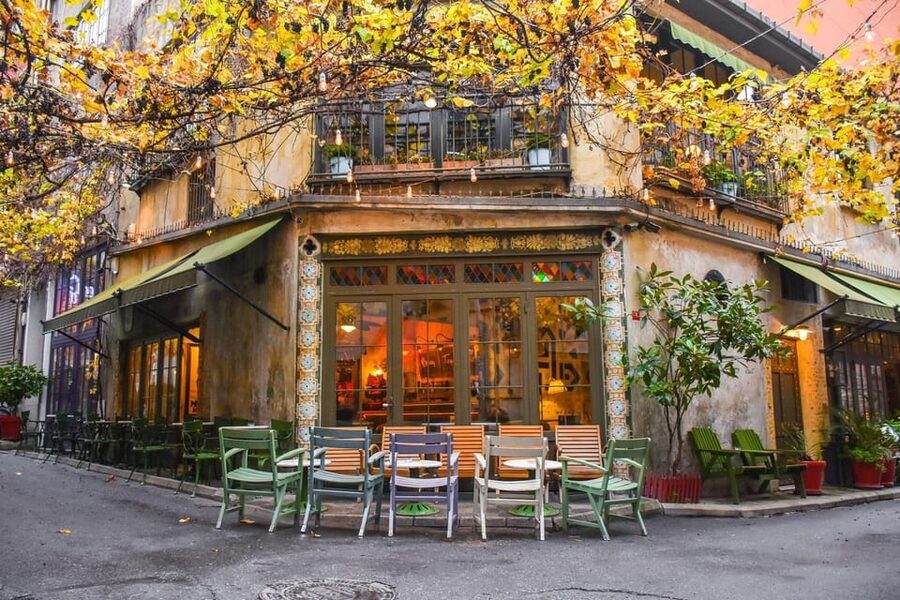
REVIEW · FENER & BALAT TOURS
Istanbul: Colorful Fener & Balat Walking Tour w/Expert Guide
Fener and Balat are proof Istanbul keeps reinventing itself. On this 2-hour walk, you follow one thread through Greek, Bulgarian, Jewish, and other communities, from old churches and schools to the Iron Church and the Ahrida Synagogue. Fener and Balat feel quieter and more local than the headline sights.
I love how the tour pairs landmark stops with neighborhood texture, not just photo ops. You’ll spend real time around places like the Bulgarian Church (the Iron Church) and the Church of Saint Mary of the Mongols (built in 1266). Also, the guides stand out for clear explanations; I’ve seen names like Hüseyin, Furkan, Can, John, and Emre mentioned for their friendly teaching and strong command of English.
One thing to consider: this is a hilly, cobblestone-style walk. If you have ankle issues or expect flat sidewalks, plan for a workout, especially around the colored streets and stairways—and dress modestly for the religious sites.
In This Review
- Key things you’ll notice on this Fener & Balat walk
- Why Fener and Balat feel different from the usual Istanbul rush
- Price and what you truly get for $18
- Start at Balat Merkez Şekercisi and get oriented fast
- Balat’s colorful streets: Muhtarligi, colored houses, and Renkli Merdivenler
- Fener’s Greek Orthodox landmarks: schools, churches, and old street life
- Saint Mary of the Mongols and Phanar College: where the dates matter
- Balat’s Bulgarian Church, also called the Iron Church
- Ahrida Synagogue and St. George’s Cathedral: closing on older layers
- Practical tips so you don’t fight the neighborhood
- How small-group energy changes the experience
- Who this walking tour is best for
- Should you book the Fener & Balat Colorful Walking Tour?
- FAQ
- How long is the Fener & Balat walking tour?
- How much does it cost?
- Where do I meet the guide?
- What language is the guide?
- Are entrance fees included?
- Is Turkish coffee included?
- What should I wear or bring?
- Is the tour suitable for wheelchair users?
- What’s the policy if I cancel?
Key things you’ll notice on this Fener & Balat walk

- Iron Church in Balat: the Bulgarian Church’s cast-iron look is the type of detail you won’t catch from postcards
- Church of Saint Mary of the Mongols (1266): a rare chance to slow down in a medieval setting
- Colorful stairways and Ottoman wooden houses: neighborhood architecture becomes part of the story
- Old-school Jewish heritage: the Ahrida Synagogue is among the city’s oldest, dating to the 15th century
- Wise pacing with lots of photo stops: breaks are built in, so the walk stays comfortable
- Finish with Turkish coffee: a simple way to reset after all the stepping and seeing
More of Fener and Balat's painted lanes



Why Fener and Balat feel different from the usual Istanbul rush
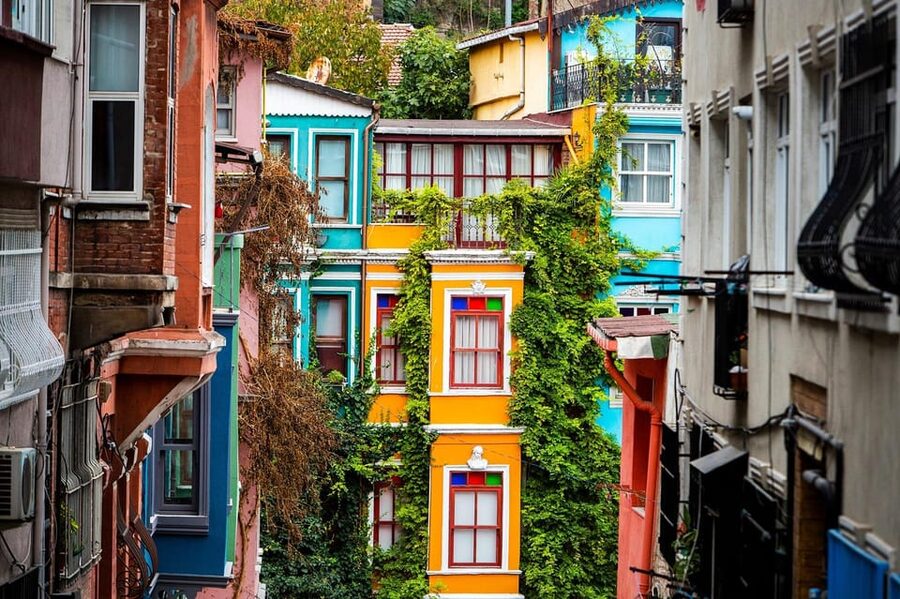
Most first-time Istanbul days are built around a tight cluster of famous monuments. This tour takes a different approach. You head into Fener and Balat, two neighborhoods where multiple cultures left visible layers—Greek, Bulgarian, Jewish, Armenian, and more—so the streets themselves feel like a history lesson you can walk through.
The best part is the balance. You’re not just ticking off buildings. You’re also learning how communities lived side by side, how churches and schools shaped daily life, and why certain landmarks became anchors. That’s what makes the walk worth your time even if you’ve already seen the big-ticket sights.
The tour also gives you a practical kind of sightseeing. You get a guided path through narrow streets, photo-friendly corners, and “pause here” moments. In reviews, people often mention having the pace kept sensible and the stops spaced so you can look, listen, and take photos without feeling rushed.
Price and what you truly get for $18
At about $18 per person for roughly 2 hours, you’re paying for three things: a focused guide, entry access to the sites, and a structured route that saves you from playing guess-and-check in steep lanes.
The “value math” here is pretty clear:
- You’re seeing multiple key religious and historic sites in a compact time window.
- Entrance fees are included, which matters for walks that otherwise turn into a series of separate costs.
- The tour is designed to help you skip the ticket line, so time goes toward seeing, not waiting.
Food isn’t included. That’s normal for a walking tour, and it can actually be a plus: you’ll have the freedom to choose where you eat and what you try next. Just be ready for the small breaks built into the route.
Start at Balat Merkez Şekercisi and get oriented fast

Your meeting point is in front of Balat Merkez Şekercisi, and you’ll spot the guide holding a flag with the Tourmania logo. It’s the kind of start that prevents confusion. You don’t waste your first minutes hunting for a group in a dense neighborhood.
From the jump, you’ll be walking into the texture of Balat: photo stops, a guided orientation, and quick segments that connect one landmark to the next. There are scheduled walking-and-pausing rhythms, including short breaks around the most scenic areas.
One practical note from the rules: arrive on time. If you’re more than 5 minutes late, the guide won’t be able to wait, and once the tour starts, the guide can’t pause for latecomers. So I’d treat the meeting time like it’s “church time,” not “maybe time.”
Worth putting side by side with this Istanbul pick:
- Istanbul: Blue Mosque, Hagia Sophia, & Old Town Walking Tour★ 4.8 · 2,372 reviews
- Istanbul: Fener Balat Half-day Guided Walking Tour★ 4.9 · 1,711 reviews
- Istanbul Highlights Small-Group Walking Guided Tour★ 4.5 · 1,346 reviews
- Istanbul: European and Asian Side Guided Foodie Walking Tour★ 4.9 · 1,038 reviews
Balat’s colorful streets: Muhtarligi, colored houses, and Renkli Merdivenler
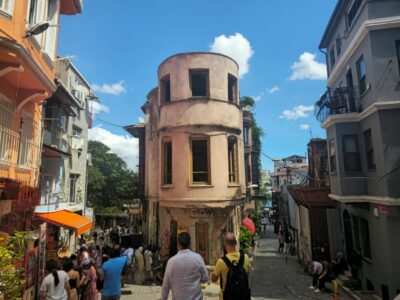
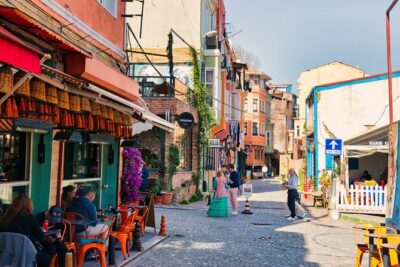
Balat is the side of Istanbul that makes people stop mid-sentence. The streets have personality. The building facades, the steps, and the way sunlight hits the colors make this neighborhood feel almost handmade.
Early on, you’ll pass through Balat neighborhood Muhtarligi, then move into the Coloured Houses of Balat area for guided context plus a photo stop. This is more than decoration. The guide’s job is to explain how these communities shaped the streets—why certain buildings look the way they do, and what changed over time as different groups settled, moved, or adapted.
Then comes one of the tour’s signature moments: Renkli Merdivenler, the colorful stairways. You’ll get a break time here, plus chances to photograph the steps and surrounding lanes. This is the kind of spot where your photos will look great, even if you’re not trying hard.
Just remember: those stairways and cobbles can be steep. Wear shoes you trust on uneven ground.
Fener’s Greek Orthodox landmarks: schools, churches, and old street life
After Balat, the walk shifts toward Fener, another neighborhood packed with religious and educational landmarks. This is where the tour starts feeling like a guided walk through how communities organized themselves.
In Fener, you’ll step inside a Greek Orthodox church and also visit a historic Greek primary school. That combo matters. Churches are obvious. Schools are where you see how communities planned for the next generation. It’s a quieter kind of history, but it sticks.
You’ll also see the neighborhood’s colorful stairways again from a different angle, then move toward the former residence of Romanian prince Dimitrie Cantemir, now tied to a museum café stop. The guide’s explanation helps you connect the dots between “big rulers” and the everyday life happening in these neighborhoods.
A couple of other Fener highlights appear as you go:
- Church of Saint Mary of the Mongols (1266), one of the tour’s medieval anchors
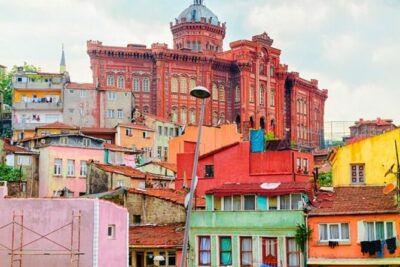
- The Phanar Greek Orthodox College, seen as the neighborhood’s education powerhouse in the story the guide tells
- Panagia Paramythia Church as a meaningful stop along the route
If you like history that’s attached to actual neighborhoods—where daily life once unfolded—Fener is where the tour really clicks.
Saint Mary of the Mongols and Phanar College: where the dates matter
The Church of Saint Mary of the Mongols is the kind of stop that benefits from a good guide. It’s not just “another church.” It’s a building tied to a specific date—built in 1266—so the sense of time gets real fast.
What you’re really collecting here isn’t only architecture. You’re collecting context for why certain communities built and preserved religious sites in the way they did. The tour uses this stop to connect the medieval layer of Istanbul to the educational and cultural identity of the area.
Right after, you’ll pass or see the Phanar Greek Orthodox College, which gives you a second viewpoint on how Greek Orthodox life took institutional form in this part of the city. The guide helps you understand that education and religion weren’t separate tracks. They were part of the same community structure.
Even if you’re not a “religious architecture” person, this section is still worth it because it anchors the tour’s theme: multiple cultures living side by side across centuries.
Balat’s Bulgarian Church, also called the Iron Church
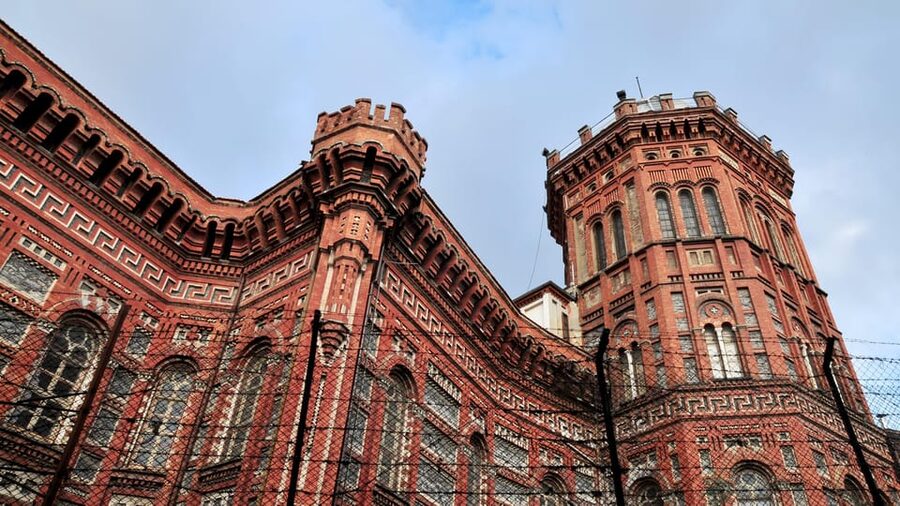
Balat’s most talked-about stop is the Bulgarian Church, commonly nicknamed the Iron Church because of its cast-iron structure. That detail changes how you see the building. Instead of thinking only about worship spaces, you start noticing materials and design choices, and how they fit the period and the community’s needs.
The surrounding walk matters too. You’ll notice beautifully preserved Ottoman-era wooden houses, which help show why Balat got its reputation for charming streets. This is where the neighborhood stops being a setting and becomes a character in the story.
There’s also something emotionally satisfying about this stop. You’re seeing a landmark tied to a particular cultural identity, but it sits within a modern neighborhood street plan. It’s not sealed behind walls as a museum object. It’s part of a living area—shops, side streets, and everyday movement.
Ahrida Synagogue and St. George’s Cathedral: closing on older layers

The walk ends by leaning into Istanbul’s older layers, and that’s where the stops become especially meaningful.
One of the final points is the Ahrida Synagogue, described as one of Istanbul’s oldest, dating back to the 15th century. You’ll likely pass it on your route, with a moment that makes the building feel like a historical marker rather than just a location.
Then you’ll reach St. George’s Cathedral, Istanbul, with a photo stop and time built in for free time. That free time matters. It gives you a breather after churches and synagogues, and it lets you step back and take in the street-level surroundings without feeling like the group is pulling you forward.
At the end, the plan is to enjoy a cup of Turkish coffee, a simple close that turns all the stepping and looking into a moment to process what you just saw.
Practical tips so you don’t fight the neighborhood
This tour rewards preparation. Do these things and the whole walk feels smoother.
Wear comfortable shoes. The neighborhood is hilly with steep cobblestone streets. In feedback, people specifically mention that it can be challenging if you have ankle problems.
Dress modestly for religious sites. A headscarf is required for women. Even if you’re not trying to enter every site, you’ll encounter places where the dress rules apply. One review warned that some churches won’t allow entry with uncovered shoulders or exposed knees unless you cover up, sometimes by buying something on-site. So I’d save time and skip the stress: wear long pants and a top that covers your shoulders.
Bring the basics. The tour asks for comfortable shoes, a hat, camera, water, and a headscarf if you need it. Flash photography isn’t allowed, so rely on natural light and your phone camera settings.
Plan your timing. The guide won’t wait if you’re late, and late arrivals can’t join once the tour has started.
If you do all that, you’ll spend less energy managing logistics and more on the best part: the street-by-street storytelling.
How small-group energy changes the experience
One thing I really like about this kind of tour is how flexible the group can feel. Some bookings have turned into smaller groups, even private tours, depending on demand. When that happens, you get more back-and-forth—questions, clarifications, and a pace that matches your interests.
Even in non-private situations, the format tends to keep you moving without feeling like you’re sprinting. People often call out the good pace and the time built in for photos and questions.
Also, guide personality clearly matters here. Names that show up in real bookings include Furkan, Can, John, Hüseyin, Emre, Hasan, and Beritan. The common thread is friendly communication and a strong ability to explain what you’re seeing in plain language.
Who this walking tour is best for
This tour fits best if you:
- Want an Istanbul day that’s off the standard monuments loop
- Like walking through neighborhoods with visible cultural layers
- Prefer guided context over wandering randomly
- Enjoy photography and short stops where you can actually look
It may be less ideal if you:
- Need wheelchair access (the tour is noted as not suitable for wheelchair users)
- Have mobility limits that don’t handle hills and cobbles
- Expect a totally flat, effortless stroll
For many people, this is a perfect “second day” activity: a way to build real understanding of the city’s mix of cultures without spending all day commuting.
Should you book the Fener & Balat Colorful Walking Tour?
I’d book this if you want a guided walk that turns neighborhoods into story. For $18 and about 2 hours, you’re getting a structured route through multiple major religious landmarks plus the colorful streets that make Fener and Balat instantly memorable. The included entrance fees and the strong guide-to-question ratio also make it feel like more than a casual stroll.
If you’re short on time, it’s also a good choice because it covers a lot of ground without being exhausting by schedule. Just commit to proper shoes, modest clothing, and arriving on time. If you do that, you’ll leave with a much clearer sense of how Istanbul’s communities shaped the streets you’ll walk next.
FAQ
How long is the Fener & Balat walking tour?
The tour lasts about 2 hours.
How much does it cost?
The price is listed as $18 per person.
Where do I meet the guide?
Meet in front of Balat Merkez Şekercisi. The guide holds a flag with the Tourmania logo.
What language is the guide?
The tour is offered with an English-speaking live guide.
Are entrance fees included?
Yes. Entrance fees are included, and the tour is set up to help you skip the ticket line.
Is Turkish coffee included?
The tour experience includes a cup of Turkish coffee at the end. Food and drinks are listed as not included, so if you want certainty about what’s covered, confirm before you go.
What should I wear or bring?
Bring comfortable shoes, a hat, camera, water, and a headscarf if you’re required to wear one (the tour notes that a headscarf is required for women). Flash photography is not allowed.
Is the tour suitable for wheelchair users?
No, it’s listed as not suitable for wheelchair users.
What’s the policy if I cancel?
Free cancellation is available up to 24 hours in advance for a full refund.
More Tours in Istanbul
- Best of Istanbul 1, 2 or 3-Day Private Guided Istanbul Tour★ 5.0 · 8,922 reviews
- Istanbul: Bosphorus Sightseeing Cruise Tour with Audio Guide★ 4.6 · 4,704 reviews
- Istanbul: Blue Mosque & Hagia Sophia Guided Tour w/ Tickets★ 4.8 · 3,600 reviews
- Istanbul: Blue Mosque, Hagia Sophia, & Old Town Walking Tour★ 4.8 · 2,372 reviews
- Istanbul: Princes Islands Tour with Heybeliada and Buyukada★ 4.4 · 2,305 reviews
- Istanbul: Basilica, Hagia Sophia, Blue Mosque Tour & Cruise★ 4.5 · 1,929 reviews
More Tour Reviews in Istanbul
- Istanbul: Bosphorus Dinner Cruise & Show with Private Table★ 4.8 · 62,058 reviews
- Istanbul: Daytime or Sunset Sightseeing Cruise & Audio Guide★ 4.8 · 14,430 reviews
- Istanbul: Bosphorus Dinner Cruise & Turkish Night Show★ 4.8 · 12,954 reviews
- Best of Istanbul 1, 2 or 3-Day Private Guided Istanbul Tour★ 5.0 · 8,922 reviews
- Istanbul: Basilica Cistern Fast-Track Entry and Audio Guide★ 4.6 · 7,521 reviews
- Istanbul: Hagia Sophia Skip-the-Line Ticket & Museum Option★ 3.7 · 4,958 reviews
More Lanes in Fener and Balat
- Istanbul: Fener Balat Half-day Guided Walking Tour★ 4.9 · 1,711 reviews
- Half day Fener-Balat Walking Tour in Turkiye★ 5.0 · 308 reviews
- Istanbul: Fener, Balat, Old Greek and Jewish Quarter Tour★ 4.9 · 234 reviews
- Istanbul: Fener & Balat Guided Tour through Colored Streets★ 4.8 · 171 reviews
- Istanbul in Colors: Balat Tour★ 5.0 · 92 reviews
- Fener and Balat – Old Greek & Jewish Quarter★ 5.0 · 74 reviews
Fresh off the boat: new Istanbul reviews

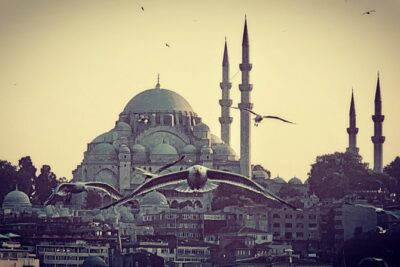
Fener & Balat Tours, compared.
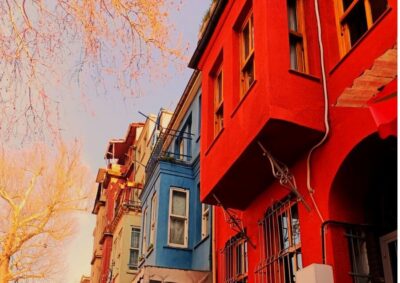 ★ 4.9Fener Balat Half-day Guided Walking TourFrom $201,711 reviews
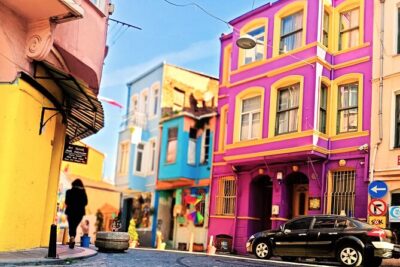 ★ 5.0Half day Fener-Balat Walking Tour in TurkiyeFrom $20308 reviews
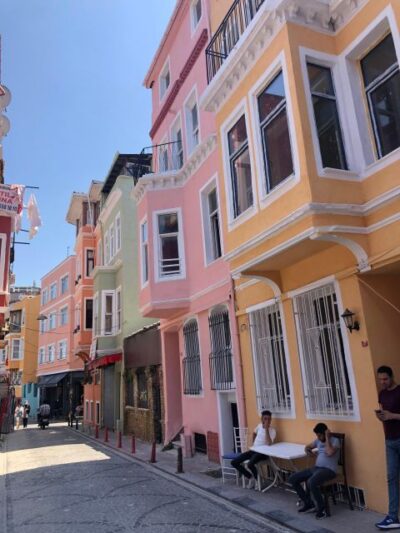 ★ 4.9Fener, Balat, Old Greek and Jewish Quarter TourFrom $59234 reviews
 ★ 4.8Fener & Balat Guided Tour through Colored StreetsFrom $15171 reviews
 ★ 5.0Istanbul in Colors: Balat TourFrom $6892 reviews
 ★ 5.0Fener and Balat – Old Greek & Jewish QuarterFrom $6074 reviews
 ★ 5.0Istanbul City Walk: Colors, Culture & History Fener Balat TourFrom $3056 reviews
 ★ 5.0Historic Balat and Chora Tour with Sunset CruiseFrom $9540 reviews
Browse the lists this tour appears in