
REVIEW · FENER & BALAT TOURS
Fener and Balat – Old Greek & Jewish Quarter
Colorful streets, big lessons, fewer crowds. This small-group walk through Fener and Balat takes you away from the main sights and into everyday Istanbul, with stops tied to Greek Orthodox, Ottoman neighborhoods, and the Golden Horn. You also get a practical side: how to ride public transport efficiently, not just where to go.
What I love most is the way the guide turns street corners into stories you can actually picture. I also like the food-and-rest rhythm built into the afternoon, with tea breaks and local treats that make the 3 hours feel human rather than rushed.
One thing to plan for: the walking is real—steep streets and lots of steps. If you’re sensitive to hills or long distances, you may want to slow down or choose a gentler plan.
In This Review
- Key highlights to watch for
- Why Fener and Balat Feel Like Another Istanbul
- Meeting at 2:00 pm: The 3-Hour Plan and Pace
- Fener Rum Patrikhanesi: Where Greek Orthodox Heritage Starts
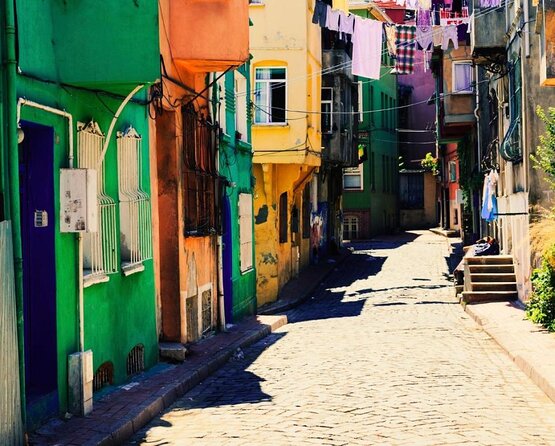
- Balat Streets: Colorful Houses and Real Neighborhood Life
- Halic and the Golden Horn Walk: Views With a Story
- Bulgarian Orthodox Church Stop: Seeing Coexistence Up Close
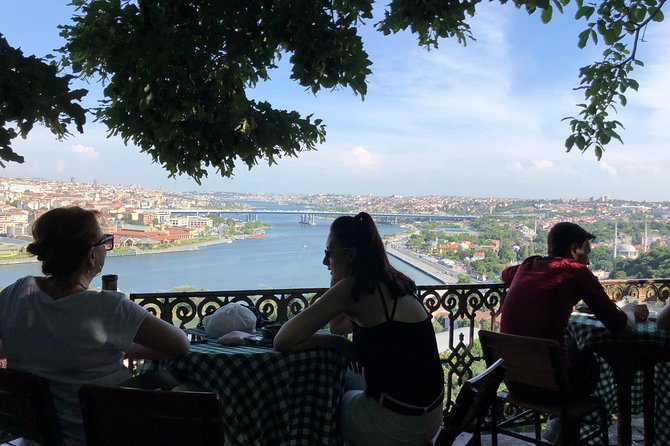
- Pierre Loti Café: Tea on the Hill With the Golden Horn in View
- Public Transport Tips You’ll Use Immediately
- Price and Value: Is $60.34 Worth It?
- Who Should Book This Tour (and Who Might Skip)
- Should You Book Fener and Balat?
- FAQ
- FAQ
- What places does this tour focus on?
- How long is the tour?
- What time does the tour start?
- How much does it cost?
- Is it a small group?
- Is the meeting point near public transport?
- Will there be a lot of walking?
- What kind of guide help do you get?
- What happens if the weather is bad?
- Can I cancel for a full refund?
- Is there a language requirement?
Key highlights to watch for
- Fener Rum Patrikhanesi: a powerful starting point for understanding the area’s Greek Orthodox identity
- Balat’s colorful housing: photographed-in daylight, not just from afar
- Golden Horn + Halic views: the guide connects the skyline to the fall of Constantinople
- Church stops for minority history: you’ll see how different communities coexisted in the same neighborhoods
- Pierre Loti café: tea and a hilltop moment with a classic view
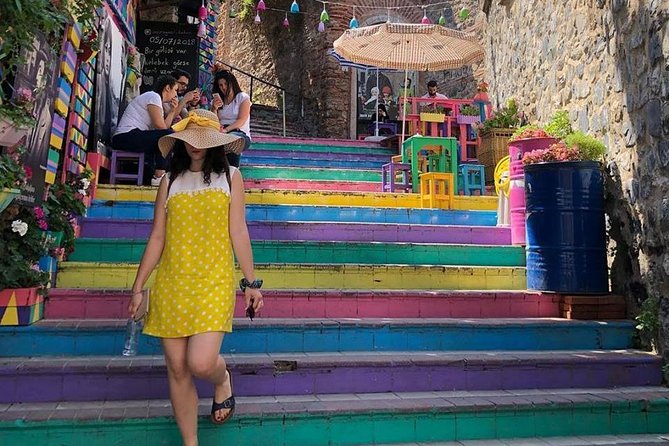
More of Fener and Balat's painted lanes



Why Fener and Balat Feel Like Another Istanbul
If your Istanbul plan is all palaces and busy landmarks, this is the antidote. Fener and Balat sit in the older western historic area—close enough to the main timeline of the city, but far enough from the standard tourist circuit that you feel daily life instead of performance.
I like that this tour gives you both atmosphere and context. On one hand, you’re walking past houses, walls, doorways, and staircases that look like they’ve been holding on through centuries. On the other, your guide explains what you’re seeing: how Greek Orthodox heritage shows up in Fener, how Ottoman-era neighborhoods shaped residential life, and how the Golden Horn’s geography mattered long before today’s cruise-y views.
It also helps that the group stays small—maximum 10 travelers—so questions aren’t awkward and the pacing stays flexible. You’ll still cover ground, but it doesn’t feel like being herded.
Meeting at 2:00 pm: The 3-Hour Plan and Pace
The tour starts at 2:00 pm and lasts about 3 hours, ending back at the meeting point. That timing is smart for two reasons. First, you get into the neighborhood before the evening rush. Second, you’re more likely to catch the light on Balat’s colorful facades without competing with peak daytime crowds.
Expect a steady walking pace. A past participant noted around 11,000 steps for the walk, with steep, narrow streets and cobblestones. It’s not described as a hardcore hike—but it’s absolutely not a sit-down tour either.
If you want lots of stop-and-shoot photography time, go in knowing the tour keeps moving. You’ll get photo opportunities (especially around Balat stairways and colorful streets), but it’s built more for experiencing than for a full-on camera marathon.
Fener Rum Patrikhanesi: Where Greek Orthodox Heritage Starts
The afternoon often kicks off at Fener Rum Patrikhanesi, a major reference point for the Greek Orthodox presence in this part of Istanbul. Even if you don’t know the terminology, you’ll feel the weight of place. This is the kind of location where the city’s layered identities become obvious just by standing near it.
This stop matters because it frames what comes next. Your guide connects the neighborhood’s role to the bigger story of Istanbul: how Byzantine-era and later Ottoman realities shaped who lived where, and how communities maintained their identities over time. When you later walk into Balat’s residential streets, it feels less random. It starts to feel like a map of how people settled, built, worshiped, and adapted.
This is also one of those moments where the guide’s English clarity makes a big difference. The best tours are the ones where you can follow the explanation, ask questions, and not miss the meaning behind details.
- Best of Istanbul 1, 2 or 3-Day Private Guided Istanbul Tour★ 5.0 · 8,922 reviews
- Istanbul: Basilica Cistern Fast-Track Entry and Audio Guide★ 4.6 · 7,521 reviews
- Istanbul: Hagia Sophia Skip-the-Line Ticket & Museum Option★ 3.7 · 4,958 reviews
- Istanbul: Hodjapasha Whirling Dervishes Show & Exhibition★ 4.4 · 4,790 reviews
Balat Streets: Colorful Houses and Real Neighborhood Life
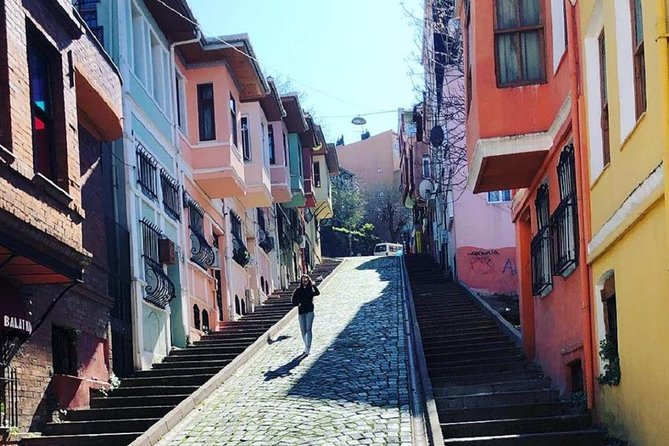
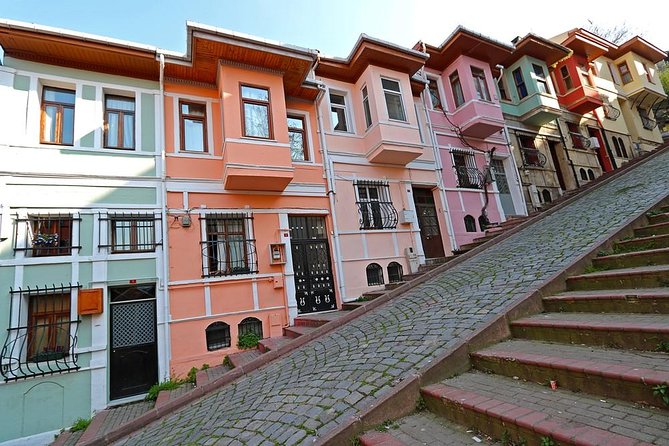
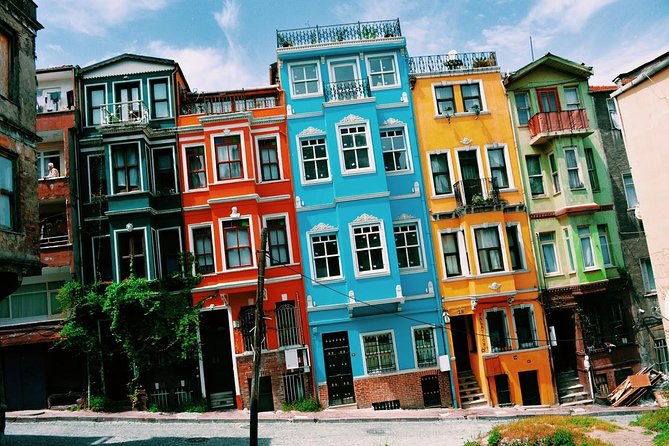
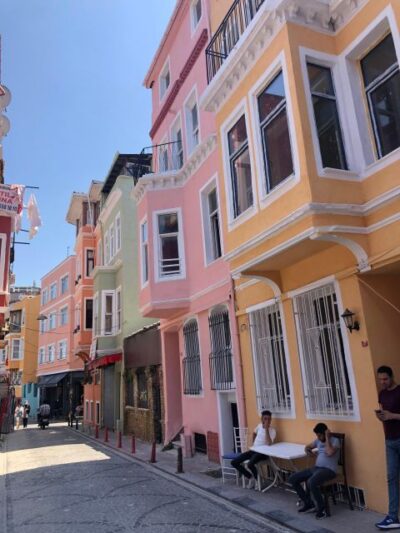
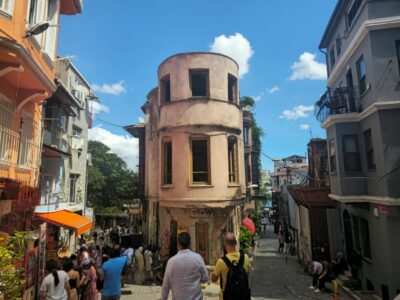
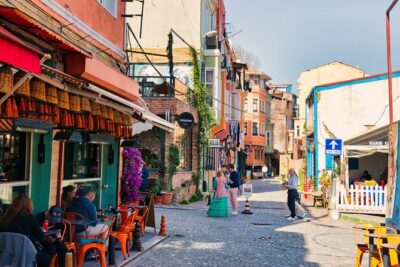
Balat is the part most people picture when they think of this area—and in a good way. You’ll stroll through tucked-away residential streets where the color comes from real architecture and real buildings, not just murals. The staircases and close-packed lanes encourage you to look down, look up, and notice the small changes in the neighborhood’s fabric.
This is where I find the tour most rewarding for first-time Istanbul visitors. Major sights can compress the city into a handful of icons. Balat expands it back into a living place. You’ll pass homes and streets that show how Ottoman-era residential patterns shaped daily life. You’ll also pick up a stronger sense of how multiple faiths and cultures shared space over centuries.
Practical note: expect steep descents and ascents. If you’re wearing uncomfortable shoes, Balat will punish you.
Halic and the Golden Horn Walk: Views With a Story
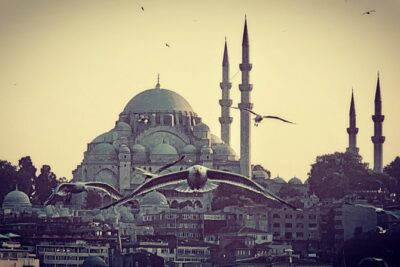
After Balat, the route leans toward Halic and the Golden Horn, which is where Istanbul starts to look like Istanbul—water, bridges, hills, and that long historical shoreline feeling.
Walking here is more than scenery. Your guide shares what the Golden Horn meant in the city’s history and ties it to the fall of Constantinople. That kind of context makes the view stick in your memory, because it stops being just a postcard direction and becomes a place with consequences.
This stretch also tends to feel calming compared with the narrow-street chaos. Even if you’re walking uphill or on uneven ground, the open horizon gives your legs a break in your head.
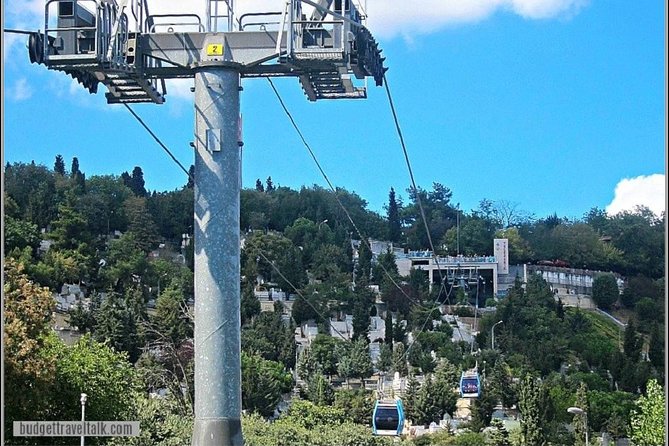
If you like transit as part of the experience, this is also the phase where the tour’s practical side becomes obvious. Some itineraries in this experience use a mix of tram, bus, ferry, and even cable car at points, so you can learn how locals move instead of relying only on taxis.
Bulgarian Orthodox Church Stop: Seeing Coexistence Up Close

Another highlight is a stop at the Bulgarian Orthodox Church. This is one of those places that makes the city’s minority story tangible. You’re not reading about coexistence in a museum. You’re standing in a neighborhood where religious communities shaped the built environment.
I appreciate how this tour avoids turning history into a single straight line. The city’s identity is more like overlapping waves—Greek Orthodox heritage in one direction, Jewish life and Ottoman neighborhood patterns in another, and Bulgarian Orthodox traditions visible in the streets and churches you pass.
This is also where the guide’s storytelling style matters. One of the recurring strengths from different guides on similar tours is how they connect architecture and community with the larger Ottoman-era and Byzantine-era context.
Pierre Loti Café: Tea on the Hill With the Golden Horn in View
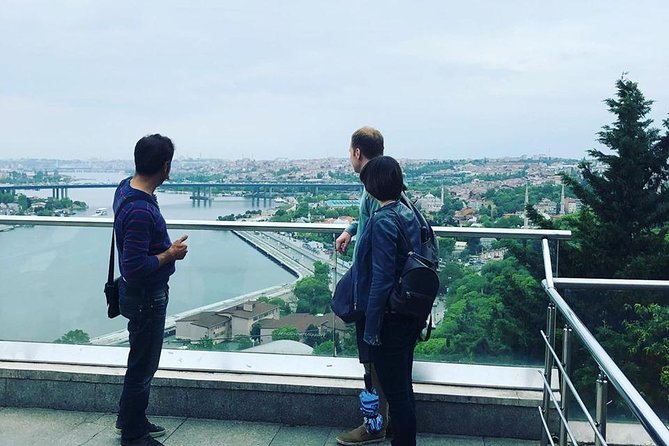
The payoff for many people comes at Pierre Loti café on or near Pierre Loti hill. This stop gives you the classic Istanbul mood: sit, look out, and drink something warm while the city stretches below.
From what I see in real experiences, the best part is the combination of comfort and location. You get a cup of tea—often çay—and you slow down long enough to absorb the panorama. Some versions of the day also include Turkish treats, and a ferry ride later can come with a warm sip of sahlep on the ride back, which is the kind of detail that makes the afternoon feel local rather than sightseeing-only.
If the day is cold or rainy, the café moment becomes even more valuable. Even in less ideal weather, people still report enjoying this segment, because it’s an actual break in a walk-heavy itinerary.
Public Transport Tips You’ll Use Immediately
One reason this tour earns its keep is that it doesn’t just tell you what to see—it helps you navigate how Istanbul moves. You’ll get pointers for riding tram and other transit, and you’ll often finish with guidance for getting back efficiently.
That matters because Istanbul transit can feel confusing on day one. This tour helps you practice your way into the system while you’re already in the neighborhoods that need that skill.
You’ll also leave with a mental map. After walking and riding together, routes make more sense. You’re less likely to waste half a day backtracking, and you’ll know which direction to head when you want to return for coffee or another viewpoint.
Price and Value: Is $60.34 Worth It?
At about $60.34 per person for roughly 3 hours, the value comes from what you actually do in that time. You’re paying for:
- a small-group format (max 10)
- meaningful neighborhood access beyond the main tourist lanes
- historical context that helps you understand what you’re seeing
- at least one tea-and-treat moment
- practical public transport coaching
If you like guided walks that teach you how to see, this price doesn’t feel like a shell game. It’s buying your time and your guide’s ability to translate architecture, religion, and street life into something you can carry with you.
If you prefer purely iconic monuments, you might feel this is more walk-and-story than must-see landmark. But if you’re chasing the real shape of Istanbul, this price often feels fair.
Who Should Book This Tour (and Who Might Skip)
This tour is a great fit if you:
- want off-the-beaten-path neighborhoods (not just the big-ticket postcards)
- enjoy history tied to streets and buildings, not only plaques
- want transit tips so you can keep exploring after the tour
It may be less ideal if you:
- need very flat ground or long resting intervals
- hate hills and stairs (Balat and the hill area are part of the design)
- rely on simple language and you struggle with more detailed explanations, since the day includes lots of Ottoman-era minority and architecture context
Also consider the group size and pacing. This isn’t a slow wander with endless stops. It’s structured but not rigid.
Should You Book Fener and Balat?
If you want to understand Istanbul as a city of neighborhoods—not just monuments—this is one of the better choices you can make early in your trip. The Balat colors, the Golden Horn viewpoint with context, and the Pierre Loti tea break create a good mix of photos, walking, and meaning. Plus, the transit coaching helps you keep that momentum for the rest of your days.
If your legs are your limiting factor, you can still book, but go in with realistic expectations. Wear proper shoes, plan for hills, and consider moving a slower pace during the tea stop.
Guides you might encounter include Salih, Omar, Önder, Burak, Barak, and Sahli—people who bring strong English and a friendly, story-driven approach, and often help with getting around.
FAQ
FAQ
What places does this tour focus on?
The tour focuses on Istanbul’s Fener and Balat districts, includes the Golden Horn/Halic area, visits a Bulgarian Orthodox Church, and ends with time around Pierre Loti café.
How long is the tour?
It’s about 3 hours.
What time does the tour start?
The start time is 2:00 pm.
How much does it cost?
The price is $60.34 per person.
Is it a small group?
Yes. The tour has a maximum of 10 travelers.
Is the meeting point near public transport?
Yes. The meeting point is described as being near public transportation.
Will there be a lot of walking?
Yes. Expect walking along steep streets and steps, with enough distance that proper shoes help.
What kind of guide help do you get?
The guide provides public transport tips so you can use transit for further sightseeing.
What happens if the weather is bad?
This experience requires good weather, and if it’s canceled due to poor weather, you’ll be offered a different date or a full refund.
Can I cancel for a full refund?
Yes. You can cancel up to 24 hours in advance for a full refund.
Is there a language requirement?
The tour is offered in English. One past experience noted that understanding the guide’s information is important because the day includes detailed neighborhood and historical context.
More Tour Reviews in Istanbul
- Istanbul: Bosphorus Dinner Cruise & Show with Private Table★ 4.8 · 62,058 reviews
- Istanbul: Daytime or Sunset Sightseeing Cruise & Audio Guide★ 4.8 · 14,430 reviews
- Istanbul: Bosphorus Dinner Cruise & Turkish Night Show★ 4.8 · 12,954 reviews
- Best of Istanbul 1, 2 or 3-Day Private Guided Istanbul Tour★ 5.0 · 8,922 reviews
- Istanbul: Basilica Cistern Fast-Track Entry and Audio Guide★ 4.6 · 7,521 reviews
- Istanbul: Hagia Sophia Skip-the-Line Ticket & Museum Option★ 3.7 · 4,958 reviews
More Lanes in Fener and Balat
- Istanbul: Fener Balat Half-day Guided Walking Tour★ 4.9 · 1,711 reviews
- Half day Fener-Balat Walking Tour in Turkiye★ 5.0 · 308 reviews
- Istanbul: Colorful Fener & Balat Walking Tour w/Expert Guide★ 4.7 · 234 reviews
- Istanbul: Fener, Balat, Old Greek and Jewish Quarter Tour★ 4.9 · 234 reviews
- Istanbul: Fener & Balat Guided Tour through Colored Streets★ 4.8 · 171 reviews
- Istanbul in Colors: Balat Tour★ 5.0 · 92 reviews
Fresh off the boat: new Istanbul reviews

Fener & Balat Tours, compared.
 ★ 4.9Fener Balat Half-day Guided Walking TourFrom $201,711 reviews
 ★ 5.0Half day Fener-Balat Walking Tour in TurkiyeFrom $20308 reviews
 ★ 4.7Colorful Fener & Balat Walking Tour w/Expert GuideFrom $18234 reviews
 ★ 4.9Fener, Balat, Old Greek and Jewish Quarter TourFrom $59234 reviews
 ★ 4.8Fener & Balat Guided Tour through Colored StreetsFrom $15171 reviews
 ★ 5.0Istanbul in Colors: Balat TourFrom $6892 reviews
 ★ 5.0Istanbul City Walk: Colors, Culture & History Fener Balat TourFrom $3056 reviews
 ★ 5.0Historic Balat and Chora Tour with Sunset CruiseFrom $9540 reviews
Browse the lists this tour appears in