
REVIEW · GRAND BAZAAR TOURS
Carpets, Rugs and Kilims bazaar, Grand Bazaar and Egyptian Bazaar
Carpets first, chaos later. This Old City tour is interesting because it mixes Ottoman caravanserai culture with hands-on market wandering at the Grand Bazaar and the Egyptian Spice Bazaar—plus you get coffee or tea to keep your energy up. I love the chance to slow down at Vezir Han and look closely at handwoven rugs and kilims instead of just speeding past shop windows. I also like how the Egyptian Bazaar shifts the whole experience into scent and color as soon as you walk in. One drawback: you’re spending most of the time walking inside crowded covered market streets, so comfortable shoes help a lot.
You’ll meet at Çemberlitaş (near Mollafenari) and finish at the Egyptian Bazaar by Galata Bridge. It runs about 3 hours 20 minutes, it’s guided in English, and the group stays small (max 10), which makes navigating these labyrinths feel less stressful. You’ll use a mobile ticket, and entrance fees and coffee/tea are included.
In This Review
- Key things to know before you go
- Old City Markets, With a Real Sense of Where Things Come From
- Vezir Han Caravanserai: Carpets and Kilims With Context
- Grand Bazaar: How to Walk a 4000-Shop Maze
- Egyptian Bazaar Spice Market: When Smell Becomes the Guide
- Eminönü and Mahmutpasha Bazaar Backstreets for Local-Style Browsing
- Price and What You’re Really Paying For
- Practical Market Advice (So You Enjoy It, Not Just Survive It)
- Who This Tour Fits Best
- Should You Book This Tour?
- FAQ
- How long is the tour?
- What are the main stops on the itinerary?
- Is the tour guided in English?
- What does the price include?
- Where does the tour start and end?
- Can I cancel for free?
Key things to know before you go
- Vezir Han is a 17th-century caravanserai, not just a showroom, so the setting explains why rugs and trade fit together.
- You get dedicated time in each major bazaar, not a rushed photo-stop circuit.
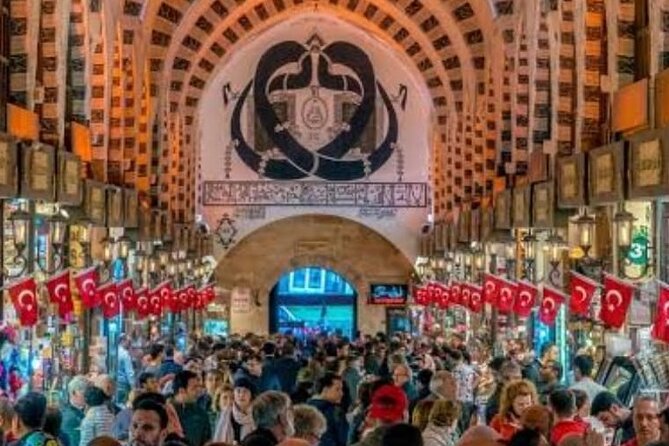
- Grand Bazaar has its own logic, with specialties by street and an indoor design meant to handle heat and rain.
- Egyptian Bazaar is smaller and more sensory, where spices, teas, dried fruits, honey, and sweets do the talking.
- Eminönü backstreets add local shopping realism, then you end with a Turkish coffee stop near a famous coffee place.
Get lost in the Grand Bazaar a while longer


Old City Markets, With a Real Sense of Where Things Come From
This tour makes Istanbul’s shopping streets make more sense, fast. Instead of treating the Grand Bazaar and Spice Bazaar like endless hallways of souvenirs, you’re guided to understand how trade worked and what people bought there.
What I like most is the flow: rugs and textiles in a historical han first, then the big-ticket market (Grand Bazaar), then the food-and-scent market (Egyptian Bazaar), and finally a short walk into Eminönü backstreets for everyday-style browsing. The pacing is short enough to keep you awake, but long enough to actually look.
You’ll also get small-group energy. With a maximum of 10 people, you’re not fighting for space at every archway or turning into a human bottleneck in busy aisles.
Vezir Han Caravanserai: Carpets and Kilims With Context
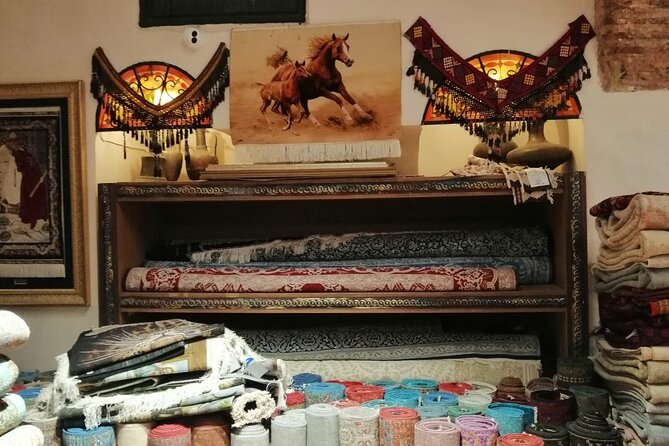
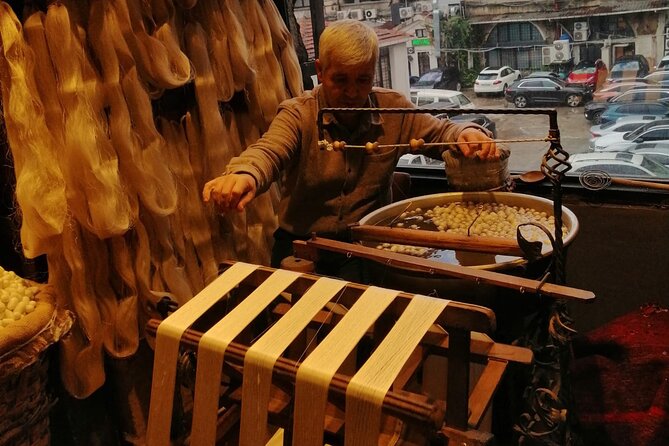
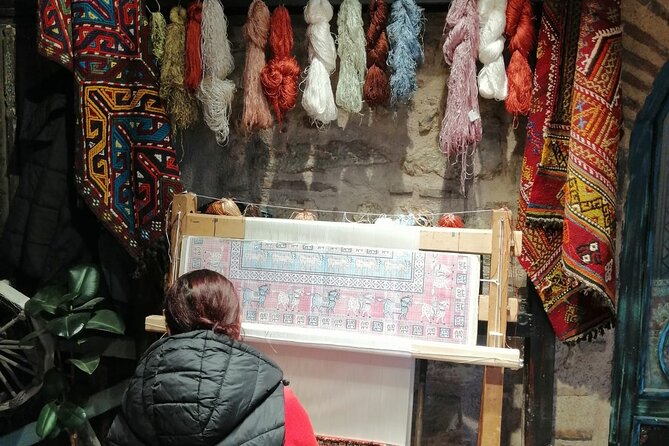
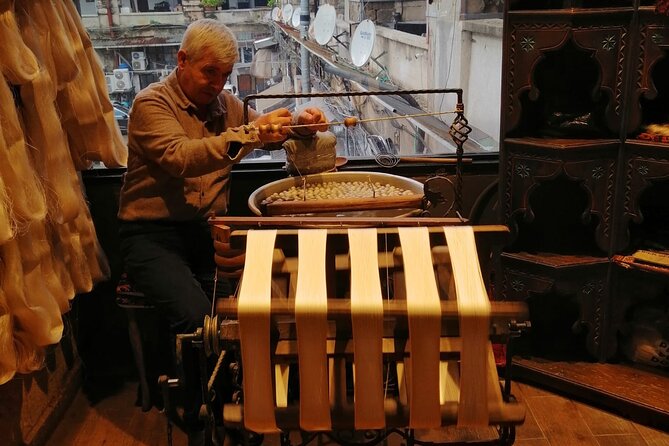
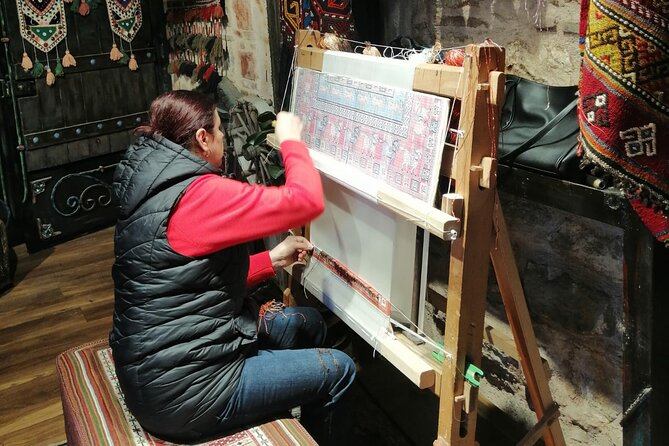
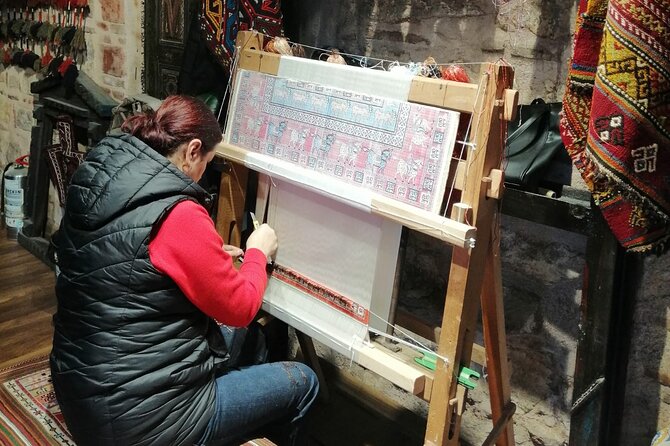
The first stop is Vezirhan Handmade Carpets & Klims in Vezir Han, a historic caravanserai tied to Ottoman-era commerce. You step into a place that once worked as a resting, storage, and trading hub for merchants moving goods like silk, spices, and textiles.
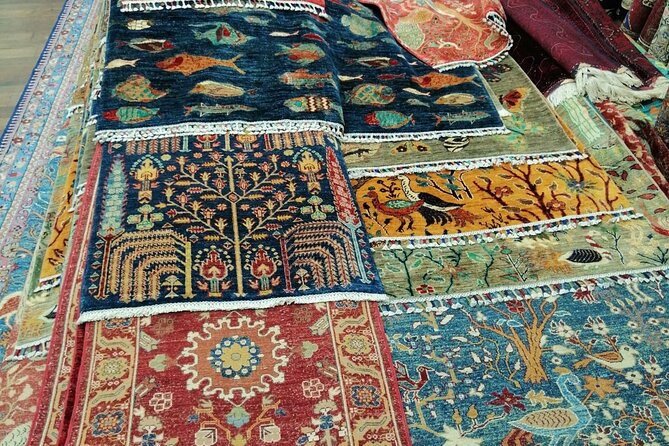
This matters, because carpets and kilims aren’t just decoration here. Traditionally, handwoven textiles were shaped by everyday life—woven by hand, often by women, and carrying personal and cultural meaning. Even if you’re not planning to buy, you’ll walk out with better instincts for what to notice: pattern, origin, and how designs reflect different traditions.
You spend about 1 hour 10 minutes at the carpet stop, which is a good amount of time to slow down. One person browsing can feel endless when the guide isn’t keeping the visit focused; with this schedule, you’re given time to examine pieces and learn what the patterns and craftsmanship are communicating.
What to consider: if you’re only here for quick souvenir shopping, the first stop might feel slower than the markets that come later. But if you enjoy craft, you’ll probably find this portion is the most educational.
Grand Bazaar: How to Walk a 4000-Shop Maze
Next comes the Grand Bazaar, a 15th-century covered market complex that grew into an enormous trading system over time. You’ll see why it functions like its own mini-city: thousands of shops organized by trade specialties, with architecture designed to protect people from heat, rain, and even fire.
You spend another 1 hour 10 minutes here, and that timing helps you avoid the classic problem: arriving, getting overwhelmed, and then leaving without actually seeing what you wanted. With a guide, you also learn how to move through the space more efficiently. The goal isn’t just wandering; it’s knowing what each area tends to sell and how to spot your interests among the crowds.
A practical bonus is the building design. The arched ceilings and domes matter because they make the bazaar walkable in changing weather. On a hot day, you’re not just sweating through open streets. On a rainy day, you’re still under cover.
What to watch: the Grand Bazaar is busy by design, with lots of tempting displays. If you hate being pushed toward purchases, set your own boundary early and keep your attention on the textile lanes, the ceramics, or whatever category your eyes like. You can enjoy the place without buying.
More stalls at the Spice Bazaar
- Small-Group Bosphorus Cruise and Istanbul’s Egyptian Bazaar★ 3.5 · 208 reviews
- Istanbul: Basilica Cistern, Blue Mosque & Spice Bazaar Tour★ 5.0 · 41 reviews
- Istanbul: Blue Mosque, Basilica Cistern & Spice Bazaar Tour★ 4.9 · 30 reviews
- Istanbul Grand Bazaar and Egyptian Bazaar Shopping Tour★ 4.0 · 28 reviews
Egyptian Bazaar Spice Market: When Smell Becomes the Guide
Then the tour shifts gears to the Egyptian Bazaar, also known as the Spice Bazaar. This market was built in the 17th century and became a center for spice trade in Istanbul, including goods that arrived through Egypt, an important province in the Ottoman world.
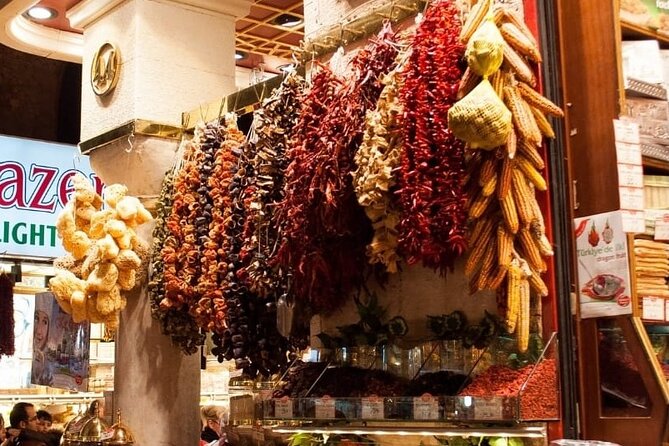
The moment you enter, the focus is sensory. You’ll encounter the aromas of things like cinnamon, cumin, saffron, sumac, dried fruits, nuts, and herbs. Spices were historically valuable for more than flavor: they were also used for preservation, medicine, and perfumes. That context gives the market meaning beyond snack-time.
You only have about 25 minutes here, but it’s the right kind of short. It’s enough time to soak in the colors, learn what’s commonly sold, and pick up something small if you want. It’s also easier to explore than the Grand Bazaar, because this bazaar is smaller and more focused.
Tip for your visit: if you plan to taste or buy, keep your budget and your luggage space in mind. Food and spices can be fantastic souvenirs, but some items can add weight fast.
Eminönü and Mahmutpasha Bazaar Backstreets for Local-Style Browsing
After the big-name markets, you’ll head into Eminönü Çarşısı for a taste of where locals shop. This part of the tour takes you into textile shops and traditional kitchenware areas, plus stalls with copper items—exactly the sort of background browsing you usually miss when you stay strictly on the main tourist routes.
You’ll spend about 20 minutes here, which is short, but it’s long enough to feel the difference. The energy is more day-to-day. Instead of hunting for the loudest souvenir, you’re more likely to spot practical goods and familiar shopping habits.
This is also where the tour includes a coffee moment. You can try a Turkish coffee at the backyard of a very famous coffee shop. It’s a smart break after market walking, and it gives you a chance to reset before your tour finishes near the Egyptian Bazaar by Galata Bridge.
Price and What You’re Really Paying For
At $66.51 per person for about 3 hours 20 minutes, this is priced as a guided market experience rather than a DIY shopping spree. You’re not just paying for access to bazaars—you’re paying for a guide who helps you interpret what you’re seeing, plus time carved out for the main stops.
Here’s what’s included:
- Entrance fees
- Coffee and/or tea
- A guided format in English
- A small group size (max 10)
And what’s not included:
- Private transportation
- Lunch, snacks, brunch
So the value is strongest if you want structure. The Grand Bazaar and Spice Bazaar can be navigated on your own, but it’s easy to get lost, miss key areas, or not understand what differentiates rug origins or spice types. Paying for guidance gives you a cleaner, calmer visit with less trial-and-error.
How to think about it: if you’d spend a chunk of time simply wandering anyway, having an organized route plus interpretive stops often makes the cost feel fair.
Practical Market Advice (So You Enjoy It, Not Just Survive It)
Here’s how I’d approach these markets so you get the best experience out of the time you have.
First, wear shoes built for long indoor walking. Even covered markets can pack people in close, and you’ll be moving between different sections.
Second, decide your focus before you go. If textiles are your thing, keep your eyes on patterns and materials rather than getting distracted by every small trinket. If food and spices are your thing, your best plan is to visit with a short list of items you actually want, since you’ll be surrounded by so many options.
Third, if you’re tempted to buy carpets: go slow. The entire point of starting at Vezir Han is to learn what you’re looking at—handwoven craft, pattern meaning, and origins—so use the education you get. Even if you don’t buy, you’ll get more satisfaction by understanding why certain rugs or kilims look the way they do.
Finally, take the coffee break seriously. Markets can turn into a constant-motion blur. That Turkish coffee stop gives you a reset moment so the last stretch doesn’t feel like sprinting.
Who This Tour Fits Best
This tour fits best if you like one (or more) of these:
- craft and textile design, especially handwoven carpets and kilims
- guided explanation that makes famous markets less confusing
- a food-and-spice atmosphere where you can actually enjoy the senses
- small-group walking that doesn’t feel like a school trip herd
If you’re the type who hates shopping pressure and wants strictly sightseeing, you might still enjoy it, but you’ll need to set expectations. The stops are markets, so you’ll constantly see products, displays, and sellers.
It also suits people who want a focused Old City route. You start in Çemberlitaş area and end near Galata Bridge, and the schedule keeps you moving through the most connected spots without turning the day into an all-day ordeal.
Should You Book This Tour?
Yes—if you want a guided Old City market route where rugs and spices aren’t just scenery. The biggest reason to book is the structure: you get meaningful time in Vezir Han for carpet context, then time in the Grand Bazaar to actually see how the complex works, and then a quick, sensory hit at the Egyptian Spice Bazaar.
Skip it (or reconsider) if you want a mostly open-ended hangout with no emphasis on textiles. Also, if you’re not comfortable with crowds, keep in mind that market interiors are active and close.
For many people, this is a strong value because the entrance fees and coffee/tea are included, and your money also buys the kind of interpretation that turns browsing into understanding.
FAQ
How long is the tour?
It runs for about 3 hours 20 minutes.
What are the main stops on the itinerary?
You’ll visit Vezirhan Handmade Carpets & Klims (Vezir Han), the Grand Bazaar, the Egyptian Bazaar (Spice Bazaar), and Mahmutpasha Bazaar / Eminönü Çarşısı backstreets, ending in front of the Egyptian Bazaar near Galata Bridge.
Is the tour guided in English?
Yes, it’s offered in English.
What does the price include?
The price includes coffee and/or tea, and entrance fees. It does not include private transportation or meals like brunch or lunch.
Where does the tour start and end?
The tour starts at Çemberlitaş, Mollafenari, 34120 Fatih/İstanbul, Türkiye, and ends in front of the Egyptian Bazaar (Spice Market) near Galata Bridge at Rüstem Paşa, 34116 Fatih/İstanbul, Türkiye.
Can I cancel for free?
Free cancellation is available. You can cancel up to 24 hours in advance for a full refund.
More Tour Reviews in Istanbul
- Istanbul: Bosphorus Dinner Cruise & Show with Private Table★ 4.8 · 62,058 reviews
- Istanbul: Daytime or Sunset Sightseeing Cruise & Audio Guide★ 4.8 · 14,430 reviews
- Istanbul: Bosphorus Dinner Cruise & Turkish Night Show★ 4.8 · 12,954 reviews
- Best of Istanbul 1, 2 or 3-Day Private Guided Istanbul Tour★ 5.0 · 8,922 reviews
- Istanbul: Basilica Cistern Fast-Track Entry and Audio Guide★ 4.6 · 7,521 reviews
- Istanbul: Hagia Sophia Skip-the-Line Ticket & Museum Option★ 3.7 · 4,958 reviews
Back to the Spice Bazaar
- Small-Group Bosphorus Cruise and Istanbul’s Egyptian Bazaar★ 3.5 · 208 reviews
- Istanbul: Basilica Cistern, Blue Mosque & Spice Bazaar Tour★ 5.0 · 41 reviews
- Istanbul: Blue Mosque, Basilica Cistern & Spice Bazaar Tour★ 4.9 · 30 reviews
- Istanbul Grand Bazaar and Egyptian Bazaar Shopping Tour★ 4.0 · 28 reviews
- Sailing Through Culture Bosphorus and Spice Bazaar Tour★ 3.6 · 26 reviews
- Morning Bosphorus Cruise and Spice Bazaar★ 3.5 · 25 reviews
More of the Grand Bazaar
- Istanbul Grand Bazaar: From Rooftops to the Secret Passages★ 4.8 · 337 reviews
- Istanbul: Hagia Sophia, Blue Mosque and Grand Bazaar Tour★ 4.5 · 222 reviews
- Istanbul: Hagia Sophia, Blue Mosque, and Grand Bazaar Tour★ 4.5 · 162 reviews
- Istanbul Old City: Basilica Cistern – Blue Mosque – Grand Bazaar★ 5.0 · 112 reviews
- Morning Istanbul: Half-Day Tour with Blue Mosque, Hagia Sophia, Hippodrome and Grand Bazaar★ 4.5 · 103 reviews
- Private Istanbul Shopping in Grand Bazaar with Personal Shopper★ 5.0 · 68 reviews
Fresh off the boat: new Istanbul reviews

Grand Bazaar Tours, compared.
 ★ 4.8Istanbul Grand Bazaar: From Rooftops to the Secret PassagesFrom $31337 reviews
 ★ 4.5Hagia Sophia, Blue Mosque and Grand Bazaar TourFrom $35222 reviews
★ 4.5Hagia Sophia, Blue Mosque, and Grand Bazaar TourFrom $25162 reviews
 ★ 5.0Istanbul Old City: Basilica Cistern – Blue Mosque – Grand BazaarFrom $60112 reviews
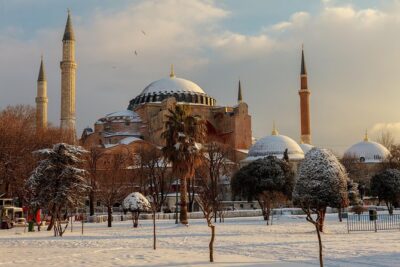 ★ 4.5Morning Istanbul: Half-Day Tour with Blue Mosque, Hagia Sophia, Hippodrome and Grand BazaarFrom $141103 reviews
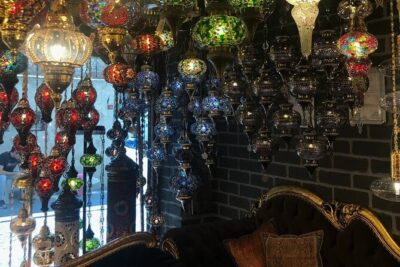 ★ 5.0Private Istanbul Shopping in Grand Bazaar with Personal ShopperFrom $7568 reviews
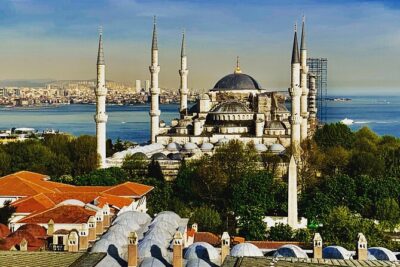 ★ 5.0Private 5-6h: Topkapi + Hagia Sophia + Blue Mosque + Grand BazaarFrom $30067 reviews
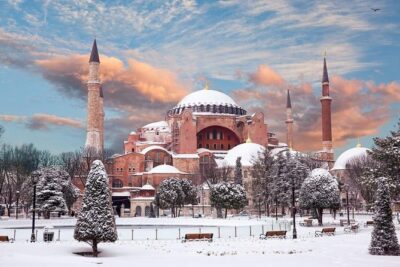 ★ 3.5Imperial Istanbul Half-Day Tour: Hagia Sophia and Grand BazaarFrom $11064 reviews
Browse the lists this tour appears in