
REVIEW · TURKISH CRAFT WORKSHOPS
Istanbul: Ceramic & Tile Painting Workshop (KILN FIRED)
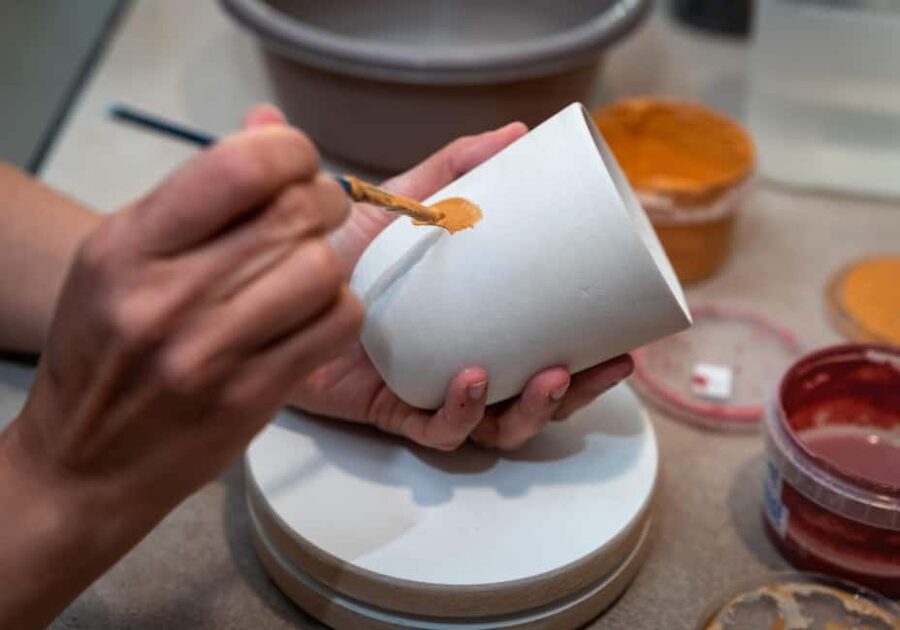
Fire turns paint into something you can use. In Istanbul, you paint a cup, bowl, or plate with Ottoman tile patterns, and the studio fires it at 1000°C for dishwasher-safe durability. I love the mix of hands-on creativity and real-world practicality. The main drawback is simple: your finished piece arrives after 2–3 weeks, not the same day.
This workshop is set near Galata Tower, between Galataport and Galata Tower, so you can pair it with an evening walk and dinner nearby. In a small group (up to 20), you get expert guidance in Turkish or English, plus unlimited hot Turkish tea and fresh Turkish delight while you work.
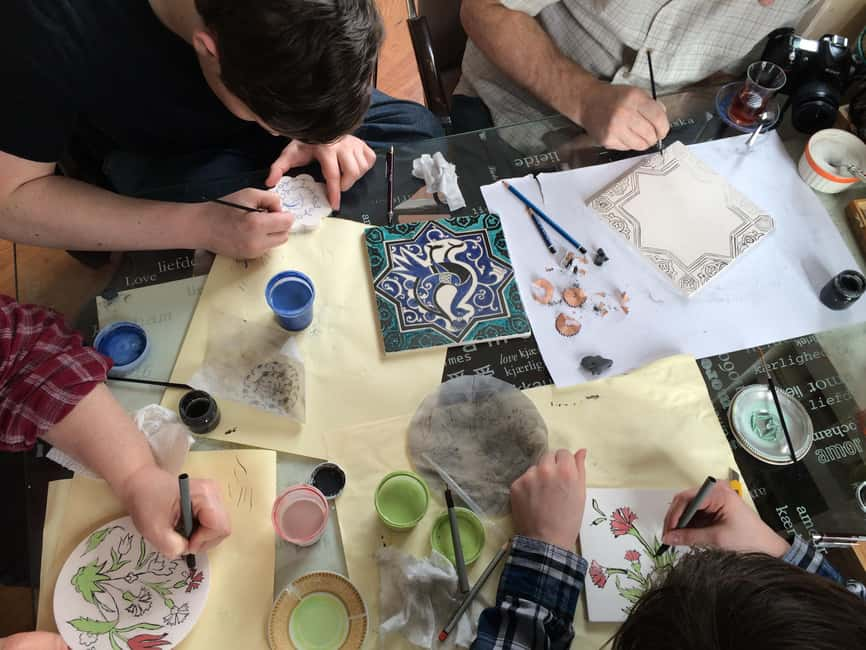
You’ll choose what to paint, too: traditional Iznik-style flowers and geometric Ottoman motifs, or your own modern design on a ready ceramic form. Depending on what you pick, you might start with a pre-marked piece or you might go fully freehand with an empty ceramic shape.
In This Review
- What Makes This Ceramic Workshop Different Near Galata Tower
- First Steps: Picking a Ceramic Piece and a Pattern
- Your Real Work: Painting Ottoman Tile Motifs That Look Authentic
- How the 1000°C Firing Changes Everything (and Why It’s Worth Waiting)
- A Day’s Rhythm: Tea, Time, and Small-Group Focus
- Practical Value: Price, What’s Included, and What Could Cost Extra
- Your Finished Piece: What You Can Expect in 2–3 Weeks
- Who This Workshop Fits Best (and Who Might Skip It)
- Should You Book This Kiln-Fired Ceramic Painting Workshop?
What Makes This Ceramic Workshop Different Near Galata Tower
- 1000°C kiln firing turns your painted underglaze into permanent color
- Ottoman tile patterns (Iznik flowers and geometric designs) give you a real template
- Choose a cup, bowl, or plate for functional art you can actually use
- Professional glazing helps make the finished piece dishwasher safe
- You travel light because your work gets shipped after firing
- Small-group guidance in Turkish or English helps you get results, even if you’re new to ceramics
Make something to carry home



First Steps: Picking a Ceramic Piece and a Pattern
The experience starts in a studio setting near Galata Tower, an area that’s easy to reach and easy to explore on foot. You’re not just sitting and watching. You’re actively selecting what you’ll make and deciding how traditional you want to go.
You’ll work on a ceramic piece meant for kiln firing, so the materials and process are geared toward durability, not quick decoration. If you want something straightforward, you can often pick from pre-drawn options where you add color to an existing motif. If you want more creative control, you can choose empty ceramics and design your own motives within the Ottoman tile style.
This choice matters because it changes the whole feel of the workshop. With a pre-drawn piece, you can focus on color placement and pattern rhythm. With an empty piece, you’ll spend more time thinking about composition, but you’ll leave with something more personal.
Guidance also comes into play here. The instructor (Esra runs the studio) explains how Ottoman patterns are built, and that turns your design from random decoration into a repeatable visual system. Even if you only pick one pattern, you end up understanding why it works.
Your Real Work: Painting Ottoman Tile Motifs That Look Authentic
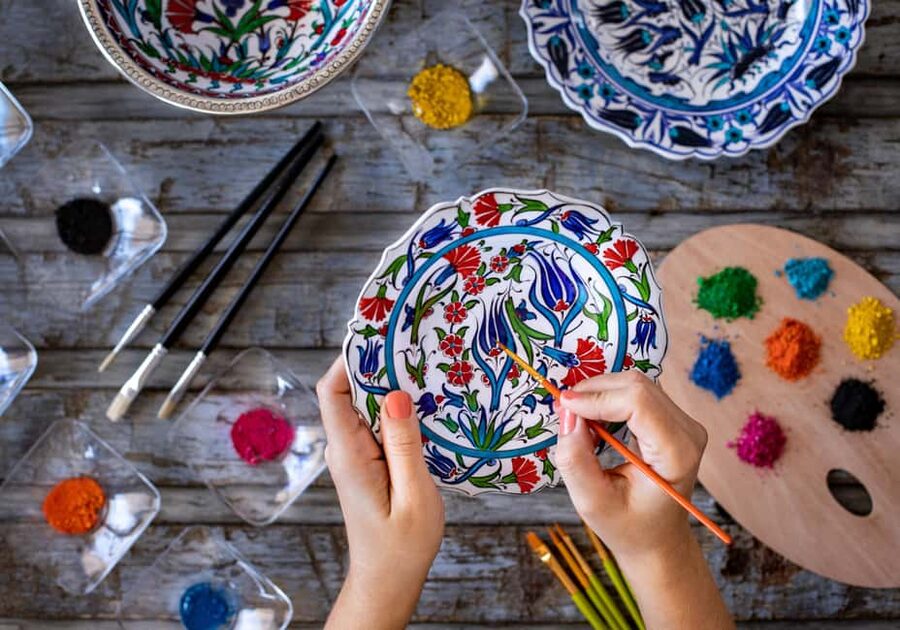
Once you’re seated, the workshop shifts into practical art-making. You’ll get brushes, palettes, stencils, and special ceramic paints designed for kiln firing. That combination is important: it helps you get crisp pattern edges, clean lines, and consistent color bands without needing years of practice.
For the style, you’ll be working with Ottoman tile themes, including Iznik flowers and geometric designs. These motifs aren’t random. They follow patterns that are meant to repeat, balance, and harmonize. That means you’re not just copying an image. You’re learning how to structure decoration in a way that feels period-correct.
If you want to lean traditional, you can follow the established motif set and paint it in a way that respects the tile logic. If you want to lean modern, you can still keep the Ottoman structure but reinterpret the pattern on your own terms. That’s the sweet spot for me in this workshop: it’s creative, but it’s not chaotic.
One more useful detail: the workshop doesn’t treat this like a basic craft class. It talks about glaze and firing, so you understand that what you’re painting today is only the first half of the transformation.
How the 1000°C Firing Changes Everything (and Why It’s Worth Waiting)
Here’s where this experience becomes more than a souvenir workshop: your piece is fired at 1000°C with a glaze coating. That means the colors are designed to become permanent, rather than something that stays pretty only until it gets scratched or washed wrong.
This is the part that changes how you should think during the workshop. You’re not painting with the usual assumption that the product will stay fragile. You’re painting with a sense of responsibility because you know the outcome depends on the materials and the kiln process.
The underglaze ceramic paints and the glaze firing work together. The paint isn’t meant to be a surface coating that rubs off. It’s part of what gets locked in by the kiln firing process. That’s also why the finished ceramic is described as dishwasher safe, which is rare for art you make on vacation.
The trade-off is timing. Your piece becomes your own only after the studio fires it and prepares it to ship. You receive it ready in 2–3 weeks, which is long enough that you’ll want to plan for living without it on your first days in Istanbul.
Worth putting side by side with this Istanbul pick:
- Istanbul:Original Turkish Mosaic Lamp Workshop w/ Snacks★ 4.9 · 3,077 reviews
- Istanbul: Perfume Making Workshop with Bosphorus View★ 5.0 · 2,985 reviews
- Istanbul: Turkish Mosaic Lamp Workshop w/ Materials Included★ 5.0 · 2,058 reviews
- Istanbul: Turkish Coffee Making and Fortune Telling Workshop★ 4.9 · 1,308 reviews
A Day’s Rhythm: Tea, Time, and Small-Group Focus
The workshop lasts 1.5 hours, which is just enough time to get into a pattern, start seeing your design take shape, and still feel energized rather than rushed. You’ll also have unlimited hot Turkish tea and fresh Turkish delight during the session, so you can slow down and enjoy the process.
The small group size (up to 20) helps here. It’s not a giant class where you get one quick explanation and then figure it out alone. You’re working closely enough that questions stay practical: how to place color, how to build the motif rhythm, how to work with the stencils, and how the glazing and firing will affect what you’re doing.
This is where Esra’s style shows up in a big way. The studio experience is set up to feel welcoming, not intimidating. You can talk about Istanbul, ask about Ottoman tile inspirations, and learn what guides the pattern choices. That conversation isn’t extra fluff. It helps you paint with more intent.
Practical Value: Price, What’s Included, and What Could Cost Extra
The price is $75 per person for a 1.5-hour workshop, and what you get at the end is the real value. You’re not only paying for the session. You’re also covered for the professional kiln firing at 1000°C, the materials, and shipping your completed piece to your address.
That matters because ceramic work is all about the after part. Glaze and kiln firing take time, tools, and expertise. The workshop includes those steps, which is why it’s priced like a full-making experience rather than a short craft activity.
There is one item to keep in mind: the info notes that if glazing of the ceramic is requested, shipping costs may apply. At the same time, the main highlights say the firing includes glaze coating. If you want to be extra safe, ask the studio during your session what glazing options are included for your specific piece and whether any extra request would change shipping costs.
Hotel pickup and drop-off aren’t included, so you’ll handle your own way there. The upside is that the studio location near Galata Tower makes it easy to plan independently.
Your Finished Piece: What You Can Expect in 2–3 Weeks
When your session ends, your work doesn’t just sit unfinished. The studio takes your design through kiln firing and finishing, then ships it to you. You should plan on a delivery window of 2–3 weeks.
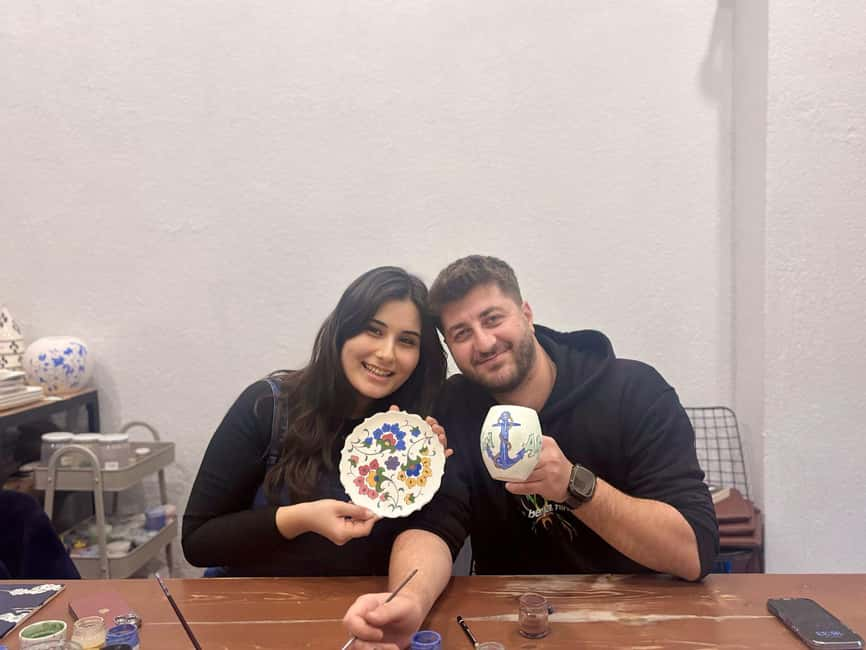
Because it’s dishwasher safe, you can treat it like a daily-use item instead of a fragile display plate. If you like the idea of functional art, this is one of the reasons the workshop is a solid choice. You’re not just buying a decorative object. You’re creating something designed to survive regular life.
One more practical thought: because it’s shipped, you don’t have to carry a ceramic item around Istanbul. That’s a real relief if you’re also visiting museums, doing day trips, or moving hotels.
Who This Workshop Fits Best (and Who Might Skip It)
This workshop is a strong fit if you want a hands-on souvenir that’s actually usable and made with professional firing. If you like Istanbul’s Ottoman design language and you enjoy pattern-based art, you’ll feel at home with Iznik flowers and geometric motifs.
It’s also a good choice if you’re traveling with limited time. Ninety minutes is short, and you can pair it with a simple plan before or after: Galata Tower area strolls, Galataport waterfront time, or dinner nearby.
You might want to skip it if you need the finished piece immediately. The 2–3 week wait is part of the process. Also, if you’re not interested in making something that you’ll use (and keep), the value of kiln-fired durability may not feel worth the wait.
Should You Book This Kiln-Fired Ceramic Painting Workshop?
Book it if you want your creativity to end with something permanent, not just temporary paint. The combination of Ottoman tile patterns, professional 1000°C firing, and shipping makes this one of the more practical art workshops in Istanbul.
If you hate waiting for souvenirs, or you only want a quick take-home item that day, look for a faster craft option. But if you’re okay planning around delivery and you like the idea of dishwasher-safe ceramic art, this is a smart, satisfying workshop to add to your Galata-area day.
More Workshops in Istanbul
- Istanbul:Original Turkish Mosaic Lamp Workshop w/ Snacks★ 4.9 · 3,077 reviews
- Istanbul: Perfume Making Workshop with Bosphorus View★ 5.0 · 2,985 reviews
- Istanbul: Turkish Mosaic Lamp Workshop w/ Materials Included★ 5.0 · 2,058 reviews
- Istanbul: Turkish Coffee Making and Fortune Telling Workshop★ 4.9 · 1,308 reviews
- Istanbul: Perfume Workshop at Old Wooden Mansion, 80+ Oils★ 4.9 · 1,237 reviews
- Istanbul: Turkish Mosaic Lamp Workshop in Galata – All Included★ 5.0 · 636 reviews
More Tour Reviews in Istanbul
- Istanbul: Bosphorus Dinner Cruise & Show with Private Table★ 4.8 · 62,058 reviews
- Istanbul: Daytime or Sunset Sightseeing Cruise & Audio Guide★ 4.8 · 14,430 reviews
- Istanbul: Bosphorus Dinner Cruise & Turkish Night Show★ 4.8 · 12,954 reviews
- Best of Istanbul 1, 2 or 3-Day Private Guided Istanbul Tour★ 5.0 · 8,922 reviews
- Istanbul: Basilica Cistern Fast-Track Entry and Audio Guide★ 4.6 · 7,521 reviews
- Istanbul: Hagia Sophia Skip-the-Line Ticket & Museum Option★ 3.7 · 4,958 reviews
More Turkish Craft Workshops
- Istanbul:Original Turkish Mosaic Lamp Workshop w/ Snacks★ 4.9 · 3,077 reviews
- Istanbul: Perfume Making Workshop with Bosphorus View★ 5.0 · 2,985 reviews
- Istanbul: Turkish Mosaic Lamp Workshop w/ Materials Included★ 5.0 · 2,058 reviews
- Istanbul: Perfume Workshop at Old Wooden Mansion, 80+ Oils★ 4.9 · 1,237 reviews
- Istanbul: Turkish Mosaic Lamp Workshop in Galata – All Included★ 5.0 · 636 reviews
- Istanbul Turkish Mosaic Lamp Workshop in Old Town – All Included★ 5.0 · 292 reviews
Fresh off the boat: new Istanbul reviews


Turkish Craft Workshops, compared.
 ★ 4.9Original Turkish Mosaic Lamp Workshop w/ SnacksFrom $293,077 reviews
 ★ 5.0Perfume Making Workshop with Bosphorus ViewFrom $282,985 reviews
 ★ 5.0Turkish Mosaic Lamp Workshop w/ Materials IncludedFrom $292,058 reviews
 ★ 4.9Perfume Workshop at Old Wooden Mansion, 80+ OilsFrom $281,237 reviews
 ★ 5.0Turkish Mosaic Lamp Workshop in Galata – All IncludedFrom $34636 reviews
 ★ 5.0Istanbul Turkish Mosaic Lamp Workshop in Old Town – All IncludedFrom $30292 reviews
 ★ 5.0Perfume Making Workshop in a Stylish Galata Atelier in IstanbulFrom $28186 reviews
 ★ 4.9Sand Brewed Turkish Coffee Workshop in Old TownFrom $12142 reviews
Browse the lists this tour appears in