
REVIEW · EVENING EXPERIENCES
Istanbul Haunted Night Tour
One hour into the evening, Istanbul turns darker. This Haunted Night Tour mixes ghost-lure storytelling with real landmarks from the Roman and Ottoman eras, from Constantine’s forum to the gates of Topkapi. I love the way the tour keeps the mood spooky without forgetting the facts, and I also like how guides such as Sara and Mehmet can make the grim stories feel clear and human.
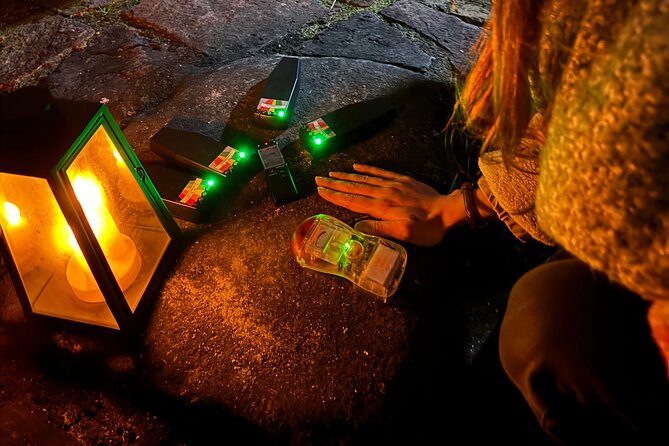
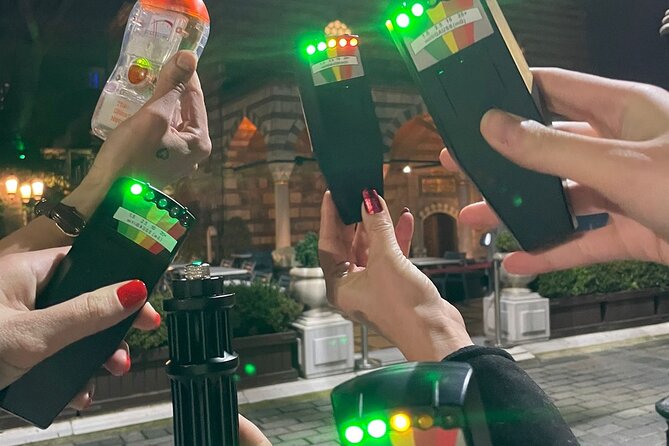
You’ll also get hands-on gear for the night, like EMF detectors, a green laser web, dowsing rods, and an EVP recorder, which adds play-at-your-own-pace interactivity instead of just sitting and listening. The best part is how the walk threads together multiple eras into one evening.
One consideration: most stops lean hard into executions, torture, and fratricide, so if you’re sensitive to dark violence, plan for that tone before you go.
In This Review
- Key highlights worth showing up for
- A 2-hour 8pm walk through Istanbul’s power centers
- Where you’ll meet and how the route finishes near Topkapi
- Constantine’s Forum: the column that anchors the darkest themes
- Ahmet Tevfik Pasa Mezari: sultans, advisors, and the stories people fear
- The Sphendone remains: torture, disfigurement, and the prison vibe
- The Hippodrome: chariot racing, power theater, and public punishment
- Kucuk Ayasofya: from Saints Sergius and Bacchus to a Little Hagia Sophia
- Back side Sphendone and the “best seats in the house” idea
- Serpent Column: spoils of war to a brutal execution
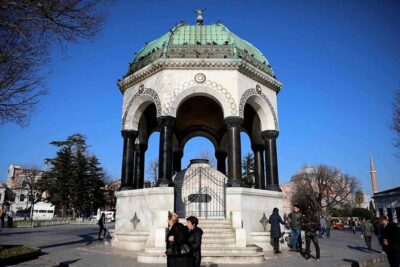
- German Fountain: chariot-race gates and a deadly unpaid-soldier event
- Sultan Ahmet Tomb: fratricide laws and a haunting mausoleum
- Sultanahmet Square: coffee banned, and the consequences described
- Bab-i-Humayun gate: why the Imperial Gate scared people
- The ghost equipment: fun tools with no promise attached
- Who this tour suits best (and who should skip it)
- Should you book this Istanbul Haunted Night Tour?
- FAQ
- FAQ
- What is the price per person?
- How long is the Istanbul Haunted Night Tour?
- What time does the tour start and where does it end?
- Is the tour offered in English?
- What’s included for the haunted experience?
- How big is the group?
- Are entrance tickets included anywhere?
- What if the weather is bad?
Key highlights worth showing up for
- Small group pacing (max 20) keeps the story from feeling rushed
- Start at Constantine’s column, end at Bab-i-Hümayun for a satisfying route through the old imperial core
- EMF, EVP, dowsing rods, and a green laser web make it an interactive haunted walk
- Hippodrome-focused stops connect chariot races to public punishment and mass events
- Little Hagia Sophia stop at Kucuk Ayasofya–area lore links Justinian-era rooms to Ottoman intrigue
- Guides like Brent, Sara, and Mehmet are highlighted for energy and serious place-based research
Worth putting side by side with this Istanbul pick:

A 2-hour 8pm walk through Istanbul’s power centers
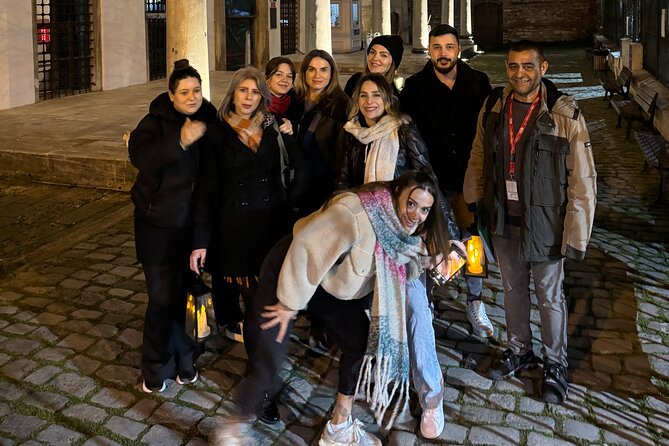
This tour is built for the evening crowd that wants more than a nighttime stroll. It runs about 2 hours, starting at 8:00 pm, and it stays concentrated in the historic zone where Roman, Byzantine, and Ottoman stories overlap. The timing matters: at night, Istanbul’s monumental spaces feel bigger, and the guide’s storytelling lands with more punch.
The price is $48.06 per person, which is honestly pretty reasonable for what you get. You’re paying for a live guide, a tight route that hits major sites without the need to line up and plan, and included ghost tools that make the evening feel like an activity, not a lecture. One admission-related detail also helps the value: at Kucuk Ayasofya–Gazi Süleyman Paşa Mosque there’s an admission ticket included, while other stops are listed as free.
The trade-off is the theme itself. This is not a light, PG ghost tour. You’ll hear about assassinations, prison cruelty, public executions, and even a legal tradition tied to Ottoman succession. You might find the pace fast if you prefer slow museum time, but it’s designed for walking and listening.
Where you’ll meet and how the route finishes near Topkapi
You start at the Column of Constantine area, at Molla Fenari, Vezirhan Cd. No:16 D:18, 34120 Fatih/İstanbul. The tour ends at Bab-ı Hümayun, the Imperial Gate of Topkapi Sarayı, at 34122 Fatih/İstanbul, behind and to the side of the Hagia Sophia.
There’s a practical perk here: after the guided finish, the guide walks back close to the starting point and can point you in whatever direction you want next. That’s useful if you plan to continue exploring, grab a late snack, or get back to your hotel by tram or bus.
Also, keep in mind the route is designed for evening walking. Comfortable shoes matter more than normal. It’s near public transportation, and the tour limits the group to 20 people, so it stays manageable even if you’re not a confident walker.
Constantine’s Forum: the column that anchors the darkest themes
The evening opens at Forum of Constantine, tied to the moment that Constantine moved the capital of the Roman Empire to this area (starting around 330). The anchor for the spooky narrative here is the Column of Constantine, framed as holding dark secrets from the past.
What makes this stop work for you is the contrast. The forum story gives you the political backdrop—power, relocation, legitimacy—before the tour shifts into ghosts and brutality. Even if you’re not into paranormal stuff, it helps you understand why so many legends cling to this specific corner of the city.
The watch-out: this stop is brief (listed at 10 minutes). If you like to linger for photos or to read every surface detail, you’ll need to keep moving with the group and save extra time for later.
- Best of Istanbul 1, 2 or 3-Day Private Guided Istanbul Tour★ 5.0 · 8,922 reviews
- Istanbul: Basilica Cistern Fast-Track Entry and Audio Guide★ 4.6 · 7,521 reviews
- Istanbul: Hagia Sophia Skip-the-Line Ticket & Museum Option★ 3.7 · 4,958 reviews
- Istanbul: Hodjapasha Whirling Dervishes Show & Exhibition★ 4.4 · 4,790 reviews
Ahmet Tevfik Pasa Mezari: sultans, advisors, and the stories people fear
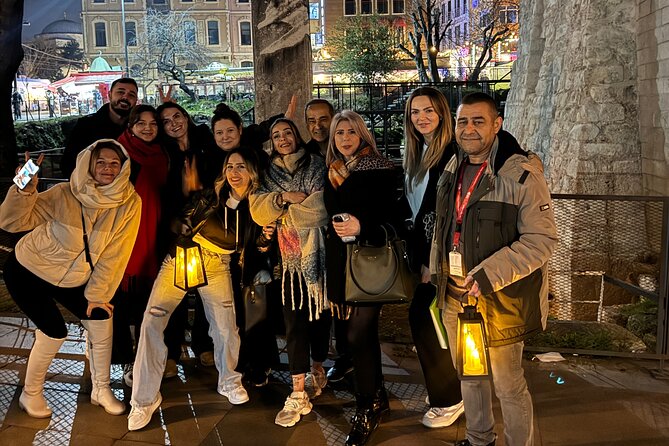
Next comes Ahmet Tevfik Pasa Mezarı, described as a graveyard of a sultan and his advisors from the 19th century. The tone shifts from Roman empire framing to a more personal, court-driven kind of danger: betrayal and assassination.
I like that this stop breaks the pattern. After the Roman/Byzantine focus near the Hippodrome, you get a different kind of historical thriller—less about empire-wide spectacle and more about the human cost of political survival.
It’s also quick (about 10 minutes). If you’re the type who always wants more context, you can pair this with a daytime revisit later so the names and relationships sink in.
The Sphendone remains: torture, disfigurement, and the prison vibe
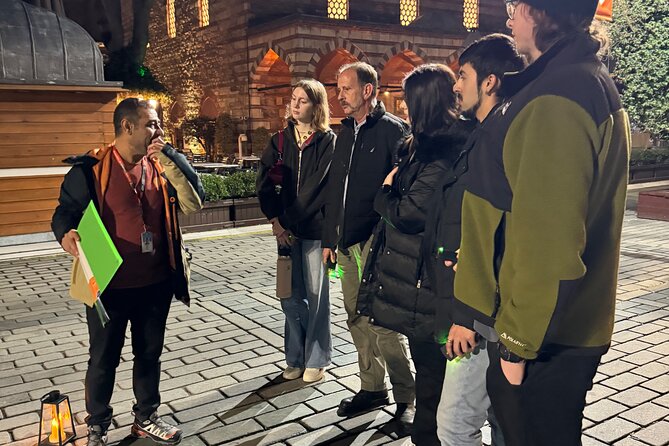
You’ll then move toward the Sphendone remains, described as the vaulted remnants of the south side of the Hippodrome. Here the tour emphasizes what used to happen around this structure, including an ancient prison that once housed wild animals for circus-style spectacles.
The guide also discusses torture methods used in these settings, including how disfiguration was common. That’s the moment the tour stops acting like a spooky walk and turns into a dark history storytelling session.
Two stops cover the Sphendone from different angles: one side looks at the prison context, and later you’ll return to hear about “best seats in the house” and how death was compiled here over centuries. The repeated location helps, because it gives you a 3D feel for how the space might have worked—where people stood, where punishment happened, and how audiences could watch.
Potential drawback: this is not gentle storytelling. If you dislike violence descriptions, you may find yourself tuning out or needing breaks.
The Hippodrome: chariot racing, power theater, and public punishment
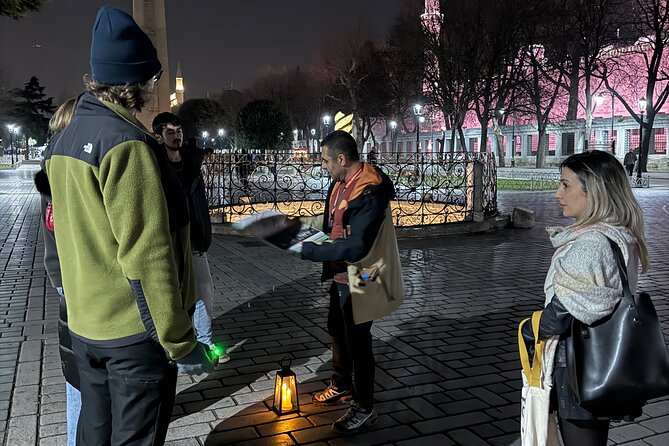
The Hippodrome stop is longer at about 20 minutes, and it’s treated as the emotional center of the route. The Hippodrome is described as the sporting and social center of Constantinople, the center of the Roman world for over 1000 years, and second only to Circus Maximus.
You’ll hear how it hosted famous chariot races with rival factions, and how it also held public executions. The guide frames it as a place where citizens could see the emperor face to face, and where one of the most horrific massacres in human history took place.
Here’s why this matters for you: it connects the fun-to-watch elements (racing, factions, crowds) to the darker function (punishment and spectacle). That helps the ghost theme feel grounded rather than random.
You’ll probably want to bring a photo mindset, but don’t just shoot the view. Let the guide explain how the space served as a stage for both entertainment and terror.
Kucuk Ayasofya: from Saints Sergius and Bacchus to a Little Hagia Sophia
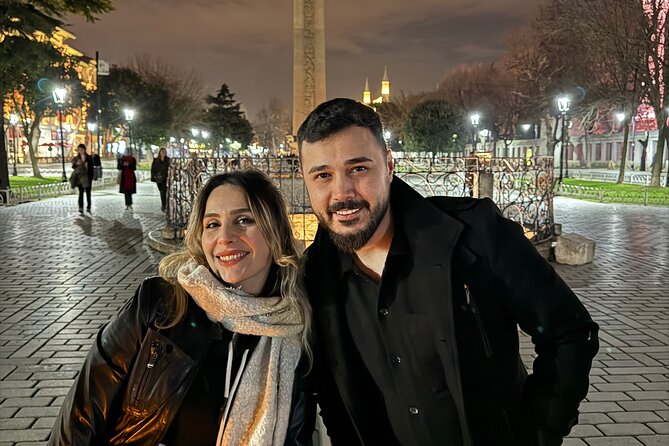
At Kucuk Ayasofya – Gazi Süleyman Paşa Mosque, the tour gives you one of the best shifts in tone. This spot is described as once being called the Church of Saints Sergius and Baccus, later renamed under Ottoman rule the Little Hagia Sophia Mosque.
The story goes further back: before it was a church, the area is described as a palace home to Justinian before he became emperor in the 6th century. Then comes an Ottoman-era tale tied to a high-ranking eunuch who was embezzling money and evading taxes. He was found and executed here, with the narrative emphasizing that he lost something very personal.
Admission is listed as included at this stop, so it’s a practical win for your money. It also gives you a breather from the Hippodrome’s prison and execution themes.
If you’re deciding whether to do this tour at all, this is one of the stops that makes it feel worth the ticket price: you’re not just hearing scary stories; you’re visiting a place with layered identity changes.
Back side Sphendone and the “best seats in the house” idea
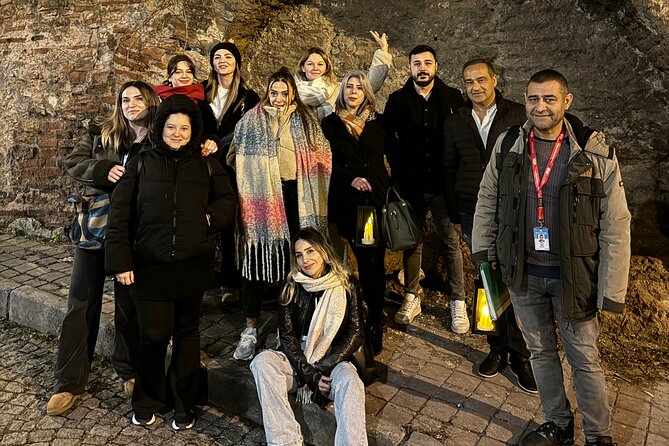
You revisit the Sphendone remains from the back side. This time, the focus is on how people experienced power and death from where they sat or stood. The guide includes the concept of the best seats, and it also points to a coup d’état that succeeded in dethroning a powerful emperor, along with the fate of the emperor and his sons above these walls.
This second Sphendone stop is a smart storytelling device. When you hear a space described twice with different details, you start to picture how violence and authority were staged in the same physical area over and over.
Try not to rush this one. Even though it’s only about 8 minutes, it’s one of the moments where the tour feels like it has a thesis: history repeats its tactics, and people keep returning to the same symbolic buildings.
Serpent Column: spoils of war to a brutal execution
Next is the Serpent Column, introduced through a haunted framing: the column is discussed as tied to spoils of war and then to a brutal execution of a Byzantine emperor.
This stop is shorter (about 8 minutes), but it’s memorable because it gives you a story arc in miniature. The column becomes both a trophy and a warning. That double meaning is exactly how cities like Istanbul generate legends—objects get repurposed, and later generations read new stories into old stone.
If you like symbolism, this is where you’ll enjoy paying attention to what the guide connects rather than just the object itself.
German Fountain: chariot-race gates and a deadly unpaid-soldier event
The German Fountain stop is brief at 10 minutes, but it packs context. You’ll hear how the location was connected to the starting gates for chariot races. Then, in the Ottoman era, the narrative moves to soldiers returning from war who weren’t being paid, and how this led to a deadly event at this location. The story also mentions an old tree that once stood there.
What I like about this stop is the cause-and-effect structure. The tour doesn’t keep the ghosts floating in the air. It ties the fear to money, authority, and public pressure—things that feel sadly familiar in any century.
Since it’s quick, take it as a connection point rather than expecting a full chapter. If you want more, you’ll likely enjoy revisiting these sites during daytime after your night walk has given you the right questions to ask.
Sultan Ahmet Tomb: fratricide laws and a haunting mausoleum
At the Sultan Ahmet Tomb, the tour shifts toward Ottoman succession rules. The story is centered on the law of fratricide, which allowed sultans to kill brothers and children who threatened their throne. It’s framed as the reason these figures are associated with haunting near their mausoleum.
This stop is about 10 minutes, and it’s emotionally heavier than some of the others because the theme is family, not just enemy states. You’ll likely find it chills more than it thrills, and that’s the point.
If you like your history dark but not confusing, this is one of the cleanest narratives on the route.
Sultanahmet Square: coffee banned, and the consequences described
At Sultanahmet Square, the tour turns to a surprising detail: in the early 17th century, coffee was banned for public drinking, and the consequences were described as literally deadly. This stop is short at 5 minutes, but the shock value is useful.
I think moments like this help you remember the tour later. A single absurd rule tied to real punishment makes the city feel specific, not generic.
Bab-i-Humayun gate: why the Imperial Gate scared people
The final stop is at Bab-i-Humayun, described as the main gate to the Imperial Palace. The guide explains that it wasn’t just grand; it was also designed to scare and intimidate people entering. The narrative also includes a special race for the palace’s head gardener, framed as a matter of life and death.
This ending works because it closes the loop on the whole theme. Early on, you’re taught how power was staged in public spaces like the Hippodrome. At the end, you see power staged at the threshold of the palace itself.
Even though it’s listed as about 10 minutes, it gives you a satisfying sense of arrival: you finish at the place where authority was supposed to feel unavoidable.
The ghost equipment: fun tools with no promise attached
Included with the tour are EMF detectors, Maddusa’s Web green laser, dowsing rods, and an EVP recorder. The way this plays in practice is simple: you’ll have something to hold and try while the guide explains the next story and location.
A good way to think about these tools is as props that support the experience. They can make the night feel interactive and give you something to do with your curiosity. They also help the tour avoid the awkward “just stand there and be scared” problem.
Just keep your expectations realistic. This is a guided themed walk with history as the backbone. The value is the pairing of storytelling and place.
Who this tour suits best (and who should skip it)
You’ll likely love this if you want a nighttime walking tour with a serious history backbone and don’t mind grim subject matter. It’s also great for people who enjoy hands-on activities, since the included equipment gives you a role beyond listening.
It’s especially good for travelers who want to see the older European-side landmarks after dark and feel like you learned something new about how Constantinople and Ottoman Istanbul operated.
Skip or think twice if:
- you prefer light entertainment and would rather avoid executions, torture, and fratricide stories
- you get uncomfortable with prolonged standing and walking at night
- your travel plans are fragile around weather, since the tour requires good weather
Should you book this Istanbul Haunted Night Tour?
Book it if you want a compact 8:00 pm, ~2-hour evening that ties spooky storytelling to specific places like the Hippodrome, Sphendone remains, Serpent Column, and Topkapi’s Bab-i-Humayun. The price feels fair for the format, especially with included admission at Kucuk Ayasofya and the interactive ghost-tool lineup.
Don’t book it if you’re hoping for a gentle, family-friendly ghost walk. This tour leans into the darker side of power: punishments, conspiracies, and public terror. If that tone matches your idea of a great night in Istanbul, you’re in the right place.
FAQ
FAQ
What is the price per person?
The tour costs $48.06 per person.
How long is the Istanbul Haunted Night Tour?
It lasts about 2 hours.
What time does the tour start and where does it end?
It starts at 8:00 pm at the Column of Constantine area and ends at Bab-ı Hümayun at Topkapi Sarayı.
Is the tour offered in English?
Yes, the tour is offered in English.
What’s included for the haunted experience?
You get EMF detectors, Maddusa’s Web green laser, dowsing rods, and an EVP recorder.
How big is the group?
The tour has a maximum of 20 travelers.
Are entrance tickets included anywhere?
At Kucuk Ayasofya – Gazi Suleyman Pasa Mosque, the admission ticket is included. The other listed stops show admission ticket free.
What if the weather is bad?
The tour requires good weather. If it’s canceled due to poor weather, you’ll be offered a different date or a full refund.
More Evening Experiences in Istanbul
- Istanbul: Daytime or Sunset Sightseeing Cruise & Audio Guide★ 4.8 · 14,430 reviews
- Istanbul: Bosphorus Dinner Cruise & Turkish Night Show★ 4.8 · 12,954 reviews
- Istanbul Bosphorus Sunset Cruise on Luxury Yacht★ 5.0 · 4,465 reviews
- Istanbul: Sunset or Day Small-Group Yacht Cruise with Snacks★ 4.9 · 3,774 reviews
- Istanbul: Bosphorus Sunset Cruise on Yacht with Live Guide★ 4.9 · 2,845 reviews
- Istanbul: Bosphorus Sunset Cruise with Drinks & Snack★ 4.8 · 2,716 reviews
More Tours in Istanbul
- Best of Istanbul 1, 2 or 3-Day Private Guided Istanbul Tour★ 5.0 · 8,922 reviews
- Istanbul: Bosphorus Sightseeing Cruise Tour with Audio Guide★ 4.6 · 4,704 reviews
- Istanbul: Blue Mosque & Hagia Sophia Guided Tour w/ Tickets★ 4.8 · 3,600 reviews
- Istanbul: Blue Mosque, Hagia Sophia, & Old Town Walking Tour★ 4.8 · 2,372 reviews
- Istanbul: Princes Islands Tour with Heybeliada and Buyukada★ 4.4 · 2,305 reviews
- Istanbul: Basilica, Hagia Sophia, Blue Mosque Tour & Cruise★ 4.5 · 1,929 reviews
More Tour Reviews in Istanbul
- Istanbul: Bosphorus Dinner Cruise & Show with Private Table★ 4.8 · 62,058 reviews
- Istanbul: Daytime or Sunset Sightseeing Cruise & Audio Guide★ 4.8 · 14,430 reviews
- Istanbul: Bosphorus Dinner Cruise & Turkish Night Show★ 4.8 · 12,954 reviews
- Best of Istanbul 1, 2 or 3-Day Private Guided Istanbul Tour★ 5.0 · 8,922 reviews
- Istanbul: Basilica Cistern Fast-Track Entry and Audio Guide★ 4.6 · 7,521 reviews
- Istanbul: Hagia Sophia Skip-the-Line Ticket & Museum Option★ 3.7 · 4,958 reviews
Fresh off the boat: new Istanbul reviews


Evening Experiences, compared.
 ★ 4.8Daytime or Sunset Sightseeing Cruise & Audio GuideFrom $814,430 reviews
 ★ 4.8Bosphorus Dinner Cruise & Turkish Night ShowFrom $2812,954 reviews
 ★ 5.0Istanbul Bosphorus Sunset Cruise on Luxury YachtFrom $304,465 reviews
 ★ 4.9Sunset or Day Small-Group Yacht Cruise with SnacksFrom $313,774 reviews
 ★ 4.9Bosphorus Sunset Cruise on Yacht with Live GuideFrom $192,845 reviews
 ★ 4.8Bosphorus Sunset Cruise with Drinks & SnackFrom $82,716 reviews
 ★ 5.0Bosphorus Sunset Yacht Experience: Istanbul’s BestFrom $482,181 reviews
 ★ 5.0Sunset or Daytime Istanbul Guided Luxury Yacht Cruise with SnacksFrom $241,977 reviews
Browse the lists this tour appears in