
REVIEW · BLUE MOSQUE TOURS
Istanbul-St Sophia,Blue Mosque,Hippodrome Guided Tour
A quick walk turns into a full Byzantine-to-Ottoman story. I especially loved the Blue Mosque’s Iznik tiles and how the guide connected the Hippodrome’s chariot-race layout to what you’re seeing on the ground. One thing to keep in mind: Hagia Sophia entry isn’t guaranteed because of long lines and mosque closures can happen last minute.
This is a shared walking tour in Sultanahmet that tries to cover a lot without feeling like a sprint. You’ll start near the obelisk area, get a real sense of the old imperial “arena” at the Hippodrome, then move on to two of Istanbul’s most famous religious landmarks. Expect airport-style security, crowds, and the kind of timing where arriving a bit early matters.
In This Review
- Key points at a glance
- From the Hippodrome obelisk to Sultanahmet’s power center
- The Hippodrome walk: where chariots roared (and what you’ll actually see)
- Blue Mosque inside: tiles, minarets, and why the visit feels different
- Hagia Sophia: a guided approach with no guarantees
- How the guide turns stones into a story
- Price and value: what $41 buys you in a 3-hour window
- Logistics you should plan for before you leave
- Who this tour suits best
- Should you book this Istanbul-St Sophia, Blue Mosque, Hippodrome tour?
- FAQ
- Where do I meet the guide?
- How long is the tour?
- Is pickup included?
- Are entry fees included?
- Is Hagia Sophia entry guaranteed?
- Do I need to bring ID?
- Do I need a headscarf?
- Are pets or large bags allowed?
Key points at a glance
- Blue Mosque details: minarets, the interior look, and the Iznik tile decoration are the big draw.
- Hippodrome in context: the old track is about 2 meters below ground, marked on the paving around Sultan Ahmet Square.
- Hagia Sophia with realistic odds: you’ll get the guided experience, but entry depends on line conditions.
- Byzantine and Ottoman framing: the walk focuses on how power and art shifted over time.
- No entry fees included: plan on paying separately, plus food and drinks are on you.
- Shared-group start can be messy: multiple groups use the same pickup area near the obelisk—show up 10–15 minutes early.
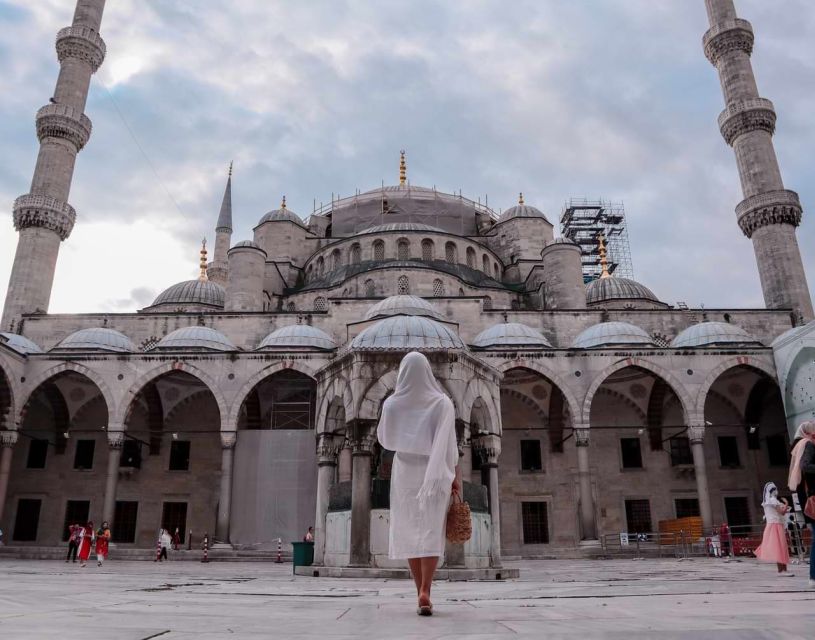
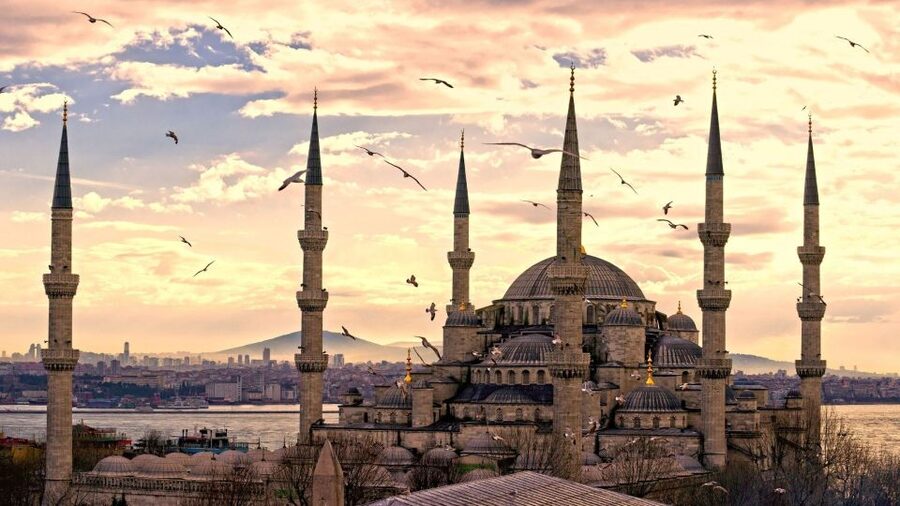
More time beneath the Blue Mosque's six minarets



From the Hippodrome obelisk to Sultanahmet’s power center
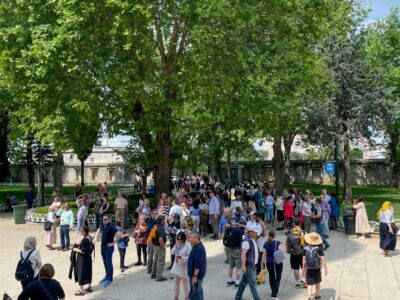
Your tour meets in front of Marmara Universitesi Rektörlük, opposite the obelisk in the Hippodrome area. The guide holds a flag with the All Tours Istanbul logo, and the key move is simple: arrive 10–15 minutes early. That area is also where lots of groups line up close together, so being early helps you avoid the usual “which group is ours?” moment.
Once you’re organized, the tour’s core idea clicks: you’re not just viewing monuments. You’re tracing a living street-level map of Roman and Byzantine entertainment, then following that energy forward into the era of great churches and imperial mosques.
The Hippodrome stop is designed to help you understand scale. The chariot-race track is now about 2 meters (6.6 feet) below ground, but the line of it is marked on the paving around Sultan Ahmet Square. That physical detail makes the whole place easier to picture. Instead of guessing where the action used to be, you’re standing on the outline of where gladiators and chariots would have cut across the arena.
The Hippodrome walk: where chariots roared (and what you’ll actually see)
Even if you’re not a Roman-history person, this part works because the guide points out the “anchors” of the Hippodrome. You’ll see surviving monuments that once shaped the spectacle. Key sights include:
- the obelisks
- the Serpentine Column from Delphi
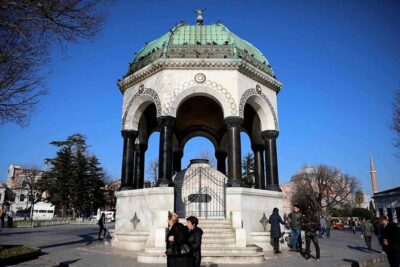
- the Byzantine German Fountain of Wilhelm II
You can think of this as the tour’s brain: it gives you landmarks for the story. In the modern square, those objects sit like frozen punctuation marks, but they connect to the movement and drama of the imperial arena.
Also, this stop sets up the rest of the tour nicely. The Ottoman-era Blue Mosque and the Byzantine-era Hagia Sophia can feel separate if you only treat them as individual must-sees. The Hippodrome helps you see why Istanbul’s rulers cared so much about public spaces—because mass gatherings were where power showed itself.
Blue Mosque inside: tiles, minarets, and why the visit feels different
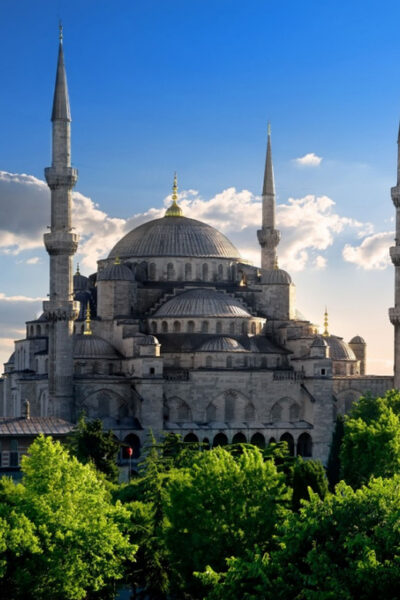
After the Hippodrome framing, you move to Sultan Ahmed Mosque, the famous Blue Mosque. This is one of those places where you can’t really do it justice with photos alone. The minarets are obvious even from far away, but the interior look is what usually sticks with people—especially the famed Iznik tiles.
Here’s what to pay attention to as you go in:
- The tilework isn’t just decorative. It’s part of how the mosque creates an atmosphere that feels intentionally made for worship and visual calm.
- The guide’s commentary helps connect the design choices to the era, rather than treating everything as “pretty stuff.”
Timing matters. The tour runs about 3 hours total, with roughly an hour at each major stop on the stated schedule. In real life, the time you spend in the Blue Mosque can be affected by crowds and any last-minute changes, since this is a functioning mosque. The important practical point: don’t expect you’ll have full control over how long you stand inside. Your best strategy is to wear comfortable shoes and keep your pace steady.
Worth putting side by side with this Istanbul pick:
- Istanbul: Daytime or Sunset Sightseeing Cruise & Audio Guide★ 4.8 · 14,430 reviews
- Best of Istanbul 1, 2 or 3-Day Private Guided Istanbul Tour★ 5.0 · 8,922 reviews
- Istanbul: Basilica Cistern Fast-Track Entry and Audio Guide★ 4.6 · 7,521 reviews
- Topkapi Palace and Harem Skip-the-Line-Tickets & Audio Guide★ 4.3 · 4,745 reviews
Hagia Sophia: a guided approach with no guarantees
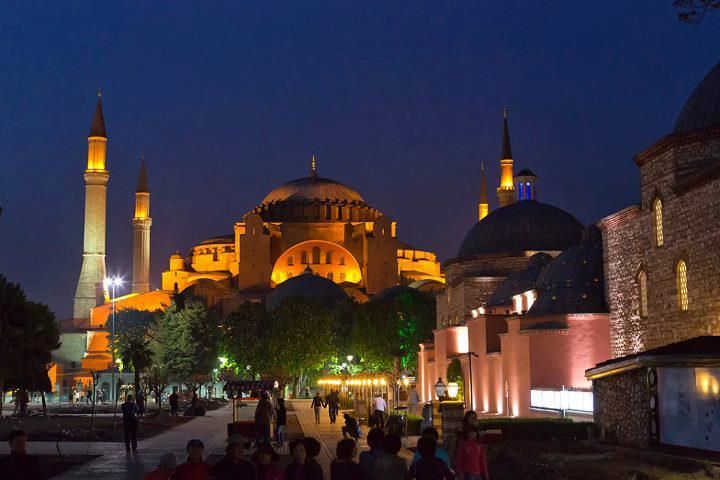
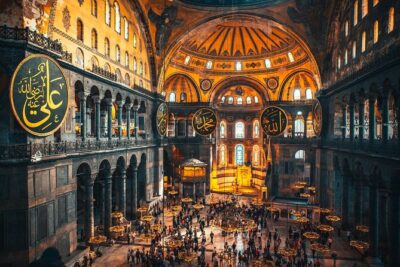
Next comes Hagia Sophia, also known as the Church of Holy Wisdom. This building is one of the world’s big architectural statements, and the tour tries to make you “read” it like a historical document: how it was richly decorated, how emperors and patrons wanted to be remembered, and how the space evolved through time.
One reality check is built into the experience: entry into Hagia Sophia is not guaranteed due to long lines. So I suggest planning in two layers:
- If you get inside, great. Treat it like a full visit with the guide explaining what you’re looking at.
- If you don’t, you’ll still benefit from the way the guide sets the building up for you—then you can decide on your own whether to rejoin later or come back on another day.
Either way, expect security screening at Hagia Sophia and the Blue Mosque. The tour notes that visitors must pass through airport-style security, and that alone can add time to the day. When you’re walking between major sites, that time can be the difference between a smooth hour and a shortened experience.
And remember: the tour can be impacted by mosque closures “last minute without notice.” That’s not something you can control, so it’s worth choosing flexible expectations before you go.
How the guide turns stones into a story
The tour’s “secret sauce” is not just the checklist of famous places. It’s the angle: Byzantine and Ottoman perspectives side by side. You’ll hear about Byzantine churches’ locations, the Roman chariot-race context of the Hippodrome, and then how the imperial mosque tradition lands at the Blue Mosque.
This is especially helpful if you’ve visited Istanbul’s big sights before but felt like you were collecting photographs instead of understanding meaning. With this format, the guide connects the dots as you walk:
- the entertainment space (Hippodrome) as a political and cultural stage
- the religious architecture (Hagia Sophia) as a statement of belief and power
- the Blue Mosque as a later imperial expression, with unmistakable visual identity through tiles and design
It also helps that the guide is a professional English-speaking, licensed tour leader. That matters because the value here isn’t “a famous monument.” It’s what you’re being told to notice while you’re standing there.
Price and value: what $41 buys you in a 3-hour window
At $41 per person for a roughly 3-hour guided walk, the deal is mostly about efficiency and explanation. You’re not getting transport included (and entry fees aren’t included either), but you are getting:
- a licensed English guide
- time at the sights (stated as long time on all places)
- service charges and taxes
The main value question is whether you want interpretation versus doing it on your own. If you’re the type who enjoys structured pacing—walking with someone who can point out key details—this can feel fair. If you’d rather wander slowly without a schedule, you might feel the squeeze, especially with crowds and security.
Also, entry conditions affect perceived value. If Hagia Sophia lines prevent entry, part of the building experience changes from guaranteed to “best effort.” The good news is the tour still focuses on the historical framing and the surrounding context, but you should still treat Hagia Sophia entry as a variable.
Logistics you should plan for before you leave
This tour is simple, but Istanbul is not. Here are the practical parts that can make or break your day.
1) Meeting point specifics
Meet at Marmara Universitesi Rektörlük, opposite the obelisk on the Hippodrome. The guide will be holding a flag. Because many groups gather nearby, arriving early helps you get sorted fast.
2) Security and lines
All visitors pass through airport-style security. That can add time, and Hagia Sophia entry is explicitly not guaranteed because lines can be long.
3) Mosque closures can happen
Blue Mosque and Hagia Sophia are functioning mosques. They could close last minute without notice, so keep flexibility in mind.
4) Dress code: headscarf for women
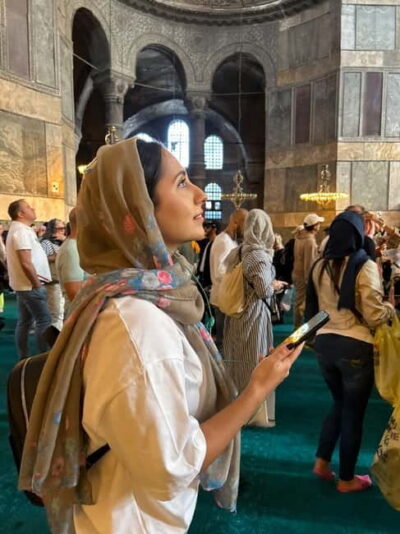
Women must carry a headscarf. Have one ready rather than scrambling inside.
5) What to bring
Bring passport or ID, comfortable shoes, and a camera. Sunglasses can help, especially in open-square sections.
6) Luggage rules
No pets, and no luggage or large bags. If you’re traveling light, you’re in good shape.
7) Hotel pickup is optional
If you choose pickup, you need to be ready in the hotel lobby 15 minutes before the pickup time. Some streets can be inaccessible by van, so you might be sent to a nearby meeting point. Drivers wait no longer than 5 minutes after the scheduled pickup time.
Who this tour suits best
This tour makes the most sense if:
- you want a fast, guided “Istanbul core” experience in a single half-day block
- you like architecture and history with visual explanations (not just facts)
- you’re okay with crowd reality and security time, and you show up early
It might feel disappointing if:
- you hate group starts and prefer a totally flexible schedule
- you need guaranteed entry to Hagia Sophia no matter what
- you’re sensitive to mosque closure or line uncertainty
Should you book this Istanbul-St Sophia, Blue Mosque, Hippodrome tour?
I’d book it if you want a guided walk that ties together three big Istanbul landmarks into one story—Hippodrome spectacle, Hagia Sophia’s architectural awe, and the Blue Mosque’s tile-and-minaret identity. The guide-led explanation is the reason to choose this format, not the locations alone.
Skip or reconsider if Hagia Sophia entry is your non-negotiable must. Because lines and last-minute mosque closures can change what you experience, you may want a Plan B: either build in time for a second attempt later, or keep your expectations flexible when you arrive.
If you do go, do one thing that pays off immediately: arrive early, travel light, and wear shoes you can stand in for a while. That way, you spend your energy on the sights—and not on the clock.
FAQ
Where do I meet the guide?
Meet in front of Marmara Universitesi Rektörlük, opposite the obelisk on the Hippodrome. The guide will be holding a flag with the All Tours Istanbul logo.
How long is the tour?
The duration is 3 hours.
Is pickup included?
Hotel pickup is optional. If you select pickup, be ready in your hotel lobby 15 minutes before the scheduled time. If the van can’t access your street, you may be assigned a nearby meeting point.
Are entry fees included?
No. All entry fees are not included.
Is Hagia Sophia entry guaranteed?
No. Entry into Hagia Sophia is not guaranteed due to long lines.
Do I need to bring ID?
Yes. You should bring a passport or ID card.
Do I need a headscarf?
Women must carry a headscarf.
Are pets or large bags allowed?
No pets are allowed, and luggage or large bags are not allowed.
More Tours in Istanbul
- Best of Istanbul 1, 2 or 3-Day Private Guided Istanbul Tour★ 5.0 · 8,922 reviews
- Istanbul: Bosphorus Sightseeing Cruise Tour with Audio Guide★ 4.6 · 4,704 reviews
- Istanbul: Blue Mosque & Hagia Sophia Guided Tour w/ Tickets★ 4.8 · 3,600 reviews
- Istanbul: Blue Mosque, Hagia Sophia, & Old Town Walking Tour★ 4.8 · 2,372 reviews
- Istanbul: Princes Islands Tour with Heybeliada and Buyukada★ 4.4 · 2,305 reviews
- Istanbul: Basilica, Hagia Sophia, Blue Mosque Tour & Cruise★ 4.5 · 1,929 reviews
More Tour Reviews in Istanbul
- Istanbul: Bosphorus Dinner Cruise & Show with Private Table★ 4.8 · 62,058 reviews
- Istanbul: Daytime or Sunset Sightseeing Cruise & Audio Guide★ 4.8 · 14,430 reviews
- Istanbul: Bosphorus Dinner Cruise & Turkish Night Show★ 4.8 · 12,954 reviews
- Best of Istanbul 1, 2 or 3-Day Private Guided Istanbul Tour★ 5.0 · 8,922 reviews
- Istanbul: Basilica Cistern Fast-Track Entry and Audio Guide★ 4.6 · 7,521 reviews
- Istanbul: Hagia Sophia Skip-the-Line Ticket & Museum Option★ 3.7 · 4,958 reviews
More at the Blue Mosque
- Istanbul: Blue Mosque & Hagia Sophia Guided Tour w/ Tickets★ 4.8 · 3,600 reviews
- Istanbul: Blue Mosque, Hagia Sophia, & Old Town Walking Tour★ 4.8 · 2,372 reviews
- Istanbul: Basilica, Hagia Sophia, Blue Mosque Tour & Cruise★ 4.5 · 1,929 reviews
- Istanbul: Blue Mosque Guided Tour★ 4.5 · 1,910 reviews
- Hagia Sophia Skip-the-Line Ticket & Blue Mosque Audio Guide★ 4.1 · 1,879 reviews
- Istanbul: Blue Mosque, Hagia Sophia, & Basilica Cistern Tour★ 4.7 · 1,806 reviews
Fresh off the boat: new Istanbul reviews


Blue Mosque Tours, compared.
 ★ 4.8Blue Mosque & Hagia Sophia Guided Tour w/ TicketsFrom $393,600 reviews
 ★ 4.8Blue Mosque, Hagia Sophia, & Old Town Walking TourFrom $712,372 reviews
 ★ 4.5Basilica, Hagia Sophia, Blue Mosque Tour & CruiseFrom $681,929 reviews
 ★ 4.5Blue Mosque Guided TourFrom $191,910 reviews
 ★ 4.1Hagia Sophia Skip-the-Line Ticket & Blue Mosque Audio GuideFrom $331,879 reviews
 ★ 4.7Blue Mosque, Hagia Sophia, & Basilica Cistern TourFrom $581,806 reviews
 ★ 4.3Basilica Cistern Guided Tour & Blue Mosque Audio GuideFrom $481,337 reviews
★ 4.9Blue Mosque, Hagia Sophia & Basilica Cistern TourFrom $1521,180 reviews
★ 4.3Basilica Cistern Guided Tour & Blue Mosque Audio GuideFrom $481,337 reviews
★ 4.9Blue Mosque, Hagia Sophia & Basilica Cistern TourFrom $1521,180 reviews
Browse the lists this tour appears in