
REVIEW · WINE TOURS
Istanbul: Wine Tasting with Indigenous Local Varieties
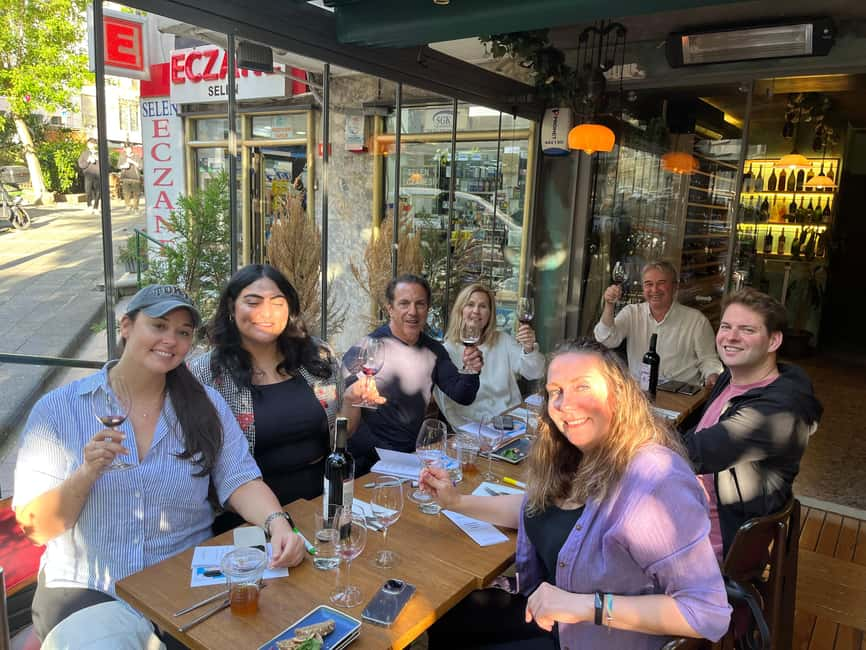
Six pours, one big Turkey wine story. In Kadıköy at WAYANA Wine Bar, you’ll get a focused 90-minute introduction to natural wine using rare, native grape varieties and hands-on tasting flights.
I especially like the way this experience is built for learning without feeling stiff. You’ll sample six low-intervention wines, and the host ties each glass to terroir, local legends, and regenerative farming practices.
One thing to consider: the tasting is always a mix of three whites and three reds, not a choose-your-own layout. If you’re strongly team-white or team-red, you may wish you could do a separate session.
In This Review
- Key things that make this tasting worth your time
- Where natural wine meets real local grapes in Kadıköy
- Finding WAYANA: the steel statue detail that saves time
- The tasting flow: six 50 ml flights (three whites, three reds)
- Indigenous grape highlights you’ll remember
- How the host turns glasses into context you can use
- The WAYANA factor: why this bar matters beyond the tasting
- Natural wine expectations: why some people start cautious
- Price and value: is $59 reasonable for six indigenous flights?
- Practical tips for getting the most from your evening
- Who this tasting is for (and who should skip it)
- Should you book the Istanbul wine tasting at WAYANA?
- FAQ
- What is the duration of the wine tasting?
- How many wines are included in the tasting, and how much do you pour?
- Is food included with the tasting?
- Where do I meet the group?
- Is the host/greeter available in English?
- Is this activity suitable for children?
Key things that make this tasting worth your time
- Small seats, 90 minutes, and lots of room for questions
- Six 50 ml flights with three whites and three reds, designed to keep your palate fresh
- Rare indigenous grapes highlighted across the selection, including Hasandede, Karasakız, Kanlıkara, and Karkuş
- Natural winemaking styles explained in plain language, from skin-contact to wild fermentation and amber tones
- A serious wine bar backdrop: WAYANA lists 500+ labels from 142 local wineries, so your tasting sits in a larger world
Worth putting side by side with this Istanbul pick:


Where natural wine meets real local grapes in Kadıköy
If you’ve ever had a so-so experience with natural wine, this is the kind of tasting that can reset your expectations. Not because it waters anything down, but because it steers you toward Turkey’s indigenous grape varieties and farming approaches that are still evolving.
The setting is WAYANA Wine Bar in Kadıköy. It’s a cozy setup with a limited group size, so you’re not stuck listening to a lecture from across a room. You’re tasting as you go, with a host who guides your attention to what you’re actually tasting, not just what the bottle claims.
And Kadıköy itself is a smart choice for this kind of evening. It feels local and lived-in, which matches the vibe of a tasting rooted in place: grapes, people, and land.
Finding WAYANA: the steel statue detail that saves time
Meeting up is simple if you use the landmark. Look for the modern steel statue in front of WAYANA Wine Bar. That’s your fix-point, and it beats wandering down the street scanning for a wine bar door.
Timing matters here because it’s a tight 90-minute session. Plan to arrive a bit early so you can settle in, grab a seat, and start with the first flight without rushing.
Inside, you’ll benefit from the small-seat format. With only 24 seats available, the room stays conversational. You can ask questions as they come up, instead of waiting until the end.
The tasting flow: six 50 ml flights (three whites, three reds)
The experience is built around a clear structure: six flights, each served as 50 ml pours. That makes it easy to compare styles and grapes without getting overwhelmed.
Here’s the basic rhythm you should expect:
- You’ll taste three whites and three reds as part of the same session.
- The host frames each wine with context (grape, method, and what to notice).
- The sampling size is small enough that your palate doesn’t lose track after the second or third pour.
No food is served with the tasting. That’s not a dealbreaker, but it changes how you plan your evening. If you tend to get hungry fast, consider eating beforehand. One practical upside: because there’s no food included, the experience stays focused on the wines and how they show up in the glass.
If you want something alongside your pours, you can order additional options at menu prices, including cheese. One review singled out cheese as excellent, so that may be worth building into your plan if you’re the type who likes to snack while tasting.
Worth putting side by side with this Istanbul pick:
- Istanbul Bosphorus Sunset Cruise with Wine on a Luxury Yacht★ 5.0 · 198 reviews
- Istanbul: Small Group Yacht Tour with Unlimited Wine★ 4.9 · 101 reviews
- Private Yacht Voyage : Music, Wine & Snacks for Groups★ 5.0 · 33 reviews
- Istanbul Private Wine Tasting Tour Through 3 City Wineries★ 5.0 · 22 reviews
Indigenous grape highlights you’ll remember
What makes this tasting more than a basic natural wine intro is the grape selection. You’re not just sampling random bottles. You’re working through indigenous varieties that each bring their own personality.
The wines include examples like:
- Hasandede, described as a skin-contact wine
- Karasakız, described as wild-fermented
- Kanlıkara, described as coming from the wild
- Karkuş, described as an amber wine
You don’t need a chemistry degree to enjoy this, but it helps to know what those labels usually mean in practice:
- Skin-contact often leads to deeper color and more texture, since the skins are left in contact longer.
- Wild fermentation points to native yeasts doing the work, which can create a more characterful, sometimes rough-around-the-edges profile.
- Amber style typically means the wine shows more color and grip than a typical white, thanks to extended contact and winemaking choices.
The host also connects these styles to terroir and farming. That matters because it’s the difference between tasting for flavor only and tasting for understanding. Even if you don’t buy a bottle that night, you’ll leave with a mental map of what Turkish indigenous varieties can do.
How the host turns glasses into context you can use
The best parts of this experience are the human ones: the guidance and the way the tasting stays approachable.
You’ll get an English-speaking host/greeter, and they pace the session with an enthusiastic, helpful tone. You’re also given printed sheets for the wines. In real terms, that means you can follow along without trying to memorize every grape name and method while you’re tasting.
The printed material is especially useful because indigenous grape names can be tough at first. Seeing them on paper helps you remember them later when you’re comparing bottles or planning another stop.
One more thing I like: the host doesn’t just give technical notes. They connect terroir, local stories, and regenerative farming. That combination is what makes the tasting feel grounded instead of abstract. You’re learning how the wine is shaped by the same forces that shape the land it comes from.
And because the room is small, the vibe stays flexible. If something doesn’t click—like a flavor you can’t place—you’re more likely to get a direct answer instead of a polite nod and silence.
The WAYANA factor: why this bar matters beyond the tasting
This is not a pop-up tasting in an empty back room. WAYANA Wine Bar serves 500+ labels from 142 local wineries. That detail matters for your expectations.
It signals that:
- The staff likely deal with Turkish wine constantly, not just for one tour.
- Your tasting is part of an ongoing conversation happening in the room every night.
- If you like what you’re tasting, you have a larger shelf to explore afterward.
So even though your official experience lasts 90 minutes, you’re tasting in a place that’s built for repeat browsing. If you want to come back later with more context, you’ll have a starting point from the indigenous grapes you tasted this evening.
Natural wine expectations: why some people start cautious
Natural wine has a reputation, and for good reason. Some bottles can be inconsistent. That’s also why the caution is real: if you’ve had natural wine that felt off or simply not enjoyable, you might come in skeptical.
The nice part here is that the selection is varied and framed with care. You’re tasting multiple indigenous grapes and different natural methods in a structured session. That helps you separate personal preference from bad-match assumptions.
Also, the small tasting size keeps the experience honest. If a wine is too funky for your taste, you’re not trapped with a full glass. You can calibrate quickly—then move on to the next flight.
That’s probably the biggest practical reason this format works: it reduces the risk of leaving with a single wrong bottle shaping your whole opinion.
Price and value: is $59 reasonable for six indigenous flights?
At $59 per person for a 90-minute tasting, this is priced like a focused guided experience, not a casual pour-at-a-bar deal. Here’s how the value stacks up based on what you actually get:
You’re paying for:
- Six flights (50 ml each)
- Three whites + three reds
- A host-guided explanation that links grapes, terroir, and farming
- Service and tax included
- A cozy environment with a small group size
What you’re not paying for is food included in the tasting. There’s no added meal bundle here. That means the value is concentrated in the wine itself and the guidance around it.
If you like natural wine and want a structured entry point into Turkish indigenous grapes, $59 feels fair for the amount of guided tasting you get. If you want a wine event that includes a full food pairing, you might feel the absence more.
Practical tips for getting the most from your evening
A few small moves can make a big difference:
- Use the printed sheets. Don’t treat them as decoration; they’re there so you can keep track and order intelligently later.
- Take your time between flights. Natural wines often make more sense after a short palate reset, and the tasting-size pours help you do that.
- If you’re curious about a grape name, ask early. In a small room, quick questions get better answers.
- If you get hungry, plan ahead. Since nothing is served with the tasting, consider an earlier meal or add something like cheese from the menu.
Who this tasting is for (and who should skip it)
This is a great fit if you want:
- A small-group, English-friendly introduction to Turkish indigenous grapes
- A natural wine tasting guided with context, not just poured and forgotten
- A structured format that helps you learn without overdoing alcohol
It may be less ideal if:
- You’re expecting separate tastings only of reds or only of whites
- You need food included in the price
- You strongly dislike natural winemaking styles like skin-contact, wild fermentation, and amber styles
Should you book the Istanbul wine tasting at WAYANA?
Yes, if you’re curious about Turkey’s indigenous wine scene and want to learn what makes it different. The most praised elements line up with what you’ll actually benefit from: an attentive, helpful host, useful printed guidance, and a selection that feels like a real introduction rather than random experimentation.
Book it especially if you’re the kind of traveler who likes tasting with a purpose—so you can move from first impressions to better choices afterward.
If you can’t stand mixed white-and-red formats, or you want a meal-style evening instead of a tasting-first event, then you might want to look for a different format.
FAQ
What is the duration of the wine tasting?
The tasting lasts 90 minutes.
How many wines are included in the tasting, and how much do you pour?
You get six flights, with each flight served as 50 ml. The tasting includes three whites and three reds.
Is food included with the tasting?
No food is served during the tasting. Additional food and wine can be ordered at menu prices.
Where do I meet the group?
You meet in front of WAYANA Wine Bar at a modern steel statue.
Is the host/greeter available in English?
Yes, the host or greeter speaks English.
Is this activity suitable for children?
No. It is not suitable for children under 18.
More Wine Tours in Istanbul
- Istanbul Bosphorus Sunset Cruise with Wine on a Luxury Yacht★ 5.0 · 198 reviews
- Istanbul: Small Group Yacht Tour with Unlimited Wine★ 4.9 · 101 reviews
- Private Yacht Voyage : Music, Wine & Snacks for Groups★ 5.0 · 33 reviews
- Istanbul Private Wine Tasting Tour Through 3 City Wineries★ 5.0 · 22 reviews
- Istanbul: Bosphorus Sunset Cruise with Snacks and Wine★ 4.9 · 21 reviews
- Street Food & Wine Pairing Kadikoy Evening Tour★ 5.0 · 18 reviews
More Food & Drink in Istanbul
- Istanbul: Guided Food Tour with Ferry Ride and Tastings★ 4.9 · 770 reviews
- Turkish Food Night and Rooftop Experience Istanbul★ 5.0 · 666 reviews
- Istanbul: Turkish Food Night and Rooftop Experience★ 5.0 · 569 reviews
- Istanbul: Guided Food and Culture Tour★ 4.9 · 528 reviews
- The Award-Winning PRIVATE Food Tour of Istanbul: The 10 Tastings★ 5.0 · 462 reviews
- Istanbul Food Tour – History and Culture of Turkish Culinary★ 5.0 · 265 reviews
More Tour Reviews in Istanbul
- Istanbul: Bosphorus Dinner Cruise & Show with Private Table★ 4.8 · 62,058 reviews
- Istanbul: Daytime or Sunset Sightseeing Cruise & Audio Guide★ 4.8 · 14,430 reviews
- Istanbul: Bosphorus Dinner Cruise & Turkish Night Show★ 4.8 · 12,954 reviews
- Best of Istanbul 1, 2 or 3-Day Private Guided Istanbul Tour★ 5.0 · 8,922 reviews
- Istanbul: Basilica Cistern Fast-Track Entry and Audio Guide★ 4.6 · 7,521 reviews
- Istanbul: Hagia Sophia Skip-the-Line Ticket & Museum Option★ 3.7 · 4,958 reviews
Fresh off the boat: new Istanbul reviews



Wine Tours, compared.
 ★ 5.0Istanbul Bosphorus Sunset Cruise with Wine on a Luxury YachtFrom $24198 reviews
 ★ 4.9Small Group Yacht Tour with Unlimited WineFrom $57101 reviews
 ★ 5.0Private Yacht Voyage : Music, Wine & Snacks for GroupsFrom $27033 reviews
 ★ 5.0Istanbul Private Wine Tasting Tour Through 3 City WineriesFrom $21422 reviews
 ★ 4.9Bosphorus Sunset Cruise with Snacks and WineFrom $2421 reviews
 ★ 5.0Street Food & Wine Pairing Kadikoy Evening TourFrom $19818 reviews
 ★ 5.0Small Group Yacht Tour With Unlimited Wine, Fruits & Mixed NutsFrom $5910 reviews
 ★ 4.0Full-Day Wine Tour from IstanbulFrom $4579 reviews
Browse the lists this tour appears in