
REVIEW · PRIVATE
Semi Private – Constantinople Tour of Istanbul: Discovering the Byzantine Empire
Byzantium comes at you fast, in stone and gold. I love how this route connects everyday Istanbul neighborhoods to major Byzantine Christian power centers, especially the Chora Church and its famed interior mosaics and frescoes. I also like the way the tour includes the working seat of the Ecumenical Orthodox Patriarchate in Fener, not just outward sightseeing. One thing to keep in mind: the day can feel shorter than advertised once you factor in pickup timing, and at least occasionally one or two stops can be affected by closures for renovation.
This is a smart “sampler” if you want the Byzantine imprint without giving up an entire day. You ride in an air-conditioned coach, cruise along the Golden Horn, then walk through churches and viewpoints around Ayvansaray/Blachernae, the walls, and palace ruins. The group is limited to up to 10, which helps the guide keep things moving and answer questions.
In This Review
- Key Highlights Worth Your Time
- The Route: A Short Tour That Maps Byzantium Across Istanbul
- Golden Horn Drive: Why This Waterway Made Constantinople Powerful
- Fener and the Ecumenical Orthodox Patriarchate: A Living Seat of Authority
- St. Mary of Blachernae: The Holy Virgin Shrine in an Important Church
- Chora Church (Kariye Museum): Mosaics and Frescoes That Actually Explain Belief
- Blachernae Palace Ruins and Anemas Dungeons: From Imperial Grandeur to Prison Fear
- Constantinople’s City Walls: Fortification Math You Can See
- Timing Reality Check: Why This Can Feel Short on the Day
- Value and Best-Fit Travelers
- Should You Book This Byzantine Istanbul Tour?
Key Highlights Worth Your Time
- Chora Church (Kariye Museum): Hours of visual storytelling in mosaics and frescoes, with ticket admission included for your visit.
- Ecumenical Orthodox Patriarchate in Fener: See St. George’s church and the elegant patriarchal seat in the Greek quarter.
- St. Mary of Blachernae: Visit the shrine space connected to worship of the Holy Virgin, including a holy water spring.
- Blachernae Palace ruins + Anemas Dungeons exterior: Stand where imperial life gave way to imprisonment—via exterior views that spark imagination.
- Tekfur Palace (outside): A 12th-century surviving pavilion near the city walls gives you a sense of scale.
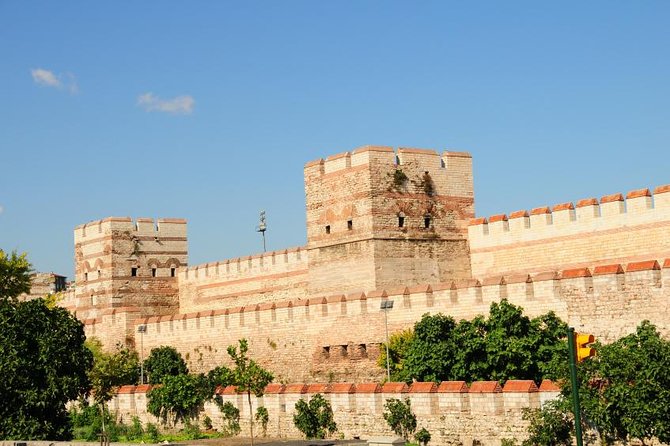
- Constantinople Walls: Learn what 5th-century fortifications meant, with the chance to see remnants of gates and towers.
Worth putting side by side with this Istanbul pick:


The Route: A Short Tour That Maps Byzantium Across Istanbul
This tour is built like a timeline in motion. In about 3 hours, you move from the harbor world that fed Constantinople to the religious institutions that shaped daily belief—then you finish at the defensive walls that kept the empire standing.
The value here is the mix of places: you get working religious sites (still in use), plus major monuments that are now ruins. That blend matters, because Byzantium wasn’t only churches and art. It was administration, ceremony, trade, and control—all stitched together in one city.
Also, with a maximum group size of 10, you’re less likely to get lost in the shuffle. You’ll still be walking inside churches and museum spaces, and you’ll need a moderate fitness level, but it’s not a long hike.
Golden Horn Drive: Why This Waterway Made Constantinople Powerful
The experience starts with a coach ride around the Golden Horn, the historic naval harbor area tied to Byzantine trade. You’ll hear how this bay links with the Bosphorus Strait and how that geography turned the area into a major shipping hub.
Here’s why that matters for the rest of the tour: when you understand the waterway, you understand why Constantinople grew so fast and why the empire invested so heavily in religion and administration. Trade money built monuments. Political stability kept routes safe. The churches and palaces weren’t random. They were part of a system.
Keep an eye on viewpoints from the road. Even if you can’t see every detail, it helps you place the later stops: the churches in the neighborhoods, the palace ruins, and the city walls.
Fener and the Ecumenical Orthodox Patriarchate: A Living Seat of Authority
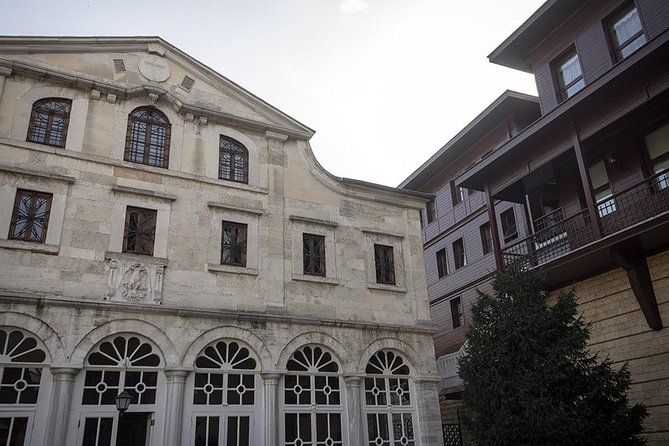
One of the strongest stops on the day is in Fener, the historic Greek district where the Ecumenical Orthodox Patriarchate is based. This isn’t presented as an empty relic. It’s the seat tied to Orthodox leadership and ceremonial tradition.
You visit St. George’s church on site, which is described as the primary church associated with the patriarchate. You also get to observe the elegantly decorated patriarchal seat—an immediate reminder that religious authority in Constantinople wasn’t only spiritual. It was public, formal, and visually communicated.
Time on site is about 30 minutes, with admission included. That’s enough to see the key features without feeling rushed, especially in a small group. If you care about how Christianity was organized under Roman and Byzantine rule, this stop gives real context fast.
- Best of Istanbul 1, 2 or 3-Day Private Guided Istanbul Tour★ 5.0 · 8,922 reviews
- Istanbul: Basilica Cistern Fast-Track Entry and Audio Guide★ 4.6 · 7,521 reviews
- Istanbul: Hagia Sophia Skip-the-Line Ticket & Museum Option★ 3.7 · 4,958 reviews
- Istanbul: Hodjapasha Whirling Dervishes Show & Exhibition★ 4.4 · 4,790 reviews
St. Mary of Blachernae: The Holy Virgin Shrine in an Important Church
Next comes Ayvansaray, historically tied to Blachernae. This part of town is special because it holds the Church of St Mary of Blachernae, connected to worship of the Holy Virgin.
One practical note: the tour is honest that this church’s architecture may not look like the most glamorous postcard from the outside. But the significance is the point. The shrine connection and the worship tradition are what make the site meaningful to the Eastern Orthodox community.
You’ll enter and look over the holy water spring with your guide. That moment is small in duration, but it’s the kind of detail that makes the entire tour click: you’re not just viewing art styles from a distance. You’re stepping into a place that still carries religious importance.
Expect this stop to be reflective and slightly different from the museum-like spaces. Dress and behavior matter more here than at exterior viewpoints.
Chora Church (Kariye Museum): Mosaics and Frescoes That Actually Explain Belief
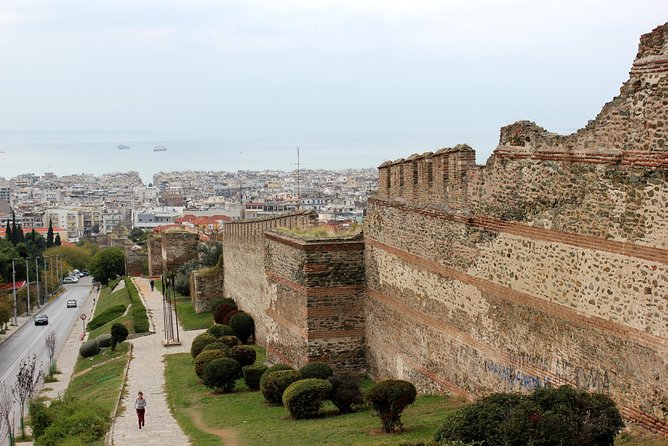
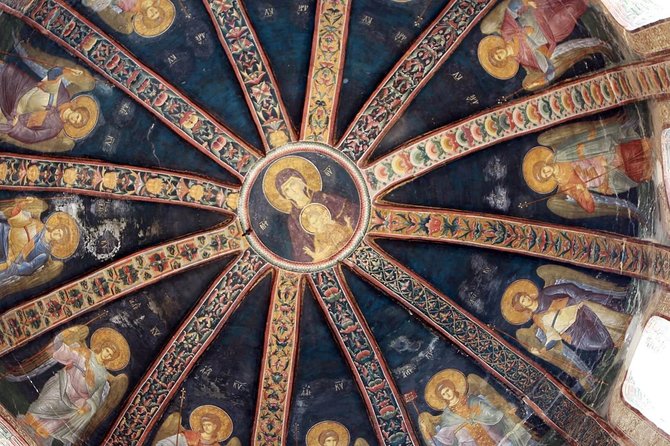
If you only remember one interior from the day, make it Chora Church (St. Savior in Chora, also called Kariye Museum). Your visit is about 1 hour, and ticket admission is included.
What makes this stop so effective is the way the church functions like a visual Bible. The mosaics and frescoes depict scenes from the Bible and portray the life and miracles of Jesus. On top of that, the artwork isn’t random decoration. It’s narrative. It’s teaching—at eye level.
I like that the tour frames why the details matter. The guide explains that the artwork went far beyond the standard look of Byzantine production. That gives you a lens for what you’re seeing, instead of just scanning for pretty color.
Practical tip: plan for a bit of “reading with your eyes.” If you move slowly and look at figures and story panels, the hour feels full rather than short.
Blachernae Palace Ruins and Anemas Dungeons: From Imperial Grandeur to Prison Fear
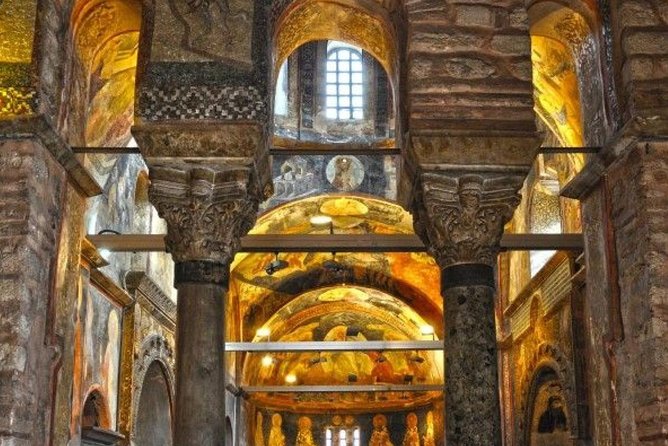
After the Chora stop, you return toward Ayvansaray and focus on Blachernae Palace. You won’t get a full palace interior. Instead, you observe the ruins of the once grand palace complex.
This is where the imagination does a lot of work—in a good way. Stand in the exterior spaces where greatness once operated, and then look at the prison exterior known as the Anemas Dungeons.
That pair—palace ruins plus dungeons—is a strong contrast. It reminds you Byzantium had an edge. Power came with ceremony, but it also came with punishment and control. Even without entering, seeing these elements close together helps you feel the emotional spectrum of life in the city: luxury beside fear.
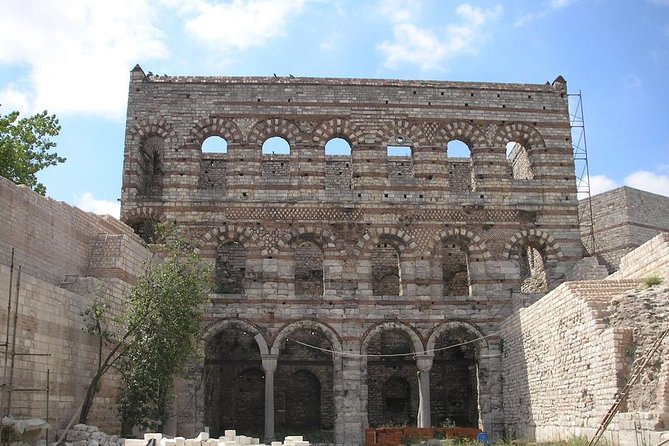
The tour also includes time at Tekfur Palace (from outside). This 12th-century pavilion is described as the only surviving structure adjacent to the city walls, so it helps you understand the scale of the Blachernae Palace area. You’ll spend about 20 minutes, with admission included.
Constantinople’s City Walls: Fortification Math You Can See
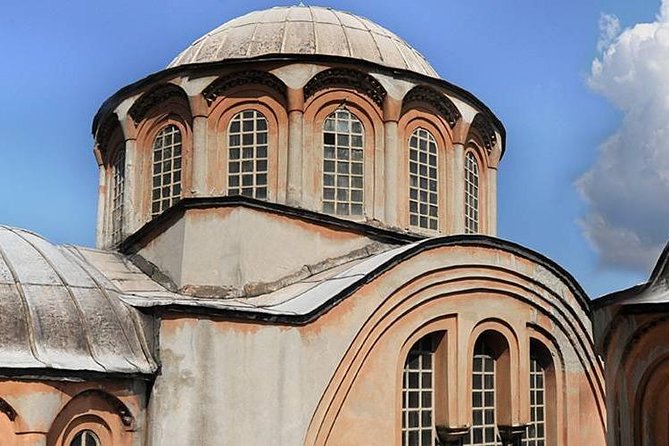
The day ends with the Walls of Constantinople—fortifications that ringed the city. You’ll learn they were about 22 kilometers long, with 96 towers and nine main gates dating back to the 5th century.
You’re not walking along the full wall circuit in a 3-hour tour. Instead, you promenade by the remains—enough to connect the numbers to reality. When you know the basics (length, towers, gates), the walls stop being a vague historical label. They become a system.
This is especially satisfying after seeing palace and church areas. The walls were the backdrop for everything: who could enter, who couldn’t, and how long the empire could endure siege pressure.
Timing Reality Check: Why This Can Feel Short on the Day
On paper, the tour runs about 3 hours. In practice, the experience can feel tighter once you include pickup time and the rhythm of multiple stops in different neighborhoods.
Also, the schedule can be affected by closures. At least occasionally, some stops may be off-limits due to renovations, and you might end up seeing a site from the bus rather than entering.
What I’d do if you’re planning your day: treat this as a focused sampler, not a guaranteed deep visit to every interior detail. If you want maximum time in Chora Church specifically, make peace with the idea that other places may be more exterior-focused.
If you’re visiting Istanbul for the first time and juggling major attractions, this tour can still work well. Just don’t build your itinerary like everything will run at full museum pacing.
Value and Best-Fit Travelers
At $47.89 per person, you’re paying for a semi-private group size, a professional guide, hotel pickup, and admission-tied entries at several major sites—plus an air-conditioned coach. That’s a pretty fair deal for the amount of “distance learning” you get in a few hours: you see multiple neighborhoods and connect trade, religious authority, art, palace power, and defensive infrastructure.
Who this suits best:
- You want Byzantine Christianity and you want it organized, not scattered.
- You care about church art and want a strong Chora visit.
- You like the idea of seeing both a still-functioning patriarchal seat and major monuments now mostly in ruins.
- You’d rather do this with a small group than navigate buses and walking alone.
Who might want a different option:
- You want a full, slow, museum-style pace at multiple interiors.
- You’re very sensitive to schedule changes if a site is under renovation.
- You dislike church environments where you need to be respectful and quiet.
Should You Book This Byzantine Istanbul Tour?
Yes—if your goal is a concentrated Byzantine overview with real stops that connect to how people actually worshipped and governed. I especially recommend it if Chora Church is on your list, because the visit is long enough to matter and the art is genuinely central to understanding Byzantine visual language.
I’d hold your expectations in the sweet spot: this is short, and it’s designed to cover a lot of key sites, so some moments are necessarily quick. If you go in ready for that, you’ll leave with a much clearer map of how Constantinople’s religion, politics, and stone walls all fit together.
More Private in Istanbul
- Istanbul: Bosphorus Dinner Cruise & Show with Private Table★ 4.8 · 62,058 reviews
- Best of Istanbul 1, 2 or 3-Day Private Guided Istanbul Tour★ 5.0 · 8,922 reviews
- Istanbul: Private Turkish Bath, Massage, and Spa in Old City★ 4.6 · 3,225 reviews
- Bosphorus Dinner Cruise with Show and Private Table★ 4.5 · 2,021 reviews
- Private Transfer from Istanbul Airport to Fatih, Beyoglu and Besiktas★ 5.0 · 1,793 reviews
- Istanbul: Private Turkish Bath, Sauna, and Massage★ 4.8 · 1,306 reviews
More Tours in Istanbul
- Best of Istanbul 1, 2 or 3-Day Private Guided Istanbul Tour★ 5.0 · 8,922 reviews
- Istanbul: Bosphorus Sightseeing Cruise Tour with Audio Guide★ 4.6 · 4,704 reviews
- Istanbul: Blue Mosque & Hagia Sophia Guided Tour w/ Tickets★ 4.8 · 3,600 reviews
- Istanbul: Blue Mosque, Hagia Sophia, & Old Town Walking Tour★ 4.8 · 2,372 reviews
- Istanbul: Princes Islands Tour with Heybeliada and Buyukada★ 4.4 · 2,305 reviews
- Istanbul: Basilica, Hagia Sophia, Blue Mosque Tour & Cruise★ 4.5 · 1,929 reviews
More Tour Reviews in Istanbul
- Istanbul: Bosphorus Dinner Cruise & Show with Private Table★ 4.8 · 62,058 reviews
- Istanbul: Daytime or Sunset Sightseeing Cruise & Audio Guide★ 4.8 · 14,430 reviews
- Istanbul: Bosphorus Dinner Cruise & Turkish Night Show★ 4.8 · 12,954 reviews
- Best of Istanbul 1, 2 or 3-Day Private Guided Istanbul Tour★ 5.0 · 8,922 reviews
- Istanbul: Basilica Cistern Fast-Track Entry and Audio Guide★ 4.6 · 7,521 reviews
- Istanbul: Hagia Sophia Skip-the-Line Ticket & Museum Option★ 3.7 · 4,958 reviews
Fresh off the boat: new Istanbul reviews

Private, compared.
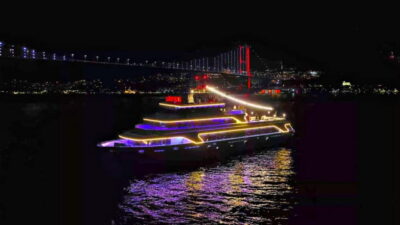 ★ 4.8Bosphorus Dinner Cruise & Show with Private TableFrom $2862,058 reviews
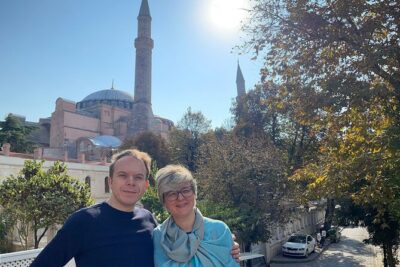 ★ 5.0Best of Istanbul 1, 2 or 3-Day Private Guided Istanbul TourFrom $1008,922 reviews
 ★ 4.6Private Turkish Bath, Massage, and Spa in Old CityFrom $533,225 reviews
 ★ 4.5Bosphorus Dinner Cruise with Show and Private TableFrom $302,021 reviews
 ★ 5.0Private Transfer from Istanbul Airport to Fatih, Beyoglu and BesiktasFrom $601,793 reviews
 ★ 4.8Private Turkish Bath, Sauna, and MassageFrom $591,306 reviews
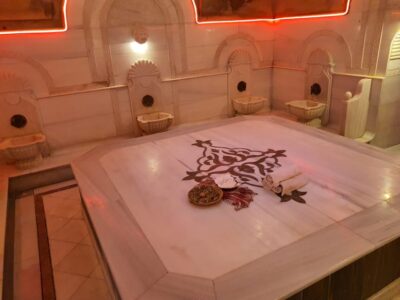 ★ 4.6Acemoglu Historical Turkish Bath w/Private OptionsFrom $421,190 reviews
 ★ 5.0ISTANBUL BEST: Iconic Landmarks Full Day PRIVATE Guided City TourFrom $801,032 reviews