
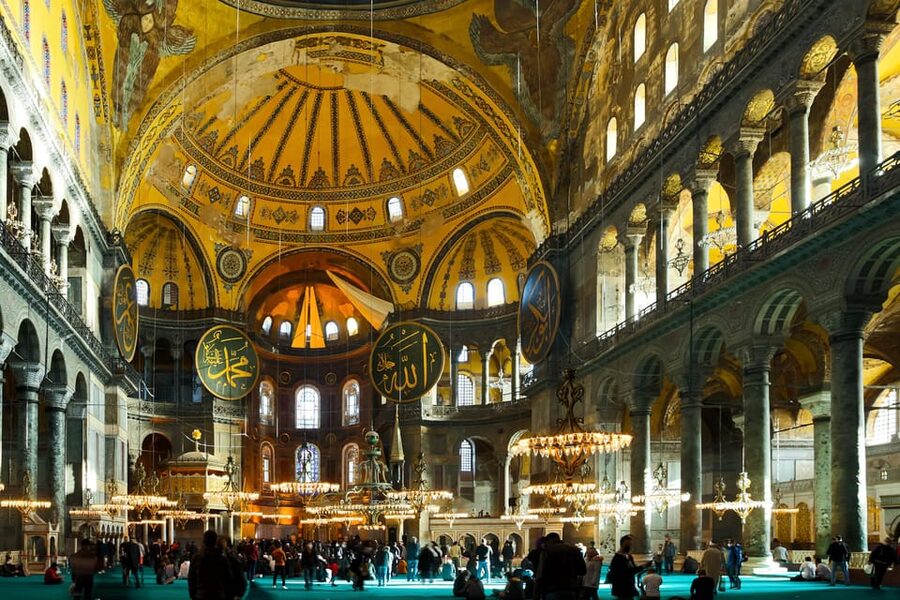
REVIEW · HAGIA SOPHIA TOURS
Skip-the-Line Hagia Sophia Digital Tickets w/Audio Guide
One ticket, then you choose the pace. This Hagia Sophia digital ticket gets you inside with skip-the-line entry plus an English audio guide so you can make sense of the Byzantine and Ottoman layers at your own speed.
I love the self-paced wandering. You’re not stuck with a group pace, and that matters here because the building rewards slow looking, especially around the dome area and the detailed surfaces. I also love that the audio guide gives you English narration that ties the major design features to the bigger story of Istanbul.
One possible drawback: skip-the-line often helps with the ticket queue, not security. If there’s a checkpoint line—or if your QR entry code has a problem—you can lose precious time from the roughly 1-hour visit window.
In This Review
- Key Things to Know Before You Go
- Hagia Sophia Self-Guided Tickets: The Smart Way to See Istanbul’s Biggest Interior
- Entering Hagia Sophia: Where the “Skip-the-Line” Benefit Really Happens
- Your 1-Hour Flow Inside: Dome, Mosaics, and Calligraphy on a Tight Timeline
- The Audio Guide in English: Useful Context Without a Scripted Tour
- Practical Expectations: Shoes, No Flash, Water, and Construction Outside
- Price and Value: Is $41 a Good Deal for This Format?
- Where This Works Best: Who Should Book and Who Might Not
- When Things Go Wrong: QR Codes, Security Lines, and Open Areas
- Should You Book This Skip-the-Line Hagia Sophia Ticket?
- FAQ
- How long is the Hagia Sophia visit with this ticket?
- What is included in the price?
- Is the audio guide available in English?
- Where do I enter Hagia Sophia?
- Does the ticket skip the security line?
- Are flash photos allowed inside Hagia Sophia?
- What should I bring for the visit?
- Is food or drinks allowed inside?
- Is this ticket refundable if my plans change?
- Is it suitable for wheelchair users or people with mobility impairments?
Key Things to Know Before You Go

- Skip-the-line has limits: you may still queue for security at busy times
- English audio on your phone: narration explains the Byzantine and Ottoman eras
- 1 hour is real time: plan a quick route or you’ll feel rushed
- Photography rules matter: no flash inside
- QR-code hiccups can happen: be patient if you need to redeem your entry
Other ways under the Hagia Sophia dome


Hagia Sophia Self-Guided Tickets: The Smart Way to See Istanbul’s Biggest Interior
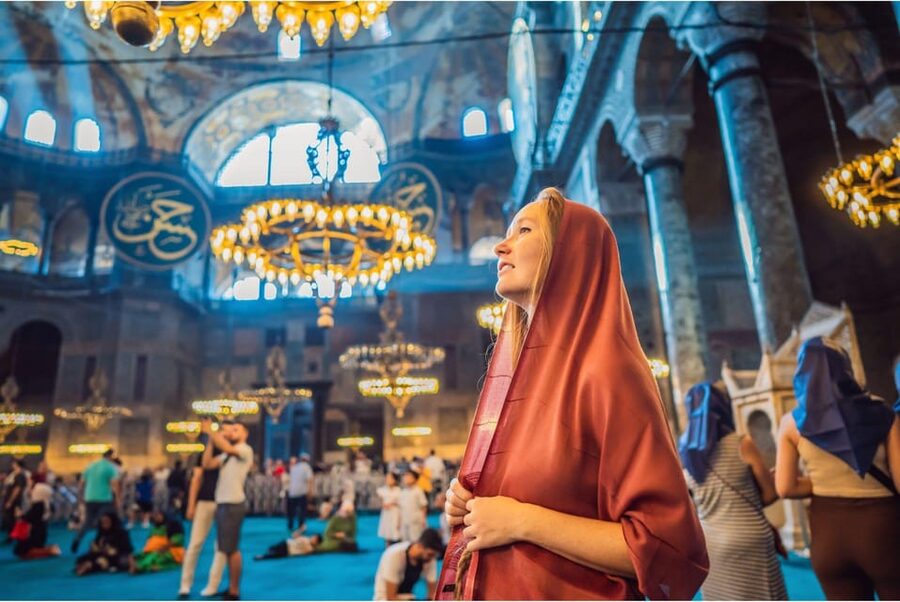
Hagia Sophia is one of those places where a guided tour can be helpful… but a self-guided setup can be even better. The reason is simple: you want enough freedom to look up, look close, and then look again. With this kind of ticket, you’re not waiting for someone else’s questions to finish before you move on.
The ticket includes two key pieces: entry and an audio guide loaded to your smartphone. That’s a nice combo for a site like this because the building itself does the storytelling. Your job is to point your attention. The narration helps you know what you’re looking at and why it mattered across the Byzantine and Ottoman periods.
If you like to travel at your own pace—especially in big, high-ceilinged monuments—this fits. The experience is designed around a smooth walk-through, not a formal itinerary with fixed stops.
Entering Hagia Sophia: Where the “Skip-the-Line” Benefit Really Happens
Start by going to Hagia Sophia (Ayasofya) and entering on your own. You don’t get hotel pickup, and there’s no guide meeting you at the door. For foreigners, the information you’re given points you toward a tourist entrance near Topkapi Palace, with direct access to the upper floor galleries via a gentle ramp.
Here’s the important nuance: this is not an all-access bypass for every line. During peak seasons, security checkpoints can still be busy. The ticket does not provide priority access for that part of the process, so you should expect at least some waiting if you arrive at a crowded hour.
This is also where the practical value of a digital ticket matters. When it’s working right, you move through quickly and spend your time inside—where it counts. When it’s not, the time cost can be surprisingly noticeable because your visit duration is about 1 hour.
Your 1-Hour Flow Inside: Dome, Mosaics, and Calligraphy on a Tight Timeline
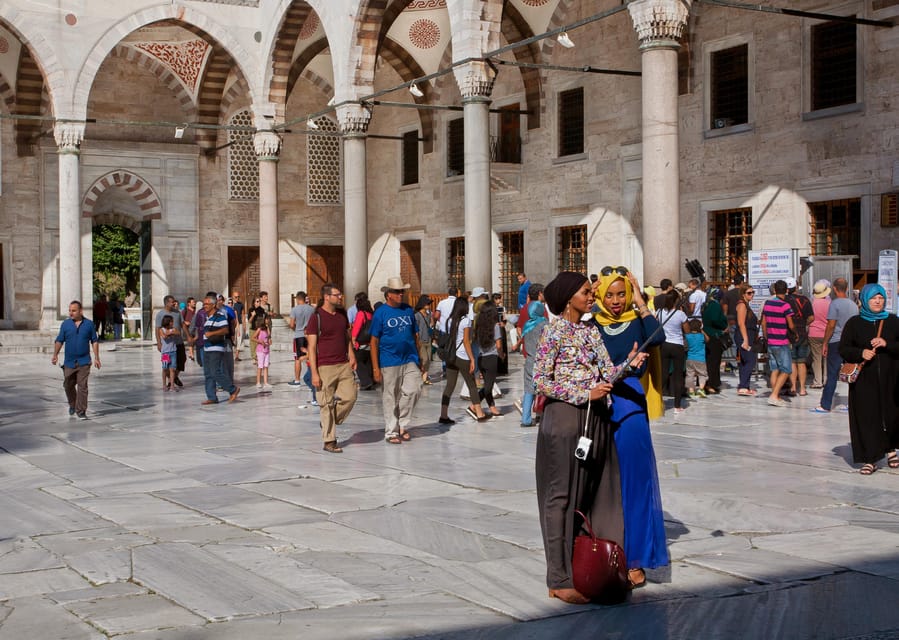
You’re looking at an easy-to-understand structure inside: you walk, you stop, you look up, and the audio guide helps you attach meaning to what you see. In an ideal world, one hour is enough to experience the main sights without feeling like you ran laps.
The highlights you’ll want to plan around are the famous dome, the mosaics, and historic calligraphy. Those are the three anchors that visitors always mention for a reason. The dome is the visual spectacle; the mosaics give you the surfaces and figures that define the Byzantine look; the calligraphy reflects the Ottoman touch that followed centuries later.
A simple way to use your time:
- Start by finding the dome view your eyes naturally go to first.
- Then pivot to mosaics and take a bit longer on the details rather than trying to scan everything.
- Finish with calligraphy so the story feels like it shifts through time, not just style.
One thing to keep in mind: your actual route can be influenced by what areas are open. There have been cases where the audio guide refers to more than one level, but access to a lower area wasn’t possible during the visit. That doesn’t mean the whole experience fails. It just means you should expect your path to be shaped by on-the-ground access.
Worth putting side by side with this Istanbul pick:
- Istanbul: Hagia Sophia Skip-the-Line Ticket & Museum Option★ 3.7 · 4,958 reviews
- Topkapi Palace and Harem Skip-the-Line-Tickets & Audio Guide★ 4.3 · 4,745 reviews
- Istanbul: Blue Mosque & Hagia Sophia Guided Tour w/ Tickets★ 4.8 · 3,600 reviews
- Istanbul: Hagia Sophia Entry Ticket with Audio Guide★ 4.3 · 2,854 reviews
The Audio Guide in English: Useful Context Without a Scripted Tour
The audio guide is available in English and is meant to help you read the building. That means it’s not just describing what’s in front of you—it also frames the Byzantine and Ottoman empires so the details don’t feel random.
In a place like Hagia Sophia, you’ll often notice the architecture first. Then you’ll realize you’re looking at layers of history. The audio narration helps connect those layers—so you understand why a particular design choice belongs to a certain era, and why the site changed hands across time.
You’ll also want to treat the audio guide like a tool, not a requirement to listen cover-to-cover. If you hear a section that matches what you’re seeing at that moment, pause and listen more. If you’re heading to another area, skip ahead. This keeps the experience from turning into phone-glued wandering.
Practical Expectations: Shoes, No Flash, Water, and Construction Outside
The basics are straightforward. Bring comfortable shoes—there’s a moderate amount of walking. A camera is allowed, but flash photography is not allowed inside. Water is suggested too, though food and drinks aren’t allowed within Hagia Sophia.
Now add one more practical reality. You might find the exterior under renovation with scaffolding during certain periods. That doesn’t take away from the interior experience, but it can affect the arrival photos and the quick sense of arrival. If that matters to you, build in a little flexibility for how the outside looks when you arrive.
Inside, the biggest comfort issue is your time on your feet. Even with a guided explanation from your audio, you’re still navigating a historic building. Wear shoes you’re happy to stand and walk in for an hour.
Price and Value: Is $41 a Good Deal for This Format?
At about $41 per person for skip-the-line entry plus an audio guide, the value depends on how you plan your day.
If your goal is to see Hagia Sophia and not spend extra hours in lines, this can feel like good money spent. You’re paying for a smoother arrival and an audio tool that helps you get more from the space without paying for a human guide.
If you’re the type who reads everything on-site and rarely uses audio, then the price can feel steep relative to what you personally consume. But most people don’t come to Hagia Sophia just to walk. They come to understand it. That’s where the audio guide earns its keep.
One more value check: timing. Because your visit is about an hour, anything that delays entry can shrink your time inside fast. There have been cases where QR entry codes didn’t work right away, leading to a wait at the door. When that happens, the “you spend more time inside” promise can turn into “you spend more time at the threshold.” If you’re juggling other timed tickets later, this is worth factoring in.
Where This Works Best: Who Should Book and Who Might Not
This self-guided ticket format fits best if you:
- like to control your pace
- want English context without listening to a group guide
- can handle a moderate walk inside a major monument
- are okay with a plan that’s flexible based on what’s open
It’s not suitable for people with mobility impairments or wheelchair users, since the visit setup doesn’t match those needs.
If you’re the kind of visitor who wants constant human guidance—someone steering you, answering questions, and keeping you on a perfect route—then a self-guided ticket might leave you wanting. But if you prefer learning by looking, this is a strong match.
When Things Go Wrong: QR Codes, Security Lines, and Open Areas
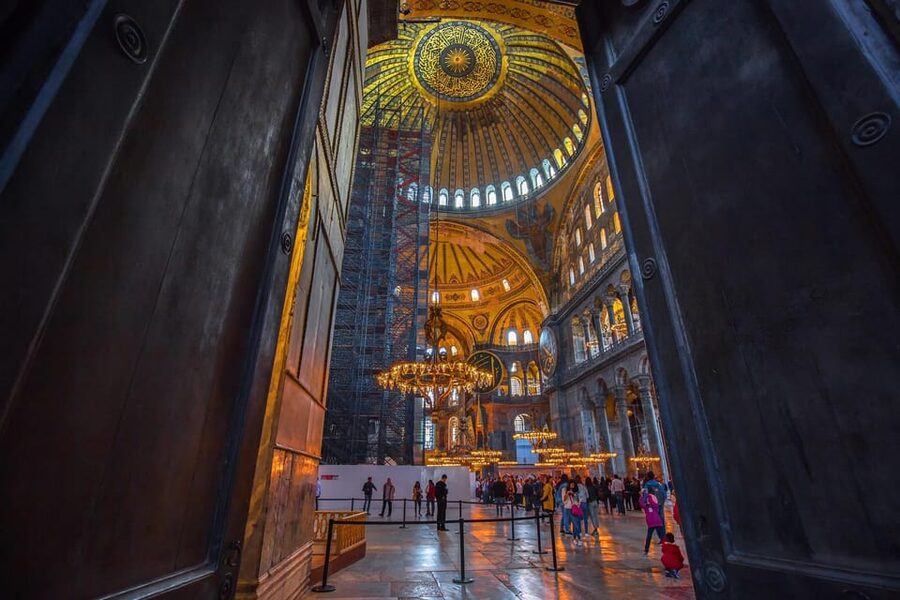
No one wants to talk about problems at Hagia Sophia, but being prepared is part of traveling smart. The most common kind of issue with digital entry is when a QR code doesn’t scan or requires a redemption step before the audio guide and official entry ticket are fully usable.
If your phone screen or QR code isn’t working smoothly on arrival, that can push you into a wait. And because your visit time is short, those delays can steal minutes from the inside experience.
Another issue that can happen is a mismatch between what the audio guide describes and what’s accessible in that moment. You might hear references to more levels than are open during your visit. That doesn’t mean the audio guide is useless. It just means you should be ready to adapt your route based on what staff allow you to enter.
And remember the security reality. Even with skip-the-line entry, expect security checkpoints to create delays in busy seasons. Plan to arrive a bit earlier than you think you need to.
Should You Book This Skip-the-Line Hagia Sophia Ticket?
Book it if you want a practical, modern way to visit Hagia Sophia without committing to a rigid group schedule. The pairing of skip-the-line entry with an English audio guide is a good match for travelers who want to learn as they look, and who can handle a one-hour visit.
I’d hold off or choose a different approach if:
- you’re traveling with tight timing connections later and can’t absorb delays
- your phone or QR access might be unreliable on the day (low battery, weak signal, screen problems)
- you’re expecting that skip-the-line means no queues at all (security can still slow things down)
If you do book, go in with the right mindset: expect to queue a little at security, use the audio to guide your attention, and focus on the dome, mosaics, and calligraphy instead of trying to cover every possible corner. That’s how you get the best value out of this $41 experience—more meaning, less waiting.
FAQ
How long is the Hagia Sophia visit with this ticket?
The duration is 1 hour. Check availability for starting times.
What is included in the price?
You get a skip-the-line entry ticket and an audio guide on your smartphone.
Is the audio guide available in English?
Yes, the audio guide is available in English.
Where do I enter Hagia Sophia?
You enter on your own at Hagia Sophia (Ayasofya). Foreigners can enter through the tourist entrance near Topkapi Palace.
Does the ticket skip the security line?
The ticket provides skip-the-line entry, but it does not provide priority access for security. Lines at security checkpoints can still occur, especially in peak seasons.
Are flash photos allowed inside Hagia Sophia?
No. Flash photography is not allowed inside.
What should I bring for the visit?
Bring comfortable shoes and a camera. Water is also recommended.
Is food or drinks allowed inside?
No. Food and drinks are not allowed inside Hagia Sophia.
Is this ticket refundable if my plans change?
Yes. You can cancel up to 24 hours in advance for a full refund.
Is it suitable for wheelchair users or people with mobility impairments?
No. It is not suitable for mobility impairments or wheelchair users.
More Tickets in Istanbul
- Istanbul: Hagia Sophia Skip-the-Line Ticket & Museum Option★ 3.7 · 4,958 reviews
- Topkapi Palace and Harem Skip-the-Line-Tickets & Audio Guide★ 4.3 · 4,745 reviews
- Istanbul: Blue Mosque & Hagia Sophia Guided Tour w/ Tickets★ 4.8 · 3,600 reviews
- Istanbul: Hagia Sophia Entry Ticket with Audio Guide★ 4.3 · 2,854 reviews
- Istanbul: Topkapi Palace and Harem Ticket with Audio Guide★ 4.4 · 2,401 reviews
- Istanbul: Basilica Cistern Skip-the-Line Entry Ticket★ 4.6 · 2,270 reviews
More Tour Reviews in Istanbul
- Istanbul: Bosphorus Dinner Cruise & Show with Private Table★ 4.8 · 62,058 reviews
- Istanbul: Daytime or Sunset Sightseeing Cruise & Audio Guide★ 4.8 · 14,430 reviews
- Istanbul: Bosphorus Dinner Cruise & Turkish Night Show★ 4.8 · 12,954 reviews
- Best of Istanbul 1, 2 or 3-Day Private Guided Istanbul Tour★ 5.0 · 8,922 reviews
- Istanbul: Basilica Cistern Fast-Track Entry and Audio Guide★ 4.6 · 7,521 reviews
- Istanbul: Hagia Sophia Skip-the-Line Ticket & Museum Option★ 3.7 · 4,958 reviews
Hagia Sophia, A Few More Ways In
- Istanbul: Hagia Sophia Skip-the-Line Ticket & Museum Option★ 3.7 · 4,958 reviews
- Istanbul: Blue Mosque & Hagia Sophia Guided Tour w/ Tickets★ 4.8 · 3,600 reviews
- Basilica Cistern & Hagia Sophia with Optional Topkapi Palace★ 4.6 · 3,547 reviews
- Istanbul: Hagia Sophia Entry Ticket with Audio Guide★ 4.3 · 2,854 reviews
- Istanbul: Blue Mosque, Hagia Sophia, & Old Town Walking Tour★ 4.8 · 2,372 reviews
- Istanbul: Basilica, Hagia Sophia, Blue Mosque Tour & Cruise★ 4.5 · 1,929 reviews
Fresh off the boat: new Istanbul reviews



Hagia Sophia Tours, compared.
 ★ 3.7Hagia Sophia Skip-the-Line Ticket & Museum OptionFrom $334,958 reviews
 ★ 4.8Blue Mosque & Hagia Sophia Guided Tour w/ TicketsFrom $393,600 reviews
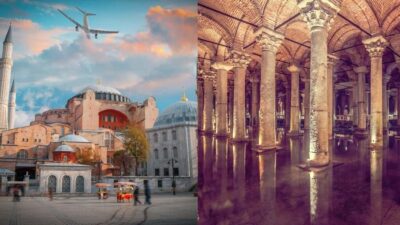 ★ 4.6Basilica Cistern & Hagia Sophia with Optional Topkapi PalaceFrom $813,547 reviews
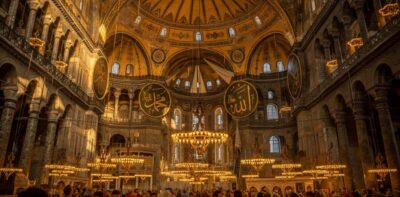 ★ 4.3Hagia Sophia Entry Ticket with Audio GuideFrom $332,854 reviews
 ★ 4.8Blue Mosque, Hagia Sophia, & Old Town Walking TourFrom $712,372 reviews
 ★ 4.5Basilica, Hagia Sophia, Blue Mosque Tour & CruiseFrom $681,929 reviews
 ★ 4.3Combo: Hagia Sophia+Basilica Cistern Optional Topkapi PalaceFrom $811,880 reviews
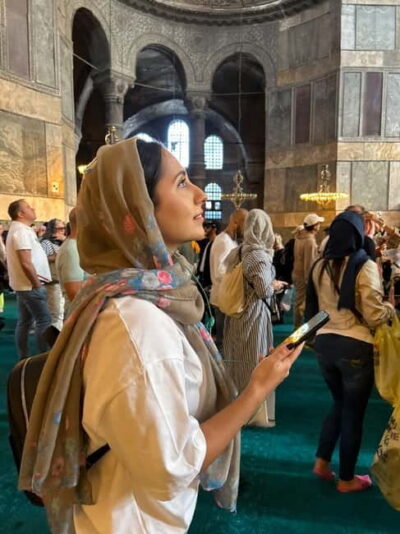 ★ 4.1Hagia Sophia Skip-the-Line Ticket & Blue Mosque Audio GuideFrom $331,879 reviews
Browse the lists this tour appears in