
REVIEW · HISTORICAL TOURS
Historical Peninsula
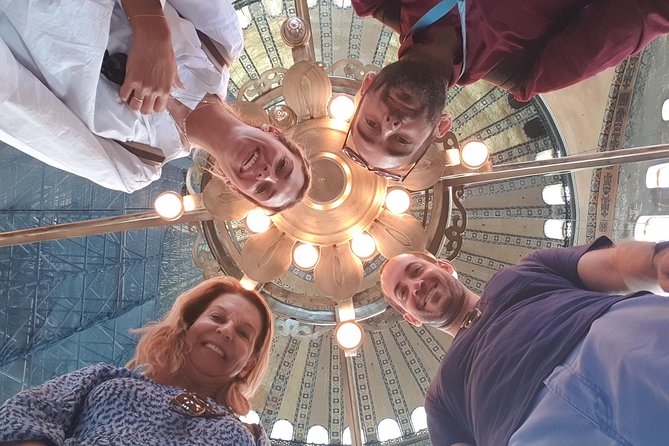
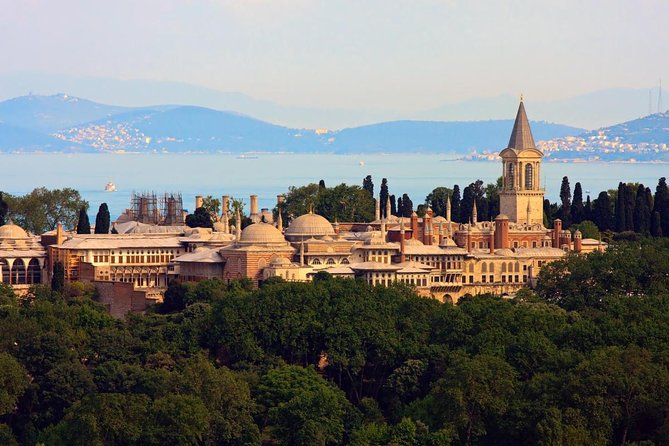
Istanbul’s Old City hits hard in 5 hours. This small-group tour threads together the big names—Hagia Sophia and Topkapi Palace—plus a few quieter stops like the Nuruosmaniye Mosque and the Spice Market. You get a guide, a mobile ticket, and enough time at each site to actually understand what you’re looking at, not just pose and shuffle.
Two things I really like: the small-group size (max 10 people in the pitch, with a stated cap of 20 in the details) so you can ask questions and get real suggestions for the rest of your Istanbul days. Second, the order of the route makes sense for sight-watching: Hagia Sophia first, then Topkapi, then shorter “story stops” like the Hippodrome and Basilica Cistern, before you end with the Spice Market’s sweet-smelling chaos and Turkish delight.
One possible drawback: admission isn’t included for several major stops (including Hagia Sophia, Topkapi, and Basilica Cistern). Also, access at Hagia Sophia can vary by current rules, and some people feel the viewing areas aren’t equal—so you’ll want to set expectations before you go.
In This Review
- Key points to know before you book
- What this Istanbul Old City tour is really for
- Meeting point: start where the action is
- Stop 1: Hagia Sophia—what the guide helps you notice
- Stop 2: Topkapi Palace—2 hours that actually feel structured
- Stop 3: Hippodrome—short stop, good stories
- Stop 4: Basilica Cistern—cool, atmospheric, and film-famous
- Stop 5: Nuruosmaniye Mosque—beautiful, and refreshingly less crowded
- Stop 6: Misir Çarşısı (Spice Market)—Turkish delight and real sensory overload
- The guide and language options: why it matters more than you think
- Pacing and physical demands: good for most people, but wear good shoes
- Timing, weather, and what to do if plans change
- Price value: what you’re paying for (and what you’re not)
- Who should book this tour
- Should you book?
- FAQ
- How long is the tour?
- How much does it cost?
- What’s included in the price?
- What is not included?
- Do I need an admission ticket for each stop?
- Where do we meet, and where does it end?
- Is there a mobile ticket?
- Is it easy to join with moderate mobility needs?
Key points to know before you book
- Small group energy with room to talk to your guide (and ask practical questions)
- Major monuments, smart pacing: two big museum-ish sites plus shorter stops that don’t fry your legs
- Basilica Cistern “movie vibe”—you’ll understand why filmmakers keep using it
- Nuruosmaniye Mosque stop gives you a calmer, less obvious Istanbul moment
- Spice Market Turkish delight is included, and it’s a fun way to end the tour
Worth putting side by side with this Istanbul pick:

What this Istanbul Old City tour is really for

This is for when you want the Old City classics, but you don’t want to feel like you’re wandering with a dead phone battery and a vague map. The tour is built as a guided route across Sultanahmet area landmarks, so you can focus on seeing—and understanding—what changed over centuries in one tight stretch of time.
At $57.62 per person for about 5 to 6 hours, the price is mostly paying for guided time and logistics. Admission tickets for key sights aren’t included, so you should budget extra for entry fees where required. Still, the structure is what makes it good value: you get a guide’s context at places where looking alone can feel like staring at very pretty walls.
The group size matters here. With a max of 20 (and the tour marketed as up to 10 per group), you’re not packed like a subway car. That translates into smoother museum moments and more Q&A when you’re trying to figure out what you’re seeing in Hagia Sophia’s interior or what role Topkapi Palace played in Ottoman rule.
Meeting point: start where the action is
You’ll meet at Cankurtaran, Ayasofya Meydanı (34122 Fatih/İstanbul). This location is convenient if you’re already planning to explore around Hagia Sophia and the historic core.
The tour ends back at the meeting point. That’s helpful because it means you can return to your hotel area without a complicated “now what?” moment.
It also runs near public transportation, which is good if you’re staying somewhere that’s easier to reach by tram/metro than by taxi. You’ll still walk between stops, though, so wear shoes you’re comfortable with for cobblestones and museum floors.
Stop 1: Hagia Sophia—what the guide helps you notice
Plan for about 1 hour 30 minutes here. Admission isn’t included, so you’ll need to handle entry separately.
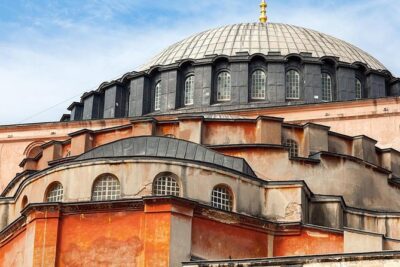
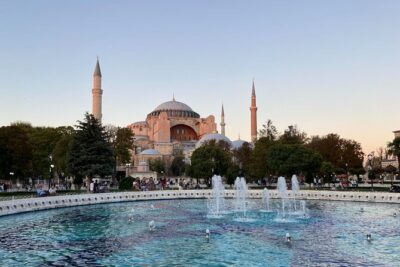
Hagia Sophia is one of those places where you can feel the importance immediately, but it’s easy to miss the details that make it special. A guide helps you slow down and read the building like a timeline—Byzantine roots, later transformations, and the layers still visible today.
A big thing to know: current access can affect what you can see inside. Some visitors report that lower-floor areas may be restricted and that people may need to view from upper balconies instead, depending on current rules. That can be emotional if you came expecting full access. It’s not something you can fully “tour away,” but a guide can help you understand what sections are available when you arrive and make the most of the viewpoints you do have.
Also, the crowd reality is real. Reviews include comments about long lines and the feeling that entry costs can be heavy. The good news is that having a guided visit can help you get in more efficiently than doing everything solo. And if you’re doing a night plan on your own, people do love seeing Hagia Sophia lit up—but this tour itself is focused on a guided daytime visit.
Practical tip from common visitor habits: if you’re bringing your own snacky supplies or you’re sensitive to foot comfort, be ready for the shoe situation inside. Some people suggest bringing a plastic bag to keep shoes cleaner.
- Best of Istanbul 1, 2 or 3-Day Private Guided Istanbul Tour★ 5.0 · 8,922 reviews
- Istanbul: Basilica Cistern Fast-Track Entry and Audio Guide★ 4.6 · 7,521 reviews
- Istanbul: Hagia Sophia Skip-the-Line Ticket & Museum Option★ 3.7 · 4,958 reviews
- Istanbul: Hodjapasha Whirling Dervishes Show & Exhibition★ 4.4 · 4,790 reviews
Stop 2: Topkapi Palace—2 hours that actually feel structured
You’ll spend about 2 hours at Topkapi Palace. Admission also isn’t included, so again, budget for entry.
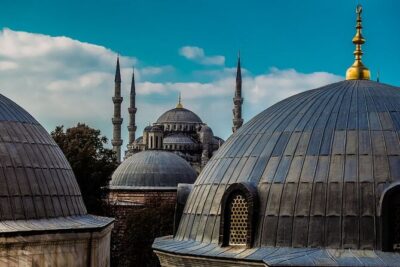
What I like about pairing Topkapi right after Hagia Sophia is that it helps you connect the dots. Hagia Sophia shows the monumental end of Byzantine-era architecture. Topkapi shows the Ottoman side of power—where leadership, court life, and the empire’s wealth met behind palace walls.
In plain terms: without a guide, you can wander and still feel impressed—but with a guide, the time turns into understanding. You’ll get brief information about the palace and the Ottoman Empire, which helps you interpret rooms and courtyards instead of just ticking boxes.
The drawback is the usual palace reality: two hours can be enough to see the highlights, but not enough to fully “complete” Topkapi like a marathon. If you’re the type who hates rushing, pick one or two themes you care about—court life, imperial symbolism, or architecture—and let the guide steer you toward the best fits.
Stop 3: Hippodrome—short stop, good stories
Next is the Hippodrome, around 30 minutes, with free admission.
This is one of my favorite types of stops on tours: not huge, not exhausting, but full of “wait, really?” history once someone explains what those monuments are and why the space mattered. You’ll look at the key features and hear the stories behind them, and that context helps you understand why people pay attention to a site that can look like ruins or open stone from a distance.
Thirty minutes is short on purpose. You’re not trying to memorize every detail. You’re getting oriented and then moving on—like setting a frame before you start the real painting.
Stop 4: Basilica Cistern—cool, atmospheric, and film-famous
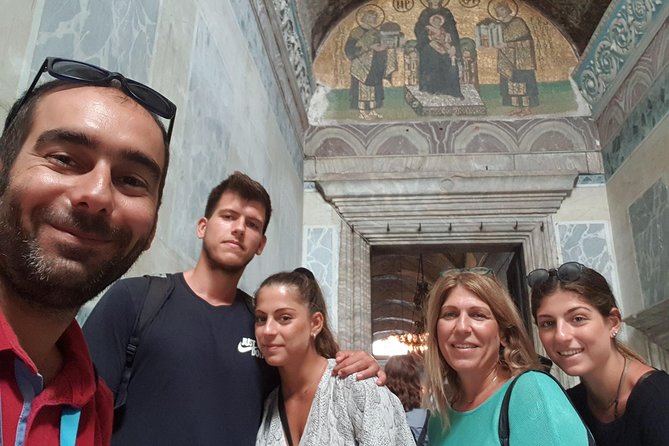
You’ll spend about 30 minutes at the Basilica Cistern. Admission isn’t included.
Basilica Cistern works even when you don’t know much going in. The atmosphere is the whole point: water, shadows, and a kind of quiet that feels worlds away from street noise. People also connect it to film and TV, and it’s easy to understand why it shows up on screen so often.
The guide’s value here is turning a pretty underground space into a story. You’ll “feel the atmosphere,” but you’ll also remember that this was functional infrastructure, not just a decorative basement. That shift makes the place stick in your brain long after the tour is over.
A practical note: it’s underground and can feel cooler than you expect. If you run warm, you may still want a light layer. And since this is a shorter stop, it’s a good reset moment between larger sights.
Stop 5: Nuruosmaniye Mosque—beautiful, and refreshingly less crowded
Then comes Nuruosmaniye Mosque, about 30 minutes, with free admission.
This is a great “breather” stop. The mosque is often overlooked compared to the big-name circuit, and that usually means you can look longer without getting steamrolled by crowds. The tour emphasizes how beautiful it is, even if you think of it as newer in the grand sweep of Istanbul landmarks.
You’ll have a moment to slow down and appreciate a living place of worship alongside historic monuments. That contrast is part of why Istanbul feels like more than a museum city—it’s still changing day to day.
Stop 6: Misir Çarşısı (Spice Market)—Turkish delight and real sensory overload
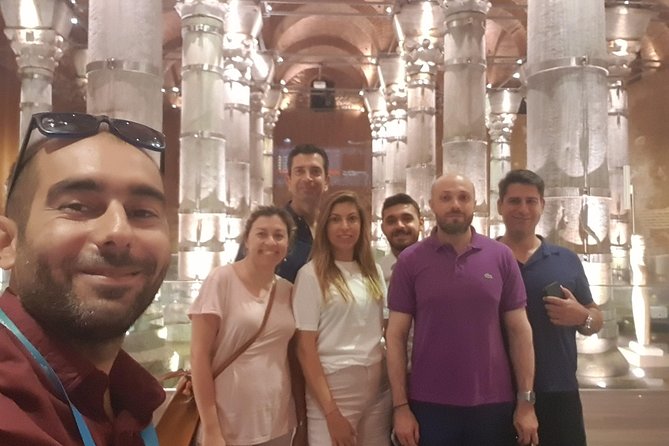
Finally, you’ll end at Misir Çarşısı (Spice Market) for about 1 hour, with free admission and Turkish delight included.
This isn’t just a shop stop. It’s part of the tour’s goal: to take you beyond landmark sightseeing and give you a taste of how Istanbul feels at street level. The Spice Market is described as the oldest covered bazaar in the world, and there’s a fun detail that daily around 22,000 people work and move through the market—it’s a place with serious daily rhythm, not a staged tourist set.
You’ll sample Turkish delight (and yes, that sweet break is a nice way to end a walking day). More importantly, you’ll learn how to move through the market without getting lost in it. A guide can point out what to look for and what to ignore so you leave with memories, not just bags.
If you’re picky about what you buy, you’ll still enjoy the stop—because you’re there for the context and the included tasting. If you love shopping, you’ll have plenty of chances once the hour gives you breathing room.
The guide and language options: why it matters more than you think
The tour offers five different languages, and that changes everything if you’re trying to understand what you’re seeing. Hagia Sophia and Topkapi can be overwhelming, even when you’re staring at them with the “right” questions. A good guide translates the big ideas into the specific stuff you can actually notice—symbols, design choices, and the why-behind.
And since the group is small, you can ask follow-ups. That’s huge when you’re trying to turn a list of attractions into an Istanbul itinerary that feels personal. The tour also aims to give insider suggestions for the rest of your vacation, and that’s where the guide can help you save time after the tour ends.
Pacing and physical demands: good for most people, but wear good shoes
This tour is listed for moderate physical fitness. You’ll be walking between stops, spending time inside museums/monuments, and moving through crowds.
The stops aren’t evenly long, though. Two longer blocks (Hagia Sophia and Topkapi) are followed by three shorter visits. That pattern is smart because it prevents the classic “I’m dying at stop number five” problem.
Still, if you have mobility issues, it’s worth thinking about the cobblestones and indoor floors. The tour is near public transportation, and service animals are allowed, but the walking component is very much part of the experience.
Timing, weather, and what to do if plans change
This tour requires good weather. If weather causes cancellation, you’ll be offered a different date or a full refund.
That matters because the route is in the Old City area where weather affects comfort quickly. If you’re traveling in a season with sudden rain, plan for layers you can manage, and keep an eye on your confirmation message once booked.
Price value: what you’re paying for (and what you’re not)
You’re paying $57.62 for the guided tour. That covers the guide’s time and the structure: the route, the pacing, and the interpretation.
What you’re not paying for includes several practical essentials:
- Coffee and/or tea during breaks
- Lunch
- All fees and taxes
- Plus admissions for key stops (Hagia Sophia, Topkapi Palace, and Basilica Cistern) are explicitly not included, while Hippodrome, Nuruosmaniye Mosque, and Misir Çarşısı are listed as free in this itinerary.
So here’s the clean way to judge value: if you’re the type who likes to understand context and wants help with “what should I focus on,” the guide time can be worth it even after you add entry fees. If you’d rather self-tour and spend your money on more time inside instead of interpretation, it might feel expensive—especially given that some sights have restricted access areas.
Who should book this tour
This one is a strong fit if:
- You want the top Old City hits in one guided sweep
- You prefer small groups and interaction, not giant crowds
- You like architecture and cultural layers, and want a guide to translate them
- You want a practical itinerary plus a sweet ending at the Spice Market
It’s less ideal if:
- You’re expecting admission-free access to everything
- You strongly dislike any uncertainty around sight access rules at Hagia Sophia
- You prefer totally independent exploring with no group schedule
Should you book?
If your goal is to see Hagia Sophia and Topkapi without spending your whole day bouncing between lines and guesswork, I’d book it. The tour’s strongest value is the guided context in the exact places where independent sightseeing can feel confusing.
Just go in with two smart expectations. First, admission costs are on you for several major stops, so budget accordingly. Second, Hagia Sophia’s viewing areas can be affected by current rules, and people have had very different experiences depending on what access is available.
Book it if you want structure, interpretation, and a smooth Old City route that ends with a real Istanbul taste test.
FAQ
How long is the tour?
It runs about 5 to 6 hours.
How much does it cost?
The price is listed as $57.62 per person.
What’s included in the price?
The tour includes a guided tour. Turkish delight at the Spice Market is also included.
What is not included?
It does not include coffee and/or tea, lunch, and all fees and taxes. Admission tickets for some stops are not included.
Do I need an admission ticket for each stop?
Admission is listed as not included for Hagia Sophia, Topkapi Palace, and Basilica Cistern. Admission is listed as free for the Hippodrome, Nuruosmaniye Mosque, and Misir Çarşısı.
Where do we meet, and where does it end?
You meet at Cankurtaran, Ayasofya Meydanı, 34122 Fatih/İstanbul and the tour ends back at the same meeting point.
Is there a mobile ticket?
Yes, the tour uses a mobile ticket.
Is it easy to join with moderate mobility needs?
The tour lists moderate physical fitness as the requirement. It’s near public transportation, and service animals are allowed.
More Historical Tours in Istanbul
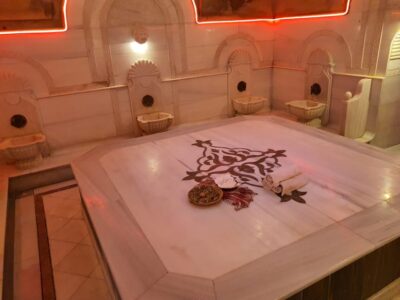
- Istanbul Gedikpasa Historical Turkish Bath with Privacy Option★ 5.0 · 1,285 reviews
- Istanbul: Acemoglu Historical Turkish Bath w/Private Options★ 4.6 · 1,190 reviews
- Istanbul: Gedikpasa Historical Hammam with Privacy Add-On★ 4.8 · 918 reviews
- Istanbul Historical Tour with Guide, Lunch and Transfers★ 4.5 · 561 reviews
- All in One Day Istanbul – Historical Tour of Istanbul with Bosphorus Cruise★ 5.0 · 489 reviews
- Istanbul Heritage Tour – Incl. Lunch★ 4.5 · 416 reviews
More Tour Reviews in Istanbul
- Istanbul: Bosphorus Dinner Cruise & Show with Private Table★ 4.8 · 62,058 reviews
- Istanbul: Daytime or Sunset Sightseeing Cruise & Audio Guide★ 4.8 · 14,430 reviews
- Istanbul: Bosphorus Dinner Cruise & Turkish Night Show★ 4.8 · 12,954 reviews
- Best of Istanbul 1, 2 or 3-Day Private Guided Istanbul Tour★ 5.0 · 8,922 reviews
- Istanbul: Basilica Cistern Fast-Track Entry and Audio Guide★ 4.6 · 7,521 reviews
- Istanbul: Hagia Sophia Skip-the-Line Ticket & Museum Option★ 3.7 · 4,958 reviews
Fresh off the boat: new Istanbul reviews

Historical Tours, compared.
 ★ 5.0Istanbul Gedikpasa Historical Turkish Bath with Privacy OptionFrom $601,285 reviews
 ★ 4.6Acemoglu Historical Turkish Bath w/Private OptionsFrom $421,190 reviews
 ★ 4.8Gedikpasa Historical Hammam with Privacy Add-OnFrom $59918 reviews
 ★ 4.5Istanbul Historical Tour with Guide, Lunch and TransfersFrom $248561 reviews
 ★ 5.0All in One Day Istanbul – Historical Tour of Istanbul with Bosphorus CruiseFrom $164489 reviews
 ★ 4.5Istanbul Heritage Tour – Incl. LunchFrom $216416 reviews
 ★ 5.0Full-Day Private Guided Cultural Tour of IstanbulFrom $120279 reviews
 ★ 5.0Istanbul Food Tour – History and Culture of Turkish CulinaryFrom $127265 reviews
Browse the lists this tour appears in