

REVIEW · ISTANBUL HOP-ON HOP-OFF TOURS
Istanbul Hop-on Hop-off Sightseeing Red Bus
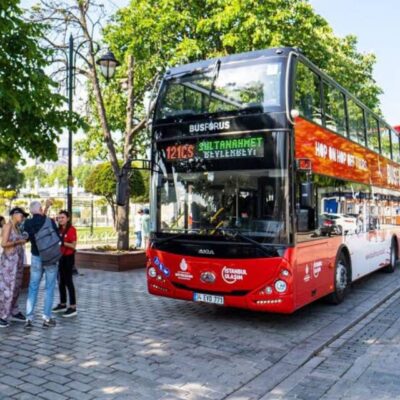
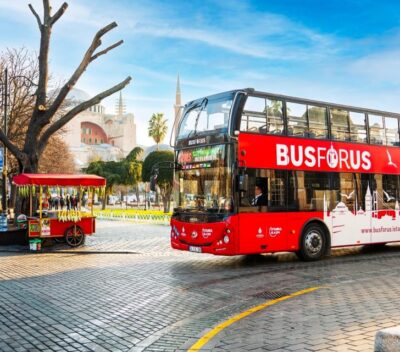
One bus, two continents, big day. This Istanbul Hop-on Hop-off Red Bus is a practical way to sample the city’s top neighborhoods fast, with an audio guide and enough stops to shape your own plan.
I especially like the focus on major landmarks across both sides of the Bosphorus, so you get an instant feel for where things are. The other big win for me is convenience: mobile ticket plus onboard audio and Wi-Fi helps you stay moving instead of hunting down info on the street.
The possible drawback is also classic Istanbul: traffic. The ride can be slow, and the bus can get crowded, so hop-on time matters and you’ll want a flexible mindset.
In This Review
- Key things to know before you ride
- Starting in Sultanahmet: the smart base for a first Istanbul day
- The route that matters: Europe-to-Asia in one long loop
- Using the audio and Wi-Fi without getting stuck
- Stop-by-stop: what each area is best for
- Sultanahmet: Hagia Sophia, the Blue Mosque, and the photo-friendly core
- Eminönü: spice shopping and the grand bazaar orbit
- Karaköy: creative streets and the feeling of the waterfront
- Galataport Istanbul: cruise-port views near Galata
- Dolmabahçe: the Ottoman administrative powerhouse
- Naval Museum (Beşiktaş): Ottoman sea power, 1897 style
- Beylerbeyi Palace (Asian side): a summer residence right by the bridge
- Beşiktaş Bazaar: Sunday market energy, even if you just snack
- Taksim Square and İstiklal Caddesi: the nightlife and tram corridor
- Şişhane Sokak: changing streets and a metro advantage
- Egyptian Bazaar again (Spice Bazaar): shopping loop insurance
- Back to Sultanahmet: end point and a final reset
- Price and logistics: worth it or overpaying?
- How to ride it like a pro (and avoid the pain)
- Who should book this bus, and who should skip it
- Should you book the Istanbul Hop-on Hop-off Red Bus?
- FAQ
- FAQ
- How long is the Istanbul Hop-on Hop-off Red Bus experience?
- What does the tour cost?
- Is this a true hop-on hop-off tour?
- Do I need a paper ticket?
- What languages is the audio available in?
- Where does the bus start?
- Is the tour easy to fit into a typical visit?
- Can I cancel and get a full refund?
Key things to know before you ride
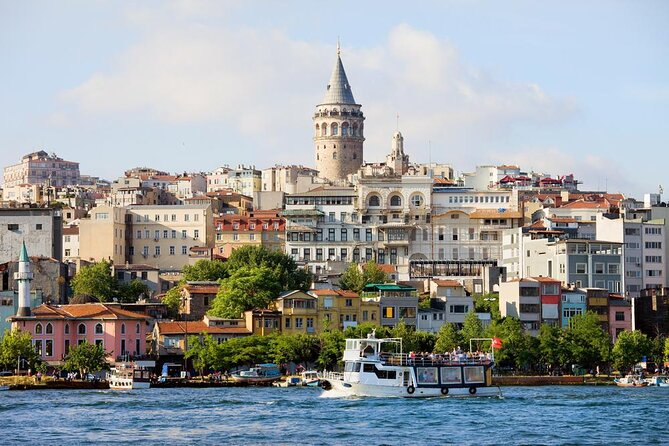
- 12 hop-on hop-off stops that map out Sultanahmet, Eminönü, Galata area, Beşiktaş, and Asia-side sights.
- Audio guide in multiple languages plus a focus on sightseeing context as you pass key monuments.
- Onboard Wi-Fi and a mobile ticket, which makes it easier to plan on the go.
- Central starting point in Sultanahmet, so you’re already near Hagia Sophia/Blue Mosque territory.
- Traffic and crowding risk, which can turn a quick hop into a long wait at certain times.
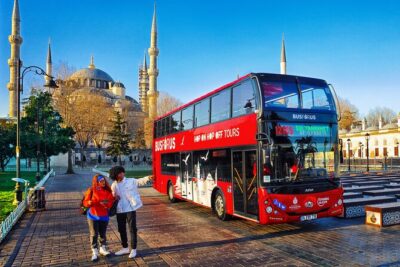
See more of the city from the top deck



Starting in Sultanahmet: the smart base for a first Istanbul day
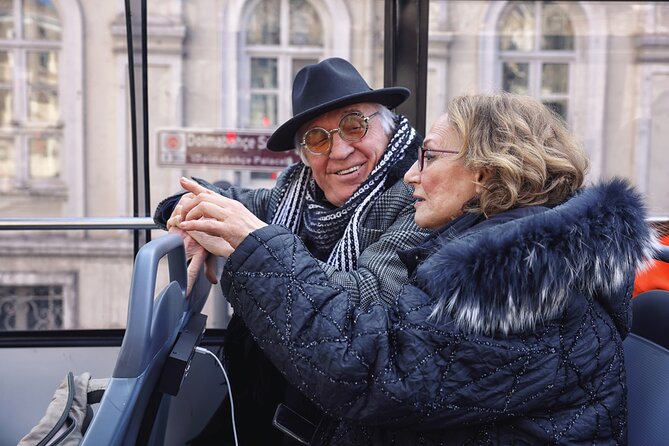
If you’re trying to get your bearings, starting in Sultanahmet is the move. This is where the city’s postcard sights cluster. From here, you can walk short distances, take photos without doing a full commute, and then catch the bus when your feet start complaining.
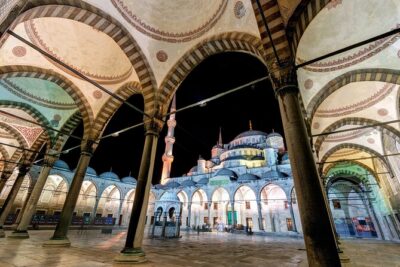
On this route, you pass the big hitters you probably came for: Hagia Sophia and the Blue Mosque (with those prominent minarets). You also glide past other nearby landmarks that shape this whole neighborhood, like the Egyptian Obelisk of Theodosius and the Stone of Million pillar ruin in the Sultanahmet area. Even if you don’t get off right away, the bus ride helps you see how close so many famous sites really are.
One practical note: Sultanahmet is also where people tend to overbook their day. So if you want to keep stress low, use the bus as your reset button after a couple of museum or mosque visits.
The route that matters: Europe-to-Asia in one long loop
This is a one-day sightseeing loop, and it crosses from the European side to the Asian side. That matters because Istanbul is not one compact city. It’s a set of neighborhoods stitched together by water, hills, bridges, and traffic.
You’ll pass through areas like Eminönü and Karaköy, then out toward Beşiktaş and the Bosphorus palaces on the way back. On paper, hop-on hop-off can sound like a lot of freedom. In real life, Istanbul traffic is the governor. The upside is that you still get a wide, efficient sample of the city without committing to a dozen separate rides.
A small planning trick: instead of thinking in terms of hopping to one stop and instantly being there, think in terms of a slow-moving tour bus that’s also your transit. If you build in extra time for delays, the day feels smooth. If you treat it like a subway train, it can feel frustrating.
Using the audio and Wi-Fi without getting stuck
The bus includes an audio guide in multiple languages, and it’s designed to explain what you’re seeing as you go. You also get onboard Wi-Fi, which is useful for quick map checks, bookmarking where you want to get off next, or looking up opening times before you commit to a stop.
Audio + Wi-Fi is a nice combo for a city like Istanbul, where signage and local spelling variations can slow you down. Just keep one reality in mind: if the bus is crowded and you’re standing, it can be harder to hear the narration, and standing can block views from seated passengers. If you care about photography, aim for the side of the bus where you’ll have the clearest sightlines as you approach the main waterfront stretches.
- Best of Istanbul 1, 2 or 3-Day Private Guided Istanbul Tour★ 5.0 · 8,922 reviews
- Istanbul: Basilica Cistern Fast-Track Entry and Audio Guide★ 4.6 · 7,521 reviews
- Istanbul: Hagia Sophia Skip-the-Line Ticket & Museum Option★ 3.7 · 4,958 reviews
- Istanbul: Hodjapasha Whirling Dervishes Show & Exhibition★ 4.4 · 4,790 reviews
Stop-by-stop: what each area is best for
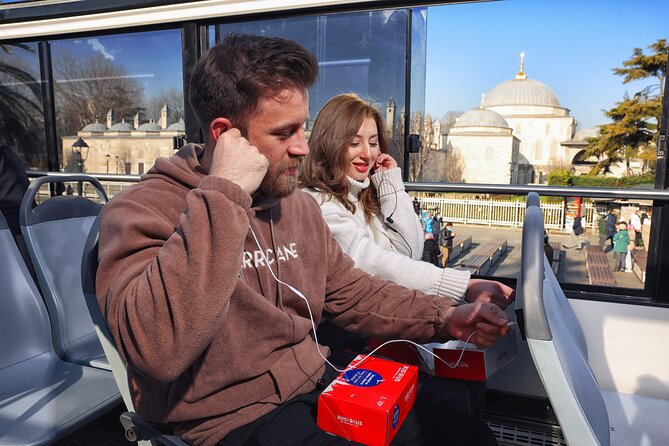
Sultanahmet: Hagia Sophia, the Blue Mosque, and the photo-friendly core
Sultanahmet is built for first-time orientation. Get off here if you want to do the big icons early, while streets are less chaotic and before you’ve burned your energy.
This stop is also handy because it’s near the cluster of sights the bus mentions: the mosaic-filled Hagia Sophia mosque, the Blue Mosque, and nearby historical pieces like the Egyptian Obelisk of Theodosius and the Stone of Million ruin. Even if you only walk one loop through the area, you’ll quickly understand why this part of town is so tightly packed.
If you only do one stop in depth, make it this one.
Eminönü: spice shopping and the grand bazaar orbit
Eminönü is busy for a reason. Boats unload passengers near the docks, and the whole area feeds into the bazaars.
This stop is especially good if you want to combine sightseeing with shopping. The bus route highlights the Egyptian Bazaar (Spice Bazaar) with its mix of carpets, textiles, lamps, jewelry, and stalls packed with fruit, teas, and spices. It also connects you visually to the Grand Bazaar world, with its endless indoor lanes.
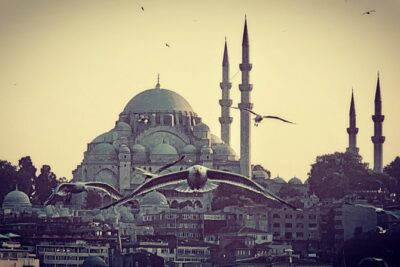
Two notable religious landmarks also come into view here: Süleymaniye Mosque and the Rustem Pasha Mosque, known for Iznik tiles. If your plan includes a tile or mosque visit, Eminönü is a practical base.
Just remember: Eminönü is a maze at peak times. If you get off here, give yourself time to slow down. If you try to rush through, you’ll miss the good stuff and end up doubling back.
Karaköy: creative streets and the feeling of the waterfront
Karaköy has that “port district meets street life” vibe. Expect hip cafes and late-night cocktail energy alongside neighborhood bakeries and family-run businesses.
What’s interesting from a sightseeing angle is the mix of old structures and newer visual culture. You’ll also catch the Klç Ali Paşa complex, which includes a 16th-century mosque and therapeutic baths. That’s a very Istanbul kind of detail: layered use of space across centuries.
If you like wandering without a strict itinerary, Karaköy is a good hop. It’s also a smart place to take a break before the more formal palaces and museums later on.
Galataport Istanbul: cruise-port views near Galata
Galataport is a cruise ship port and mixed-use development in the Galata area, sitting on the European side where the Bosphorus meets the Golden Horn.
Even if you don’t do a full shopping stop, it’s useful because it gives you a clean waterfront sense of where you are. Istanbul waterfronts change character quickly. This area is more modern in feel compared with the older bazaars, so it helps balance the day.
If you’re arriving on a cruise or you’re curious how cruise crowds interact with the city, this stop is a quick reality check.
Dolmabahçe: the Ottoman administrative powerhouse
Dolmabahçe Palace was a major administrative center of the Ottoman Empire from 1856 to 1887 and again from 1909 to 1922. (The information also notes that Yıldız Palace was used in the interim.)
This stop lands in Beşiktaş, on the European coast by the Bosphorus. So it’s not just about the palace itself; it’s about the setting. You get that water-and-imperial-building contrast that Istanbul does so well.
If you want the most “wow” value from one of the palaces, this is the one to prioritize. Plan for enough time to actually step inside or at least enjoy the exterior approach without racing the bus schedule.
Naval Museum (Beşiktaş): Ottoman sea power, 1897 style
The Istanbul Naval Museum is in Beşiktaş. It was established in 1897 by Ottoman Minister of Navy Bozcaadalı Hasan Hüsnü Pasha.
This is a good stop for travelers who like military or maritime context, and it adds a different angle than mosques and markets. The museum’s focus is on an important collection of military artifacts related to the Ottoman Navy.
If your day is already heavy on religious and market stops, this one can refresh your perspective.
Beylerbeyi Palace (Asian side): a summer residence right by the bridge
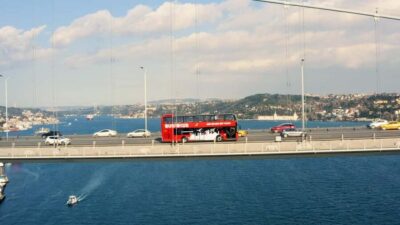
This is your Asia-side highlight: Beylerbeyi Palace in Üsküdar. The name Beylerbeyi means Lord of Lords. The palace is an imperial Ottoman summer residence built between 1861 and 1865, and it sits immediately north of the First Bosphorus Bridge.
This stop is valuable because it shows how the wealthy Ottoman world used the Bosphorus beyond just court centers. It also gives you a satisfying viewpoint of the bridge and shoreline area—an Istanbul sight that feels very “you are here.”
If you’re thinking about timing, keep in mind that crossing into the Asian side can be slower depending on traffic. So if you’re hoping to spend a long time here, be realistic about the bus loop’s pace.
Beşiktaş Bazaar: Sunday market energy, even if you just snack
The Büyük Beşiktaş Çarşısı stop focuses on a popular Sunday market. The bus describes it as a place where the range of goods can be astonishing, from tomatoes to exclusive jewellery.
Even if you don’t shop, this is a great “watch people” stop. Markets in Istanbul are not just commerce. They’re social space.
If you do get off, treat it like a stroll: browse, compare prices, and pick up a small bite rather than trying to buy everything in one pass.
Taksim Square and İstiklal Caddesi: the nightlife and tram corridor
Taksim Square is a busy hub with the Republic Monument, nightlife, shopping, and dining. The route also notes vintage trams running along İstiklal Caddesi, the main pedestrian boulevard lined with 19th-century buildings.
This is where Istanbul feels urban and European-city-like in a different way than Sultanahmet and the bazaars. The side streets around Taksim can hold bars, antique shops, and rooftop eateries with Bosphorus views.
If you want a break from the heavy history concentration and want more street atmosphere, hop off near Taksim. Just know it’s also a place where crowds build quickly, so don’t come here expecting empty sidewalks.
Şişhane Sokak: changing streets and a metro advantage
Şişhane Sokak has a past tied to lighting shops and traffic that felt less pleasant. The route information also says it’s rapidly transforming, with handsome fin-de-siècle buildings and easier access thanks to the new metro station.
It’s also included for a specific reason: the name points to a 6th Office linked to Istanbul’s first modern municipality. That’s a fun detail because it turns an ordinary-looking street into something with administrative history.
This stop is best if you want to connect with the city’s modern transit logic. If you’re thinking you’ll need a backup way to get around, being near metro access can help you feel more in control.
Egyptian Bazaar again (Spice Bazaar): shopping loop insurance
The route includes the Egyptian Bazaar / Spice Bazaar area again as Stop 11. That’s actually useful. If you didn’t have time to shop at Eminönü the first time, or you want to return for spices, teas, or small gifts without backtracking across town, this second touchpoint acts like loop insurance.
This is where you can right-size your souvenir strategy. Buy a few small things earlier, then come back once you know what you actually want.
Back to Sultanahmet: end point and a final reset
The journey ends back in Sultanahmet. That makes sense because your day’s “big icon” area is also your easiest place to end, regroup, and return to your hotel on foot or by short transit hops.
If you’re thinking about timing, I like ending here because it lowers the risk of being far from your base after a long day of riding and walking.
Price and logistics: worth it or overpaying?
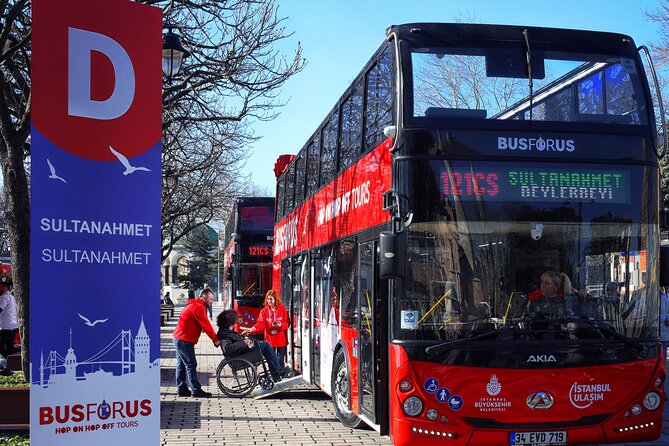
At $70 per person for an approx. one-day experience, value depends on how you use it.
Here’s the honest math in plain terms:
- If you treat the bus as your main way to move between neighborhoods, you’ll likely feel it’s worth it. The route covers a wide spread, including both continents.
- If you mainly want one or two sights, you might feel the price when traffic slows the ride and hop times shrink.
The reviews do point to the trade-offs you should expect in Istanbul: traffic can be brutal, buses can get overloaded, and timing at stops can feel unpredictable. Some people also report confusion about identifying the correct bus because signage isn’t always clear. That means you should arrive at the starting area a bit early and confirm you’re at the right pickup point before you commit your time.
Seating can also be a factor. If you end up standing, you might not enjoy the ride as much, and your view can be blocked.
So my advice is simple: buy this tour when you want an orientation tool and a broad scan of Istanbul. Don’t buy it if you’re expecting the smooth, predictable pacing of a small European city.
How to ride it like a pro (and avoid the pain)
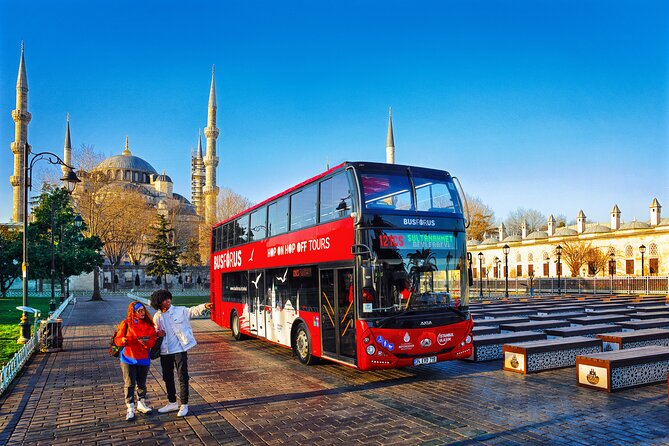
I’d use these tactics to get the best day possible.
First, ride with a flexible schedule. Istanbul traffic can stretch the day more than you expect. If you plan tight museum appointments, the bus loop might not be your friend.
Second, pick your priority stops before you board. Use the first hop to set your plan: if Sultanahmet is your must-do, do it first. If you want palaces, plan for Dolmabahçe and Beylerbeyi earlier in your day when you still have energy.
Third, deal with crowding smartly:
- If you want to hear the audio and see well, try to get a seat early on.
- If you end up standing, keep your window-side attention because views can still be great even when you’re not comfy.
Fourth, use the bus for transit between distant areas, not as a guarantee of quick transfers. If you want to go from one stop to a distant one, accept that the loop can take longer than you think in heavy traffic.
Finally, have a backup plan. The city has public transit options, but the key is knowing that the bus loop can end up crowded or delayed. When you have a backup idea, the day feels safer.
Who should book this bus, and who should skip it
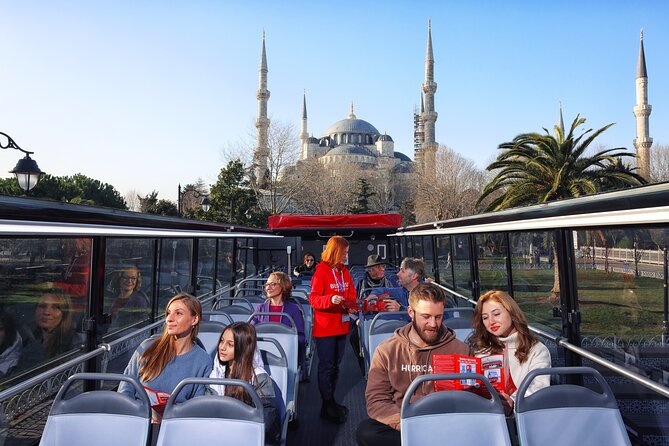
This works best for you if:
- You want a fast overview of Istanbul’s big areas in one day.
- You like audio explanations and prefer not to build a complex routing plan.
- You’re staying near Sultanahmet or you can reach the start point easily.
You might skip it if:
- You hate slow rides and want a strict schedule.
- You’re very sensitive to crowding or long standing.
- You only want one or two specific sights, because you may pay for time you can cover with shorter walks or targeted transport.
If you’re unsure, lean on this: the bus is excellent as a first pass to figure out your next moves. After that, you can build a more focused itinerary for the areas you actually fall in love with.
Should you book the Istanbul Hop-on Hop-off Red Bus?
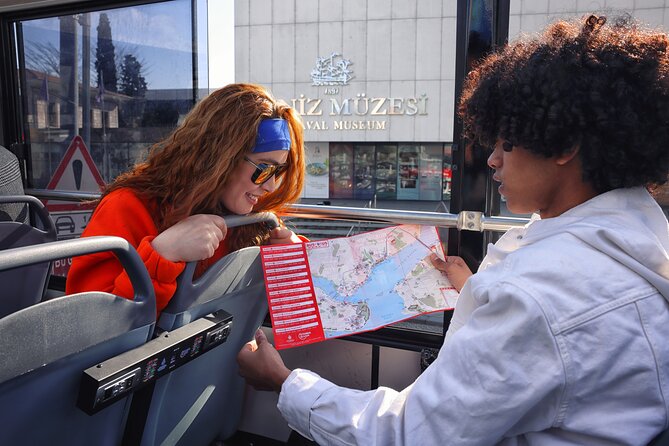
Book it if you want an easy, wide-angle introduction that takes you from Sultanahmet to the Bosphorus palaces and into both sides of the city. The $70 price can feel fair when you use the hop-on freedom to cover distance and sanity-check what you want to explore deeper later.
Skip or reconsider if you’re arriving during peak crowd and traffic periods and you can’t handle delays. In that case, you’ll probably do better with a smaller plan that’s less dependent on the pace of a city bus.
FAQ
FAQ
How long is the Istanbul Hop-on Hop-off Red Bus experience?
It’s listed as approximately 1 day.
What does the tour cost?
The price is $70.00 per person.
Is this a true hop-on hop-off tour?
Yes. You can hop on and off at 12 different stops.
Do I need a paper ticket?
No. You’ll use a mobile ticket.
What languages is the audio available in?
The audio guide is multi-lingual, and the experience is offered in English.
Where does the bus start?
The starting point is centrally located in Sultanahmet.
Is the tour easy to fit into a typical visit?
Confirmation is received at booking time, it’s near public transportation, and most travelers can participate.
Can I cancel and get a full refund?
Yes. Free cancellation is offered, and you can cancel up to 24 hours in advance for a full refund.
More Tour Reviews in Istanbul
- Istanbul: Bosphorus Dinner Cruise & Show with Private Table★ 4.8 · 62,058 reviews
- Istanbul: Daytime or Sunset Sightseeing Cruise & Audio Guide★ 4.8 · 14,430 reviews
- Istanbul: Bosphorus Dinner Cruise & Turkish Night Show★ 4.8 · 12,954 reviews
- Best of Istanbul 1, 2 or 3-Day Private Guided Istanbul Tour★ 5.0 · 8,922 reviews
- Istanbul: Basilica Cistern Fast-Track Entry and Audio Guide★ 4.6 · 7,521 reviews
- Istanbul: Hagia Sophia Skip-the-Line Ticket & Museum Option★ 3.7 · 4,958 reviews
More of Istanbul from the Bus
- Istanbul: Hop-On-Hop-Off with Optional Audio Tour or Cruise★ 4.2 · 1,058 reviews
- Istanbul Top Attractions sightseeing Hop-on Hop-Off Bus★ 3.5 · 197 reviews
- Open-Top Hop-on Hop-off Sightseeing Bus Tour in Istanbul★ 4.0 · 195 reviews
- Istanbul: Hop-On Hop-Off Sightseeing Bus with Audio Guide★ 3.8 · 110 reviews
- Istanbul Hop On Hop Off Bus24 Hours Ticket★ 3.8 · 90 reviews
- Istanbul: Hop-On Hop-Off Bus Ticket★ 4.1 · 44 reviews
Fresh off the boat: new Istanbul reviews



Istanbul Hop-On Hop-Off Tours, compared.
 ★ 4.2Hop-On-Hop-Off with Optional Audio Tour or CruiseFrom $681,058 reviews
 ★ 3.5Istanbul Top Attractions sightseeing Hop-on Hop-Off BusFrom $69197 reviews
 ★ 4.0Open-Top Hop-on Hop-off Sightseeing Bus Tour in IstanbulFrom $68195 reviews
 ★ 3.8Hop-On Hop-Off Sightseeing Bus with Audio GuideFrom $70110 reviews
 ★ 3.8Istanbul Hop On Hop Off Bus24 Hours TicketFrom $6890 reviews
 ★ 4.1Hop-On Hop-Off Bus TicketFrom $6544 reviews
 ★ 3.4Istanbul City Sightseeing Tour & Turkish Dinner & ShowFrom $21116 reviews
 ★ 3.7Private Hop On Hop Off Tour 3 Hours-Pickup From HotelFrom $14214 reviews
Browse the lists this tour appears in