
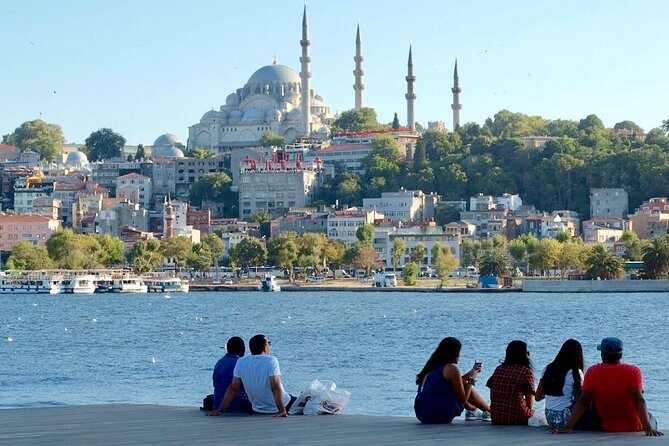
REVIEW · GALATA TOWER TOURS
Multi Cultural Istanbul: Galata Tower – Fener and Balat – Golden Horn by Ferry
A single walk can feel like Istanbul’s whole resume. This small-group tour strings together Galata Tower, Jewish and Orthodox sites, and the neighborhoods of Fener and Balat into one smooth afternoon along the Golden Horn. I especially liked how much is included for the price, plus the way the guide ties architecture to real cultures living side-by-side. One thing to plan for: there’s moderate walking with some steep bits, and it’s not ideal for strollers.
What makes this work for most people is the pacing. You start with a big-picture view from Galata Tower, then shift into street-level history in Beyoğlu (Pera) and the hill neighborhoods on the European side, with short stops and transit help via ferry, tram, and bus. And with a maximum of 8 travelers, it doesn’t feel like you’re dodging a crowd just to hear the story.
In This Review
- Key highlights you should care about
- Why Galata to Fener and Balat feels like a city timeline
- Getting there and how the route flows (ferry, tram, bus, repeat)
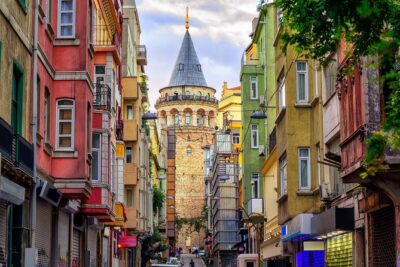
- Galata Tower: the Genoese fortification and the views that set the tone
- Beyoğlu (Pera) and the Turkish Jewish Museum: history you can walk through
- En route details you’ll notice later: steep streets, photo stairs, and a bascule bridge
- Fener Rum Patrikhanesi: a quick spiritual stop with big context
- Fener & Balat streets: colors, churches, and the way communities stack over time
- The Bulgarian Orthodox Church and the iron-story of a building
- Vlaherna Meryem Ana Church: the spiritual pause
- Constantinople walls and the two-continent fact you feel in the streets
- Karaköy and the return: commercial energy beside old streets
- Price and what you’re really paying for
- Who should book this, and who should skip it
- Should you book Multi Cultural Istanbul: Galata Tower – Fener & Balat – Golden Horn by Ferry?
- FAQ
- How long is the tour?
- What is the meeting point?
- Where does the tour end?
- Is Galata Tower entry included in the price?
- What transport is included?
- What language is the tour offered in?
- How big is the group?
- Is the tour stroller accessible?
- Is hotel pickup included?
- What’s the walking like?
- Is free cancellation available?
Key highlights you should care about
- Galata Tower panorama plus entry support in the all-inclusive option
- Small group size (up to 8) with an English-speaking professional guide
- Multiple cultures in one route, including Jewish and Eastern Orthodox landmarks
- Golden Horn “linking” moments, from the bascule bridge to major views over the water
- Not just views: stops include churches, fortifications, and photo-friendly stairways
- Transit variety: ferry, tram, and bus help break up the walking
Other climbs up Galata way



Why Galata to Fener and Balat feels like a city timeline
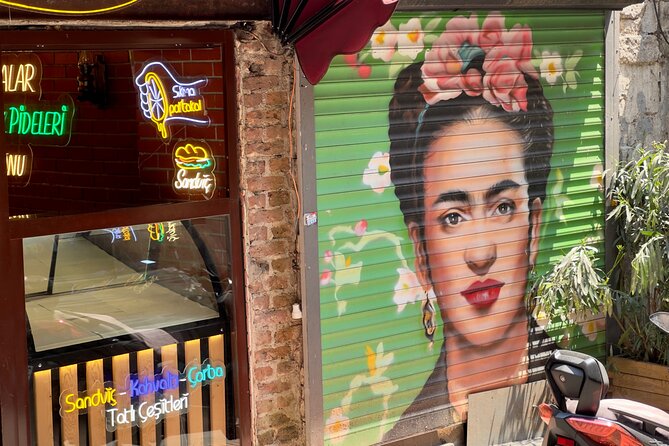
Istanbul’s neighborhoods can look similar from a distance, but up close they tell different stories. This tour is built so you experience those layers in order: start with a signature skyline moment at Galata Tower, then move into the older Ottoman and Byzantine-era texture of Beyoğlu (once Pera) and the Golden Horn’s surrounding quarters.
In practical terms, you’re not just checking boxes. You get a sense of how empires shaped the street grid, the religious buildings, and even the feel of daily life. One guide-style thread I keep seeing in this experience: guides like Erol, Ergil, İcil, Gamze Aksin, and Can (John) are praised for staying engaged, answering questions, and keeping history clear without turning it into a lecture.
Getting there and how the route flows (ferry, tram, bus, repeat)
You’ll meet at Anemon Koleksiyon Galata Hotel in Beyoğlu. The tour ends near the Karaköy Ferry Terminal by Galata Bridge, with the route designed to connect back toward Kadıköy and Üsküdar Pier.
The best part of the logistics is the variety. You’re not stuck doing one long slog on foot. Transport is included (ferry, tram, and bus), which helps you spend your energy where it counts: viewpoints, historic streets, and the short interior stops.
One note for sanity: the experience uses ferry crossings, and ferry operations can sometimes change. If you’re traveling with tight plans afterward, leave some buffer so you’re not fighting schedule stress if a water segment is altered.
Galata Tower: the Genoese fortification and the views that set the tone
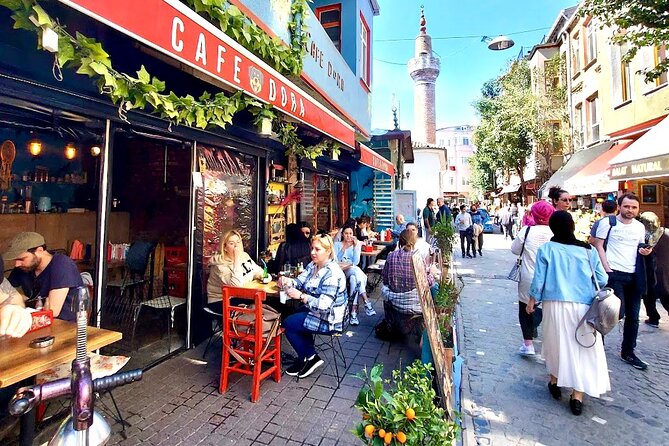
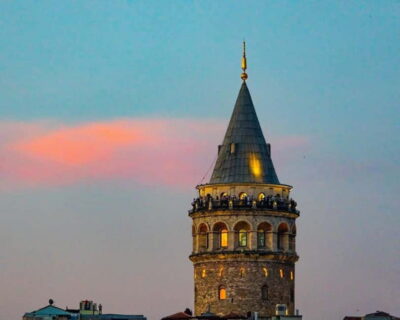
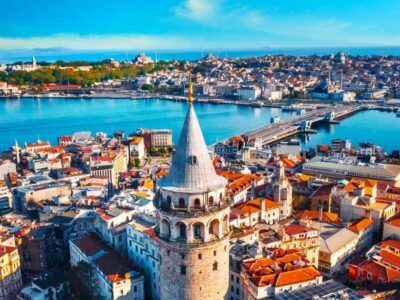
You start at Galata Tower, one of the city’s most distinctive sights. This structure is tied to the Genoese in 1348, and the guide context makes it more than a photo stop. From the top, you get that instant “I get the city now” panorama—water, bridges, hills, and the way districts stack.
If you choose the all-inclusive option, entry fees and donations are included. If you don’t, the tower entry fee isn’t in the base price (it’s listed as 30 EUR per person), so check what you booked.
Either way, you’ll enjoy the first-hour payoff. It’s the moment where the rest of the walk makes sense, because you can later connect what you see on the street to what you saw from above.
More of Fener and Balat's painted lanes
- Istanbul: Fener Balat Half-day Guided Walking Tour★ 4.9 · 1,711 reviews
- Half day Fener-Balat Walking Tour in Turkiye★ 5.0 · 308 reviews
- Istanbul: Colorful Fener & Balat Walking Tour w/Expert Guide★ 4.7 · 234 reviews
- Istanbul: Fener, Balat, Old Greek and Jewish Quarter Tour★ 4.9 · 234 reviews
Beyoğlu (Pera) and the Turkish Jewish Museum: history you can walk through
After the tower, the route shifts into the “how did this area become European Istanbul?” story. Beyoğlu, historically known as Pera, is presented as the European Quarter—home to embassies and trading centers, plus those 19th-century apartment houses with a Parisian feel.
Along the way, you’ll pass a famous photo spot: 19th-century art nouveau stairs. This is one of those small stops that’s worth it because it gives you a quick visual break from church and museum interiors, and it’s easy to capture without feeling rushed.
Then there’s the Museum of Turkish Jews, which focuses on artifacts tied to the history of Jewish people in Turkey, plus an art gallery and synagogue. This stop is valuable because it expands the tour beyond Orthodox Christian landmarks. You don’t just hear about communities in general; you see material that explains what shaped them locally.
Practical tip: museum time is short on this kind of route, so treat it like a guided orientation. If a topic really grabs you, you’ll likely want to follow up later on your own—this visit helps you know what to look for.
En route details you’ll notice later: steep streets, photo stairs, and a bascule bridge
The walk is part sightseeing, part reality check. Some streets in the Fener and Balat area are steep, and that shows up in comfort level. Good shoes matter. The reward is that you see how neighborhoods actually connect—on foot, with curves and rises that buses can’t perfectly replace.
You’ll also see the bascule bridge spanning the Golden Horn. The point isn’t only the engineering. It’s described as both a real and symbolic link between two parts of Istanbul. When you stand near it (and later when you see the water from other angles), you start understanding why the Golden Horn is such a magnetic geographic feature.
And yes, the views over Halic (Golden Horn) are a big deal. “Halic” is explained as meaning inlet in English, and the water’s shape makes the skyline feel layered. If you have any control over your time of day on future visits, dawn and dusk are called out as especially good for the mood and the light.
Fener Rum Patrikhanesi: a quick spiritual stop with big context
Next up is Fener Rum Patrikhanesi, the Ecumenical Patriarchate—described as the spiritual center for Eastern Orthodox Christians, often compared to the Vatican in scale of importance.
This stop is short (around 15 minutes), and that makes it feel like a pause rather than a deep tour. The value is in the context: you learn why this place matters, then you move on while everything is still fresh.
If you’re the type who likes religion-as-architecture and religion-as-politics (not just prayer halls), this is an efficient and meaningful stop.
Fener & Balat streets: colors, churches, and the way communities stack over time
Now you hit the neighborhoods themselves: Fener & Balat. The route frames these areas as a miniature timeline, taking you from Byzantine to Ottoman and then into modern times. The tour connects Ayvansaray, Balat, and Fener as neighborhoods where empires left marks and where different communities have lived close to each other.
What you’ll love here is the street experience. These are places you’d probably hesitate to navigate alone at first, because the streets are character-heavy and easy to get turned around in. With a guide, you move through with purpose—looking at façades, courtyards, and the way buildings relate to one another across small distances.
Also, you may get small moments of food and rest. One report includes time for Turkish desserts and tea at a local cafe. That may not be identical for every group day, but it’s a common kind of break that makes the walk feel more like a cultural afternoon than a checklist.
The Bulgarian Orthodox Church and the iron-story of a building
One of the most memorable stops is the Bulgarian Orthodox Church: a curious neo-Gothic white-painted church made from cast iron sections.
Here’s what makes it special: it was built (or cast) in Vienna in 1896 and then brought to Istanbul. That kind of detail changes how you see the church. It’s not just a pretty building; it’s a physical record of manufacturing, trade, and European connections at the end of the 19th century.
This stop is short (about 15 minutes), so again, think orientation. If you’re into architectural history, you’ll likely want to take extra photos and then circle back later if you have more time in the city.
Vlaherna Meryem Ana Church: the spiritual pause
After Balat’s visuals and the iron church story, you stop at Vlaherna Meryem Ana Church, described as very emotional and spiritual. It’s a brief stop (about 10 minutes), but the guide context is the point here.
This is one of those moments where the tour shifts from explanation to atmosphere. Even if you’re not religious, it can still hit emotionally because you’re stepping into a place meant for reflection.
Constantinople walls and the two-continent fact you feel in the streets
The tour also includes time where history turns physical: references to the walls of Constantinople, described as the greatest fortifications of the medieval age, with multiple towers and gates and large sections still standing.
You’ll also hear a clear storyline about Istanbul as a capital across empires: Roman, Byzantine, and Ottoman. And you’re reminded of the fact that Istanbul is the only city in the world located on two continents. That detail is easy to say; it’s harder to forget once you’re moving across the city’s spine of water and bridges.
Karaköy and the return: commercial energy beside old streets
To finish, you head into Karaköy, described as one of Istanbul’s oldest historic districts. Today it functions as an important commercial center and transport hub.
This ending matters because you get contrast. You started with views and historic layers, and you end with a working neighborhood feel near transportation. Then you return by ferry as part of the route, with the tour concluding near the Karaköy Ferry Terminal by Galata Bridge.
If you like your tours to land with one last big city perspective, the return segment helps. It’s a good time to take in the Golden Horn from the water and to connect it one more time to what you saw from Galata Tower earlier.
Price and what you’re really paying for
At $79.39 per person for about 4 hours, this tour can be good value because you’re not just buying guide time. In many bookings, you’re also paying for:
- Transport (ferry, tram, bus)
- Small-group format (maximum 8 travelers)
- Galata Tower entry and donations if you select the all-inclusive option
If you did not pick the all-inclusive option, you should budget for the Galata Tower fee (30 EUR pp). That’s the biggest swing in the real cost, so double-check your option before you go.
Also, consider the time savings. Navigating Galata, then Fener and Balat, while hitting several distinct landmarks and religious sites is doable on your own—but it’s the kind of day where you might burn hours figuring out the most efficient order. Here, you get a plan that keeps the day moving without feeling like a race.
Who should book this, and who should skip it
This tour is a strong fit if you want a guided route that connects architecture and cultures across a short time window. You’ll especially like it if you enjoy religious history, neighborhood walking, and skyline views.
It may be less ideal if you:
- Need stroller-friendly routes (it’s not stroller accessible)
- Have limited mobility or hate hills (there’s a moderate amount of walking and some steep streets)
- Have an extremely strict schedule right after the tour, since ferry timing can sometimes shift
If you’re comfortable walking a few kilometers with pauses for stops, you’ll get a lot out of the cultural variety and the Golden Horn views.
Should you book Multi Cultural Istanbul: Galata Tower – Fener & Balat – Golden Horn by Ferry?
Yes—if you want the best kind of Istanbul day: one that mixes a headline view, recognizable photo moments, and quieter stops that explain how communities formed.
I’d book it when:
- You want multiple cultures covered in one organized afternoon
- You like small groups and Q-and-A style guiding
- You’re curious about how the Golden Horn shaped the city
I’d hesitate if:
- You can’t handle steep streets or moderate walking
- You need a fully stroller-accessible itinerary
- You hate any chance of schedule changes due to ferry operations
If you do go, wear shoes you trust for slopes, bring a light layer for sea-breeze weather near the water, and plan to take your time with the tower views. The rest of the walk reads better when you’ve already seen the city from above.
FAQ
How long is the tour?
The tour runs about 4 hours.
What is the meeting point?
You start at Anemon Koleksiyon Galata Hotel on Bereketzade, Büyük Hendek Cd. No:5, Beyoğlu.
Where does the tour end?
It ends near the Karaköy Ferry Terminal by Galata Bridge, with the route toward Kadıköy and Üsküdar Pier.
Is Galata Tower entry included in the price?
It depends on the option you choose. If the all-inclusive option is selected, Galata Tower entry fees and donations are included. If not, the Galata Tower entry fee is not included (listed as 30 EUR per person).
What transport is included?
Transport is provided by ferry, tram, and bus.
What language is the tour offered in?
The tour is offered in English.
How big is the group?
The maximum group size is 8 travelers.
Is the tour stroller accessible?
No, it is not stroller accessible.
Is hotel pickup included?
No hotel pickup and drop-off are not included.
What’s the walking like?
There is a moderate amount of walking involved.
Is free cancellation available?
Yes, you can cancel up to 24 hours in advance for a full refund.
More Tour Reviews in Istanbul
- Istanbul: Bosphorus Dinner Cruise & Show with Private Table★ 4.8 · 62,058 reviews
- Istanbul: Daytime or Sunset Sightseeing Cruise & Audio Guide★ 4.8 · 14,430 reviews
- Istanbul: Bosphorus Dinner Cruise & Turkish Night Show★ 4.8 · 12,954 reviews
- Best of Istanbul 1, 2 or 3-Day Private Guided Istanbul Tour★ 5.0 · 8,922 reviews
- Istanbul: Basilica Cistern Fast-Track Entry and Audio Guide★ 4.6 · 7,521 reviews
- Istanbul: Hagia Sophia Skip-the-Line Ticket & Museum Option★ 3.7 · 4,958 reviews
More Lanes in Fener and Balat
- Istanbul: Fener Balat Half-day Guided Walking Tour★ 4.9 · 1,711 reviews
- Half day Fener-Balat Walking Tour in Turkiye★ 5.0 · 308 reviews
- Istanbul: Fener, Balat, Old Greek and Jewish Quarter Tour★ 4.9 · 234 reviews
- Istanbul: Colorful Fener & Balat Walking Tour w/Expert Guide★ 4.7 · 234 reviews
- Istanbul: Fener & Balat Guided Tour through Colored Streets★ 4.8 · 171 reviews
- Istanbul in Colors: Balat Tour★ 5.0 · 92 reviews
Around Galata Tower
- Istanbul: Galata Tower All-Day Entry Ticket with Audio Guide★ 4.4 · 1,190 reviews
- Istanbul: Turkish Mosaic Lamp Workshop in Galata – All Included★ 5.0 · 636 reviews
- Istanbul: Galata Tower Entry Ticket with Audio Guide★ 4.3 · 474 reviews
- Istanbul: Create Your Own Perfume in a Galata Workshop★ 4.8 · 277 reviews
- Perfume Making Workshop in a Stylish Galata Atelier in Istanbul★ 5.0 · 186 reviews
- Istanbul City Walk: Galata Tower, Istiklal Street & Karaköy★ 4.7 · 97 reviews
Fresh off the boat: new Istanbul reviews
Galata Tower Tours, compared.
 ★ 4.4Galata Tower All-Day Entry Ticket with Audio GuideFrom $471,190 reviews
 ★ 5.0Turkish Mosaic Lamp Workshop in Galata – All IncludedFrom $34636 reviews
 ★ 4.3Galata Tower Entry Ticket with Audio GuideFrom $41474 reviews
 ★ 4.8Create Your Own Perfume in a Galata WorkshopFrom $33277 reviews
 ★ 5.0Perfume Making Workshop in a Stylish Galata Atelier in IstanbulFrom $28186 reviews
 ★ 4.7Istanbul City Walk: Galata Tower, Istiklal Street & KaraköyFrom $1897 reviews
 ★ 5.0Istanbul Modern City – Galata & Pera & Taksim Guided Walking TourFrom $6667 reviews
★ 5.0Istanbul City Walk: Galata Tower, Istiklal Street & KaraköyFrom $3064 reviews
★ 5.0Istanbul Modern City – Galata & Pera & Taksim Guided Walking TourFrom $6667 reviews
★ 5.0Istanbul City Walk: Galata Tower, Istiklal Street & KaraköyFrom $3064 reviews
Browse the lists this tour appears in