

REVIEW · COFFEE EXPERIENCES
Turkish Coffee Trail
Coffee history is the menu today. This Istanbul walk links Eminönü streets, old coffee shops, and a hands-on making class where you heat coffee on a sand stove in a traditional copper vessel. I especially like how the day blends practical coffee skills with stories of how Turkish coffee became part of daily life.
Second, you get more than sips and photos. You’ll visit places tied to the Ottoman coffee tradition, including where coffee was stored, plus a stop in the spice bazaar area. For me, that’s what turns this into a real Istanbul experience, not just a coffee stop parade.
One thing to plan for: the tastings add up. Expect several very strong cups in a short window, so if you’re caffeine-sensitive, go slow and consider drinking tea when it’s offered.
In This Review
- Key highlights worth your afternoon
- From German Fountain to Eminönü: how the route starts
- The 30-minute Turkish coffee workshop (and what to watch for)
- Ottoman coffee rules and the stories between tastings
- Spice bazaar stops and seeing where Ottoman coffee was stored
- Hacı Bekir sweets and classic coffee-house culture
- Coffee tasting tips: caffeine, tea, and how to pace yourself
- Guides, personality, and why small groups change everything
- Price and value: is $239.65 worth it?
- Who should book this, and who might rethink it
- Should you book the Turkish Coffee Trail?
- FAQ
- How long does the Turkish Coffee Trail take?
- Is hotel pickup and drop-off included?
- Where does the tour start?
- What time does the tour begin?
- Is the tour offered in English?
- Do I get a certificate?
- How large is the group?
- What’s included in the price besides the guide?
Key highlights worth your afternoon
- 30-minute sand-stove workshop with a hands-on Turkish coffee class
- Certificate at the end of the coffee-making session
- Eminönü history on the move, including how Istanbul’s coffee culture formed
- Spice bazaar + Ottoman coffee storage as part of the route
- Historic shop visits, including the Hacı Bekir sweets stop and a classic coffee-house stop
- Small group size (max 4 travelers), which makes questions and pacing easier
Worth putting side by side with this Istanbul pick:
From German Fountain to Eminönü: how the route starts
The tour meets at the German Fountain (Binbirdirek, At Meydanı Cd, 34122 Fatih/İstanbul). The start time is 1:30 pm, and the day ends back at the same meeting point. If you’re using transit, this start area is convenient, which matters because you’re doing a walking route through older streets.
If you booked hotel pickup, it’s only for hotels on the European side of Istanbul. That pickup can be a big time-saver in a city where crossing zones can eat your afternoon. Once you’re gathered, the pace stays relaxed enough for conversation—especially because this runs with a small headcount (the max is 4). Some departures may still be marketed as a small group up to 15, but operationally, you’re dealing with a tight group size.
What you gain from this setup is simple: you can ask questions as you go. And Turkish coffee isn’t one-note. There’s craft, tradition, and etiquette wrapped into a cup.
The 30-minute Turkish coffee workshop (and what to watch for)
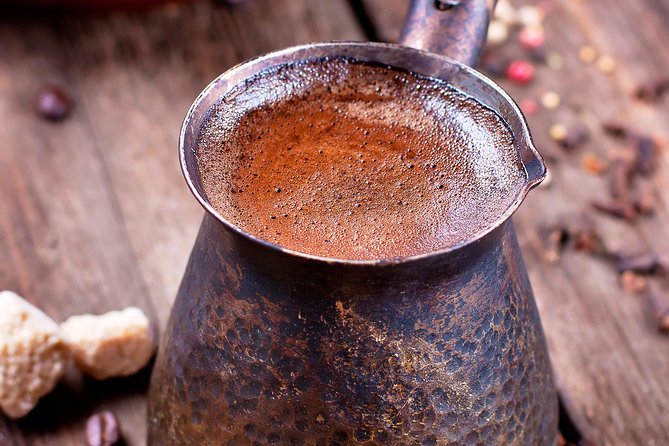
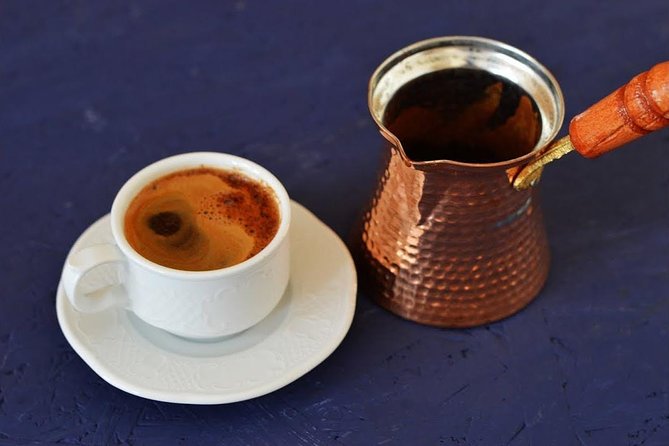
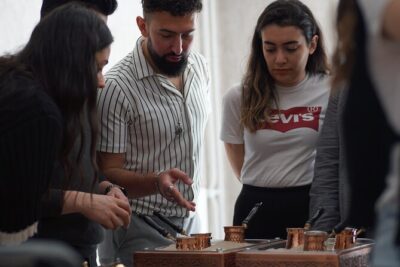
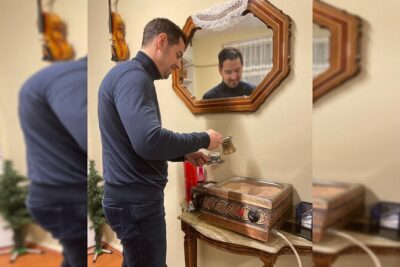
The workshop is the centerpiece of the afternoon. You’ll spend about 30 minutes making Turkish coffee yourself, guided step by step. The method is classic: heating the brew on a sand stove using a traditional copper vessel. After a short time over a small flame, the coffee turns frothy and ready to drink.
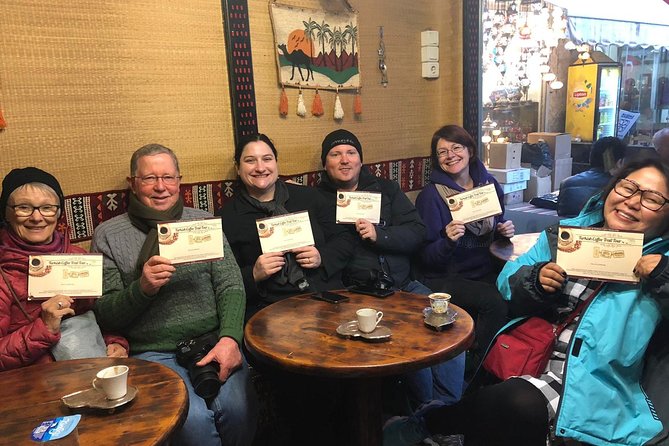
This part matters even if you think you already know Turkish coffee. The act of making it helps you understand why the foam shows up the way it does, and why the “serve it right” culture exists. You’ll also leave with a certificate after the session, which gives the experience a satisfying finish—not just a walk where you buy coffee and go.
Tip for getting the most out of the class: treat it like a skill, not a race. If you’re sensitive to caffeine, consider sipping slower and asking the guide what options you have at stops (some people do prefer tea alongside coffee).
Ottoman coffee rules and the stories between tastings
After the workshop, the day shifts into history you can actually walk through. Your guide explains how Ottoman authorities treated coffee after coffee beans arrived in Istanbul in 1519. There were prohibition decrees attributed to Ottoman sultans, and the story traces how coffee culture reappeared and organized itself into social spaces.
One of the key timeline beats you’ll hear is that coffee shops opened roughly 30 years later in the Eminönü district. That’s useful context because Eminönü today can look like a maze of commerce. The guide helps you connect what you see now—tiny streets, older storefronts, and “coffee-and-sweet” rhythms—to how the city’s coffee culture formed.
Then come the tastings. You’ll stop at a few coffee shops that represent long-running traditions. The goal isn’t just to taste. It’s to taste while your guide explains what makes each place’s approach different and how Ottoman-era practices influenced the modern ritual.
If you’re a history fan, this is where the tour gets legs. You’re not reading a poster. You’re walking the neighborhood that coffee culture grew up in, while someone translates the details into plain language.
- Best of Istanbul 1, 2 or 3-Day Private Guided Istanbul Tour★ 5.0 · 8,922 reviews
- Istanbul: Basilica Cistern Fast-Track Entry and Audio Guide★ 4.6 · 7,521 reviews
- Istanbul: Hagia Sophia Skip-the-Line Ticket & Museum Option★ 3.7 · 4,958 reviews
- Istanbul: Hodjapasha Whirling Dervishes Show & Exhibition★ 4.4 · 4,790 reviews
Spice bazaar stops and seeing where Ottoman coffee was stored
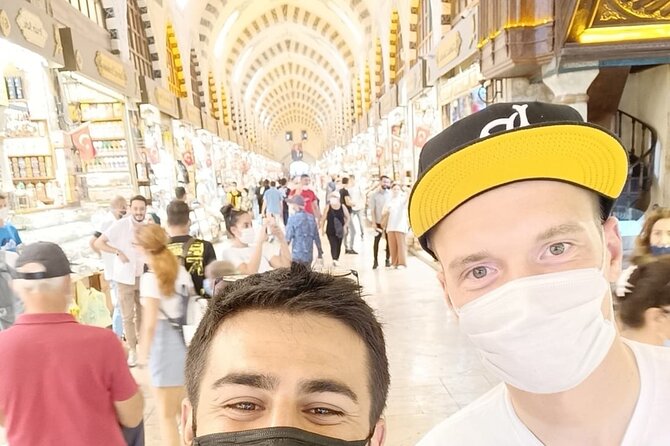
A standout part of the route is the move from coffee shops into the spice world. You’ll visit the spice bazaar area and learn about Ottoman coffee storage—so the tour isn’t only about what ends up in your cup. It also covers how coffee lived behind the scenes.
That’s valuable for two reasons:
1) It shows you coffee as a commodity, not just a drink.
2) It connects coffee to trade routes and marketplaces, which is exactly how Istanbul works.
The spice bazaar stop also helps you reset your senses. Coffee can be intense—especially when you’re tasting more than one style. The guide’s commentary makes the shift feel logical, not random: you see why spices and coffee share space in Istanbul’s market culture.
If you like bringing something home, keep an eye out for the best place to buy coffee in the spice market area. Some guides point you toward a good counter for picking up beans or packaged coffee once you’ve learned what to look for.
Hacı Bekir sweets and classic coffee-house culture
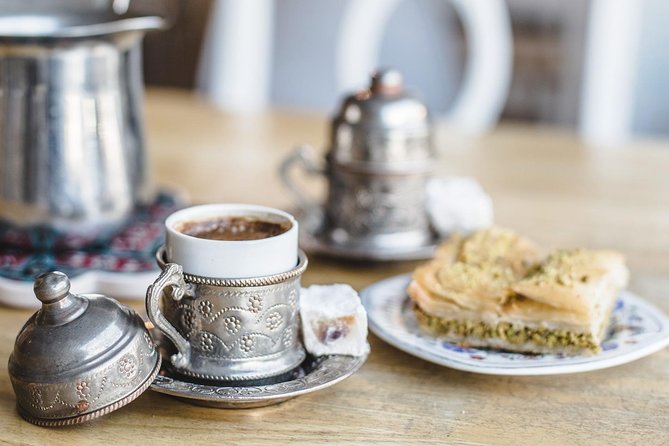
The route includes a stop at Hacı Bekir, a confectioner known for traditional sweets like Turkish delight and hard candy. This isn’t a random dessert break. In Istanbul, sweets and coffee go together for a reason: it’s part of the way coffee is enjoyed socially.
After that sweet stop, you’ll visit classic coffee businesses tied to the city’s longer coffee-making tradition—specifically Kurukahveci Inn / Kurukahveci Mehmet Efendi–type historic coffee-house stops. In past runs, guides have also gotten people inside the shop to see grinding processes associated with the brand. That detail is a nice change of pace from tasting alone, because it gives you a behind-the-scenes look at how coffee starts its journey.
The best part of these classic stops is how the guide connects the “old shop” feel with real practice. You’ll hear what the shop is known for and how it fits into the Ottoman coffee story, rather than just being shown as a landmark.
Coffee tasting tips: caffeine, tea, and how to pace yourself
Here’s the honest note: this tour can mean a lot of caffeine in a short span. Multiple people have pointed out that the coffee is very strong, and one caution was very direct—three cups in a few hours can feel too much if you’re caffeine-sensitive.
So I’d plan like this:
- Eat something before you arrive if you can (coffee is easier when your stomach isn’t empty).
- Sip slowly during tastings, and don’t force down every cup.
- If tea is offered at stops, take it. In some runs, tea has been available at most of the coffee spots, and it helps you cool down.
Also, if you don’t normally drink coffee, this is still manageable, but you’ll want that tea option. One person who isn’t a coffee drinker still enjoyed the tour because the experience included chai and time to chat in coffee settings.
Guides, personality, and why small groups change everything
The tour is led by a professional guide, and the guide’s style can make a big difference in how the afternoon feels. You may meet guides such as Diana, Tuncer, Ilker, Yasmin, Sanem, Serhat, or Oguzhan. Across these names, the common thread is storytelling that stays fun and practical—lots of history plus jokes and an ability to answer questions without turning the walk into a lecture.
In small groups (max 4), the guide can also adjust. One helpful example from a typical small-group day: if you’re the only two people, you often get extra flexibility and more time at each stop.
For you, this means you’re less likely to feel rushed through a coffee shop or pushed along like part of a conveyor belt. It’s easier to ask, Why did they store coffee this way? and How do you know the coffee is ready? and get a real answer.
Price and value: is $239.65 worth it?
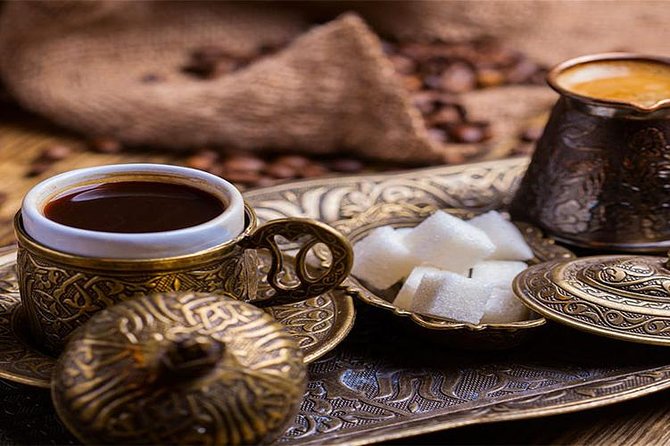
At $239.65 per person, this isn’t a budget coffee crawl. You’re paying for a bundle: a professional guide, hotel pickup and drop-off for European side hotels, Turkish coffee throughout the experience, and a hands-on class that ends with a certificate.
So what makes it feel worth it (when it’s a good fit)?
- You get guided tastings in multiple historic settings, not just one shop.
- You get the making workshop on a sand stove, which is the one part many coffee tours skip.
- The route includes both coffee culture and the spice-market world, plus Ottoman storage context.
Where the price can feel steep is if you’re expecting only a couple sips and a quick walk. The format includes multiple strong coffee tastings in a few hours, and the focus is the coffee story, not a long museum-style history session.
My practical advice: if Turkish coffee is your thing—taste, technique, and tradition—this price starts to make sense quickly.
Who should book this, and who might rethink it
This tour fits best if you want:
- A hands-on Turkish coffee-making class with a certificate
- A walk through older Istanbul streets that connects coffee to real neighborhood history
- Coffee and sweets together, plus a spice bazaar stop
It may be less ideal if:
- You’re highly caffeine-sensitive and don’t want to manage multiple strong cups
- You prefer sightseeing that’s lighter on food and drink during the same window
One more note to keep your decision grounded: there is a serious negative account from an individual that raised concerns about respectful conduct toward women and a restroom situation. That’s not the tone you’ll see echoed in the other experiences, but if inclusion and respectful treatment are non-negotiable for you, I’d weigh that information carefully and consider asking the operator directly what standards you can expect.
Should you book the Turkish Coffee Trail?
Book it if you want the Istanbul coffee story told in the only way that really works: making the coffee, tasting it in old settings, and learning why the ritual took shape the way it did.
Skip or reconsider if you don’t like strong coffee, you’re sensitive to caffeine, or you’re looking for a low-intensity food-and-history stroll. In that case, you might enjoy a lighter tasting route instead.
If you do book, show up ready to walk, bring patience for frothy coffee in small cups, and take notes on what you like. The best souvenir from this kind of day is often the taste memory—and sometimes a bag of coffee from the market once you’ve learned what to look for.
FAQ
How long does the Turkish Coffee Trail take?
The tour lasts about 3 to 4 hours.
Is hotel pickup and drop-off included?
Yes, hotel pickup and drop-off are included, but only for hotels on the European side of Istanbul.
Where does the tour start?
It starts at the German Fountain (Binbirdirek, At Meydanı Cd, 34122 Fatih/İstanbul).
What time does the tour begin?
The start time is 1:30 pm.
Is the tour offered in English?
Yes, the tour is offered in English.
Do I get a certificate?
Yes. You receive a certificate after your Turkish coffee-making workshop.
How large is the group?
The experience has a maximum of 4 travelers.
What’s included in the price besides the guide?
The tour includes hotel pickup and drop-off and Turkish coffee, along with the coffee-making workshop and certificate.
If you want, tell me your travel dates and where your hotel is on the European side, and I’ll help you sanity-check whether the 1:30 pm start fits your Istanbul plan.
More Coffee Experiences in Istanbul
- Istanbul: Turkish Coffee Making and Fortune Telling Workshop★ 4.9 · 1,308 reviews
- Istanbul: Turkish Coffee Making and Fortune Telling Workshop★ 4.9 · 451 reviews
- Turkish Coffee on Sand Workshop: Fortune Telling & Gift Set★ 5.0 · 309 reviews
- Istanbul Highlights: Guided Tour with Turkish Tea or Coffee★ 5.0 · 278 reviews
- Istanbul Turkish Coffee Making & Fortune Telling Workshop★ 5.0 · 173 reviews
- Istanbul: Sand Brewed Turkish Coffee Workshop in Old Town★ 4.9 · 142 reviews
More Tour Reviews in Istanbul
- Istanbul: Bosphorus Dinner Cruise & Show with Private Table★ 4.8 · 62,058 reviews
- Istanbul: Daytime or Sunset Sightseeing Cruise & Audio Guide★ 4.8 · 14,430 reviews
- Istanbul: Bosphorus Dinner Cruise & Turkish Night Show★ 4.8 · 12,954 reviews
- Best of Istanbul 1, 2 or 3-Day Private Guided Istanbul Tour★ 5.0 · 8,922 reviews
- Istanbul: Basilica Cistern Fast-Track Entry and Audio Guide★ 4.6 · 7,521 reviews
- Istanbul: Hagia Sophia Skip-the-Line Ticket & Museum Option★ 3.7 · 4,958 reviews
Fresh off the boat: new Istanbul reviews

Coffee Experiences, compared.
 ★ 4.9Turkish Coffee Making and Fortune Telling WorkshopFrom $231,308 reviews
★ 4.9Turkish Coffee Making and Fortune Telling WorkshopFrom $20451 reviews
★ 4.9Turkish Coffee Making and Fortune Telling WorkshopFrom $231,308 reviews
★ 4.9Turkish Coffee Making and Fortune Telling WorkshopFrom $20451 reviews
 ★ 5.0Turkish Coffee on Sand Workshop: Fortune Telling & Gift SetFrom $27309 reviews
 ★ 5.0Istanbul Highlights: Guided Tour with Turkish Tea or CoffeeFrom $60278 reviews
 ★ 5.0Istanbul Turkish Coffee Making & Fortune Telling WorkshopFrom $18173 reviews
 ★ 4.9Sand Brewed Turkish Coffee Workshop in Old TownFrom $12142 reviews
 ★ 5.0Turkish Coffee on Sand and Fortune-Telling Workshop by GentlemenFrom $1654 reviews
★ 5.0Istanbul Sand Brewed Turkish Coffee Workshop in Old TownFrom $1554 reviews
★ 5.0Turkish Coffee on Sand and Fortune-Telling Workshop by GentlemenFrom $1654 reviews
★ 5.0Istanbul Sand Brewed Turkish Coffee Workshop in Old TownFrom $1554 reviews
Browse the lists this tour appears in