
REVIEW · BOSPHORUS CRUISES
Istanbul Bosphorus Tour With Whirling Dervish Show
Two continents, one afternoon, and a spinning show. This Istanbul Bosphorus tour strings together the city’s best-known sights from the water, with a whirling dervish show built into the experience so the time passes fast. I also like the live, English commentary from a licensed guide, because you get the big picture without drowning in details.
Here’s another thing I like: it’s not a huge crowd. The group max is 50, and you can pick where you sit as the cruise changes from covered space to open-air views on the upper deck. One thing to consider is that this experience needs good weather, so if conditions aren’t right, it can be moved or refunded.
In This Review
- Key highlights worth your attention
- Where the tour starts on the Golden Horn
- Sailing out from Golden Horn and spotting Galata Köprüsü
- Dolmabahçe Palace from the water: what you can actually appreciate
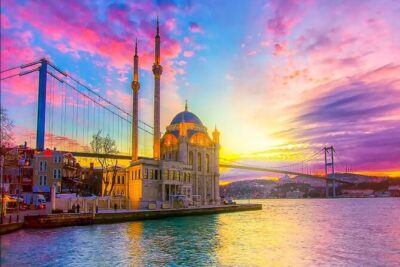
- Ortaköy coastline views: the middle village vibe
- The 15 July Martyrs Bridge and the European-Asian connection
- Rumeli Hisarı: the Ottoman fortress at the Bosphorus bottleneck
- The Fatih Sultan Mehmet Bridge: the second crossing
- Beylerbeyi Palace and the imperial summer-residence idea
- Kız Kulesi (Maiden’s Tower): the landmark finish
- Tea, onboard seating, and the whirling dervish show
- Price and value: why this is such a bargain for Istanbul
- Who should book this Bosphorus tour with dervishes
- Should you book this tour
- FAQ
- What time does the Istanbul Bosphorus tour start?
- How long is the cruise?
- Where do I meet the boat?
- What’s included in the price?
- Is lunch or drinks included?
- What happens if the weather is poor?
Key highlights worth your attention
- A short, high-impact Bosphorus route: major landmarks pass by in about 2 hours.
- Licensed live guide in English: clear, audible narration as you glide between continents.
- Whirling dervish show included: you watch the performance during the cruise, not as a separate detour.
- Tea is part of the deal: a small but real comfort on the water.
- Real-deal onboard setup: seating inside at first, then top-deck viewing; toilets are on board.
- Great value for the price: low ticket cost with multiple inclusions, plus optional paid snacks.
Other ways out onto the Bosphorus
Where the tour starts on the Golden Horn
You meet at SENKRON Tur-SEREMONİ Teknesi near Balat/Cibali, by Kadir Has University (Abdülezel paşa Cad. / Balat Parkı / Unkapanı Köprüsü). The address is pretty specific, and the good news is the meeting point is near public transportation, so you’re not forced into a taxi plan.
The cruise starts at 3:30 pm and the whole experience runs about 2 hours. That late-afternoon timing is a plus for photos, though it also means you’ll be on the water during the part of the day when wind can feel more noticeable—pack for comfort.
Also, this is a mobile-ticket style tour, so have your confirmation ready on your phone. Once you’re aboard, the flow is simple: you cruise, you learn, you watch the show, then you’re back at the same meeting point.
Sailing out from Golden Horn and spotting Galata Köprüsü
The first big moment is leaving the Golden Horn, which sets the tone for the whole trip. From here, Istanbul doesn’t feel like a grid of neighborhoods. It feels like one living waterway where the old city and the newer parts constantly overlap.
As you go, you pass the Galata Bridge (Galata Köprüsü), a 490-metre drawbridge that connects older Istanbul with more modern areas. The bridge is one of those landmarks that makes sense only when you see it from the side of the water—suddenly it’s not just a structure, it’s a moving point in the city’s rhythm.
Dolmabahçe Palace from the water: what you can actually appreciate
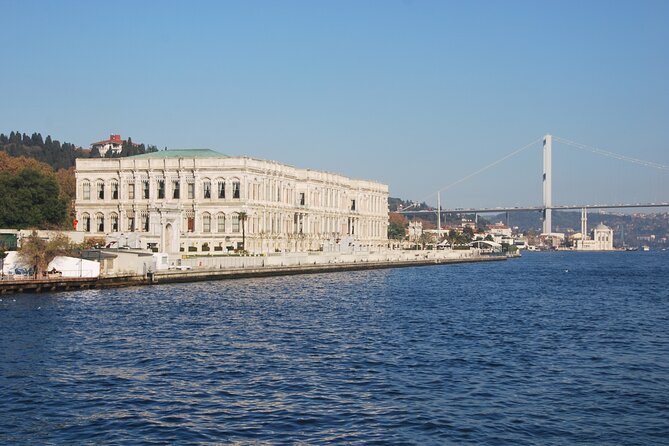
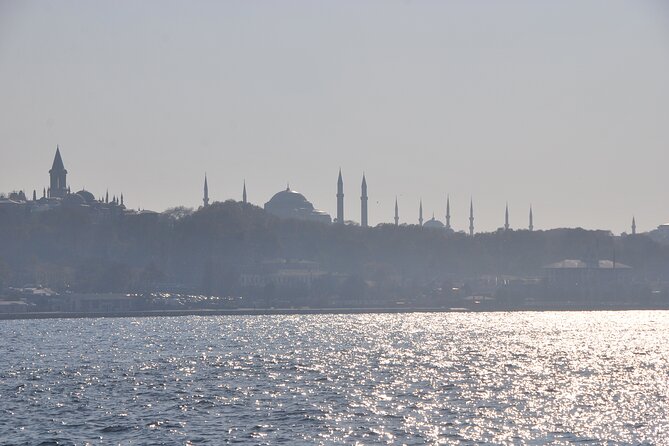
Next up is Dolmabahçe Palace, the 19th-century Ottoman administrative center where the last Ottoman sultans lived. Seeing palaces from land is one experience. Seeing one while your boat is moving is different, because you catch the scale through changing angles.
From the water, the palace reads like a statement: grand, formal, and designed to be looked at from far away. You don’t need a long visit to understand why it mattered. In a 2-hour cruise, it’s the kind of highlight that gives you immediate context for the Ottoman era without turning your afternoon into a museum marathon.
More evenings with the whirling dervishes
- Istanbul: Hodjapasha Whirling Dervishes Show & Exhibition★ 4.4 · 4,790 reviews
- Istanbul: Whirling Dervishes Ceremony and Mevlevi Sema★ 4.3 · 1,694 reviews
- Istanbul: Whirling Dervish Ceremony next to Hagia Sophia★ 4.5 · 906 reviews
- Istanbul Hodjapasha Whirling Dervishes Show & Exhibition★ 4.0 · 503 reviews
Ortaköy coastline views: the middle village vibe
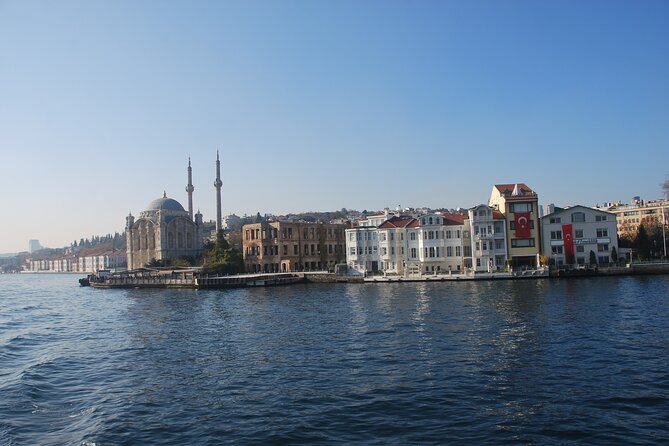
As the cruise continues along the Bosphorus European shoreline, you’ll get passes by the Ortaköy area—often described as a kind of middle ground between Beşiktaş and Kuruçeşme. The key thing here is how the coastline looks from your perspective: it resembles a string of villages, each with its own character and attractions.
I like this stretch because it feels less like ticking off stops and more like watching the city do what it does best: live along the water. You’ll notice how dense the shoreline development is and how the Bosphorus functions as both a scenic route and a working corridor.
If you’re the type who enjoys a view while a guide explains what you’re seeing, this portion works well. If you’re hoping for lots of time stepping off and wandering streets, adjust your expectations: this is mainly a cruise and viewing experience.
The 15 July Martyrs Bridge and the European-Asian connection
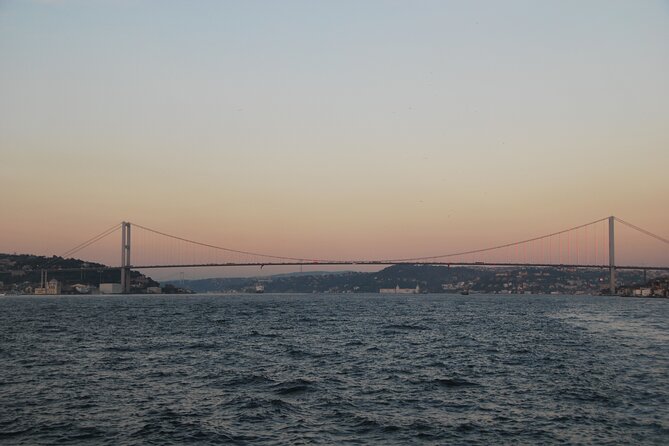
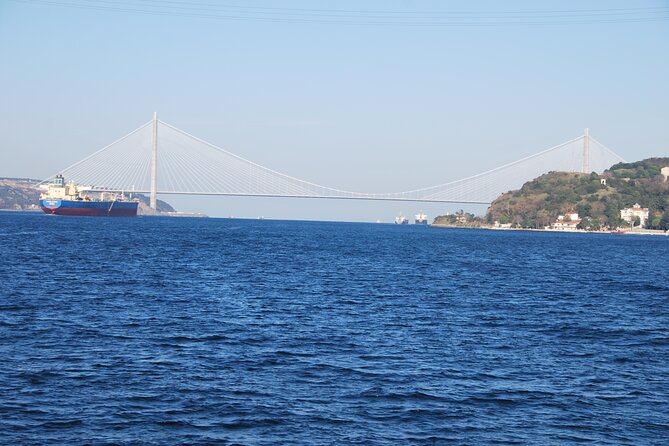
Then comes one of Istanbul’s most recognizable crossing points: the Bosphorus Bridge, known as the 15 July Martyrs Bridge (and also linked in the info with the Sultan Mehmed Bridge and the Sultan Selim Bridge naming group). It’s a suspension bridge stretching 1,560 metres, connecting the European and Asian sides.
This is where the idea of the Bosphorus really lands. You stop thinking of Istanbul as one city and start seeing it as two continents stitched together by infrastructure and daily life. Even if you know the facts, the scale looks bigger from the water because you’re moving underneath the story.
Rumeli Hisarı: the Ottoman fortress at the Bosphorus bottleneck
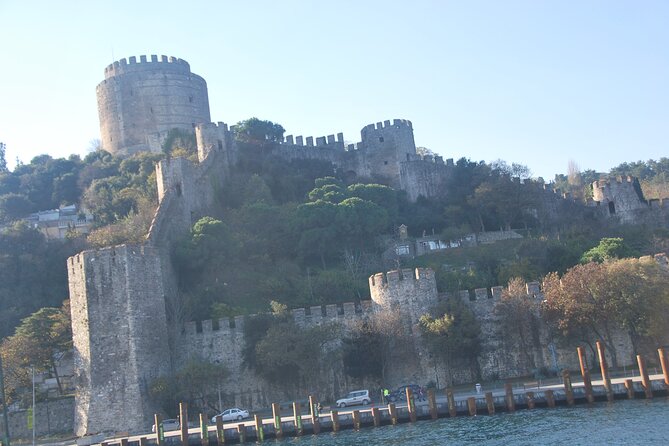
After that, you pass Rumeli Hisarı (Rumeli Castle), an Ottoman fortress dating to 1452 built by Mehmed II (Mehmed the Conqueror). It sits on the Bosphorus shore at the narrowest part of the strait, about 660 metres from where you can visually line up the opposite side (with Anadolu Hisarı mentioned as its counterpart).
What I find useful here is the strategic context. The Bosphorus wasn’t just pretty water—it was a choke point that could block or allow military and economic support to the Byzantine Empire from the north. You’ll understand the reason for the fortress shape and placement faster when you can see the geography from the water.
The Fatih Sultan Mehmet Bridge: the second crossing
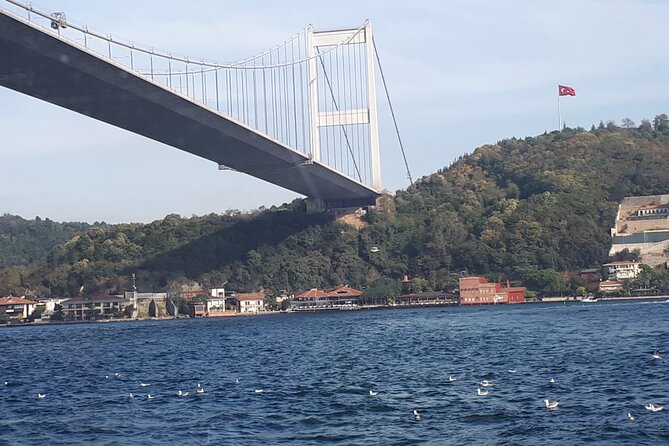
You also see the Fatih Sultan Mehmet Bridge, sometimes called the Second Bosphorus Bridge. Construction began in 1986, and it opened in 1988. It’s 1,510 metres long, with a main span of 1,090 metres, crossing between Asia and Europe again.
This stop matters because it shows Istanbul’s layers. The Ottoman era fortress gives you the past. The later bridge gives you the present-day reality that the Bosphorus continues to require major engineering solutions. From a moving boat, the modern bridge doesn’t feel cold; it feels practical.
Beylerbeyi Palace and the imperial summer-residence idea
As the cruise heads toward the next famous shoreline points, you pass Beylerbeyi Palace (Beylerbeyi Sarayı). It was commissioned by Sultan Abdülaziz to serve as an imperial summer residence and used to entertain visiting dignitaries. The palace is described as having 24 rooms, 6 halls, and a hammam.
You might think of it as a smaller counterpart to Dolmabahçe, but the real value here is atmosphere. A palace on the Bosphorus reads differently in summer light, because the setting is built into the design. Even from the water, you get the idea of leisure and ceremony tied to the strait.
Kız Kulesi (Maiden’s Tower): the landmark finish
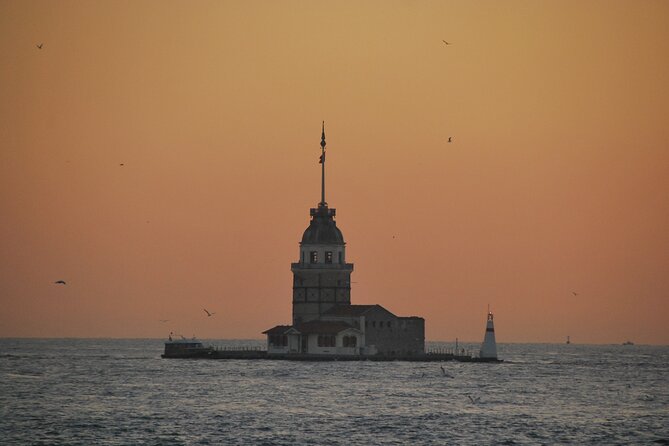
The tour’s visual hit comes near the end at Kız Kulesi (Maiden’s Tower), also known as Leander’s Tower since the medieval Byzantine period. It sits on a small islet at the southern entrance of the Bosphorus, about 200 metres from the coast of Üsküdar.
This tower has been around for more than two millennia, and that long timeline shows in how people keep returning to it. From the boat, it’s not just a photo spot. It’s a focal point that makes the whole cruise feel like a loop with a clear ending.
When the cruise finishes, you return to the meeting point—same spot you started from—so you’re not stuck figuring out a new transport plan.
Tea, onboard seating, and the whirling dervish show
The included comfort detail that I appreciate is the tea. It’s simple, but it helps if you arrive a bit early or if you’re standing outside near the dock while everyone boards.
The tour also includes the whirling dervish show. On at least one sailing, the show and dancing were visible during the cruise time, and I could see a macaw as well. That kind of moment is exactly why you’d choose a combined experience instead of just doing a plain sightseeing cruise.
On the boat itself, the flow can change during the 2 hours. One review described spending the first half inside at a table with room to watch and listen, then shifting to the top deck later for better open-air views. There’s also mention of a bar and snacks available and a toilet onboard (even if you don’t plan to use it). So you’re not just stuck staring forward the whole time—you can change your viewpoint.
One important practical note: your comfort will depend on how the boat is set up that day. Some areas can be enclosed, and some can be more open. Dress in a way that lets you handle moving between covered and exposed spots.
Price and value: why this is such a bargain for Istanbul
At $7.48 per person, this is priced like a budget-friendly add-on. The surprising part is how much you’re getting inside that price: a professional licensed guide, tea included, the whirling dervish show, and the cruise itself with admission ticket coverage.
You won’t get a full on-land day with long museum time here. But for many people, that’s the point. You’re paying for a guided “greatest hits” approach that uses the Bosphorus as the viewing platform. In a city where time is always tight, a short cruise that covers Ottoman palaces, a fortress, bridges, and the Maiden’s Tower can be a smart way to get bearings fast.
What’s not included matters too. There’s no lunch, and drinks (including alcohol) aren’t included. That’s fine if you’re planning to snack onboard or save a proper meal for later. If you’re counting on a meal being built into the tour, plan around it.
Who should book this Bosphorus tour with dervishes
This one is a good fit if you want a structured, scenic tour without spending your day commuting between major sites. It also works well for first-time Istanbul visitors who need the geography of the Bosphorus to make sense quickly.
It’s also a great match if you like combining big landmarks with a cultural performance. The whirling dervish show gives you a change of pace, and the guide commentary turns the scenery into something you can connect to the city’s Ottoman-era and modern-era layers.
If you’re a traveler who wants hands-on time—long walks, lots of stops where you step off and explore—you may feel the 2-hour format is tight. This is mainly for views from the boat and short on-board moments rather than extended wandering.
Should you book this tour
If you can find good weather and you’re free at 3:30 pm, I’d book it for the value alone. You get a lot of Istanbul landmarks in a short time, and the included tea and whirling dervish show give the cruise more personality than a basic sightseeing ride.
I’d skip it only if you’re allergic to the idea of being on the water in wind-prone conditions or if you’re hoping to spend hours walking around at each named sight. Otherwise, this is a smart, affordable way to see the Bosphorus as Istanbul actually experiences it: from the water, with live narration, and a performance that turns the afternoon into something memorable.
FAQ
What time does the Istanbul Bosphorus tour start?
The tour starts at 3:30 pm.
How long is the cruise?
The duration is about 2 hours.
Where do I meet the boat?
You meet at SENKRON Tur-SEREMONİ Teknesi, Abdülezel paşa Cad. Balat Parkı, Unkapanı Köprüsü/Kadir Has Üniversitesi Önü area in Balat, Cibali (Fatih/İstanbul).
What’s included in the price?
The tour includes a professional licensed guide, tea, and a whirling dervish show. A mobile ticket is used, and the experience notes that admission ticket is included.
Is lunch or drinks included?
Lunch is not included. The tour also says alcoholic and non-alcoholic drinks are not included (though snacks and a bar are mentioned as available on board).
What happens if the weather is poor?
The experience requires good weather. If it’s canceled due to poor weather, you’ll be offered a different date or a full refund.
More Tour Reviews in Istanbul
- Istanbul: Bosphorus Dinner Cruise & Show with Private Table★ 4.8 · 62,058 reviews
- Istanbul: Daytime or Sunset Sightseeing Cruise & Audio Guide★ 4.8 · 14,430 reviews
- Istanbul: Bosphorus Dinner Cruise & Turkish Night Show★ 4.8 · 12,954 reviews
- Best of Istanbul 1, 2 or 3-Day Private Guided Istanbul Tour★ 5.0 · 8,922 reviews
- Istanbul: Basilica Cistern Fast-Track Entry and Audio Guide★ 4.6 · 7,521 reviews
- Istanbul: Hagia Sophia Skip-the-Line Ticket & Museum Option★ 3.7 · 4,958 reviews
More Nights with the Dervishes
- Istanbul: Hodjapasha Whirling Dervishes Show & Exhibition★ 4.4 · 4,790 reviews
- Istanbul: Whirling Dervishes Ceremony and Mevlevi Sema★ 4.3 · 1,694 reviews
- Istanbul: Whirling Dervish Ceremony next to Hagia Sophia★ 4.5 · 906 reviews
- Istanbul Hodjapasha Whirling Dervishes Show & Exhibition★ 4.0 · 503 reviews
- Istanbul Traditional Turkish Dinner and Dervish Experience★ 5.0 · 490 reviews
- Whirling Dervish Ceremony: Go on a Spiritual Journey★ 4.0 · 177 reviews
More Ways Onto the Bosphorus
- Istanbul: Bosphorus Dinner Cruise & Show with Private Table★ 4.8 · 62,058 reviews
- Istanbul: Bosphorus Dinner Cruise & Turkish Night Show★ 4.8 · 12,954 reviews
- Istanbul: Bosphorus Sightseeing Cruise Tour with Audio Guide★ 4.6 · 4,704 reviews
- Istanbul Bosphorus Sunset Cruise on Luxury Yacht★ 5.0 · 4,465 reviews
- Istanbul: Perfume Making Workshop with Bosphorus View★ 5.0 · 2,985 reviews
- Istanbul: Bosphorus Sunset Cruise on Yacht with Live Guide★ 4.9 · 2,845 reviews
Fresh off the boat: new Istanbul reviews
Bosphorus Cruises, compared.
 ★ 4.8Bosphorus Dinner Cruise & Show with Private TableFrom $2862,058 reviews
 ★ 4.8Bosphorus Dinner Cruise & Turkish Night ShowFrom $2812,954 reviews
 ★ 4.6Bosphorus Sightseeing Cruise Tour with Audio GuideFrom $74,704 reviews
 ★ 5.0Istanbul Bosphorus Sunset Cruise on Luxury YachtFrom $304,465 reviews
 ★ 5.0Perfume Making Workshop with Bosphorus ViewFrom $282,985 reviews
 ★ 4.9Bosphorus Sunset Cruise on Yacht with Live GuideFrom $192,845 reviews
 ★ 4.8Bosphorus Sunset Cruise with Drinks & SnackFrom $82,716 reviews
 ★ 5.0Bosphorus Yacht Cruise Experience: Visit the Asian SideFrom $602,251 reviews
Browse the lists this tour appears in