
REVIEW · WHIRLING DERVISHES SHOWS
Istanbul: Whirling Dervishes Ceremony and Mevlevi Sema
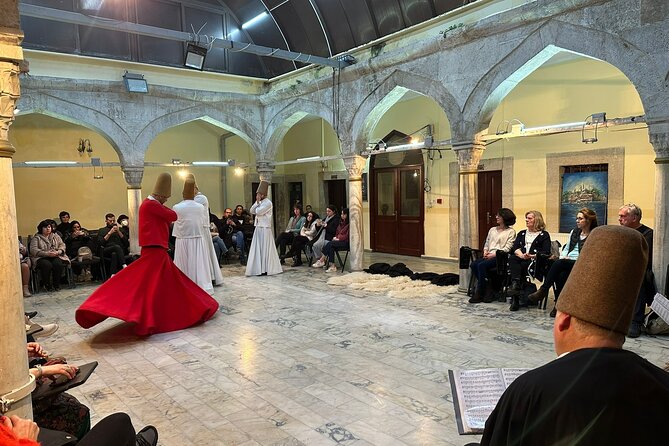
Spin into silence in Istanbul’s old halls. This Mevlevi Sema ritual at Hoca Rüstem Medrese pairs live sacred music with whirling dervishes, all in a compact, atmospheric setting. I especially like the live music setup and the way the performance feels focused and calm rather than like a typical staged show.
One practical heads-up: the ceremony is mostly done without big, step-by-step explanations in the hall, so plan to use the included English audio guide (and maybe read a bit beforehand). If you want a lot of narration from a guide in real time, this may not fully scratch that itch.
In This Review
- Key Points Worth Your Time
- Mevlevi Sema at Hoca Rüstem Medrese: What You’re Really Seeing
- Timing in the Hall: Music, Then the Whirl
- Costume Symbolism and the Philosophy Behind the Whirl
- Audio Guide, Tea, and Smartphone Prep: The Make-or-Break Details
- What to Expect Inside the Ceremony (Without the Pretend-Show Vibe)
- Respect and Etiquette: How Not to Ruin the Mood
- Price and Value: Is About $23 Worth It for One Hour?
- Who Should Book This (and Who Might Prefer Something Else)
- A Quick Reality Check on Photos and Space
- Should You Book This Whirling Dervishes Ceremony?
- FAQ
- Where is the Whirling Dervishes ceremony held?
- How long is the experience?
- What’s the price?
- What’s included with the ticket?
- Do I need headphones?
- When should I arrive?
- Is hotel pickup or drop-off included?
- Is it wheelchair accessible?
- Is cancellation possible?
Key Points Worth Your Time
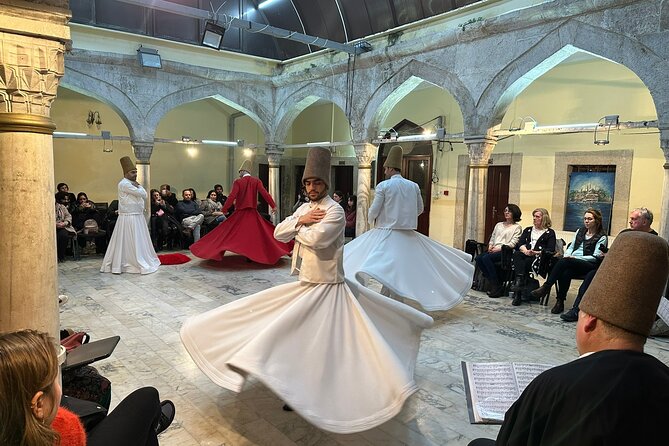
- Hoca Rüstem Medrese setting: A small madrasa-like space that keeps the ceremony feeling intimate.
- Live music first: Expect a musical opening, then the dervishes begin their ritual whirling.
- Meaningful symbolism: Colors, garments, and spinning motions tie to Sufi spiritual ideas and stages.
- Tea before the show: A simple welcome while you take your seat and get ready.
- Respect is part of it: Keep quiet, and don’t treat it like a concert.
More evenings with the whirling dervishes

Mevlevi Sema at Hoca Rüstem Medrese: What You’re Really Seeing
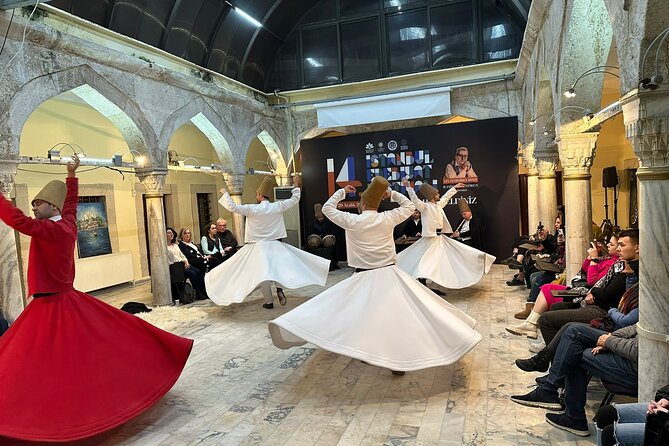
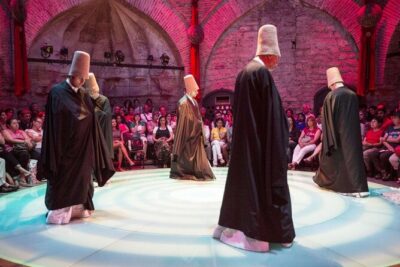
This experience is the Mevlevi Sema ceremony, a Sufi mystic tradition linked to Islam. In Istanbul, you go to the Hoca Rüstem Medrese to watch a ritual that’s far older than modern touring culture. The heart of it is the whirling: not frantic spinning for entertainment, but a disciplined, repeated motion meant to express spiritual “harmony” and unity.
The Mevlevi tradition connects to Mevlana Jelaleddin Rumi (the order’s name comes from him). The ceremony you see here isn’t trying to sell you a plot. Instead, it asks you to watch the rhythm, the musicians, and the dervishes’ focus as one moving whole.
What makes this worthwhile is the structure: music sets the mood, then the dervishes enter and the room shifts from listening to witnessing. It’s a quiet kind of spectacle, the kind where your eyes keep returning to the spinning because it looks almost controlled by something other than physics.
Timing in the Hall: Music, Then the Whirl
The whole event runs about one hour, with the performance split into two main phases. In several accounts, people describe roughly the first part as music and chanting, then the dervishes arrive and begin the ritual. The change is noticeable: the energy goes from “musicians on” to “ritual in motion.”
You’re told to arrive 15 minutes early, which matters more than it sounds. This isn’t a huge arena where you can drift in and still see well. There are limited good spots, and if you’re late you may end up blocked by pillars or packed seating.
Once the ceremony starts, plan to follow the flow rather than expecting breaks, explanations, or audience interaction. If you like events that run like a ritual, this format suits you. If you’re used to guided tours with frequent narration, you may feel a little let down at first. That’s why the audio guide is key.
Costume Symbolism and the Philosophy Behind the Whirl
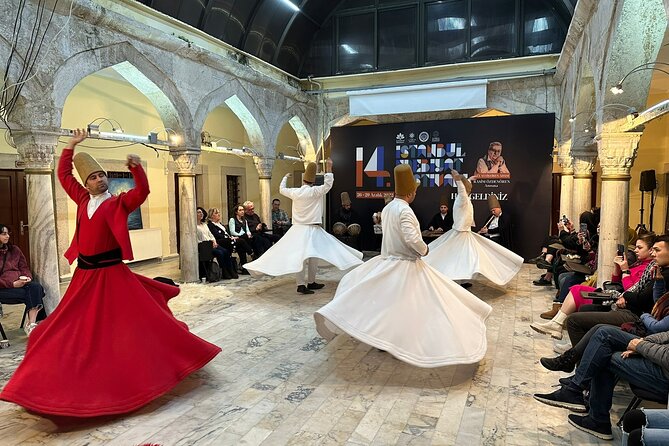
The spinning itself is the headline, but the meaning is the reason it lasts in your memory.
The whirling is framed as being in harmony with creation. The idea is that everything—from day to night, from summer to winter, from life to death—belongs to a cycle of motion. The dervishes’ spinning becomes a physical metaphor for that harmony. It’s also why costume details aren’t random.
Here are the symbolism points you can expect to hear in the context of the ceremony’s tradition:
- Black garments symbolize death.
- White garments symbolize birth.
- The tall hats symbolize tombstones of the ego, pointing to the idea of shedding self-importance before spiritual growth.
In addition, some explanations you’ll find associated with the Sema movements include the hands’ orientation. The right hand is described as opening toward the sky (receiving divine blessings), while the left hand points toward the earth (spreading blessings to humanity). You don’t need to memorize this during the show, but knowing it ahead of time helps you notice patterns you’d otherwise miss.
In short: you’re not just watching spin cycles. You’re watching a ritual language.
- Best of Istanbul 1, 2 or 3-Day Private Guided Istanbul Tour★ 5.0 · 8,922 reviews
- Istanbul: Basilica Cistern Fast-Track Entry and Audio Guide★ 4.6 · 7,521 reviews
- Istanbul: Hagia Sophia Skip-the-Line Ticket & Museum Option★ 3.7 · 4,958 reviews
- Istanbul: Hodjapasha Whirling Dervishes Show & Exhibition★ 4.4 · 4,790 reviews
Audio Guide, Tea, and Smartphone Prep: The Make-or-Break Details
This is one of those experiences where your comfort prep affects your enjoyment.
Your ticket includes an English audio guide app. That means you can create your own level of understanding in real time. The advice is simple: bring headphones and make sure your smartphone is charged. Without headphones, you’ll either miss the audio or have to keep awkwardly turning things up in a quiet space.
The event also includes a tea welcome. Many people mention it as a small but appreciated touch, especially when the weather outside isn’t cooperating. Tea isn’t the main event, but it does two useful things: it buys you time to settle in and it signals that this is meant to feel like a ceremony, not a quick ticket-and-go attraction.
Seating is another practical point. If you can, arrive earlier than the minimum so you’re not stuck behind an obstruction. Some accounts describe limited front-row depth, and others mention being placed near pillars. If you care about watching the spinning close up, early arrival is your best friend.
What to Expect Inside the Ceremony (Without the Pretend-Show Vibe)
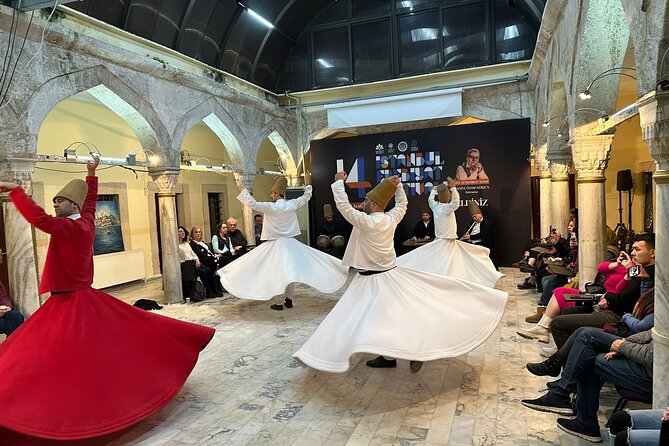
This isn’t a concert with an MC. Several people describe the event as having few frills and limited in-hall explanation. That doesn’t mean it’s empty. It means the ceremony leads, and you follow.
The show’s flow generally looks like this:
- You get seated, and tea may be served while you wait.
- Musicians perform at the start, including singing/chanting elements.
- The dervishes enter and begin the Sema whirling.
The musicians matter. The instrumental setup and singing/chanting create the steady emotional tone, and your focus naturally locks onto it. It’s also why the early part can feel “slower” than what some people expect from a performance, but it’s also why the transition to whirling lands so well.
Also note: the space is described as cozy and small. That’s part of the charm, but it can also mean you feel shoulder-to-shoulder. If you’re someone who gets bothered by tight crowds, go in with that expectation.
Respect and Etiquette: How Not to Ruin the Mood
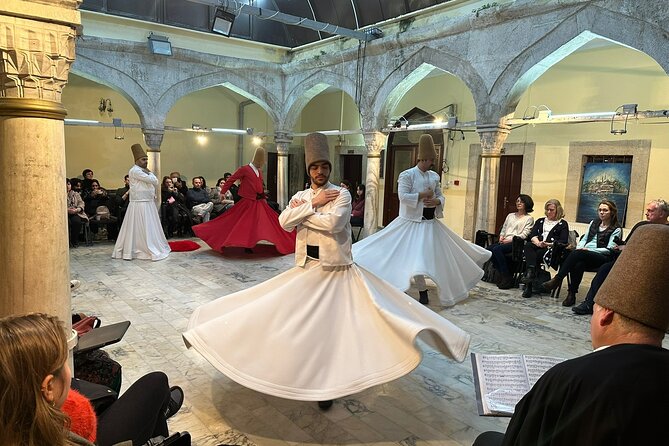
This is a religious ritual, even when it’s scheduled for visitors. That means your behavior counts.
Here are the practical rules I’d follow:
- Be quiet and respectful during the ceremony.
- Don’t treat it like a concert. In multiple accounts, people specifically mention not clapping and that applause can disrupt the feeling.
- Keep your phone use minimal once things start. If you want photos, it’s better to plan early and aim for short, respectful bursts.
In a space where people are trying to keep the ritual atmosphere intact, your best contribution is restraint. You don’t have to be stiff. Just keep it calm.
Price and Value: Is About $23 Worth It for One Hour?
At around $23 per person for roughly one hour, the price lands in the “small splurge” category. Here’s how I’d judge the value.
You’re paying for:
- a real, structured ceremony setup
- live music performers
- the whirling dervishes ritual (not a generic dance act)
- an included English audio guide app
- a tea welcome
Where it’s good value is the intensity-to-time ratio. One hour is long enough to feel the pacing of the ritual, but short enough that you won’t feel like you got stuck in a long program. In a city packed with museum hours, that one-hour spiritual evening can fit nicely.
Where you might question the value is if you arrive expecting a lot of spoken explanation. Since the hall experience is light on narration, you’ll want to lean on the audio guide and your own pre-reading. If you show up with zero context and don’t use headphones, the symbolism can pass by faster than you’d like.
Who Should Book This (and Who Might Prefer Something Else)
I’d point this toward you if:
- you want an experience that’s spiritual and quiet, not just sightseeing
- you like live music and disciplined performance
- you’re okay reading a bit about context before you go, or you’ll use the included audio guide
You might think twice if:
- you need a guide constantly explaining in plain language during the show
- you hate tight seating or being near other people
- you’re looking for a party-like atmosphere (this isn’t that)
It’s also a solid fit if you’re basing yourself near Istanbul’s historic core. People often describe it as a convenient stop while doing Sultanahmet-area sightseeing.
A Quick Reality Check on Photos and Space
In a small room, what you can see matters. Some accounts call out blocked views from pillars, and others mention that packed seating can limit your angle on footwork.
So here’s the simple strategy:
- arrive early for a better angle
- if you’re behind something, accept that you may mostly enjoy the movement and music rather than detailed footwork
- keep photography respectful and brief, especially once the whirling starts
If you treat it like a ritual you’re watching carefully rather than a theme park photo op, you’ll likely enjoy it more.
Should You Book This Whirling Dervishes Ceremony?
Yes, book it if you want a meaningful, one-hour Istanbul evening that goes beyond the usual checklist. The strongest reasons to go are the live music, the disciplined whirling, and the chance to learn the symbolism through the English audio guide while you’re there.
Hold off or adjust expectations if you’re specifically searching for a heavily explained guided lecture in the hall. This experience is built for quiet watching, not constant commentary. If you’re willing to use headphones, arrive early, and show respect, you’ll get a lot more out of it.
FAQ
Where is the Whirling Dervishes ceremony held?
It takes place at Hoca Rüstem Medrese in Istanbul.
How long is the experience?
The ceremony lasts about 1 hour.
What’s the price?
The price is listed as $23 per person.
What’s included with the ticket?
You get the ticket to the Whirling Dervishes ceremony and an audio guide app on your smartphone (English).
Do I need headphones?
Yes. You’re advised to bring headphones.
When should I arrive?
You need to be at the hall about 15 minutes before the show starts.
Is hotel pickup or drop-off included?
No, hotel pickup and drop-off are not included.
Is it wheelchair accessible?
Yes, it is listed as wheelchair accessible.
Is cancellation possible?
Free cancellation is available up to 24 hours in advance for a full refund.
More Tour Reviews in Istanbul
- Istanbul: Bosphorus Dinner Cruise & Show with Private Table★ 4.8 · 62,058 reviews
- Istanbul: Daytime or Sunset Sightseeing Cruise & Audio Guide★ 4.8 · 14,430 reviews
- Istanbul: Bosphorus Dinner Cruise & Turkish Night Show★ 4.8 · 12,954 reviews
- Best of Istanbul 1, 2 or 3-Day Private Guided Istanbul Tour★ 5.0 · 8,922 reviews
- Istanbul: Basilica Cistern Fast-Track Entry and Audio Guide★ 4.6 · 7,521 reviews
- Istanbul: Hagia Sophia Skip-the-Line Ticket & Museum Option★ 3.7 · 4,958 reviews
More Nights with the Dervishes
- Istanbul: Hodjapasha Whirling Dervishes Show & Exhibition★ 4.4 · 4,790 reviews
- Istanbul: Whirling Dervish Ceremony next to Hagia Sophia★ 4.5 · 906 reviews
- Istanbul Hodjapasha Whirling Dervishes Show & Exhibition★ 4.0 · 503 reviews
- Istanbul Traditional Turkish Dinner and Dervish Experience★ 5.0 · 490 reviews
- Whirling Dervish Ceremony: Go on a Spiritual Journey★ 4.0 · 177 reviews
- Istanbul: Whirling Dervishes Ceremony and Mevlevi Sema★ 4.5 · 128 reviews
Fresh off the boat: new Istanbul reviews


Whirling Dervishes Shows, compared.
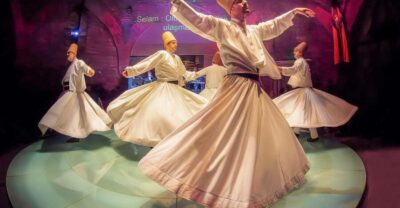 ★ 4.4Hodjapasha Whirling Dervishes Show & ExhibitionFrom $324,790 reviews
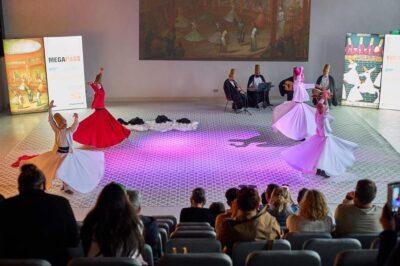 ★ 4.5Whirling Dervish Ceremony next to Hagia SophiaFrom $17906 reviews
★ 4.0Istanbul Hodjapasha Whirling Dervishes Show & ExhibitionFrom $32503 reviews
★ 4.5Whirling Dervish Ceremony next to Hagia SophiaFrom $17906 reviews
★ 4.0Istanbul Hodjapasha Whirling Dervishes Show & ExhibitionFrom $32503 reviews
 ★ 5.0Istanbul Traditional Turkish Dinner and Dervish ExperienceFrom $106490 reviews
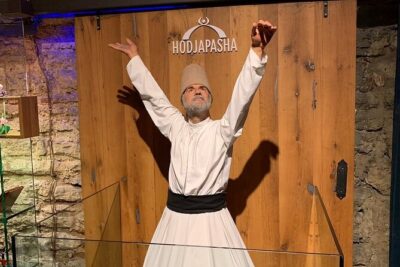 ★ 4.0Whirling Dervish Ceremony: Go on a Spiritual JourneyFrom $120177 reviews
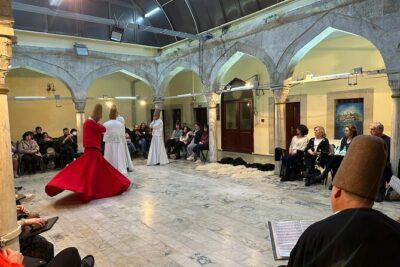 ★ 4.5Whirling Dervishes Ceremony and Mevlevi SemaFrom $24128 reviews
 ★ 4.5Istanbul Whirling Dervish Ceremony, A Mystical Sufi ExperienceFrom $42123 reviews
★ 5.0Traditional Turkish Dinner and Dervish ExperienceFrom $79109 reviews
★ 4.5Istanbul Whirling Dervish Ceremony, A Mystical Sufi ExperienceFrom $42123 reviews
★ 5.0Traditional Turkish Dinner and Dervish ExperienceFrom $79109 reviews
Browse the lists this tour appears in